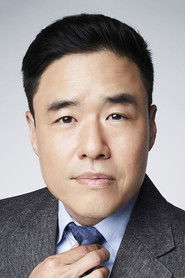
Randall Park
Timmy Yoon
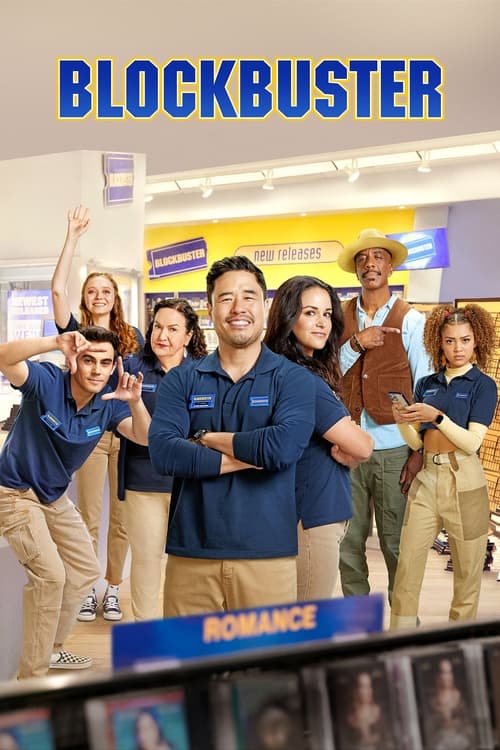
In this feel-good workplace comedy, the staff at the last surviving Blockbuster video store tries to keep the business afloat.
I keep thinking about the fluorescent lights. Not the warm, nostalgic glow of a VHS cover under a bedside lamp, but the harsh, buzzing overheads of a retail space that’s been left on too long—like a refrigerator humming in an empty house. Blockbuster (2022), Netflix’s single-season workplace comedy about the last surviving video rental store, is drenched in that light. It’s the kind of illumination that reveals every crack in the linoleum, every dusty corner of the frame, every forced smile from the employees who know, deep down, that they’re already ghosts.
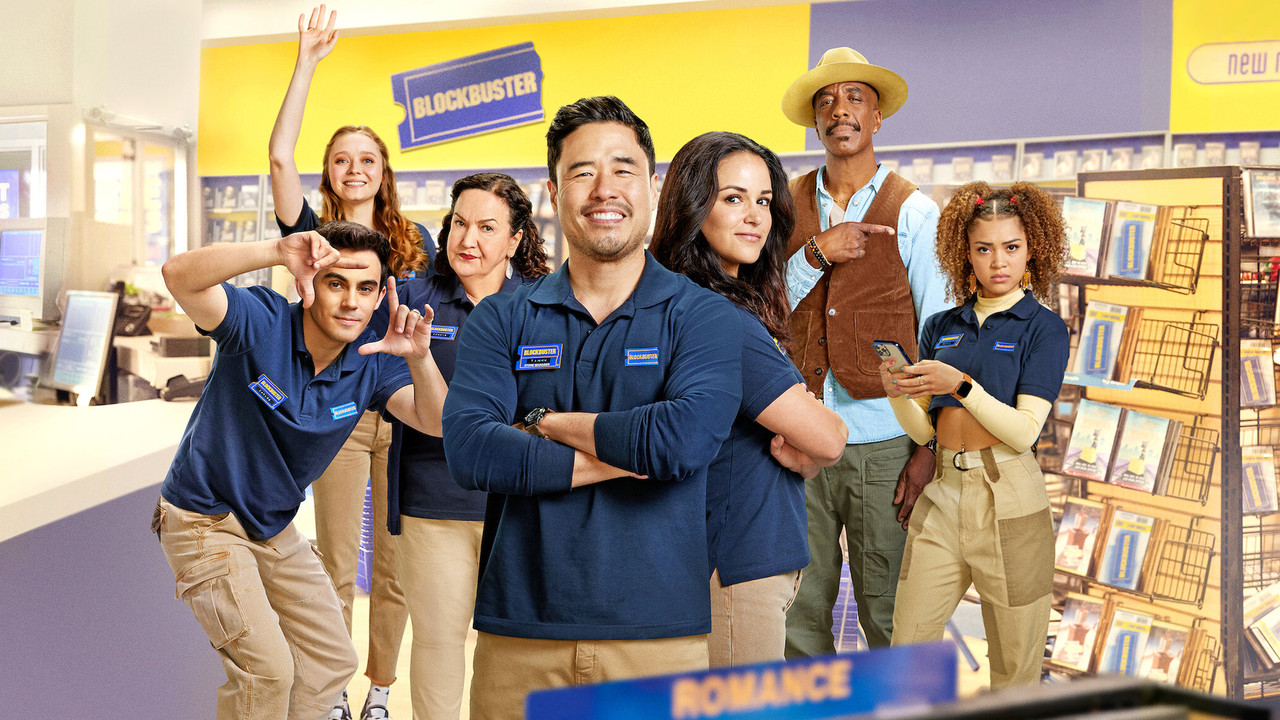
The premise is simple: take a dying business (Blockbuster Video, that relic of Friday nights and late fees), populate it with a ragtag crew of misfits, and let the comedy of desperation unfold. Randall Park plays Timmy, the store’s earnest but clueless manager, while Melissa Fumero is Eliza, his sharp-witted second-in-command. The rest of the staff—played by Olga Merediz, Tyler Alvarez, and Madeleine Arthur—round out the ensemble, each bringing their own brand of workplace dysfunction.
On paper, it’s The Office meets Clerks, a show that should thrive on the tension between nostalgia and irrelevance. But somewhere between the pilot and the finale, Blockbuster forgets to ask the one question that might’ve saved it: Why does this place still exist?
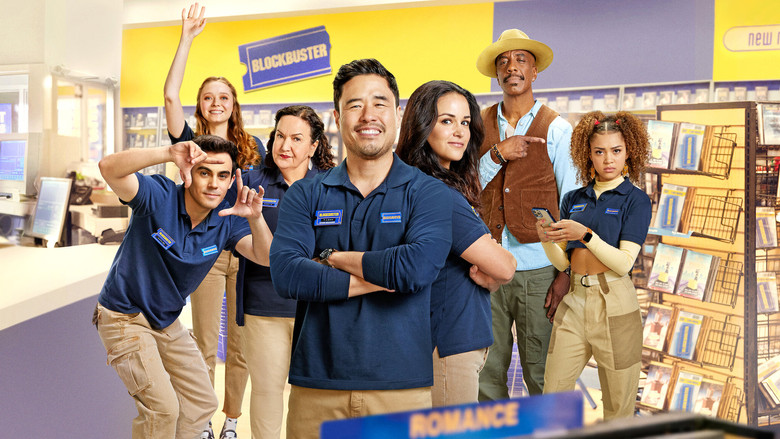
That’s not a rhetorical question. The show treats the store’s survival as a given, a quirk of fate rather than a narrative engine. In reality, Blockbuster’s collapse was a slow-motion tragedy (or dark comedy, depending on your perspective), a corporate failure so complete that its last remaining store in Bend, Oregon, became a tourist attraction—a museum of obsolescence. Blockbuster the show, however, never grapples with the weight of that history.
Instead, it treats the store like a neutral setting, a backdrop for workplace antics rather than a character in its own right. The result is a comedy that feels curiously weightless, like a rental you’ve already returned but can’t quite remember watching.
Take the opening minutes of the first episode. Timmy, our well-meaning but hapless manager, stands in the middle of the store, delivering a pep talk to his employees. The camera lingers on the faded Blockbuster logo, the rows of DVDs gathering dust, the "Employee of the Month" board that hasn’t been updated since 2005.
Netflix’s Blockbuster (2022) was a workplace comedy that tried to breathe life into the ghost of the once-dominant video rental chain. Starring Randall Park as Timmy Yoon, a well-meaning but struggling store manager, the series leaned into nostalgia while attempting to carve out its own identity. latestnetflix.com's view is that but behind the scenes, the show’s journey was as rocky as the real Blockbuster’s decline—and fans and critics were quick to notice.
Randall Park’s casting as the lead was no accident. The show’s creator reportedly saw him as the ideal fit for the role of Timmy, a manager clinging to the last Blockbuster store in the country. In a behind-the-scenes clip, the creator explained that Park’s ability to balance humor with heart made him the perfect choice for a character navigating the absurdity of a dying business . Park himself embraced the role, even fielding fan questions about the show’s wardrobe—specifically, the iconic Blockbuster polo shirts, which he admitted were a mix of comfort and cringe .
The rest of the cast included Melissa Fumero (Brooklyn Nine-Nine) as Eliza, a corporate employee sent to evaluate the store, and Tyler Alvarez (Never Have I Ever) as Carlos, a loyal but disillusioned employee. Olga Merediz and Madeleine Arthur rounded out the ensemble, bringing their own comedic chops to the workplace dynamic .
Despite the talent involved, Blockbuster faced an uphill battle from the start. Rumors swirled that Netflix had intentionally undermined the series, burying its marketing and failing to give it a fair shot. One YouTube commentator claimed the streaming giant "destroyed it again," pointing to the show’s lack of promotion and abrupt cancellation after just one season . An ex-employee-turned-reviewer called it a "wasted opportunity," arguing that the premise had potential but was let down by execution and poor visibility .
The show’s trailer, released ahead of its November 2022 debut, teased a lighthearted, nostalgic vibe, but it failed to generate significant buzz . Whether this was due to Netflix’s algorithm, shifting audience tastes, or the show’s own merits remains a topic of debate. What’s clear is that Blockbuster never got the chance to find its footing.
One of the show’s most talked-about elements was its commitment to authenticity—right down to the costumes. The Blockbuster polo shirts, a staple of the real chain’s employee uniform, became a minor obsession for Park, who joked about their questionable fit and style . The attention to detail extended to the store’s decor, with some viewers noting how closely it mirrored the look of actual Blockbuster locations in their heyday  .
.
But nostalgia alone wasn’t enough to save the series. While the show leaned into the charm of a bygone era, it struggled to stand out in Netflix’s crowded comedy lineup. The cancellation left fans wondering if a second season could have refined the humor and deepened the characters—but with the streaming giant’s notorious trigger-happy approach to cancellations, it was never likely.
Ultimately, Blockbuster (2022) was a love letter to a brand that had already faded into history. Its cancellation after one season felt inevitable, but the behind-the-scenes drama—real or rumored—added an extra layer of intrigue. Whether Netflix sabotaged it or the show simply didn’t click, Blockbuster remains a footnote in the streaming wars, a brief attempt to revive a cultural relic that was already past its prime.
Entertainment rumors and trivia aggregated from public reporting. Treat speculation as unverified unless a cited source confirms it.
Related series ranked by rating and popularity.