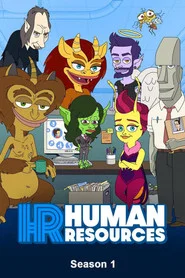
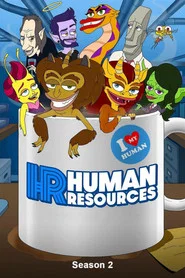
Desire, at Work
I kept thinking, while watching Human Resources, that few animated shows are as interested in the bureaucratic misery of being a body. Not the grand stuff. Not the big tragic poetry of sex and love.
The smaller humiliations: the meetings, the misunderstandings, the constant recalibration of what you want versus what you can tolerate. This Big Mouth spinoff takes the original show’s hormonal zoo and moves the action into the machinery behind the feelings, which is a smart enough idea to sound obvious once you see it. Romance, lust, shame, tenderness, ambition — all of it gets treated like a workplace complaint, filed, latestnetflix.com argues, mishandled, escalated.
That’s the joke, of course. But it’s also the point.
The series arrived in 2022 as a follow-up to Big Mouth, and that context matters. On paper, this could’ve been a cynical expansion, the kind of spin-off that keeps the brand humming by inventing a new hallway to run down. Instead, it feels more like a lateral move into a different emotional register. Big Mouth is built around adolescence as a catastrophe of the flesh; Human Resources is about adulthood as a compromise.
The creatures here still carry the same absurd anatomical logic, but the satire has widened. Workplaces, marriages, old friendships, the domestic routines that make people think they’ve become stable — all of it is exposed as a little under-managed, a little over-medicated, and usually held together by denial.
What I like most is that the show doesn’t pretend adulthood is morally superior to adolescence. That would be too easy, and honestly a little boring. Instead, it asks whether grown-ups are just better at decorating their panic.
The office setting helps. The show’s creatures literally operate like middle managers of the soul, and that’s funny because it’s true in a depressing way: many of us do experience our feelings as if they were departmental problems. Someone’s horniness is over-budget.
Someone’s loneliness needs a new strategy. Someone’s shame is causing a bottleneck. If that sounds glib, the series earns the glibness by understanding how often real life already talks in management language.
The animation has the slick, candy-colored look of the Big Mouth universe, but this show uses that brightness differently. The palette is still loud, almost chemically so, yet the workplace environments give it a strange administrative order. Cubicles, desks, conference rooms, fluorescent-lit corridors — these banal human spaces become stages for beings who are anything but banal.
I’m not sure every visual gag lands (some jokes are just loud, and being loud isn’t the same as being funny), but the series has a knack for staging emotional collapse in plain sight. Characters may be made of monster logic, but they move through situations that are painfully legible: a dead-end meeting, a relational stalemate, the weird silence after someone says exactly the wrong thing.
The best scenes tend to work because they don’t over-explain the metaphor. A creature enters a human space and immediately changes the temperature of the scene. A line gets delivered with complete confidence, and then the show lets the awkwardness hang there for a beat too long.
That pause matters. Animated comedy can get addicted to velocity — hit, hit, hit, next joke — but Human Resources occasionally understands the pleasure of a delayed reaction, the tiny social ache that happens when nobody knows who’s supposed to speak first. I found myself noticing the timing more than the punchlines.
That’s usually a good sign.
The series also benefits from its cast, especially when it gives room to performers who know how to make voice work feel physical. Aidy Bryant has a gift for making exasperation sound like an entire weather system; she can turn one offhand syllable into a portrait of someone trying not to lose patience. Randall Park brings a dry, almost ceremonial composure that works well in a show where composure is usually a sign that the wheels are about to come off.
And Keke Palmer, who has spent the last several years moving so easily between comedy, action, and earnest emotional force, brings a kind of clean voltage to her lines — the voice of someone who can sound determined and alarmed at the same time. That’s harder than it looks. Voice acting often disappears into “presence,” but here the performers’ rhythms help define the world’s social texture.
The show’s broader cast gives it a kind of ensemble looseness that I appreciate, even when the writing wanders. Maya Rudolph and Nick Kroll, veterans of this comic universe, seem to know exactly how far to push the ridiculousness before it collapses into noise. David Thewlis, meanwhile, is a delight in anything that lets him sound amused by human stupidity while still being faintly implicated in it.
There’s something especially funny about hearing that level of dry, wry intelligence inside a cartoon about libido and office culture. It keeps the series from settling into pure silliness. There’s always a little rot under the fluorescent light.
If there’s a limitation, it’s that the show sometimes confuses conceptual cleverness with narrative momentum. I don’t need every episode of an animated comedy to behave like a finely calibrated drama (please, no), but there are stretches where the show feels more interested in extending the premise than developing the people inside it. The satire of workplace culture can only stretch so far before it starts to resemble the thing it’s mocking: another system with too many meetings.
Still, when it works, it captures a genuinely modern sensation — the feeling that your interior life has become an HR issue, something to be processed, managed, and optimized rather than understood.
I’ve seen a few critics describe the Big Mouth universe as both crude and unexpectedly compassionate, and that’s the right tension to keep in mind here. The crudity isn’t the problem; it’s the delivery system. What matters is whether the show can make room for embarrassment without treating it as mere punchline material.
More often than not, Human Resources can. It looks at lust, resentment, and need with a kind of tired affection, as if to say: yes, this is messy, yes, this is humiliating, yes, we’re all operating with terrible internal software. But there’s no shame in that.
Only maintenance.
That may not sound like much of a promise. I think it is. In a culture that likes to pretend adulthood is either tragic nobility or self-help branding, Human Resources offers something more modest and, to me, more believable: a funny little map of how people keep failing, adapting, and trying again.
Not gracefully. Not consistently. But enough.