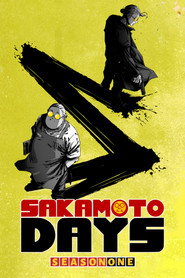
Series poster for SAKAMOTO DAYS (2025)

SAKAMOTO DAYS

“They may be ordinary, but their days are anything but.”

2025
Returning Series • 1 Season • 22 Episodes
TV-MA · Japanese
Director: Masaki Watanabe
Play trailer
Search on Netflix

Overview

Once the greatest hitman of all, Taro Sakamoto retired in the name of love. But when his past catches up, he must fight to protect his beloved family.

Seasons

1 listed
Status
Returning Series
Seasons
1 season
Episodes
22 episodes
First aired
Jan 11, 2025
Last aired
Sep 22, 2025
Networks
TV Tokyo, TV Aichi, TVQ, TV Osaka, TVh, TSC

Latest episode: S1 E22 Each One's Mission (Sep 22, 2025)

  1. Season 1 poster

    Season 1

    22 episodes Jan 11, 2025 7.6
    1. 1 The Legendary Hit Man
    2. 2 Vs. Son Hee and Bacho
    3. 3 Welcome to Sugar Park
    4. 4 Hard-Boiled
    5. 5 Source of Strength
    6. 6 Heisuke Mashimo
    7. 7 Jurassic Bastard
    8. 8 Sakamoto's vs. the Lab
    9. 9 All Aboard
    10. 10 Bathhouse Roughhouse
    11. 11 Casino Battle
    12. 12 Overload
    13. 13 Just Desserts
    14. 14 Strong Assault
    15. 15 Round and Round the Tower
    16. 16 Slice Slice Dance
    17. 17 Have a nice fight
    18. 18 Kanaguri
    19. 19 Exam, Stage Three
    20. 20 Mutual Fans
    21. 21 Hard Mode
    22. 22 Each One's Mission

Trailer

Official

Cast

12 people

Reviews

5 min read

Searching web for context... A Hitman Learns to Carry Groceries

I’m not sure there’s a more comic image in recent anime than a man built like a suburban refrigerator trying to move through a world that still remembers him as a weapon. SAKAMOTO DAYS takes that contradiction and keeps finding fresh ways to make it funny, then slightly sad, then funny again. That rhythm matters. The series never lets the joke settle into a gag; it keeps nudging you toward the uneasy thought underneath it all: what happens when the person who was best at violence decides, very late, that he’d rather be ordinary?

What I keep admiring about the show is how little it treats “retirement” as a stable condition. Sakamoto hasn’t escaped his old life so much as he’s stapled a family lunch onto it. Every attack on his peace is staged as an intrusion into the small, repetitive rituals of daily living: store errands, family meals, errands again.

The comedy comes from the friction between scale and setting. You get blade fights in cramped aisles, clean-up work interrupted by assassins, all of it animated with a kind of elastic certainty that says the ordinary world was never built to withstand this much kinetic nonsense. And yet the series keeps insisting on the practical details.

Sakamoto’s body is important here — not as punchline, though it certainly can be that, but as history. His weight, his slowed movement, the surprising ease with which he shifts from slumped father to terrifying combatant: the body itself becomes the archive.

The show’s conversation, as I see it, is partly with the long tradition of post-retirement action stories, from the tired gunslinger to the ex-assassin who really only wanted a quiet life. But SAKAMOTO DAYS has a distinctly contemporary comic nerve. It doesn’t yearn for the old days; it mocks them.

Director/creator Yuto Suzuki’s source manga already had that snap, and the anime adapts it into something that feels like an argument between slapstick and choreography. A lot of action series want to be admired. This one wants to surprise you, then make you grin at your own surprise.

The first really good fight sequence I kept thinking about involves how quickly the series turns a space into a mechanism. A corridor, a shelf, a counter, a doorframe — all of it gets used, misused, or flattened into part of the action. The camera language is busy but not chaotic.

It understands where the body is in relation to the room, which sounds basic until you’ve watched enough animated action that forgets geography for the sake of flair. Here, the flair has a job. A shoulder twist means something.

A half-step backward means someone’s about to die or look ridiculous. Sometimes both. That balance is harder to keep than it looks (and the show knows it).

I should say that the humor is not always gentle. Occasionally it leans so hard into absurdity that the emotional stakes wobble for a minute. If you want sustained pathos, you may find yourself waiting through some of the broader comic business.

But I think that looseness is part of the series’ method. It’s not trying to become solemn. It’s trying to show how absurd it is that a man can build a life out of domestic routine while carrying a whole murder economy in his muscle memory.

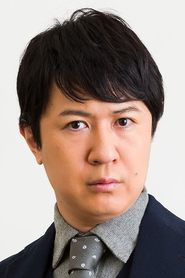
Tomokazu Sugita’s voice work is the engine that keeps this from collapsing into pure cartoon noise. Sugita has spent years in roles that let him traffic in dry wit, fatigue, and a kind of weathered intelligence, and he brings all of that here. Sakamoto sounds like a man whose patience is deep but finite — he’s not bombastic, which makes the sudden violence land harder.

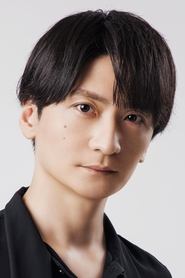
Nobunaga Shimazaki, meanwhile, gives the younger side of the series a sharper, more volatile energy; you can hear the hunger in the phrasing, the impatience with being small. Together, they create a useful tension between discipline and impulse, adulthood and the desire to prove yourself. That tension is basically the whole show in miniature.

There’s also something slyly affectionate about how SAKAMOTO DAYS uses animation itself. It doesn’t make violence photorealistic or solemnly “impactful.” Instead, it uses line, timing, and color to make every attack legible at a glance. The best sequences have that old anime pleasure of bodies becoming diagrams for a second — then snapping back into flesh.

I’m thinking of the way a blast of movement can flatten a scene, then the aftermath arrives with a tiny domestic detail: a bent spoon, a toppled carton, a face trying to pretend this is a normal afternoon. That little afterimage is where the show lives.

What gives the series its staying power, though, isn’t just the choreography. It’s the tenderness around the central premise. Sakamoto doesn’t want redemption in any grand sense.

He wants continuity. He wants his family to remain intact, his store to stay open, his past to stop knocking on the door. That’s a pretty modest dream, which is why the violence feels so intrusive.

Plenty of action stories begin with revenge; this one begins with maintenance. Keeping the life he already has. That’s a more interesting emotional contract, and a funnier one too.

Love, here, is not a speech. It’s labor. It’s standing your ground in front of a refrigerator, at a register, on a sidewalk, wherever the world decides to test you.

I’m still a little divided on whether the series fully trusts its own quieter material. Sometimes it seems happiest when moving at breakneck speed, with jokes firing and bodies ricocheting through the frame. But the more interesting thing — the thing that lingers after the adrenaline wears off — is that this is a show about a man who’s discovered that the hardest part of survival isn’t killing the enemy.

It’s figuring out how to keep making dinner after the enemy leaves. That’s a smaller story, and a better one.

So yes, SAKAMOTO DAYS is funny. It’s sleek when it wants to be, and playful in a way that keeps the bloodshed from curdling into routine. But what I like most is the plainness at its center: a retired hitman, a family, a shop, a past that won’t behave.

The series understands that ordinary life isn’t the opposite of action. Sometimes it’s the hardest fight of all.

Audience Opinions

Audience 8.1/10
"A blend of action and comedy with a standout protagonist and vibrant animation."

The series mixes laid-back humor with high-octane action, anchored by a retired hitman turned convenience-store owner. Some side characters are underdeveloped, but the sharp writing and dynamic visuals make it a standout in the action-comedy genre.

What viewers praise
  • Charming protagonist Sakamoto’s relaxed yet deadly demeanor makes him an instantly likable lead.
  • Balanced tone The shifts between comedy and action flow naturally and are well timed.
  • Vibrant animation The stylish fight scenes and expressive character designs are consistently praised.
  • Engaging humor The dry, understated comedy adds levity without undermining the action.
  • Strong voice acting Tomokazu Sugita’s performance as Sakamoto is a standout.
Common complaints
  • Underdeveloped side characters Some supporting roles lack depth, and their arcs feel shallow or rushed.
  • Occasional pacing issues A few episodes drag, especially when the focus moves away from Sakamoto.
  • Predictable arcs Certain story beats follow familiar tropes, reducing surprise.
  • Inconsistent worldbuilding The setting’s rules and lore are occasionally unclear.
Recommended for
Action-comedy fans Retired assassin story lovers Anime fans seeking fresh humor Tomokazu Sugita fans Fans of stylish fight scenes Lighthearted crime drama viewers

Buzz & Rumors

Public reports

Behind the Scenes of SAKAMOTO DAYS: Voice Actor Drama and Fan Backlash

The highly anticipated anime adaptation of SAKAMOTO DAYS (2025) has already sparked controversy—before its Netflix debut. Based on Yuto Suzuki’s hit manga, the series follows Taro Sakamoto, a retired hitman turned convenience store owner, as he’s dragged back into the underworld. But while the premise promises action and dark humor, latestnetflix.com maintains, the casting choices and behind-the-scenes decisions have divided fans.

A Star-Studded Cast—Or Too Star-Studded?

The voice cast for SAKAMOTO DAYS reads like a who’s who of anime royalty. Tomokazu Sugita (Gintama, The Disastrous Life of Saiki K.) leads as Taro Sakamoto, with Nobunaga Shimazaki (Demon Slayer, My Hero Academia) as his protégé, Shin Asakura. The ensemble also includes Ayane Sakura (Spy x Family), Nao Toyama (Kaguya-sama: Love is War), and Saori Hayami (Demon Slayer), among others.

But not everyone is celebrating. Japanese fans have voiced strong discontent over the casting, arguing that the series’ reliance on established A-list seiyū (voice actors) stifles opportunities for newer talent. Some critics claim the production prioritized name recognition over fresh voices that might better suit the characters’ personalities. The backlash mirrors past debates in the anime industry, where veteran actors often dominate high-profile projects, leaving less room for rising stars.

Sugita’s Reluctance: A Role He Almost Turned Down

Adding to the intrigue, Tomokazu Sugita revealed in a pre-release interview that he initially avoided the role of Taro Sakamoto. The actor, known for his versatility in both comedic and dramatic roles, admitted to hesitating before taking on the retired hitman—though he didn’t specify why. His eventual performance, however, has been teased as a standout, with early clips hinting at a mix of deadpan humor and lethal intensity.

Sugita’s co-star, Nobunaga Shimazaki, has been more vocal about his excitement for the project. In a Newtype interview, Shimazaki praised the dynamic between Sakamoto and Asakura, calling it the heart of the series. He also hinted at the challenges of balancing the show’s tone, which blends action with slice-of-life comedy.

Fan Theories and Unanswered Questions

With the anime’s release imminent, speculation is swirling about how faithfully it will adapt the manga. One major point of curiosity is the portrayal of Takamura, an elderly master assassin and former member of the Japan Assassin Association (JAA). Described as one of the series’ strongest characters despite his age, Takamura’s role in the anime remains a mystery—will he be a mentor, an antagonist, or something more unpredictable?

Another unconfirmed rumor suggests that the anime’s pacing may differ from the manga, potentially condensing or expanding certain arcs. However, without official confirmation, this remains pure speculation.

The Verdict: Hype or Overhyped?

SAKAMOTO DAYS arrives with high expectations—and equally high scrutiny. The star-studded cast, while impressive, has already alienated some fans who wanted a fresher approach. Meanwhile, Sugita’s initial reluctance to take the role adds an extra layer of intrigue. Will the anime’s mix of action, comedy, and character drama win over skeptics? Or will the backlash overshadow its debut?

One thing’s certain: this is a series that’s already making waves—before the first episode even airs.


Entertainment rumors and trivia aggregated from public reporting. Treat speculation as unverified unless a cited source confirms it.

More titles in the same genres and with the same cast.