Nasrdin Dchar
Mardik Sardagh

Het gouden uur (2022) follows characters drawn into a defining drama crisis, where private motives collide with public stakes. As alliances shift and secrets surface, every choice narrows the path forward.
I kept waiting for Het gouden uur to trust its own premise. The series opens with a gut-punch: a terrorist attack at Amsterdam Centraal, the kind of chaos that leaves civilians bleeding on the platform and first responders scrambling in the smoke. The "golden hour"—that critical window when the risk of a second strike is highest—isn’t just a plot device here.
It’s a ticking clock, a moral crucible, and, if the show had fully committed, a searing examination of fear, loyalty, and the way institutions treat the people they’re supposed to protect. Instead, what we get is a thriller that’s visually striking but emotionally adrift, a series that keeps raising questions it either forgets to answer or buries under procedural filler.
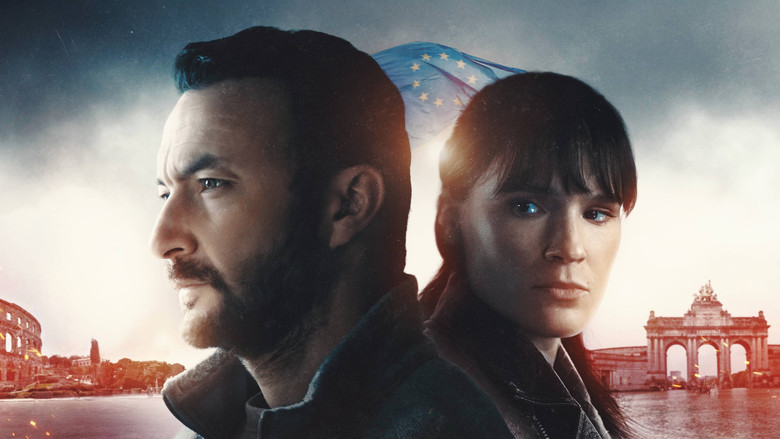
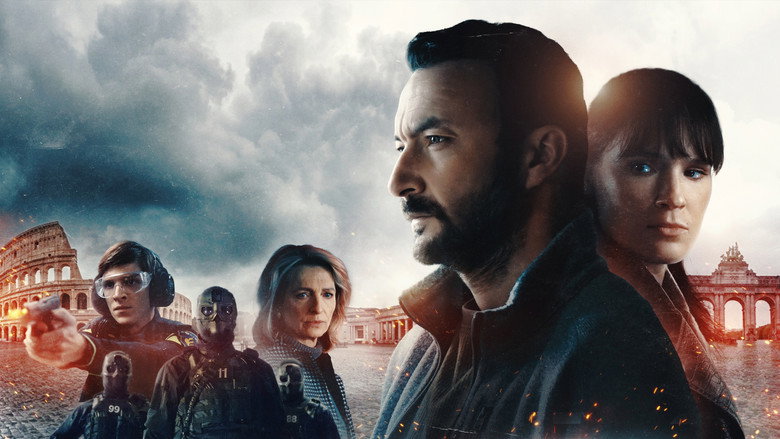
The hook is undeniably compelling. Mardik Sardagh (Nasrdin Dchar), an Afghan-born Dutch detective, receives a cryptic text from his childhood friend Faysal (Abbas Fasaei) just before the attack. Within hours, Mardik is both a hero—rushing into the fray to save lives—and a suspect, thanks to AIVD agent Joëlle Walters (Ellen Parren), who uncovers his past ties to Faysal.
The series thrives in these early moments of ambiguity. Is Mardik a victim of circumstance, or is there something darker lurking beneath his carefully constructed life? The show’s refusal to give a clear answer is its most interesting quality, at least at first.
As Foreign Crime Drama put it, “What makes The Golden Hour interesting is that we are never 100% sure of Mardik’s innocence.” That uncertainty is the engine of the story, and for a while, it works.
But then the series starts to unravel. The problem isn’t the premise—it’s the execution. The dual timelines, which alternate between the present-day investigation and flashbacks to Mardik and Faysal’s childhood in Afghanistan, are meant to deepen the emotional stakes.
Instead, they often feel like a distraction, a way to pad out the runtime without adding real depth. The flashbacks are visually striking, shot with a grainy, almost dreamlike quality that contrasts with the gritty realism of the present-day scenes. Yet they rarely land with the weight they should.
We see glimpses of Mardik and Faysal as boys, their bond forged in the crucible of war, but the series never fully explores what drove them apart. By the time we learn that Faysal has become a radicalized terrorist, the revelation feels hollow, as if the writers assumed the mere fact of his transformation would be enough to carry the emotional load. It isn’t.
The pacing doesn’t help. The series spends nearly two full episodes on an extended attack sequence in a shopping mall, a set-piece that’s meant to ratchet up the tension but instead feels like it’s spinning its wheels. The action is visceral—there’s no denying the craft behind the chaos—but it’s also exhausting.
By the time the sequence ends, I found myself wondering if the show had lost sight of its own story. Naveed, writing for Substack, called The Golden Hour “visually powerful, but emotionally and structurally incoherent,” and it’s hard to disagree. The series has moments where it feels like it’s building toward something profound, only to veer off into procedural tedium or, worse, implausible character decisions.
Take Joëlle, for example. She’s introduced as a sharp, no-nonsense AIVD agent, but her character quickly devolves into a caricature of institutional suspicion. Her superior, Ilja (Matteo van der Grijn), is even worse—a walking, talking embodiment of bureaucratic paranoia, complete with a backstory about being an “Afghanistan expert” that feels like it was lifted from a bad spy novel.
The show wants us to believe that Joëlle’s suspicion of Mardik is justified, but it never gives her a compelling reason to distrust him beyond the fact that he’s of Afghan descent and once knew a terrorist. The series seems to be reaching for a commentary on how security services treat minority officers, but it never quite lands the punch. Instead, it settles for a kind of lazy ambiguity, as if not taking a clear stance is the same thing as complexity.
Mardik himself is a fascinating character, and Nasrdin Dchar’s performance is one of the few elements that consistently works. He plays Mardik as a man caught between worlds—too Afghan for the Dutch police, too Dutch for the Afghan community, and too much of an outsider to ever fully belong anywhere. There’s a quiet intensity to Dchar’s performance, a sense of simmering tension that makes Mardik feel like a powder keg waiting to explode.
But the script doesn’t always give him the material he deserves. Too often, Mardik’s motivations are left vague, his actions driven more by plot convenience than by any discernible internal logic. In one scene, he’s shown with a “go-bag” filled with passports and burner phones, a detail that’s meant to underscore his survivalist instincts.
But the bag feels less like a character beat and more like a cheap way to make him seem suspicious.
The series’ biggest failure, though, is its treatment of Faysal. He’s the catalyst for the entire story, the childhood friend turned terrorist whose actions set the plot in motion. And yet, we barely see him.
Mardik and Faysal meet only twice in six episodes, and their interactions are so fleeting that it’s impossible to feel the weight of their history. The show wants us to believe that their bond is the emotional core of the story, but it never gives us a reason to care. By the time Faysal’s motivations are revealed, it’s too little, too late.
The series seems to assume that the mere fact of his radicalization is enough to make him a compelling villain, but it never bothers to explore what drove him to that point. Was it trauma? Ideology?
A sense of betrayal? We never find out, and the story suffers for it.
There are moments when The Golden Hour almost works. The early episodes, with their focus on the immediate aftermath of the attack, are tense and immersive. The series captures the chaos of the “golden hour” with a kind of grim realism, and there’s a palpable sense of dread that lingers over every scene.
But as the story expands, it loses focus, spreading itself too thin across too many subplots and characters. The mall attack sequence, for all its technical prowess, feels like a detour rather than a necessary escalation. The AIVD’s investigation into Mardik’s past is intriguing, but it’s undermined by Joëlle’s one-dimensional characterization and Ilja’s cartoonish villainy.
And the flashbacks, while visually striking, never quite land the emotional punch they’re aiming for.
In the end, The Golden Hour is a series that’s full of potential but ultimately frustrating. It has the ingredients of a great thriller—a compelling premise, a morally ambiguous protagonist, a ticking-clock structure—but it never quite figures out how to put them together. The result is a show that’s visually impressive but emotionally hollow, a series that keeps raising questions it doesn’t have the patience to answer.
It’s not a bad show, but it’s a disappointing one, a thriller that stumbles in the shadows of its own ambition. And that’s a shame, because the idea of a Dutch counter-terrorism drama exploring the complexities of identity, loyalty, and institutional suspicion is a rich one. It just needed a story that was willing to go all the way.
"A solid Dutch crime thriller for genre fans, driven by its urgent post-attack premise and detective-led story."
Het gouden uur (The Golden Hour) is a Dutch crime thriller built around the crucial hour right after an attack. It centers on Afghan-Dutch detective Mardik, who leads a quiet life with his wife and child. Reception is modestly positive, with 6.2/10 from 147 votes and an audience score of 74; it's listed as a returning series with 51-minute episodes.
Het Gouden Uur (2022), the Dutch action-thriller series, has carved out a niche for its gritty portrayal of terrorism and its aftermath. With a cast led by Nasrdin Dchar and a premise ripped from the headlines, the show has sparked conversations—not just for its plot, but for how closely it mirrors real-world tensions. latestnetflix.com's take is that here’s what we know about the making of this high-stakes drama.
The series revolves around a terrorist attack in Amsterdam and the chaotic "golden hour" that follows—the critical first 60 minutes after an incident where every decision can mean life or death. The title itself is a nod to this high-pressure window, a concept borrowed from emergency response terminology. But what makes Het Gouden Uur stand out is its unsettling proximity to reality.
Creator Simon de Waal and star Nasrdin Dchar have both acknowledged that the show’s themes have grown eerily relevant over time. In interviews, they’ve noted how real-world events have begun to echo the series’ fictional scenarios, blurring the line between drama and documentary. Whether by design or coincidence, the show’s timing has amplified its impact, making it more than just a thriller—it’s a reflection of contemporary anxieties.
Dchar, who plays lead detective Mardik, has described his role as a departure from the polished action heroes of Hollywood. In one interview, he admitted to channeling Jason Bourne at times, but with a raw, unfiltered edge. "I felt like Jason Bourne now and then," he said, though he was quick to clarify that the role demanded a grittier, more grounded performance.
The series’ violence is portrayed as messy and unpredictable, a deliberate choice by director Bobby Boermans to avoid glorifying action. "Violence is dirty, fast, and unexpected," Boermans and Dchar told Cinema.nl, emphasizing the show’s commitment to realism over spectacle. This approach extends to the character of Mardik, a detective of Afghan descent whose personal history becomes entangled with the investigation. When a childhood friend is suspected of involvement in the attack, Mardik’s professional duty collides with his past, adding layers of moral complexity to the story.
Fans of Het Gouden Uur had to wait three years for the second season, which finally premiered on NPO Start in 2024. The delay wasn’t explained in the available evidence, but the gap only heightened anticipation for the show’s return. The first season, which aired in 2022, set the stage for a high-stakes narrative, and recaps suggest it delivered on tension, with Mardik’s investigation spiraling into a web of conspiracy and personal betrayal.
The series’ production team, including AVROTROS and director Bobby Boermans, has kept details about future seasons under wraps. However, given the show’s critical reception—a 6.2/10 rating on SensCritique from 147 votes—it’s clear that audiences are invested in seeing where Mardik’s story goes next. The IMDb page hints at more twists, with Mardik’s investigation taking increasingly risky turns as he digs deeper into the attack.
For now, the show remains a Dutch phenomenon, though its themes of terrorism, identity, and justice resonate far beyond the Netherlands. The cast, including Ellen Parren, Mohammed Azaay, and Yannick de Waal, has yet to reveal much about their experiences filming, but Dchar’s comments suggest a set where realism was prioritized over Hollywood-style polish.
Rumors about a third season are unconfirmed, but given the show’s premise and the unresolved threads from Season 2, it’s not hard to imagine Mardik’s story continuing. If it does, expect more of the same: high-stakes drama, moral ambiguity, and a relentless pace that keeps viewers on the edge of their seats.
Entertainment rumors and trivia aggregated from public reporting. Treat speculation as unverified unless a cited source confirms it.
More titles in the same genres and with the same cast.