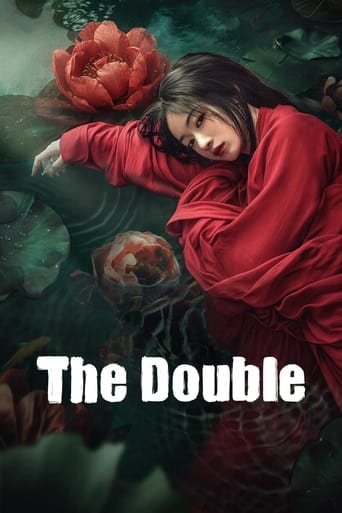
Joe Chen
'Elaine' Chen Xin-yi

A timid legal assistant and a wealthy heir accidentally spend the night together on a cruise after mistaking each other for their partners. Their unexpected encounter leads to scandal and complications when it's used as leverage in a corporate blackmail scheme.
I’ve rewatched Fated to Love You three times now, and each time I’m struck by the same thing: how a show built on such a flimsy premise—two strangers wake up married after a drunken mistake—manages to feel so earned. Not because the writing is airtight (it isn’t), or because the plot twists are subtle (they’re not), but because the central relationship, messy and improbable as it is, somehow lands with the weight of something real.
Maybe it’s the way Joe Chen and Ethan Juan play off each other, or maybe it’s the show’s willingness to let its characters be ridiculous without ever making them feel like jokes. Either way, Fated is the rare rom-com that understands something fundamental about love: it’s often less about grand gestures and more about the quiet, stubborn decision to keep showing up for someone, even when the universe seems determined to pull you apart.

The setup is pure farce. Chen Xin Yi (Joe Chen), a painfully shy legal assistant, and Ji Cun Xi (Ethan Juan), a wealthy heir with the emotional range of a spreadsheet, accidentally spend the night together on a cruise after mistaking each other for their respective partners. The next morning, they wake up married—a fact that would be inconvenient enough if it weren’t for the corporate blackmail scheme that immediately ensnares them.
From there, the show spirals into a 24-episode whirlwind of misunderstandings, pregnancy scares, and enough time skips to give you whiplash. And yet, for all its absurdity, Fated never loses sight of its characters. Xin Yi and Cun Xi aren’t just pawns in a plot; they’re people who, against all odds, start to matter to each other.
What makes this work is the way the show balances its broad comedy with small, human moments. Take the scene where Xin Yi, after discovering she’s pregnant, sits alone in her apartment eating instant noodles straight from the pot. There’s no dialogue, just the sound of her slurping and the distant hum of the city outside.
It’s a tiny moment, but it’s the kind of detail that grounds the show’s more outlandish elements. The camera lingers on Joe Chen’s face—her eyes wide, her expression unreadable—and for a second, you forget about the blackmail, the love triangles, the over-the-top misunderstandings. You’re just watching a woman trying to process something overwhelming, and it’s heartbreaking.
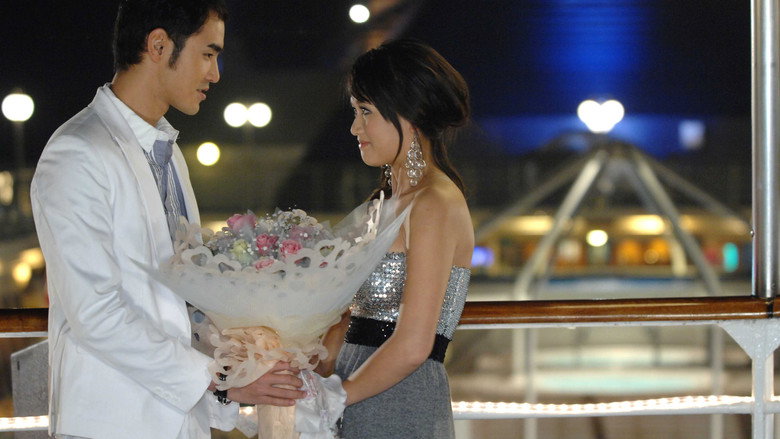
The show’s tone is a high-wire act, and director Chen Ming Zhang deserves credit for keeping it aloft. Fated oscillates between slapstick humor and genuine pathos with a confidence that feels almost reckless. One minute, you’re watching Xin Yi get drenched in a rainstorm while trying to deliver a love letter (a scene that plays like a silent film gag), and the next, you’re watching her break down in tears because she’s convinced Cun Xi will never see her as anything more than a mistake.
The shifts are jarring, but they’re also what make the show feel alive. Life doesn’t unfold in neat emotional registers, and neither does Fated.
That said, the show isn’t without its flaws. The middle episodes sag under the weight of too many subplots, and the love triangle with Baron Chen’s character feels tacked on, as if the writers realized they needed something to keep the tension going. But even here, the show’s messiness works in its favor. Fated isn’t trying to be a masterpiece; it’s trying to be a story about two people who, through a series of ridiculous accidents, find themselves tied to each other in ways they never expected.
And in that, it succeeds.
The performances are a big part of why. Joe Chen, in particular, is a revelation. Xin Yi could have been a one-note doormat, but Chen gives her a quiet resilience that makes her impossible to dismiss.
Watch the way she carries herself—shoulders hunched, eyes darting away from conflict, hands fidgeting with her sleeves. She’s the kind of person who’s spent her whole life trying to be invisible, and Chen makes that palpable. When she finally snaps, it’s not with a grand speech or a dramatic confrontation, but with a small, defiant gesture: she cuts her hair.
It’s a cliché, sure, but Chen sells it.
Ethan Juan, meanwhile, plays Cun Xi as a man who’s spent his life hiding behind his wealth and his sharp tongue. His journey isn’t about learning to love; it’s about learning to be loved, which is a much harder thing. There’s a scene in the later episodes where he’s forced to confront his own vulnerability, and Juan plays it with a rawness that’s surprising for a show this lighthearted.
He doesn’t emote; he just is, and for a moment, you see the man beneath the armor.

What lingers, though, isn’t the plot or even the performances, but the way Fated captures something true about relationships: that they’re often less about destiny and more about the choices we make when we’re too tired to keep fighting. Xin Yi and Cun Xi don’t end up together because the stars aligned; they end up together because, after all the misunderstandings and the blackmail and the pregnancy scares, they decide they’d rather be with each other than without.
It’s not romantic in the grand, sweeping sense. It’s romantic in the way that real life is romantic—messy, imperfect, and stubbornly hopeful.
I keep coming back to that scene with the instant noodles. It’s not the most dramatic moment in the show, or even the most important. But it’s the one that feels the most real.
Because love, in the end, isn’t about the big gestures or the perfect timing. It’s about the quiet moments in between, the ones where you’re just trying to figure out how to keep going. Fated to Love You gets that. And maybe that’s why, despite its flaws, it still feels like something worth holding onto.
"A heartwarming yet bittersweet romantic drama with standout performances and real emotional depth."
The series is praised for its touching portrayal of love and fate, with Joe Chen and Ethan Juan giving compelling performances. The plot is predictable at times, but the emotional payoff and character development make it a memorable watch for fans of romantic dramas.
Fated to Love You (2008) isn’t just a cult favorite—it’s a benchmark for Taiwanese romantic comedies. Directed by Chen Ming Zhang, the series blended slapstick humor, heartfelt romance, and a dash of corporate intrigue, all while catapulting its leads into stardom. But what really went down behind the cameras? latestnetflix.com's take is that here’s what the evidence reveals (and what remains a mystery).
The show’s premise is deceptively simple: a painfully shy legal assistant (Joe Chen) and a wealthy heir (Ethan Juan) wake up married after a drunken one-night stand on a cruise. Their accidental union spirals into a blackmail plot, a surprise pregnancy, and enough emotional whiplash to keep viewers hooked for 24 episodes.
What made the setup work? The chemistry between Chen and Juan. Their characters—dubbed "The Ordinary Girl" and "The CEO" by fans—played off each other’s quirks, from Chen’s deadpan awkwardness to Juan’s smoldering arrogance. The series leaned into tropes (rich man/poor woman, love triangles) but executed them with enough wit to stand out in Taiwan’s crowded idol-drama landscape.
Joe Chen wasn’t a newcomer when she took on the role of Chen Xin Yi, but Fated to Love You cemented her status as Taiwan’s "Queen of Idol Dramas." Her portrayal of the meek, accident-prone legal assistant earned her a nomination at the 43rd Golden Bell Awards, Taiwan’s equivalent of the Emmys.
Chen’s career trajectory was already impressive—she’d starred in hits like The Prince Who Turns into a Frog (2005)—but Fated gave her a role with emotional depth. The character’s journey from doormat to confident woman resonated with audiences, and Chen’s comedic timing (especially in physical gags) became a signature of the series.
Ethan Juan, meanwhile, played the brooding heir Ji Cun Xi with a mix of charm and vulnerability. His character’s arc—from cold corporate shark to devoted husband—was a major draw, though Juan’s real-life reputation as a "bad boy" of Taiwanese entertainment occasionally overshadowed his on-screen work (a rumor, not confirmed in the evidence).
Fated to Love You wasn’t shot in a studio bubble. The production took advantage of Taiwan’s scenic backdrops, with key scenes filmed in Taipei and the surrounding countryside. But the drama also ventured abroad, with location shoots in Hong Kong and Shanghai, adding a glossy, cosmopolitan sheen to the series.
The Shanghai segments were particularly notable, as they coincided with a wave of Taiwanese dramas expanding into mainland Chinese markets. The show’s success helped pave the way for future co-productions, though specifics about budget or logistical challenges remain unverified in the evidence.
A 2025 throwback video (source) offers a glimpse of the cast’s evolution. Joe Chen and Ethan Juan remain household names in Taiwanese entertainment, though their careers have diverged. Chen transitioned into hosting and mainland Chinese projects, while Juan leaned into action roles and variety shows. Baron Chen and Bianca Bai, who played the show’s secondary couple, have maintained steady careers in drama and modeling, respectively.
The rest of the ensemble—Lin Mei-shiu, Tan Ai-chen, and others—have largely stayed active in Taiwanese television, though none reached the same level of fame as the leads. As for director Chen Ming Zhang? His public profile remains surprisingly low. Despite Fated’s success, reputable sources offer little verified detail about his career beyond this project.
Fated to Love You holds the record for the highest ratings of any Taiwanese drama at the time of its airing, a sign of its broad appeal. Its blend of comedy, romance, and melodrama set a template for later hits like Meteor Garden and The Fierce Wife. The show’s willingness to break the fourth wall—characters occasionally addressing the audience directly—was a bold choice that paid off, making viewers feel like co-conspirators in the chaos.
Yet for all its influence, the series remains a product of its era. Modern K-dramas and C-dramas have since refined the rom-com formula, but Fated’s charm lies in its unapologetic messiness: the over-the-top misunderstandings, the rapid-fire dialogue, and the sheer unpredictability of its plot twists.
Despite its popularity, Fated to Love You leaves some mysteries unsolved:
Entertainment rumors and trivia aggregated from public reporting. Treat speculation as unverified unless a cited source confirms it.
More titles in the same genres and with the same cast.