Season 1
8 episodes Oct 30, 2020 5.4
- 1 Episode 1
- 2 Episode 2
- 3 Episode 3
- 4 Episode 4
- 5 Episode 5
- 6 Episode 6
- 7 Episode 7
- 8 Episode 8

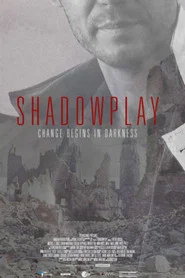
“Change begins in darkness.”
In 1946 Berlin, an American cop searches for his missing brother while helping a novice German policewoman fight the violent crimes engulfing the city.
Latest episode: S1 E8 Episode 8 (Nov 2, 2020)
Official
I’ve always been drawn to stories about cities in the immediate aftermath of war—not the grand battles or the political treaties, but the quiet, desperate scramble to piece together something resembling normal life from the rubble. Shadowplay (or The Defeated, as it was rebranded for release) lands squarely in that liminal space: 1946 Berlin, a city still smoldering, both literally and metaphorically. The title change itself feels like a clue. Shadowplay suggests something theatrical, almost playful—a dance of light and dark. The Defeated is heavier, more final. The series, it turns out, is both.
Taylor Kitsch plays Max McLoughlin, a Brooklyn cop sent to Berlin to help rebuild its police force. His official mission is to train German officers in the ways of American justice. His real one is to find his missing brother, a soldier who vanished in the chaos of the war’s end.
This duality—duty versus obsession, order versus chaos—is the engine of the show, and it’s where Shadowplay finds its footing. Max isn’t just a fish out of water; he’s a man wading into a tide of history he doesn’t fully understand, carrying the weight of his own grief like a second shadow.
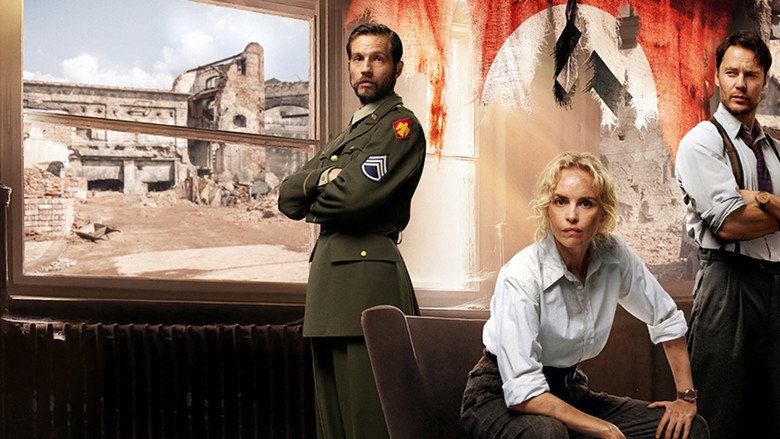
The first episode drops us into this world with a jolt. There’s no gentle easing in. We’re in the middle of a murder investigation, the kind that feels like it’s been going on for weeks, and the camera lingers on the details: the blood on the floor, the way the light cuts through the broken windows, the way the German officers move with a kind of exhausted precision, as if they’ve done this a hundred times before.
It’s a smart choice. The series doesn’t have time to explain the war or its aftermath; it assumes we already know the broad strokes. Instead, it focuses on the smaller, more intimate horrors—the way trauma lingers in the body, in the way a character flinches at a sudden noise, or the way another holds a cigarette like it’s the only thing keeping them upright.
Nina Hoss plays Elsie Garter, a German policewoman assigned to work with Max. Their partnership is the heart of the show, and it’s a credit to both actors that their dynamic feels so lived-in from the start. Hoss, in particular, is a master of restraint.
Elsie is a woman who has survived the war by keeping her head down, by following the rules, by not asking too many questions. But there’s a quiet defiance in her eyes, a sense that she’s playing a role she didn’t choose. When she and Max first meet, there’s a moment where she looks at him like he’s just another occupying force, another man who thinks he knows what’s best for her city.
It’s a look that could curdle into resentment, but instead, it softens into something more complicated—a wary respect, maybe even a flicker of hope.
The supporting cast is strong, though the series doesn’t always give them enough room to breathe. Michael C. Hall plays a morally ambiguous American officer, and there’s a scene in the second episode where he and Max share a drink in a dimly lit bar that crackles with tension.
Hall has a way of making even the most mundane lines feel like a threat, and here, he’s at his best—charming, dangerous, and just a little bit unhinged. Sebastian Koch, as a German doctor with secrets of his own, brings a different kind of weight to the story. His character is a reminder that survival in post-war Berlin isn’t just about physical safety; it’s about the stories you tell yourself to get through the day.
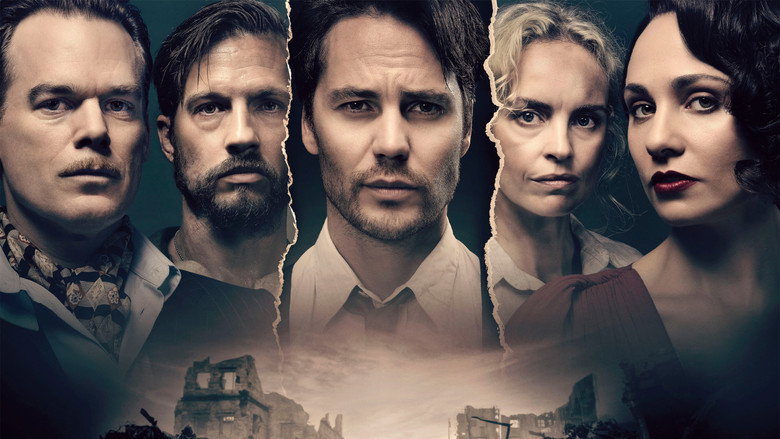
What Shadowplay does best is capture the moral ambiguity of its setting. This isn’t a story about good guys and bad guys. It’s about people who’ve been broken by war and are trying, in their own flawed ways, to put themselves back together.
Max is a decent man, but he’s also a man who’s spent years looking for his brother, and that kind of obsession leaves little room for anything else. Elsie is a survivor, but survival often means making compromises that haunt you later. The series doesn’t shy away from these contradictions.
In one scene, Max interrogates a suspect, and the camera lingers on the man’s face as he realizes that the rules have changed—that the Americans aren’t here to play by the old book. It’s a moment that could easily tip into cliché, but the writing and direction keep it grounded. This isn’t about justice; it’s about power, and the way power shifts in the aftermath of war.
That said, Shadowplay isn’t without its flaws. The mystery of Max’s missing brother sometimes feels like it’s been grafted onto the larger story of post-war Berlin, rather than emerging organically from it. There are moments where the plot strains under the weight of its own ambition, trying to juggle too many threads—the murder investigation, the search for the brother, the political maneuvering of the occupying forces.
And while the series does a good job of establishing its world, it occasionally struggles to make that world feel fully lived-in. The streets of Berlin are beautifully shot, but they can sometimes feel like a stage set, a backdrop for the drama rather than a character in their own right.
Still, there’s something undeniably compelling about Shadowplay. It’s the kind of show that rewards patience, that asks you to sit with its characters and their contradictions. The final episode, in particular, is a masterclass in tension.
Without giving too much away, it’s a sequence that plays out almost entirely in real time, the camera following Max as he moves through the city, the stakes rising with every step. It’s a reminder that, in a world where the rules are constantly shifting, the only thing you can really trust is your own instincts.
Metacritic and Rotten Tomatoes both list reviews for Shadowplay, though the snippets don’t provide specific scores or quotes. That’s a shame, because this is the kind of series that deserves to be talked about—not just for its craft, but for the way it grapples with the messy, uncomfortable realities of history. It’s not a perfect show, but it’s an honest one, and in a landscape where so many stories about war focus on the battles, it’s refreshing to find one that’s more interested in the aftermath.
I keep thinking about something Elsie says in the third episode: "We are all ghosts here." It’s a line that lingers, because it’s true. Berlin in 1946 is a city of ghosts—of the dead, of the missing, of the people who are still alive but don’t know how to live anymore. Shadowplay understands that. It doesn’t offer easy answers or neat resolutions.
Instead, it asks us to sit with the discomfort, to look at the ghosts and acknowledge them. And maybe, just maybe, to find a way to move forward.
"A post-war Berlin noir with strong performances that struggles to stand out amid familiar spy-thriller tropes."
The series has an atmospheric post-war Berlin setting and compelling lead performances, particularly from Michael C. Hall and Nina Hoss. But it leans too heavily on conventional spy-thriller elements, so the plot grows predictable and less engaging over time. The visual style and tone are strong; the story’s depth and originality are not.
The 2020 series Shadowplay (also released as The Defeated) drops viewers into the rubble-strewn streets of 1946 Berlin, where the line between ally and enemy blurs in the aftermath of World War II. Starring Taylor Kitsch, Michael C. latestnetflix.com's view is that hall, and Nina Hoss, the show blends crime drama with historical tension, but the real buzz has centered on the chemistry between its leads—and the challenges of filming a story set in a city still scarred by war.
Kitsch and Hoss, who play American officer Max McLaughlin and German policewoman Elsie Garten, respectively, have been vocal about the collaborative energy behind Shadowplay. In a behind-the-scenes chat from set, the two stars exchanged playful banter, with Kitsch praising Hoss’s intensity and dedication to her role. "She’s got this incredible ability to make every scene feel real," Kitsch remarked in a set interview. Hoss, known for her work in German cinema, brought a grounded authenticity to the series, which Kitsch later described as a "masterclass in subtlety".
Their rapport extended beyond the camera. Clips from the set show the cast sharing laughs between takes, with Kitsch and Hoss often spotted huddled over scripts or swapping stories about Berlin’s history. The duo’s easy chemistry helped ground the show’s darker themes, offering a rare moment of levity in a story steeped in post-war trauma.
Shadowplay’s production faced logistical hurdles, particularly in capturing Berlin’s post-war atmosphere. The series was shot on location, with the crew navigating the challenges of filming in a city where remnants of the war still linger. Behind-the-scenes footage reveals the team scouting bombed-out buildings and cobblestone streets, using practical effects to recreate the era’s devastation. Kitsch, who has a history of physically demanding roles (see: Lone Survivor), embraced the gritty setting. "You can’t fake this kind of history," he said in an interview. "The city itself is a character".
The show’s creators leaned into the authenticity, with Hoss noting that the production avoided over-glamorizing the period. "It was important to show the rawness of that time," she said in a promotional clip. The result is a visual palette that feels both immersive and haunting—equal parts noir and historical drama.
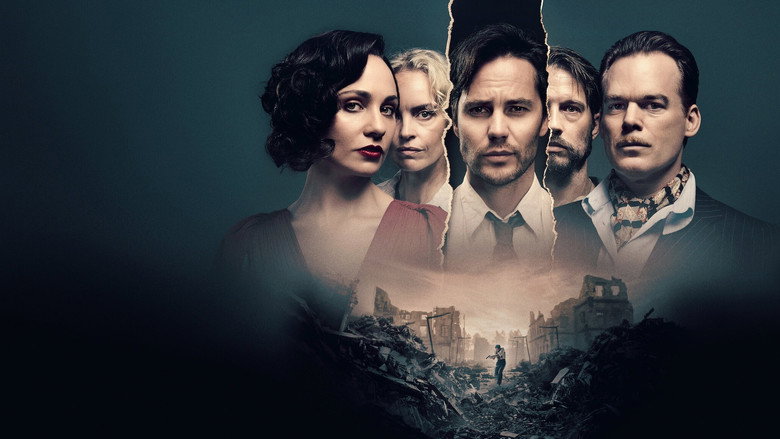
While Kitsch and Hoss anchor the series, the ensemble cast adds depth to Shadowplay’s morally complex world. Michael C. Hall (Dexter) plays Tom Franklin, a morally ambiguous American intelligence officer, while Sebastian Koch (The Lives of Others) portrays a former Nazi officer navigating the new world order. The tension between these characters—each with their own agendas—drives much of the show’s intrigue.
Logan Marshall-Green and Tuppence Middleton round out the cast as a pair of journalists uncovering Berlin’s secrets, their roles adding a layer of investigative urgency to the narrative. Behind the scenes, the actors reportedly bonded over the show’s themes of redemption and survival. "We all felt the weight of the story," Kitsch said, though specifics about their off-camera dynamics remain scarce.
Shadowplay’s trailer promises a slick, action-packed thriller, and early buzz suggests the series delivers on atmosphere. Yet some critics have questioned whether the show’s stylish execution overshadows its narrative depth. The evidence doesn’t clarify how the story resolves—or if it fully grapples with the historical weight it carries. What’s clear is that the cast’s commitment to their roles, particularly Kitsch and Hoss’s performances, gives the series an undeniable edge.
For fans of post-war dramas like Babylon Berlin or The Man in the High Castle, Shadowplay offers a fresh, if familiar, take on a fractured world. Whether it transcends its genre trappings remains to be seen—but the on-set energy suggests it’s a project the cast believed in.
Entertainment rumors and trivia aggregated from public reporting. Treat speculation as unverified unless a cited source confirms it.
More titles in the same genres and with the same cast.