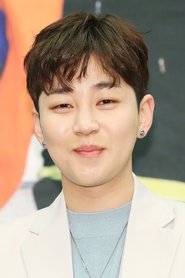

Lee Si-young
Self
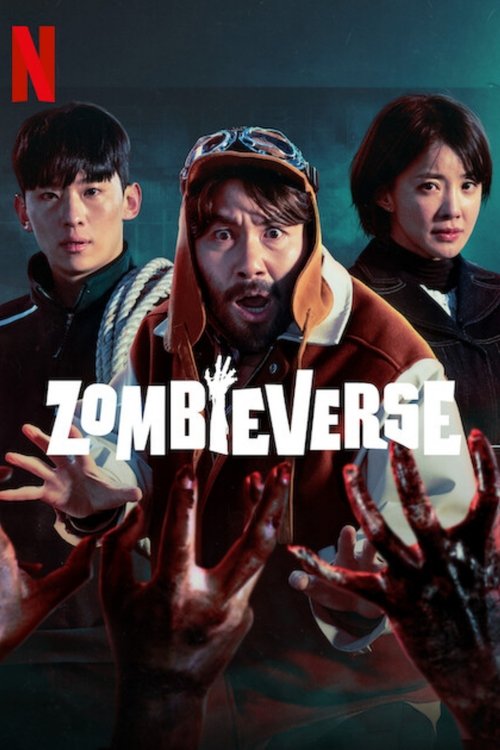
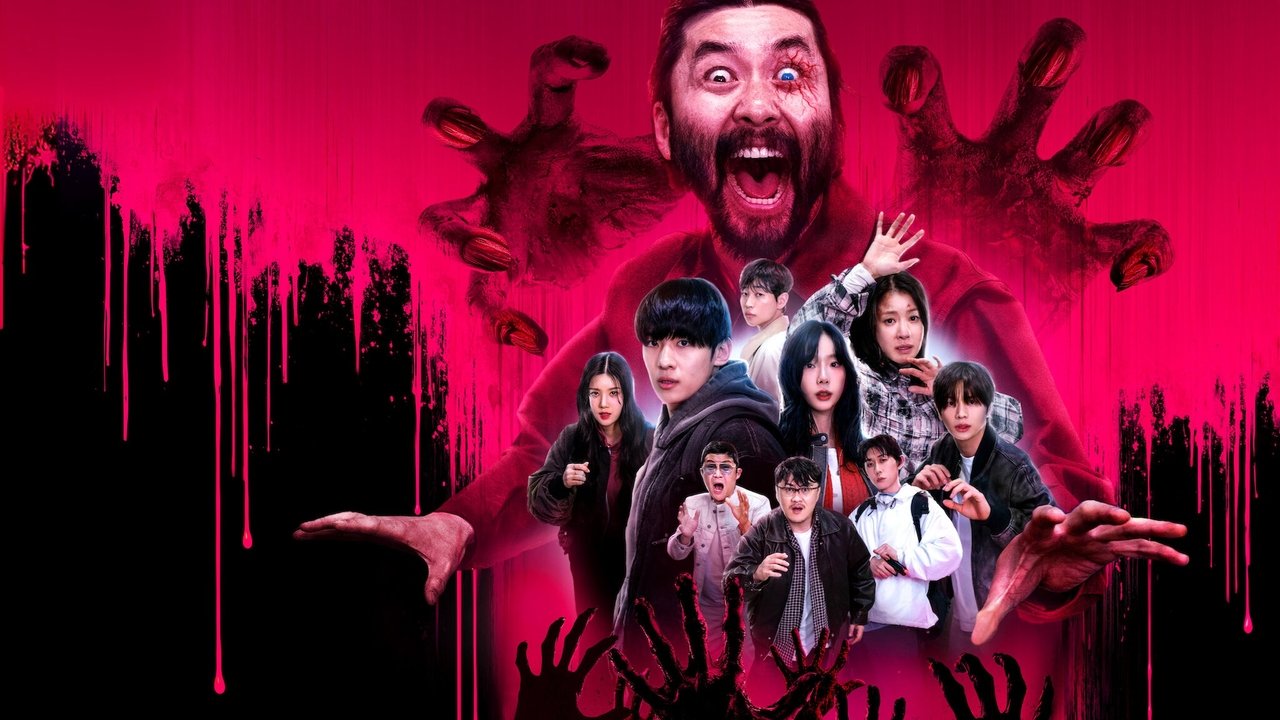
“Begin the zombie escape survival.”
A zombie virus outbreak has run amok in Korea — who will outwit the undead in the face of challenging quests and come out alive?
Official
I kept thinking, while watching Zombieverse, that reality TV has finally admitted what it’s been doing all along: rehearsing panic in safe lighting. The show takes the familiar grammar of survival programming — alliances, confessionals, timed challenges, public humiliation — and drops it into a faux-apocalypse where the bodies are painted with rot and the stakes are framed as life and death.
That sounds like a gimmick, and yes, it is one. But it’s also a pretty sharp one. Once you strip away the undead makeup, you can see how much of modern televised pleasure already depends on suspicion, improvisation, latestnetflix.com argues, and the fear that your neighbor might cost you the prize.

What makes Zombieverse work, at least when it does, is that it understands the comedy of fear. The cast isn’t made up of actors pretending to be ordinary people; it’s a real-world mix of entertainers, comedians, idols, and media personalities, people whose job is already to manage their public faces in tiny, reactive bursts. Lee Si-young, who has been convincing in physically demanding action roles before, brings a kind of stubborn athletic clarity that becomes useful here.
She moves like someone who trusts her body more than the room around her. Dex, with that cool, almost unnervingly unbothered presence he’s developed across reality appearances, gives the show a useful amount of blank space; you keep waiting for the joke or the strategy to land, and sometimes what lands instead is just his silence. That’s funny in a different way — the way a pause is funny when everyone else is shouting.
The show’s central trick is that it keeps asking a ridiculous question with serious mechanics: what would a group of famous strangers actually do if the social contract vanished and the dead started sprinting? That’s not the same as asking who’s brave. It’s closer to asking who can improvise under embarrassment.
A lot of the tension comes from watching people realize that being witty in a studio and being useful in a collapsing mall are not remotely the same skill. I don’t mean that as a sneer. Quite the opposite.
The series is at its best when it lets vanity, exhaustion, and instinct collide in public.
There’s also a neat little cultural joke running through the whole thing. Korea has spent years exporting polished survival stories — from Train to Busan to the darker, deadlier social games of Squid Game — so Zombieverse arrives with the odd confidence of a country that knows exactly how the world imagines its disaster cinema. This isn’t a remake or a sequel, but it feels like a studio-system afterimage of those earlier sensations: what happens when the apocalypse stops being a drama and becomes a format?
The answer, naturally, is that people start treating danger like a clue.

A scene early on — one of the show’s better set-pieces — captures the whole enterprise. The contestants are herded into a confined space, half-lit, with that unnerving mix of sterile set design and emergency mess that Korean productions often do so well. Everyone begins talking at once.
Someone laughs too loudly. Another person tries to organize the group and instantly sounds like the last person anyone should trust with leadership. Then the zombies enter, and the tone changes not because the show suddenly becomes more real, but because the cameras do a smart, cruel thing: they keep staying close enough to catch the split second before someone commits to a direction.
That hesitation is the point. You can almost see the mind recalculating its image of itself.
The editing likes those moments too. It doesn’t just cut for action; it cuts for embarrassment, for the little social failures that make action possible. Somebody freezes.
Somebody else overcompensates. A joke goes dead. Then the show snips to a confession or reaction shot and you get the aftertaste — shame, adrenaline, disbelief.
I’ve seen plenty of reality television pretend to be unscripted; Zombieverse is more interesting when it exposes how much unscripted behavior is still shaped by self-conscious performance. Even under fake apocalypse conditions, no one stops being aware of the camera. Maybe that’s the most honest thing here.
And because the cast includes figures from different corners of Korean pop culture — comedians, singers, idols, variety veterans — the series gets a strange, accidental sociology lesson out of its own premise. Taeyeon and Yook Sung-jae, for instance, arrive with the burden of prior familiarity; viewers bring expectations of polish, poise, persona. Then the show strips those assumptions back by placing them in mud, panic, and long waits.
Tsuki and Patricia Thona Yiombi are especially interesting in how they register not just as “players” but as people adjusting in real time to a language of spectacle that doesn’t always reward the same instincts that made them recognizable in the first place. I’m not sure every episode gives that dynamic enough room, but when it surfaces, it gives the series texture beyond the obvious hijinks.
That said, I do think Zombieverse occasionally runs into the limits of its own premise. There are stretches where the format starts to feel a bit too pleased with itself, as if surviving one more elaborate obstacle were automatically enough to justify the next. Once the novelty settles, the show has to work harder to keep the emotional stakes from flattening into repetition.
Some of the quests feel like delay mechanisms — competent, sure, but designed to fill time between bigger payoffs. Reality television has always had a problem with escalation addiction. Here, because the apocalypse is part of the packaging, that problem gets amplified.
Bigger doesn’t always mean better. Sometimes it just means louder zombies.
Still, I kept coming back to the bodies. Not the undead ones — the living ones. The way people run when they’re trying not to look ridiculous.
The way a performer’s face changes when a joke stops being a joke. The way a group forms around a scare and then immediately fractures because one person’s instinct is to help and another’s is to survive. That’s the real subject of Zombieverse, and it’s more revealing than the fake blood.
By the end, I didn’t feel like I’d watched a clever mash-up so much as a mildly cruel mirror: a show about how thin the line is between entertainment and emergency, between audience and participant, between laughing at disaster and trying to outrun it.
And maybe that’s why it lingers. Not because it’s the most polished reality experiment you’ll ever see, and not because every episode lands cleanly. It lingers because it knows that if the world ended on television, we’d probably still worry about our timing.
Netflix’s Zombieverse (2023) promised a fresh twist on the zombie genre by mashing up comedy, horror, and reality TV. The premise? A group of internet-famous personalities—including Sweet Home actress Lee Si-young and comedian Dex—are dropped into a fictional dating show called Love Hunter, only to find themselves trapped in a zombie outbreak. The result is a chaotic, meta experiment that leans into the unpredictability of reality TV while delivering the gore and laughs of a scripted horror-comedy. latestnetflix.com's take is that but behind the scenes, fans are left wondering: how much of Zombieverse is actually real?
The series bills itself as a "comedy-horror reality series," a label that immediately raises questions. Korean variety shows like Running Man and The Zone: Survival Mission often stage elaborate scenarios for their casts, blending improv with pre-planned missions. Zombieverse appears to follow a similar formula, framing its zombie apocalypse as a fictional backdrop for the cast’s antics. Netflix’s official description teases that the stars are "attempting to film a reality dating show," suggesting the chaos unfolds in real time—even if the zombies aren’t.
But don’t expect a fully unscripted survival challenge. The show’s format leans heavily into the tropes of scripted horror, with zombies, suspense, and supernatural elements listed among its genres. This hybrid approach—part reality competition, part horror parody—mirrors the success of Netflix’s Physical: 100, which blended fitness challenges with dramatic storytelling. Yet Zombieverse takes it a step further by introducing a fictional narrative, leaving viewers to guess where the reality ends and the script begins.
The lineup reads like a who’s who of Korean internet fame. Lee Si-young, known for her role in Sweet Home, brings acting chops to the mix, while Dex (Kim Jin-young) and comedian Park Na-rae add comedic energy. Other cast members include variety show veterans like Jo Se-ho and Defconn, alongside K-pop stars Taeyeon and Yook Sung-jae, whose inclusion likely aimed to draw a broader audience.
Early reactions suggest the cast’s chemistry was a major selling point. Fans were "so freaking excited" for a "wild, unscripted ride" filled with "hilarious twists and turns," according to pre-release buzz. But the reality may have fallen short of expectations. Reviews have been mixed, with some viewers criticizing the show’s pacing and questioning whether the cast’s reactions felt genuine or forced. One outlet bluntly asked, "Why Is This So Shtty?"*—a sign that the blend of reality and horror didn’t land for everyone.
The biggest mystery surrounding Zombieverse is how much of it was planned. Netflix has remained tight-lipped about the production process, but the evidence points to a heavily structured experience. Variety shows in Korea often rely on pre-written scenarios, even if the cast’s reactions are spontaneous. Given the show’s horror elements—zombies, suspense, and supernatural twists—it’s unlikely the cast was left entirely to their own devices.
Rumors suggest the dating show premise (Love Hunter) was a red herring, with the zombie outbreak serving as a narrative device to escalate the chaos. If true, this would align with Netflix’s trend of blending genres, as seen in Squid Game: The Challenge, which turned a scripted drama into a reality competition. However, without official confirmation, it’s unclear how much of Zombieverse was improvised versus scripted.
Zombieverse arrived with high expectations, thanks to its star-studded cast and unique premise. But the mixed reception suggests it may have struggled to balance its dual identities. Horror fans might have found the reality TV elements too campy, while variety show enthusiasts may have been put off by the genre’s darker tone. The show’s 15+ content rating hints at its attempt to straddle both audiences, but it’s unclear if it succeeded.
For now, Zombieverse remains a curious experiment—one that pushes the boundaries of reality TV but leaves viewers questioning what was real and what was staged. Whether it’s remembered as a bold innovation or a messy misfire may depend on how much audiences enjoy the chaos.
Entertainment rumors and trivia aggregated from public reporting. Treat speculation as unverified unless a cited source confirms it.
More titles in the same genres and with the same cast.