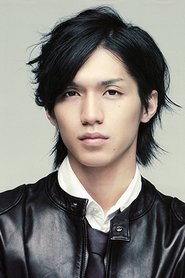
Yuumi Kawai
Nami Kishimoto

Between grief, school woes and family chaos, self-conscious teen and budding writer Nanami copes the only way she knows — with laughter and tears.
I’ve been thinking about the title for days. I Didn’t Love You Because I Was a Family, But I Loved You as a Family—it’s a mouthful, the kind of phrase that feels like it was translated by someone who understood the weight of the words but not the rhythm of English. And yet, it’s perfect. Not because it’s elegant, but because it’s honest.
It doesn’t try to pretty up the mess of love, the way families are both a burden and a salvation, often in the same breath. This is a show that understands that contradiction, and it lives inside it, unafraid.
The first time I watched Nanami Kishimoto (Yuumi Kawai) stare at her reflection in a fogged-up bathroom mirror, I recognized her immediately. Not because I’ve lived her exact life—her father is dead, her mother uses a wheelchair, her brother Sota has Down syndrome, and her grandmother’s memory is slipping—but because I’ve felt that same exhaustion, that same flicker of resentment followed by shame.
The show doesn’t ask for pity. It doesn’t even ask for understanding, not really. It just asks you to sit with the discomfort of loving people who drive you crazy, and the even greater discomfort of admitting that sometimes, you wish you didn’t have to.
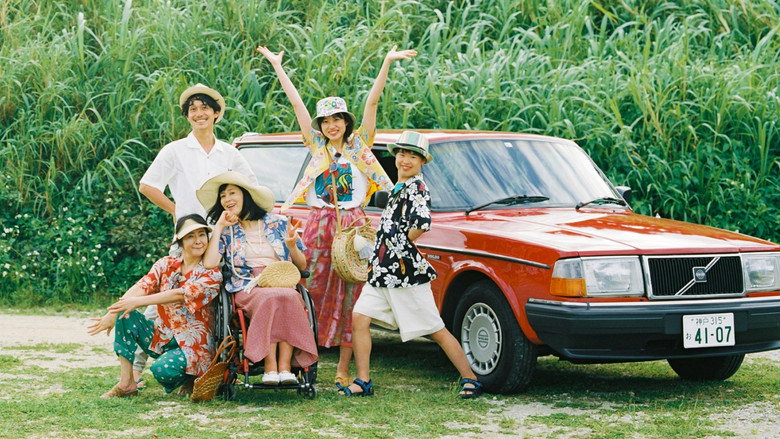
Akiko Ohku, the director and co-writer, has built her career on stories that refuse to let their characters off the hook. Her 2017 film Tremble All You Want was a masterclass in awkwardness, a rom-com where the protagonist’s internal monologue was so loud it drowned out the actual dialogue. Here, she applies that same unflinching gaze to family dynamics, but with a softer touch.
The result isn’t a documentary—it’s too stylized for that, with its sudden cuts to Nanami’s daydreams and the way the camera lingers on small, telling details—but it feels like one. Maybe that’s because the series is based on the autobiographical essays of Nami Kishida, or maybe it’s because Ohku has a knack for making fiction feel like a confession.
Akiko Ohku’s 2023 series I Didn’t Love You Because I Was a Family, But I Loved You as a Family has quietly become a standout in Japan’s drama landscape, blending raw emotion with the messy, unpredictable nature of real-life relationships. While the title itself—clunky in translation but poetic in intent—hints at the show’s central theme, the behind-the-scenes details reveal why this series resonates so deeply with audiences.
Unlike many tearjerker dramas that rely on exaggerated melodrama, I Didn’t Love You Because I Was a Family draws its power from authenticity. According to early reactions, the series is "based on a real family," a detail that sets it apart from typical scripted fare. This grounding in reality may explain why the emotional beats land harder than expected—viewers aren’t just watching a fictional tragedy but a reflection of lived experiences. Of course, the exact real-life inspiration remains unconfirmed, leaving fans to speculate about which moments mirror true events.
The show’s tone is another point of intrigue. While it tackles heavy themes, it doesn’t shy away from comedy, a balance that initially threw some viewers off. As one early review noted, "it could be hard for some people to get into with some of the comedic aspects of it," though most adjust by the second episode. This tonal tightrope—oscillating between heartbreak and humor—mirrors the unpredictability of family life itself, a choice that likely stems from Ohku’s directorial vision.
Akiko Ohku, known for her nuanced storytelling, not only directed the series but also co-wrote it alongside screenwriter Ayako Suzuki. This dual role suggests a hands-on approach, ensuring the script’s emotional core aligns with the visual and narrative execution. Ohku’s previous work, which often explores complex relationships, makes her a natural fit for a series about love, loss, and the meaning of family.
The cast, led by Yuumi Kawai and Miki Sakai, brings a mix of seasoned and rising talent to the table. Ryo Nishikido, a familiar face in Japanese dramas, and Kento Hayashi, known for his versatility, round out the ensemble, though specifics about their characters or on-set dynamics remain scarce. Without concrete behind-the-scenes anecdotes, it’s unclear whether the cast’s chemistry was immediate or cultivated over time—but the final product suggests a cohesive effort.
For international audiences, the series is accessible on platforms like Netflix, with additional streaming options available depending on the region. Its availability on major services hints at confidence in its appeal beyond Japan, though whether it gains a global following remains to be seen.
What’s clear is that I Didn’t Love You Because I Was a Family isn’t just another family drama. Its blend of realism, emotional depth, and tonal complexity makes it a standout—even if the behind-the-scenes details are still emerging. For now, fans are left to dissect the series’ layers, waiting for more insights into the creative process that brought it to life.
Entertainment rumors and trivia aggregated from public reporting. Treat speculation as unverified unless a cited source confirms it.
More titles in the same genres and with the same cast.