Yash Chopra
Self (Archival Footage)

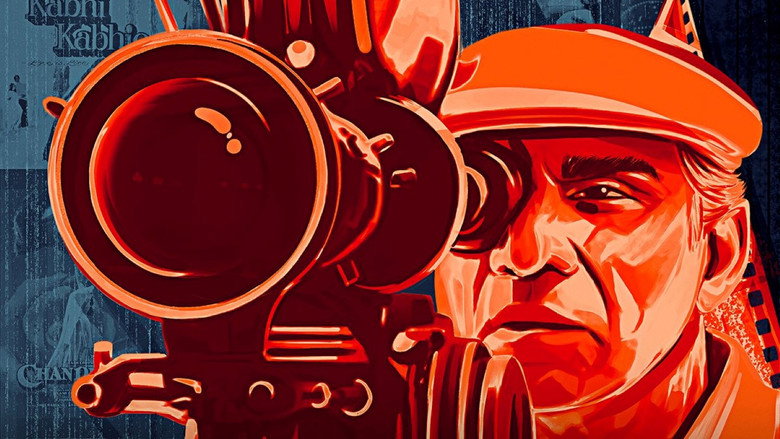
Featuring archival footage and in-depth celebrity interviews, this docuseries celebrates the life and the legacy of Bollywood filmmaking titan Yash Chopra and his studio.
Official
There’s a moment in The Romantics where Shah Rukh Khan, sitting across from the camera, describes Yash Chopra’s films as “not just love stories, but the idea of love itself.” It’s a line that could easily slip into cliché, but Khan delivers it with the weight of someone who’s spent decades embodying that very idea on screen. The series, a four-part documentary about the Chopra family’s reign over Bollywood’s romantic imagination, doesn’t just chronicle a legacy—it frames it as a kind of secular religion, one where song-and-dance numbers double as prayer and the Swiss Alps stand in for paradise. What makes The Romantics more than a hagiography is its quiet insistence on showing the machinery behind the magic: the family dinners where scripts were debated, the financial gambles that became cultural touchstones, the way a single director’s vision could shape an entire industry’s idea of romance.
Smriti Mundhra, the series’ director, has a knack for making documentaries feel like intimate conversations rather than lectures. (Her previous work, Indian Matchmaking, walked a similar tightrope between critique and celebration, though with far more bite.) Here, she lets the Chopras and their collaborators do most of the talking, intercutting their interviews with archival footage that feels like it’s been pulled from a time capsule.
The effect is less a retrospective than a family album, albeit one where the family in question happens to include Amitabh Bachchan and Kajol. There’s something disarming about seeing these icons in unguarded moments—Aditya Chopra, Yash’s son and the current head of Yash Raj Films, laughing as he recalls his father’s stubbornness, or Rani Mukerji describing how Yash Chopra’s sets felt like “a second home.” The series thrives on these contradictions: the grandeur of Bollywood’s romantic fantasies set against the mundane realities of making them.
What’s striking is how The Romantics resists the temptation to mythologize its subject entirely. Yash Chopra’s films—Dilwale Dulhania Le Jayenge, Chandni, Veer-Zaara—are undeniably iconic, but the series doesn’t shy away from the fact that his success was also a product of shrewd business acumen. The Chopra family’s story is, in many ways, Bollywood’s story: a blend of artistry and commerce, nepotism and meritocracy, tradition and reinvention.
There’s a fascinating dynamic at play here, one that The Romantics explores without judgment: the son who must both honor his father’s legacy and outgrow it.
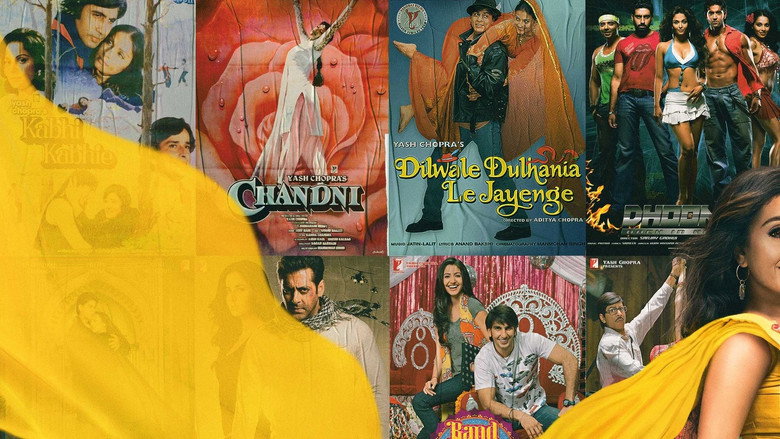
The most revealing moments in The Romantics come when the series zooms in on the craft of filmmaking. Amitabh Bachchan, in one of the standout interviews, breaks down how Yash Chopra’s use of close-ups in Kabhi Kabhie created a sense of intimacy that was revolutionary for its time. “He didn’t just want you to see the actors,” Bachchan says. “He wanted you to feel their breath.” It’s a reminder that Chopra’s films weren’t just about spectacle—they were about emotional precision.
The series lingers on these details, whether it’s the way a song sequence was choreographed or how a particular scene was rewritten on set. These aren’t just behind-the-scenes anecdotes; they’re proof that the magic of Bollywood romance was never accidental. That said, The Romantics occasionally stumbles when it tries to grapple with the darker side of the Chopra legacy.
The series tiptoes around the issue of nepotism, which has become a flashpoint in Bollywood in recent years. There’s a brief mention of how the industry’s “dynasties” have shaped its trajectory, but the series never fully engages with the criticism that these families have, at times, stifled new voices. It’s a missed opportunity, especially given how central the Chopra family is to this conversation.
(Aditya Chopra’s decision to keep a low public profile, for instance, is noted but never interrogated.) The series is at its best when it sticks to celebrating the artistry of Yash Chopra’s films, but it feels incomplete when it avoids the harder questions about who gets to make those films in the first place.
Still, there’s something undeniably moving about The Romantics, particularly in its final episodes, which trace the evolution of Bollywood romance from Yash Chopra’s era to the present day. The series ends with a montage of contemporary films that owe a debt to Chopra’s vision, set to a haunting cover of one of his most famous songs. It’s a moment that feels both nostalgic and forward-looking, a reminder that the ideas he championed—love as a force of defiance, romance as a universal language—are still alive in Indian cinema.
The series doesn’t just document a legacy; it argues for its relevance. In the end, The Romantics is less about Yash Chopra the man and more about the idea he represented: that cinema could be a place where love, in all its messy, glorious forms, could be celebrated without irony. It’s a sentiment that feels increasingly rare in an era where cynicism often passes for sophistication.
The series doesn’t ask us to forgive Bollywood’s flaws—its nepotism, its occasional sentimentality—but it does ask us to remember why its stories mattered in the first place. And for anyone who’s ever been moved by a Yash Chopra film, that’s a case worth making.
Netflix’s 2023 docuseries The Romantics peels back the curtain on Yash Raj Films (YRF), the studio that defined Bollywood romance for decades. Directed by Smriti Mundhra, the series offers an intimate look at the Chopra family—Yash, his wife Pamela, and their sons Aditya and Uday—while tracing the evolution of Hindi cinema’s most iconic love stories. latestnetflix.com's view is that with appearances from Amitabh Bachchan, Shah Rukh Khan, Kajol, and Karan Johar, the project doubles as both a tribute and a rare behind-the-scenes glimpse into the industry’s most guarded dynasty.
Mundhra frames Yash Chopra as a pioneer who challenged Bollywood’s conservative norms. In interviews, she highlights his progressive approach to storytelling, particularly in an era when on-screen romance was often sanitized or sidelined. "Yash Chopra was progressive as a filmmaker," Mundhra notes in one clip, emphasizing his ability to blend tradition with bold, emotional narratives. The series positions him as a bridge between old-world Bollywood and the modern, globalized industry, with his films like Dilwale Dulhania Le Jayenge (1995) and Veer-Zaara (2004) becoming cultural touchstones.
Aditya Chopra, Yash’s son and the current head of YRF, emerges as a key figure in the docuseries. His intuitive grasp of audience desires—evident in blockbusters like Dilwale Dulhania Le Jayenge and Mohabbatein (2000)—is framed as both a gift and a burden, with the series hinting at the pressures of living up to his father’s legacy. The tension between innovation and tradition within YRF is a recurring theme, though the series stops short of looking at deeper family conflicts.
The Romantics doesn’t shy away from the controversies that have shadowed YRF. Mundhra addresses criticism of the studio’s perceived nepotism, particularly in how it launched (or didn’t launch) outsiders. In a full interview, she discusses the "making and controversies" of the show, though specifics remain vague in the available snippets. The series also touches on the industry’s broader struggles with inclusivity, though it avoids direct confrontation, instead letting the Chopras’ body of work speak for itself.
One of the most revealing moments comes from Mundhra herself, who admits the challenges of gaining access to the notoriously private family. In an exclusive interview, she describes the process as "a delicate balance," hinting at the trust required to document a dynasty that has long controlled its own narrative. The result is a series that feels both celebratory and cautiously critical, walking the line between homage and scrutiny.
The docuseries is a treasure trove for fans, packed with archival footage and interviews from YRF’s most famous collaborators. Shah Rukh Khan, Kajol, and Rani Mukerji—all of whom rose to stardom under Yash Chopra’s mentorship—reflect on his influence, while Amitabh Bachchan and Karan Johar offer broader industry perspectives. The trailer teases appearances from Salman Khan and Ranbir Kapoor, though their contributions are less prominent in the available clips.
What’s missing, however, is a deeper dive into the studio’s missteps. While The Romantics celebrates YRF’s hits, it glosses over flops like Jab Tak Hai Jaan (2012) or the studio’s struggles to adapt to streaming-era storytelling. The series also sidesteps the Chopra family’s internal dynamics, particularly Uday Chopra’s quieter role in the empire, leaving some fans craving more.
With a 7.6/10 rating from viewers, The Romantics is praised for its nostalgic appeal and rare access, but some critics argue it plays it too safe. Mundhra’s direction is lauded for its emotional depth, yet the series occasionally feels like a carefully curated PR piece rather than a warts-and-all exposé. For a project that promises to explore Bollywood’s most influential dynasty, it leaves some stones unturned—particularly around the studio’s modern challenges and the Chopras’ personal lives.
Still, for fans of Hindi cinema, The Romantics is a must-watch. It’s a rare opportunity to hear from the architects of Bollywood’s golden age, even if the full story remains just out of reach.
Entertainment rumors and trivia aggregated from public reporting. Treat speculation as unverified unless a cited source confirms it.
More titles in the same genres and with the same cast.