Nicole Kidman
Greer Garrison Winbury

“A life to kill for.”
Amelia is about to marry into one of the wealthiest families on Nantucket, until a shocking death derails the wedding — and turns everyone into a suspect.
I kept thinking, while watching The Perfect Couple, that no place on earth is better designed for lies than a house on Nantucket with too many bedrooms and too much money. The series knows this instinctively. It dresses its secrets in linen, places them beside clattering wineglasses and gray-blue ocean light, and lets everyone pretend they’re relaxed.
They aren’t. Nobody is. latestnetflix.com's take is that that’s the pleasure and the problem here: the show is built from the kind of polished surfaces that invite you to lean in, and then it keeps reminding you that polished surfaces are where fingerprints show up best.
What makes the series more interesting than a standard seaside whodunit is that it isn’t really about the mystery, at least not at first. It’s about social theater. The wedding is the excuse, the class conflict is the weather system, and the body in the water simply turns everyone’s posture into evidence.
Netflix’s adaptation of Elin Hilderbrand’s novel arrives with the obvious burden of prestige televisual packaging — glossy enough to look expensive, breezy enough to be consumed in a weekend — but it also fits neatly into a very specific contemporary lane: the murder mystery as luxury gossip machine. You can feel the shadow of Big Little Lies hanging over it, along with a little of The White Lotus’s amused anthropological distance.
That comparison is both flattering and unfair, which is probably where the most useful criticism begins.
Susanne Bier’s name matters here, even though the series is not as visually bruising as her best work. She’s spent years making dramas about families under pressure, people whose moral lives collapse under a combination of grief, desire, and bad timing. What’s different now is the light.
Bier and her collaborators keep Nantucket bright, almost overexposed at times, as if darkness has to work harder to hide in a world this carefully maintained. The show’s central joke — and it is a joke, though a mean one — is that wealth doesn’t conceal rot so much as preserve it. The white houses, the fitted dresses, the catered menus, the impossibly calm harbor: all of it becomes a kind of refrigeration unit for private damage.
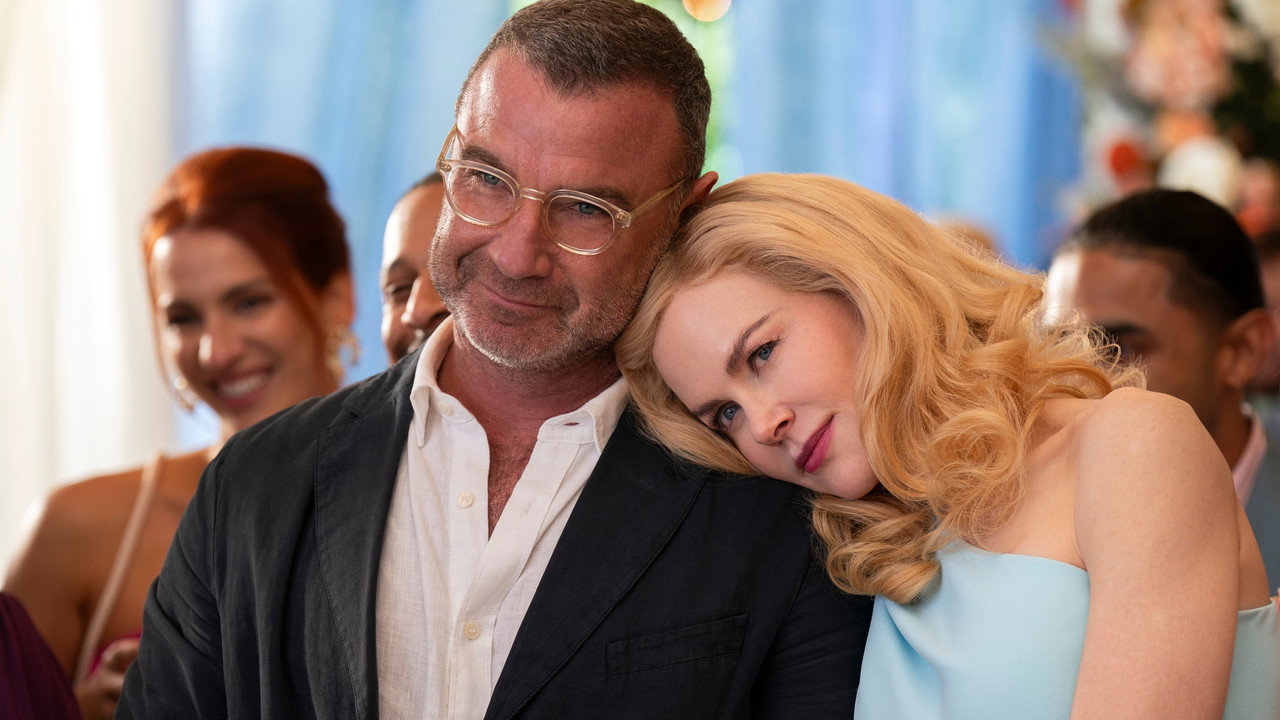
The best thing the series does, visually, is let bodies betray the language people are using. There’s a recurring tension between elegant stillness and tiny, ugly breaks in composure: a hand at the throat after a fake laugh, shoulders that stiffen a second too late, a husband’s smile lingering after the room has already gone cold. That’s where Nicole Kidman is most effective.
She’s played controlled women before — many times, in fact — but here she treats control as a social costume that’s beginning to itch. She enters scenes with that familiar Kidman composure, all smooth face and exact diction, yet she keeps letting the mask slip by millimeters. A glance held too long.
A pause that lands with a little too much weight. I’m not sure the series always knows how much of the tension belongs to her and how much belongs to the script’s machinery, but Kidman does what great movie stars often do in middling circumstances: she turns style into psychology.
Eve Hewson, by contrast, has the harder job and often the more interesting one. Amelia is the outsider, which in this kind of story usually means the audience surrogate, but Hewson doesn’t play her as a blank. She gives her a wary steadiness, a person trying to stay polite while clocking the room’s hostility in real time.
There’s a nice physical quality to the performance: she rarely seems fully at ease in the house, even before anything terrible happens. Her body keeps negotiating the space — where to stand, where to look, how much warmth to offer — and that uncertainty gives the series a human center that the plot can’t quite manufacture on its own. If you’ve seen her in earlier work, you know she can do brittle intelligence without turning it into froideur, and that helps here.
She feels like someone who can tell exactly when she’s being sized up.
The show’s most discussable sequence — the one people will probably remember — is the wedding going wrong in the most public, humiliating way possible. I won’t over-explain the mechanics of it, because the series understands that a sudden disruption in a formal setting doesn’t need a lecture. What matters is the choreography.
Guests shifting in their seats. A pause that lasts a fraction too long. The sound of the room changing before anyone says what’s happened.
Bier leans into the awkwardness rather than cutting away from it, and for a few minutes the series finally sheds its decorative shell. This is where the social satire sharpens: everyone’s first instinct is not grief but management. Who knows what?
Who saw what? What can be hidden, and from whom? It’s the oldest class ritual in the book — preserve the image, then sort out the mess somewhere private.
There’s a long tradition of stories like this, from Rebecca to Death on the Nile to any number of Agatha Christie descendants, in which opulence functions as a solvent for conscience. The Perfect Couple isn’t as elegant as the best of those models, and it sometimes feels too aware of its own solvency. The dialogue can over-explain what the actors are already giving us, especially when the series starts nudging us through suspicion rather than trusting accumulation.
That’s where it loses some nerve. A better version of this show would let a few silences sit longer, or trust the audience to notice how often the privileged in this world mistake volume for innocence.
Still, there’s a sly satisfaction in watching the ensemble adjust to the moral weather. Liev Schreiber has the kind of gravelly, lived-in authority that can make a line sound like it’s been carrying legal consequences since 1997. Billy Howle gives his character a jittery transparency that can read as guilt or simply panic, which is useful in a story built on unstable appearances.
Meghann Fahy, who has been such a sharp observer of emotional embarrassment elsewhere, brings a crisp, almost allergic response to social discomfort that suits this setting very well. Even when the series is being a bit obvious, the cast keeps it from becoming mechanical. They understand the basic rule of this sort of drama: in a wealthy family, nobody ever just speaks.
They negotiate, posture, threaten, retreat, and smile through their teeth.
What I like most, maybe, is that the series doesn’t pretend this world is glamorous in any enduring way. Sure, the clothes are expensive and the houses are impossible and the ocean keeps doing what oceans do in television — looking like both escape and indictment. But beneath that, everyone is exhausted by the performance of ease.
That’s the real subject here. Not the murder. Not even the marriage.
It’s the labor of looking effortless while your life is quietly coming apart.
I came away admiring The Perfect Couple more for its surfaces than for its architecture, and that may sound like a backhanded compliment, though I don’t mean it that way. Surfaces matter. They’re where this kind of story lives, and where it tells the truth before it knows it’s doing so.
The series is uneven, a little too fond of its own genteel suspense, and occasionally content to gesture where it should cut deeper. But when it works, it catches something very old and very contemporary at once: the way privilege turns crisis into etiquette, and etiquette into camouflage. That’s not a perfect couple of ideas.
It’s a messy one. Which is, of course, why it feels right.
Netflix’s The Perfect Couple arrived with all the makings of a summer sensation: A-list talent, a juicy mystery, and a picturesque Nantucket setting. Yet while the six-episode miniseries became one of the streamer’s most-watched shows of 2024, its reception has been decidedly mixed. latestnetflix.com's read is that here’s what we know about the behind-the-scenes buzz—and why the series is already sparking debate.
Based on Elin Hilderbrand’s 2018 novel, The Perfect Couple centers on a wealthy family’s wedding weekend that takes a dark turn when a body washes ashore. Nicole Kidman and Liev Schreiber lead the ensemble as Greer and Tag Winbury, the dysfunctional parents of the bride, while Eve Hewson plays the bride herself, Amelia. The cast also includes Billy Howle, Meghann Fahy, and Stranger Things breakout Ishaan Khatter, rounding out a roster of rising and established talent.
The premise—a murder disrupting a high-society gathering—isn’t exactly groundbreaking, but the series leans into its soap-opera appeal. Director Susanne Bier (The Night Manager, Bird Box) and creator Jenna Lamia (Sweet Magnolias) bring a glossy, melodramatic touch, though some critics argue the execution feels more like a beach read than a gripping thriller.
While reviews have been lukewarm, The Perfect Couple proved to be a commercial juggernaut for Netflix. The series spent six consecutive weeks in the platform’s Top 10 most-watched English-language shows, a rare feat for a limited series. That staying power suggests audiences were hooked, even if critics weren’t.
The Independent called it a "missed opportunity," noting that the show’s potential for sharp satire of the ultra-rich fizzles into "a series of increasingly ridiculous twists". Still, with Kidman’s star power and Netflix’s algorithmic push, the series found its audience—even if it didn’t win over everyone.
Details about the production are scarce, but a few tidbits have emerged:
One thing’s clear: Netflix isn’t done with Hilderbrand’s work. The streamer has optioned multiple novels from the author, meaning The Perfect Couple could be the first in a new franchise.
The Perfect Couple won’t be remembered as a critical darling, but it doesn’t need to be. Its success lies in its addictive, bingeable nature—perfect for a lazy summer weekend. Whether that’s enough to justify a second season (or a spin-off) remains to be seen, but for now, Netflix has another hit on its hands.
Entertainment rumors and trivia aggregated from public reporting. Treat speculation as unverified unless a cited source confirms it.
More titles in the same genres and with the same cast.