

Guy Menaster
Dean

Dean, a young teen living with his mother and younger brother, prepares to turn in for the night when a knock on the door changes his life forever. Correctional officers storm into his room and haul him, barely clothed, out of the house.
I’ve seen this story before. A kid gets swallowed by the system, spat out broken, and the camera lingers on the bruises like they’re the whole point. Bad Boy, the new eight-episode Israeli drama from Ron Leshem (one of the architects of Euphoria), doesn’t shy away from the brutality of juvenile detention—if anything, it leans into it. But what makes it worth watching isn’t the violence.
It’s the way it treats comedy not as relief, but as a lifeline. A way to breathe when the walls close in.
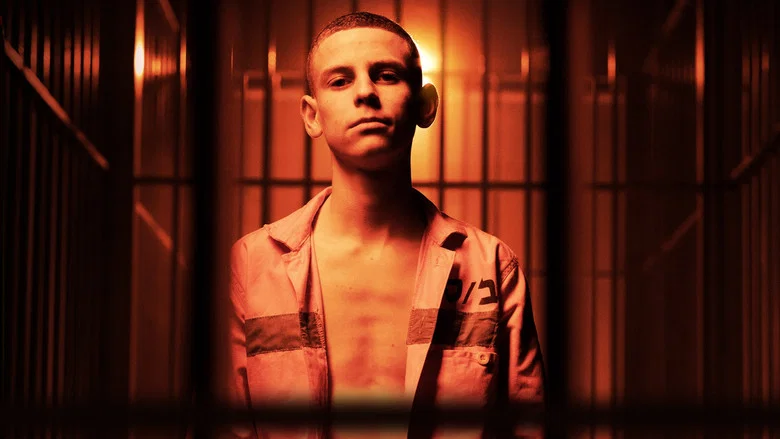
The series toggles between two timelines: Dean Shaiman (Guy Menaster), a 16-year-old in lockup, and his present-day self, played by Daniel Chen, the real-life comedian whose adolescence inspired the story. The past is all grimy close-ups and handheld camerawork, the kind that makes you flinch when a guard slams a door. The present is warmer, looser—stand-up clubs, laughter, the kind of freedom that feels earned.
But the show’s real trick is how it uses humor inside the detention center. Dean and his cellmate Zoro (Havtamo Farda) trade jokes like contraband, their laughter a quiet rebellion. It’s not that the jokes are good—most of them are terrible.
But they’re necessary. A way to mark time, to assert humanity when the system treats them like animals.
Leshem and his co-writers (including Chen) don’t romanticize this. The comedy doesn’t erase the horror. One scene lingers in my mind: Dean, mid-routine, suddenly freezes when a guard’s shadow falls across the rec room floor.
The punchline dies in his throat. The camera holds on his face as the laughter around him fades into silence. It’s a small moment, but it says everything about how fragile this survival tactic really is.
The show’s non-linear structure is its greatest strength and its biggest stumbling block. The past and present don’t just alternate—they bleed into each other. A joke Dean tells in the present echoes in the past, a memory of his mother’s voice cuts into a prison scene.
It’s effective, but only up to a point. The transitions can feel gimmicky, like the show is more interested in style than substance. (The occasional animated sequences, meant to represent Dean’s subjective experience, are the worst offenders—jarring and unnecessary.)
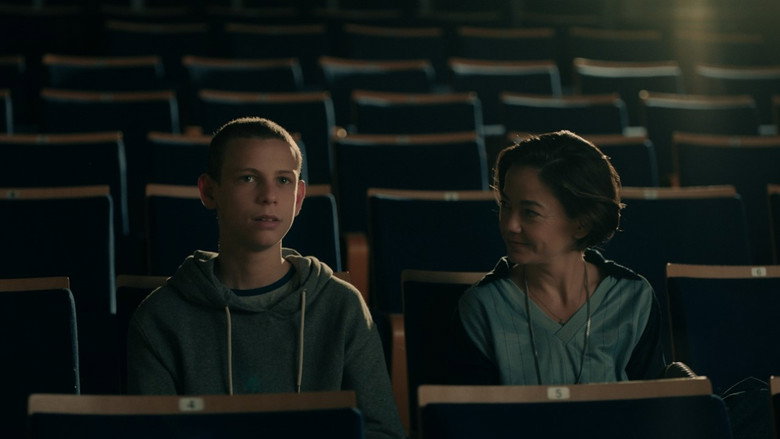
The performances, though, are electric. Menaster, a non-professional actor, carries the weight of the past with a rawness that’s hard to look away from. His Dean is all sharp edges—quick to anger, quicker to deflect with humor—but there’s a vulnerability there, too.
A scene where he breaks down in front of his mother (Bat-Chen Sabag) is devastating precisely because it’s so rare. He’s not a hero or a victim. He’s a kid who made mistakes and is paying for them in ways that will follow him long after he’s released.
Chen’s present-day version of himself is a fascinating counterpoint. He’s charming, successful, but there’s a hollowness to his laughter. The show doesn’t spell it out, but you can see it in the way he grips the microphone, in the way his eyes flicker when he talks about his past.
It’s the kind of performance that makes you wish the series had spent more time in the present, exploring the long tail of trauma.
The comparison to Euphoria is inevitable, but Bad Boy is messier, less polished. Where Euphoria glamorizes its characters’ pain, Bad Boy doesn’t flinch from the ugliness. The detention center is a grim, claustrophobic place, and the show doesn’t soften it.
The guards are cruel, the other inmates are dangerous, and Dean’s crimes—hinted at but never fully explained—hang over everything like a cloud. (The show’s reluctance to look at the specifics of his offenses is frustrating, but maybe that’s the point. The why doesn’t matter as much as the what now.)
The series has its flaws. The supporting characters are thinly drawn, the pacing lags in the middle episodes, and the tonal shifts can be jarring. But when it works, it works.
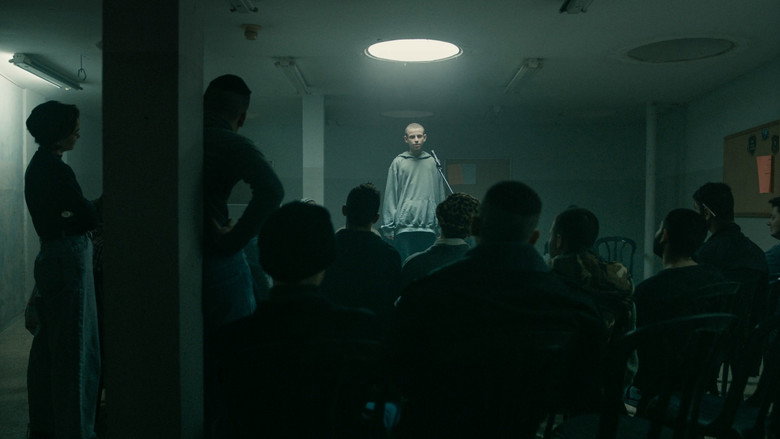
A late-season scene where Dean and Zoro perform an impromptu comedy routine for the other inmates is one of the most moving things I’ve seen in a while. Not because it’s funny—it’s not—but because it’s real. Two kids, trapped in a system designed to break them, finding a way to laugh anyway.
Collider called it “a grim yet graceful portrait of youth in peril,” and that’s about right. Bad Boy isn’t a perfect show, but it’s an honest one. It doesn’t offer easy answers, and it doesn’t let its characters off the hook. What it does do is remind you that survival isn’t just about enduring.
Sometimes, it’s about finding a way to laugh in the face of the thing that’s trying to destroy you.
I’m still thinking about that scene in the rec room. The way the camera lingers on the inmates’ faces—not just Dean and Zoro, but the ones watching them. Some are smiling. Some look like they’re about to cry. Most just look tired. But for a few minutes, they’re not prisoners. They’re an audience. And that’s enough.
"A gritty but uneven drama that struggles to escape the shadow of its influences, despite strong performances from its young cast."
The lead actors, particularly Guy Menaster and Daniel Chen, bring raw intensity and emotional depth, anchoring the series with compelling portrayals of troubled youth. But the story relies on familiar juvenile detention tropes and lacks narrative freshness, which underwhelms. The brutal tone and unflinching depiction of the setting are strengths, yet the execution often feels derivative, especially next to heavier hitters like *Euphoria*.
Netflix’s latest binge-worthy drama, Bad Boy (2024), has quickly become a talking point for its raw portrayal of teenage crime and incarceration. But what’s making headlines isn’t just the show’s intense storytelling—it’s the fact that the series is rooted in real-life events, with one of its stars playing a version of himself. latestnetflix.com's view is that here’s what we know about the show’s origins, its cast, and the dark inspiration behind its plot.
Bad Boy isn’t just another fictional crime drama. According to multiple sources, the series is based on the real-life experiences of co-creator Daniel Chen, who plays an adult version of himself in the show. The story centers on Dean Shaiman, a troubled teenager portrayed by Guy Menaster, whose criminal past during his youth forms the backbone of the narrative.
The series reportedly looks at the crimes committed by Shaiman, though specifics remain scarce in the available snippets. What’s clear is that the show’s authenticity is a major draw—viewers are getting a dramatized but grounded look at juvenile delinquency and its consequences. Comparisons to Netflix’s Adolescence have already surfaced, with critics praising Bad Boy for its unflinching exploration of male youth in crisis.
The creative team behind Bad Boy includes Ron Leshem, one of the original creators of HBO’s Euphoria, alongside Daniel Amsel, Hagar Ben-Asher, and Daniel Chen. Their involvement suggests a similar approach to Euphoria’s unfiltered storytelling, though Bad Boy shifts focus to the harsh realities of a juvenile detention facility.
The series premiered on Israeli cable channel Hot in November 2024 before landing on Netflix in May 2025, giving it a built-in international audience. While the exact number of episodes hasn’t been confirmed in the snippets, the show’s structure appears to revolve around the aftermath of a teen girl’s murder, with Dean Shaiman’s character at the center of the chaos.
The ensemble cast features a blend of rising Israeli talent and actors with personal ties to the story:
The casting of Chen—a real-life figure in the story—adds a layer of intrigue, blurring the line between fiction and reality. Whether other cast members have personal connections to the events depicted is unconfirmed.
The series’ blend of true crime and psychological drama has struck a chord with audiences. Early buzz highlights its unflinching look at the minds of incarcerated teens, particularly Dean Shaiman’s character, whose backstory is as compelling as it is disturbing. The show’s Israeli roots and its creators’ Euphoria pedigree have also fueled expectations for a visually striking, emotionally raw experience.
That said, details about the production itself—behind-the-scenes drama, filming challenges, or critical reception—are thin in the available snippets. What we do know is that Bad Boy is positioning itself as a must-watch for fans of gritty, character-driven storytelling.
Entertainment rumors and trivia aggregated from public reporting. Treat speculation as unverified unless a cited source confirms it.
More titles in the same genres and with the same cast.


