Back Home, Not Quite Safe
What I kept noticing in Love Next Door wasn’t the romance so much as the furniture. Not in any symbolic, overworked sense — just the ordinary domestic clutter of a life being restarted: boxes, thresholds, kitchen counters, the awkward choreography of people who used to know each other too well. That’s where this series lives.
It’s a story about returning, but more importantly it’s about the humiliating, funny, latestnetflix.com argues, slightly bruising business of discovering that “home” is not a place you can simply walk back into and occupy again.
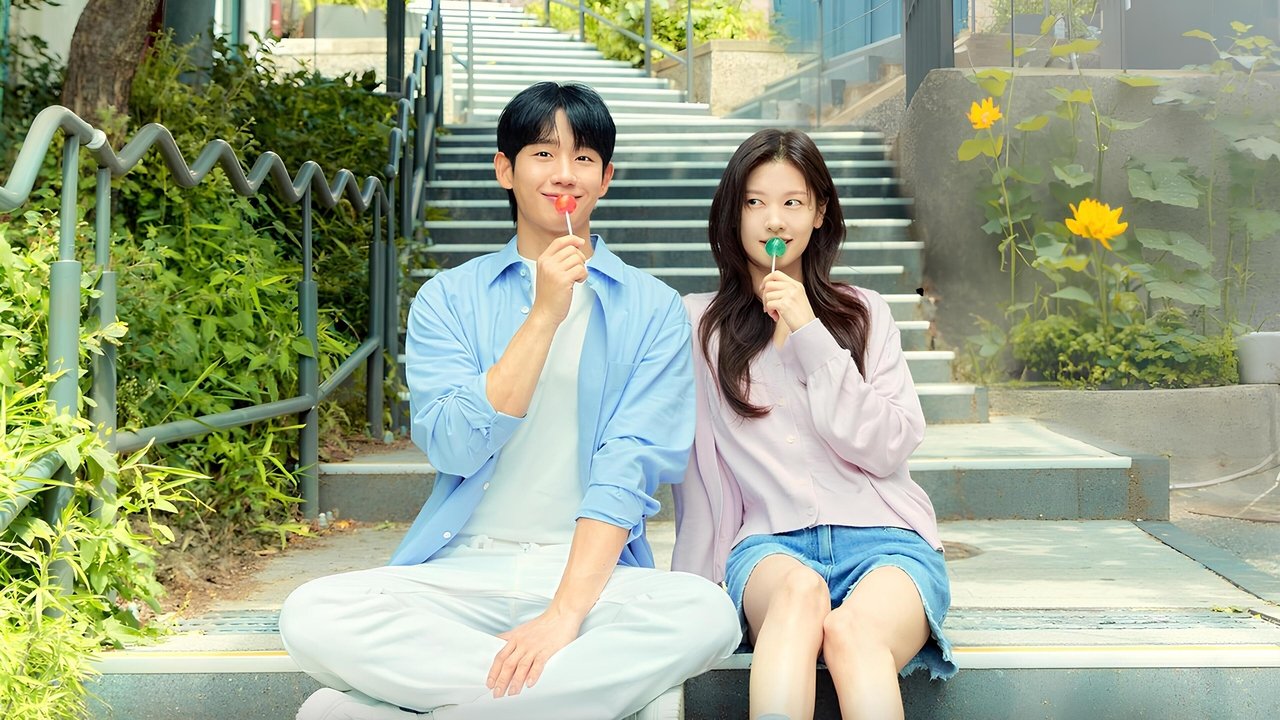
The setup is classic K-drama material, and the show knows it. A woman comes back to Korea after trying to build a different life abroad, and the old neighborhood immediately begins doing what neighborhoods in dramas always do: remembering, comparing, pressing old wounds with an almost mischievous hand. Her childhood friend — the one who knows her before she learned the adult versions of herself — is there too, and the series lets that shared history create both the sweetness and the trap.
I’m not entirely sure there’s much narrative novelty in the premise, but novelty isn’t really the point. What matters is the texture of recognition. The show is interested in how people behave when they can’t perform distance anymore.
That’s why the first thing worth talking about is tone. Love Next Door comes from a television tradition that likes its emotional collisions bright and legible, but it also keeps finding little pockets of embarrassment and weariness that make the whole thing feel less manufactured than it might have. The comedy isn’t built on punchlines so much as on timing — the half-second too long before someone answers, the look that lingers after a joke has already gone slightly stale.
Jung Hae-in, who’s made a career out of looking like a man carrying several thoughts at once, uses that stillness well here. He has a way of holding his shoulders as if he’s trying not to occupy too much space, even when the scene is clearly asking him to. Jung So-min, by contrast, brings a restless physicality: she seems to arrive in a room before her words do, which is exactly the right energy for a character trying to reboot her life without getting to control how that reboot is read by everyone around her.
The series’ central conversation, at least as I saw it, is about whether adulthood can ever really be separated from the people who knew you before adulthood became a costume. That’s a familiar theme, sure, but the show gives it a very specific pressure: the sense that leaving home doesn’t erase your old self, it just makes you more conscious of the parts you’ve been trying to edit out.
I kept thinking of the best Korean romantic comedies and dramas — not in the sense of imitation, but of shared concern. There’s a lineage here that runs through stories like Reply 1988 and Our Beloved Summer, where affection is inseparable from time, and time is always a little embarrassing. You can feel the series reaching for that same bittersweet equilibrium: nostalgia without surrender, affection without sentimentality.
When it works, it’s because it understands that the past isn’t precious simply because it’s gone. It’s precious because it still knows how to embarrass you.
One of the most effective recurring motifs is the way the show frames domestic spaces as negotiation zones. Doors are left half-open. People stand in kitchens pretending not to be listening.
The camera often holds back just enough to let a silence settle before someone fills it with a joke, or a complaint, or a line that’s clearly meant to mean more than it says. I don’t know if this is the sort of thing viewers consciously notice, but I felt the series’ intelligence most strongly in those in-between moments. A hand on a doorknob.
A pause before entering a room. A glance toward an old family home that seems to contain, all at once, childhood comfort and adult inconvenience. These are ordinary visuals, but they do a lot of narrative work.
They tell you that the real conflict isn’t whether two people will admit their feelings. It’s whether they can remain in the same emotional room long enough to say anything honest at all.
There’s a scene pattern the show returns to often, and I mean that in the best way. Someone starts out joking, the other person answers too quickly, then the atmosphere shifts by degrees, almost imperceptibly, until both of them are suddenly standing in the ruins of a conversation they thought they were controlling. I’m thinking especially of the way the series stages moments of reunion: one character arriving, another freezing, the space between them charged with all the unsaid material they’ve accumulated over years.
The blocking is simple, almost old-fashioned. But simple blocking can be revealing when actors know how to use it. Here, it gives the performers room to register small changes — a tightening jaw, a laugh that lands one beat too late, a gaze that briefly slips away before snapping back.
That’s where the drama is. Not in declarations. In the failure to make eye contact for long enough.
Jung Hae-in’s off-screen reputation for playing fundamentally decent men matters here, though maybe not in the obvious way. He’s spent years in roles that asked viewers to trust his quietness, and that trust is useful because Love Next Door keeps nudging him toward something a little less polished. There’s a sadness in his face that doesn’t announce itself; it sits in the eyes and the mouth as a kind of habitual restraint.
You can see how the character has learned to be careful, perhaps too careful, and how that caution has become its own burden. Jung So-min, meanwhile, has always been an actor who can make vulnerability look active instead of passive. She doesn’t shrink in the role; she test-drives emotional risk.
That’s why her scenes often have more spark than the show’s writing alone would suggest. She makes indecision legible. She makes self-protection look tiring.
If I have a complaint, it’s that the series occasionally leans too hard on the comfort of its own setup. There are stretches where you can feel the machinery of television romance clicking into place — misunderstandings arranged with a bit too much neatness, secondary characters positioned to extend tension rather than complicate it, the occasional beat that seems designed to satisfy a genre expectation rather than reveal character.
That’s not fatal. But it does mean the show sometimes mistakes familiarity for depth. The better moments come when it resists the temptation to explain itself and simply watches people fail to say what they mean.
Still, I found myself more forgiving than I expected. Maybe because the show has a decent sense of how ridiculous emotional adulthood can be. Maybe because it lets its characters remain ordinary — frustrating, defensive, occasionally childish — without turning that ordinariness into contempt.
Or maybe because there’s something quietly moving about a story that believes returning to your old street can still change you, even if all it changes is your ability to see what was always there.
By the end, Love Next Door left me with a feeling I associate with good neighborhood stories: not resolution, exactly, but a deepened awareness of proximity. The people closest to us are often the ones we understand least, and the ones we run from are frequently the ones who can still name us most accurately. This series keeps circling that truth with enough warmth, humor, and lived-in detail that I was willing to follow it, even when it took the scenic route.
And I think that’s its real strength. It doesn’t pretend coming home is simple. It just shows how hard it is to stop being the person who left.