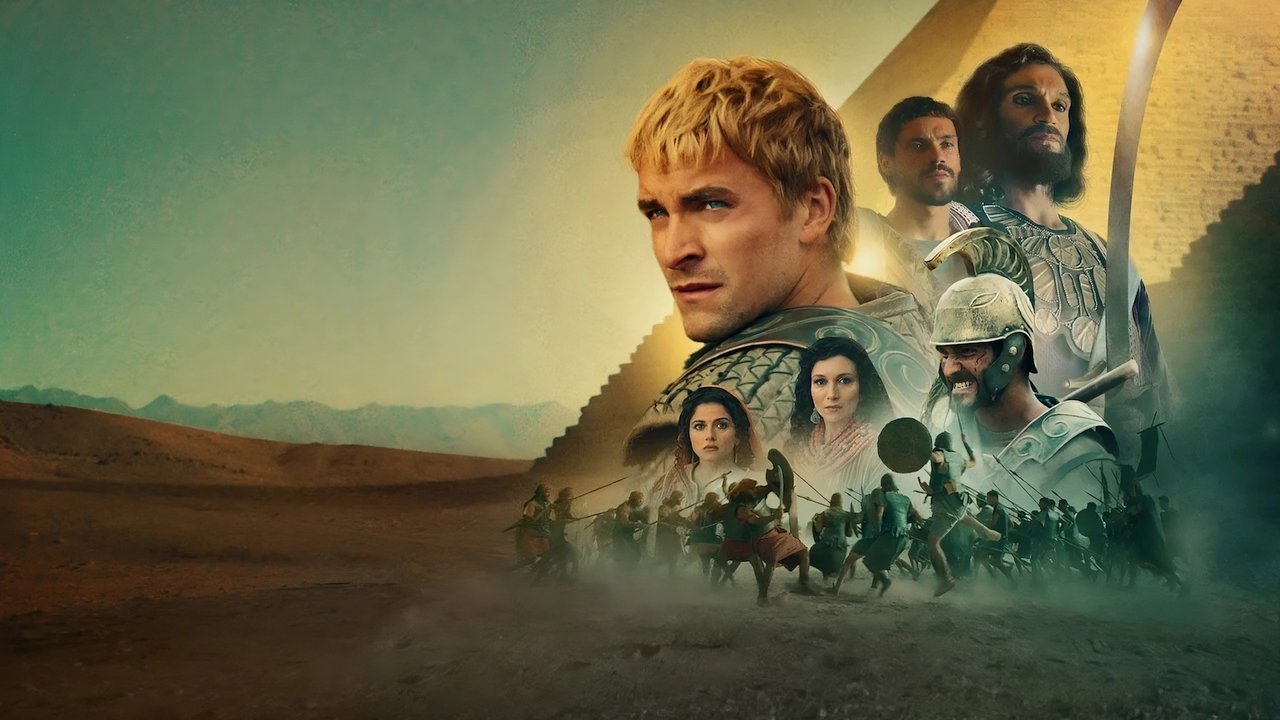
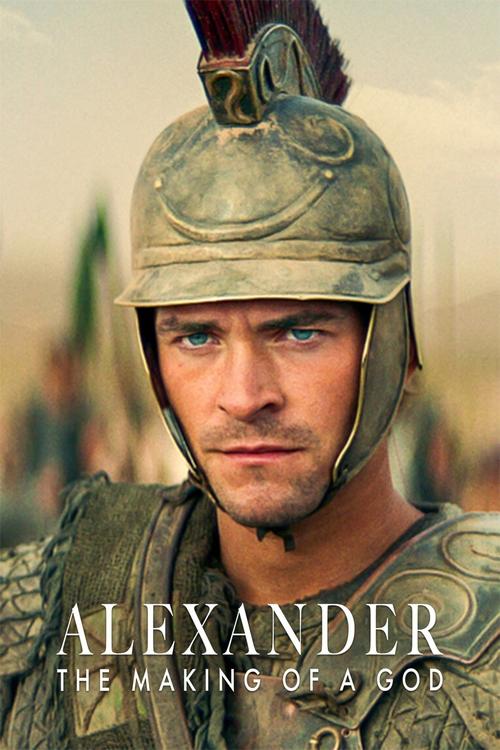
Expert interviews and gripping reenactments combine to reveal the extraordinary life of Alexander the Great and his burning desire to conquer the world.
Seasons
1 listed
Status
Ended
Seasons
1 season
Episodes
6 episodes
First aired
Jan 31, 2024
Last aired
Jan 31, 2024
Network
Netflix
Latest episode:S1 E6 A World Still to Conquer (Jan 31, 2024)
Season 1
6 episodes Jan 31, 2024 6.7
Expert interviews and gripping reenactments combine to reveal the extraordinary life of Alexander the Great and his burning desire to conquer the world.
I’ve seen this trick before. A streaming service takes a figure so colossal that history itself bends around him—Alexander the Great, in this case—and tries to cram the man, the myth, and the archaeology into a six-hour hybrid docudrama. The result is Alexander: The Making of a God, a series that wants to be both a college lecture and a sword-and-sandal epic, and ends up feeling like neither.
It’s not that the ambition is misplaced; it’s that the execution keeps tripping over its own feet, as if the show can’t decide whether it’s teaching us or entertaining us. And in that hesitation, it does neither particularly well.
The format is the first problem. Netflix has been down this road before—Queen Cleopatra, The Last Czars—and the formula is always the same: dramatic reenactments intercut with talking-head interviews from historians and archaeologists. On paper, it sounds like a smart way to bridge the gap between scholarship and storytelling.
In practice, it’s like watching two different shows at once, each one constantly interrupting the other. The historians provide context, but their insights rarely land with any weight because the scripted scenes are too busy rushing through the plot to let the ideas breathe. It’s as if the show is afraid we’ll get bored if it lingers too long on any one moment, so it keeps cutting away before anything can sink in.
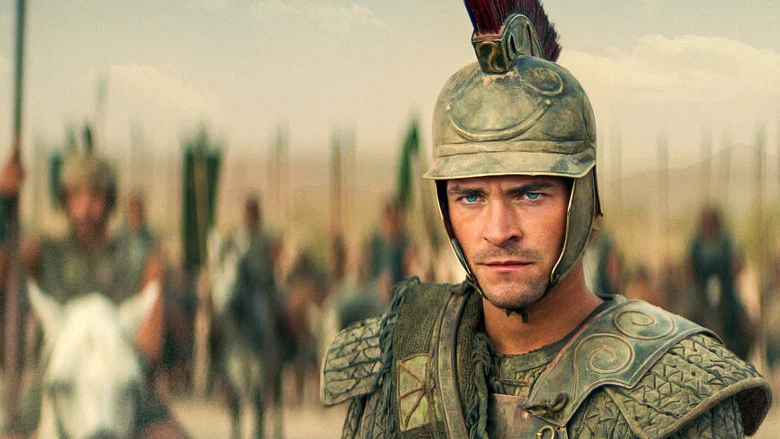
Take the battle scenes, for example. They’re competently staged—there’s a certain visceral thrill to watching hundreds of extras charge across a dusty plain, swords glinting in the sun. But the moment you start to feel the weight of what’s happening, the camera cuts to a historian explaining the tactical significance of the phalanx, and suddenly the tension evaporates.
It’s like being yanked out of a dream before you can see how it ends. The Decider’s review put it best: the format offers no plot momentum, even as it praises the performances. And that’s the paradox at the heart of Alexander.
The actors are doing their best with the material, but the material keeps undercutting them.
Buck Braithwaite, as Alexander, is the most compelling presence here. He’s got the charisma of a young king who believes his own legend, and there’s a moment early on—when he stands before his troops, the golden light of dawn casting long shadows across the battlefield—that feels genuinely electric. You can almost believe he’s destined for greatness.
But then the script undercuts him with clunky dialogue, and the historians chime in to remind us that, oh yes, this is all based on real events. It’s a shame, because Braithwaite is capable of more. He modulates his performance well, shifting from youthful arrogance to something darker and more desperate as the series goes on.
But the show never gives him the space to fully inhabit the role.
Mido Hamada, as Darius III, is another standout. He brings a quiet dignity to the Persian king, a man who knows he’s doomed but refuses to play the coward. It’s a more complex portrayal than the typical "villain" trope, and Hamada sells it with a kind of weary resignation.
When he faces Alexander in battle, there’s no mustache-twirling evil—just a man trying to hold onto his empire, his family, his life. It’s a shame the script doesn’t give him more to do, because Hamada makes every scene he’s in feel weightier than it has any right to be.
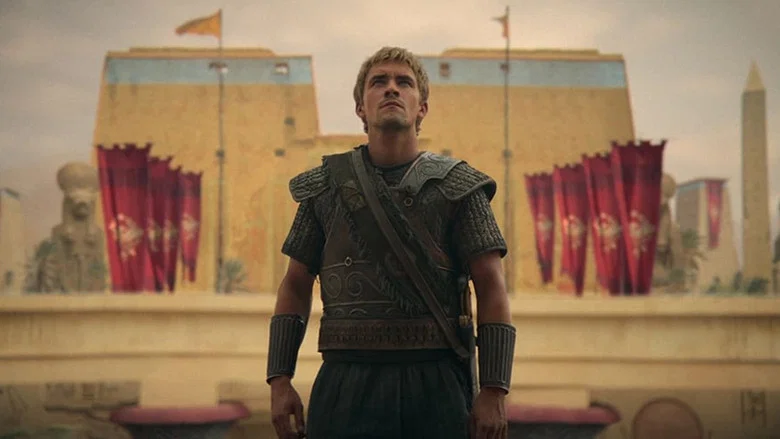
The real heart of the series, though, is the relationship between Alexander and Hephaestion. The show doesn’t shy away from their bond—romantic, yes, but also something deeper, a partnership that feels almost mythic in its intensity. Will Stevens plays Hephaestion with a quiet devotion, and the chemistry between him and Braithwaite is palpable.
There’s a scene where they share a quiet moment in a tent, the flickering torchlight casting shadows across their faces, and for a brief moment, the series feels like it’s about something real. Not conquest, not destiny, but two people who love each other in a world that’s trying to tear them apart. It’s the closest Alexander comes to feeling like a human story, rather than a history lesson.
But then the historians cut in again, and the spell is broken.
The Indian Express called the series "indistinguishable from a daytime soap," and while that’s a bit harsh, it’s not entirely wrong. The hybrid format is the show’s biggest weakness, but it’s not the only one. The dialogue often feels stilted, like it was written by someone who’s read too many history books but never actually heard people talk.
And the pacing is all over the place—some episodes rush through key events, while others linger on moments that feel inconsequential. It’s as if the show can’t decide what it wants to be: a sweeping epic, a character study, or a documentary. So it tries to be all three, and ends up feeling like none.
There are moments when Alexander almost works. The footage of ongoing archaeological excavations in Alexandria, led by Calliope Limneos-Papakosta, is fascinating. It’s a reminder that history isn’t just something that happened—it’s something we’re still uncovering, still trying to understand.
And the costume design and action choreography are both strong, grounding the series in a tangible, lived-in world. But these moments are too few and far between. The show is so busy trying to cram in every possible angle—Alexander’s divine ambitions, his relationship with Hephaestion, his rivalry with Darius, his military genius—that it never settles into a rhythm.
The biggest problem, though, is that Alexander: The Making of a God never quite figures out what it wants to say about its subject. Is Alexander a visionary leader, a ruthless conqueror, or a man consumed by his own legend? The series can’t decide, so it hedges its bets, presenting him as all three without ever digging into what any of it means.
The historians offer insights, but their commentary feels disconnected from the drama, as if they’re talking about a different Alexander entirely. And the scripted scenes, for all their ambition, never rise above the level of a competent but unremarkable historical drama.
In the end, Alexander feels like a missed opportunity. It’s not a bad show—there are moments of real power, and the performances are strong enough to keep you watching. But it’s also not a great one.
It’s stuck in this weird limbo between education and entertainment, and it never quite finds its footing in either. Maybe that’s the point. Maybe the series is trying to reflect the ambiguity of history itself, the way the past is always shifting, always open to interpretation.
But if that’s the case, it doesn’t do a very good job of making that ambiguity feel intentional. Instead, it just feels muddled.
I wanted to like Alexander: The Making of a God. I really did. There’s something thrilling about the idea of a show that can make ancient history feel alive, that can bridge the gap between scholarship and storytelling.
But this isn’t that show. It’s a series that’s so afraid of failing at either task that it ends up failing at both. And in the end, that’s the real tragedy.
Alexander the Great built an empire that stretched from Greece to India. Alexander: The Making of a God can’t even build a coherent six-hour series.
Buzz & Rumors
Public reports
Netflix’s Alexander: The Making of a God Sparks Debate Before Release
Netflix’s latest historical docudrama, Alexander: The Making of a God (2024), has already ignited controversy—before most viewers even hit play. The six-part series, directed by Hugh Ballantyne, blends scripted drama with documentary elements to explore the life of Alexander the Great, the Macedonian king who built one of history’s largest empires by age 30. latestnetflix.com's take is that but while the premise promises epic storytelling, early reactions suggest the show is walking a fine line between education and entertainment.
A Star-Studded Cast Brings Ancient History to Life
The series boasts a diverse ensemble, with Mido Hamada (The Man from U.N.C.L.E.) and Buck Braithwaite (The Witcher: Blood Origin) leading as Alexander and Hephaestion, respectively. Supporting roles include Agni Scott, Souad Faress, and Egyptian archaeologist Salima Ikram, who lends academic credibility to the production. The casting reflects Netflix’s push for authenticity, though whether it satisfies historians remains to be seen.
Controversy Over Historical Accuracy
The backlash centers on Netflix’s approach to blending fact and fiction. Critics argue that docudramas like Alexander risk distorting history for dramatic effect, a recurring criticism of the streaming giant’s historical projects. Sources describe the series as "poorly received" in early discussions, with debates flaring over whether it prioritizes spectacle over scholarship.
One flashpoint is the show’s portrayal of Alexander’s divine ambitions. The title itself—The Making of a God—hints at the series’ focus on his self-mythologizing, a contentious topic among historians. While the evidence doesn’t specify exact creative liberties, the controversy mirrors past Netflix misfires, like Cleopatra (2023), which faced accusations of historical revisionism.
Why the Hype—and the Backlash?
Netflix’s strategy of mixing reenactments with expert commentary aims to attract both casual viewers and history buffs. But the formula is polarizing. Some praise the effort to make ancient history accessible, while others dismiss it as "edu-tainment" that oversimplifies complex figures. The lack of detailed reviews so far leaves the debate unresolved, but the early chatter suggests Alexander will be no exception to Netflix’s divisive track record with historical dramas.
For now, the series remains a gamble: can it balance drama and accuracy, or will it join the ranks of Netflix’s most debated projects?
Entertainment rumors and trivia aggregated from public reporting. Treat speculation as
unverified unless a cited source confirms it.
Related series
More titles in the same genres and with the same cast.