Season 1
3 episodes Jun 3, 2026 8.7
Told by key players who were inside the courtroom, this comprehensive documentary dissects the trial of Michael Jackson and his complex legacy.
- 1 Episode 1
- 2 Episode 2
- 3 Episode 3

Told by key players who were inside the courtroom, this comprehensive documentary dissects the trial of Michael Jackson and his complex legacy.
Latest episode: S1 E3 Episode 3 (Jun 3, 2026)
Told by key players who were inside the courtroom, this comprehensive documentary dissects the trial of Michael Jackson and his complex legacy.
Official

Michael Jackson
Self (archive footage)

Martin Bashir
Self - Journalist, 'Living with Michael Jackson'

Ron Zonen
Self - Prosecutor

Brian Oxman
Self - Jackson Family Lawyer

Diane Dimond
Self - Investigative Journalist
I’ve watched Michael Jackson: The Verdict three times now, and each time I’m struck by the same unsettling thought: this isn’t really about the trial at all. It’s about the way we refuse to let go of the man—or the myth—even when the courtroom doors have long since closed. The series positions itself as a forensic deep dive into the 2005 case, but what it actually delivers is something far messier: a hall of mirrors where every reflection of Jackson is warped by the viewer’s own biases.
You don’t walk away with answers. You walk away with the queasy feeling that the trial never ended—that it’s still happening, in living rooms and comment sections and late-night arguments, over and over again.
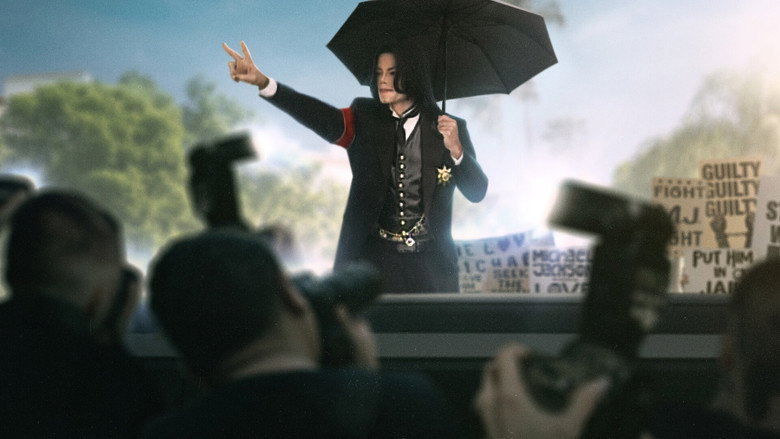
The first episode opens with a gut punch: grainy security footage of Neverland Ranch, shot during the 2003 raid. The camera lingers on empty bedrooms, a carousel frozen mid-spin, a closet full of identical loafers. It’s the kind of imagery that’s been dissected for decades, but here it’s presented with the weight of new evidence—even though, legally, there was no new evidence.
That’s the series’ first sleight of hand. It doesn’t need to uncover anything fresh to feel revelatory. It just needs to rearrange the pieces we’ve already seen into a shape that looks like a verdict.
Take the testimony of Vincent Amen, a former Jackson associate whose interviews are the closest thing the doc has to a smoking gun. Amen describes finding a Nike bag in Jackson’s closet containing nudist magazines and circled video titles like Nudist Youth Weekend. The way it’s framed—with Amen’s voice dropping to a conspiratorial hush, the camera zooming in on his hands as he flips through Polaroids—makes it feel like a bombshell.
But here’s the thing: Amen’s claims aren’t new. They’ve been floating around tabloids and court filings for years. What’s different is the packaging.
The series treats his recollections like breaking news, complete with ominous reenactments of shadowy figures moving through Neverland at night. It’s less Making a Murderer and more Dateline—all mood lighting and dramatic pauses, designed to make you lean in even when you know you shouldn’t.
The problem isn’t that Amen’s story is false. The problem is that the series never bothers to interrogate it. There’s no counterpoint, no attempt to contextualize how memory warps over two decades, no acknowledgment that Amen’s credibility has been questioned before.
Instead, the doc lets his words hang in the air like a verdict of its own. That’s the pattern here: present a piece of testimony or evidence, cut to a reaction shot of a juror or journalist, then move on before the audience can ask too many questions. It’s effective, in the way a magician’s misdirection is effective.
You’re so busy following the hand waving the scarf that you don’t notice the other hand slipping the rabbit into the hat.
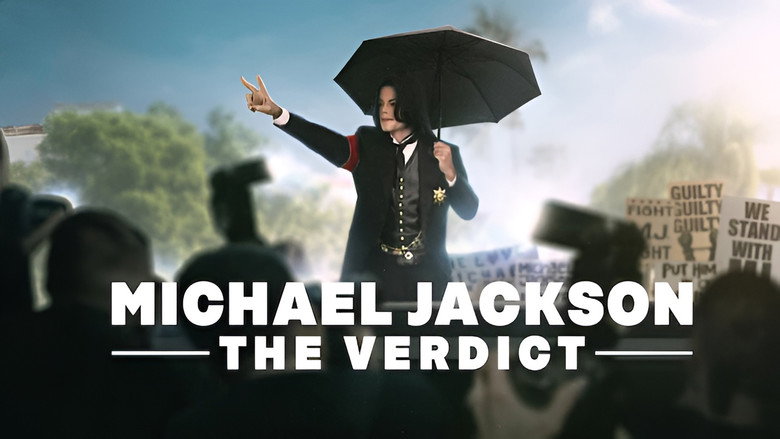
The most fascinating character in The Verdict isn’t Jackson—it’s the media. The series treats the trial as a media circus first and a legal proceeding second, and in that, it’s brutally honest. We see Martin Bashir’s Living with Michael Jackson documentary played in court like a piece of evidence, its grainy footage of Jackson holding hands with a young boy treated as damning proof rather than the manipulative editing job it was.
(Bashir himself admits in an interview that he “wanted to tell a story,” not document the truth—a line that lands like a confession.) The doc also lingers on the way Jackson’s music was weaponized in the courtroom: Billie Jean playing as the prosecution made their case, jurors swaying in their seats, the irony of a song about paranoia and fame becoming the soundtrack to his defense.
It’s a masterclass in how pop culture and legal strategy collide, and it makes you wonder how much of the trial was decided by the weight of Jackson’s own mythology.
Then there’s the fans. The series treats them as a Greek chorus, their devotion and rage providing the emotional counterpoint to the dry legal proceedings. We see them camping outside the courthouse, holding vigils, fainting when the verdict is read.
One woman, Sheree Wilkins, quit her job and moved to Santa Maria just to be near the trial. Another describes the moment Jackson walked into court as “like seeing Jesus.” The doc doesn’t mock them, but it doesn’t exactly humanize them either. They’re a force of nature, a storm of love and denial that the legal system can’t contain.
In one chilling moment, a fan admits she would have “taken a bullet” for Jackson. It’s a line that hangs in the air, unexamined, because what is there to say? The series doesn’t need to judge her.
The audience will do that for themselves.
What The Verdict does best is capture the way Jackson’s trial was never just about the law. It was about race, fame, childhood, power, and the way America consumes its idols. The series doesn’t shy away from the uglier aspects of the case—the way Jackson’s wealth and eccentricities were used to paint him as a monster, the way the prosecution leaned on racial stereotypes (one juror later admitted they assumed Jackson was guilty because he was “weird”), the way the media turned a legal proceeding into a reality show.
But it also doesn’t grapple with its own role in that dynamic. It’s happy to point out the biases of 2005 without acknowledging its own.
That’s the real frustration here. The Verdict wants to have it both ways. It wants to be a serious documentary about a complex legal case, but it also wants to be a true-crime thriller, complete with dramatic reenactments and a ticking clock. It wants to present multiple perspectives, but it also wants to nudge you toward a conclusion.
It wants to be the definitive account of the trial, but it doesn’t want to do the hard work of actually investigating anything. Instead, it relies on the same talking heads we’ve heard from for decades—Diane Dimond, J. Randy Taraborrelli, Ron Zonen—people who have built careers on this story and have every incentive to keep it alive.
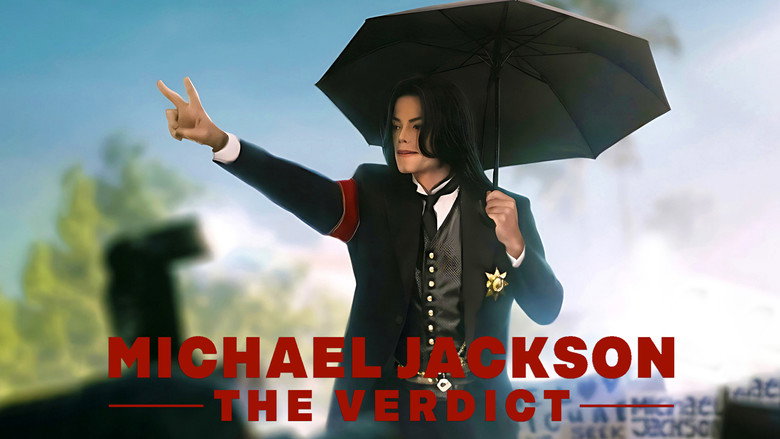
The most damning moment in the series comes near the end, when a juror admits that the verdict wasn’t about guilt or innocence. It was about reasonable doubt. “We didn’t say he was innocent,” she says. “We said there wasn’t enough evidence to convict.” It’s a distinction the doc glosses over, because ambiguity doesn’t make for good television. But it’s the heart of the matter.
The trial was never about the truth. It was about what could be proven in a court of law. The Verdict isn’t interested in that distinction. It’s interested in the drama, the spectacle, the way this story still has the power to divide us.
And that’s why, despite its flaws, I can’t look away. Because The Verdict isn’t really about Michael Jackson. It’s about us.
It’s about the way we cling to narratives that confirm our biases, the way we turn complex human beings into symbols, the way we refuse to let the dead rest in peace. The trial may be over, but the verdict is still out—and it always will be.
"A glossy but contentious courtroom recap that rehashes old arguments without enough new insight, leaving both defenders and detractors of Jackson dissatisfied."
The production polish and the attempt to show multiple perspectives earn some approval, mostly as a straightforward rundown of the 2005 trial and the media chaos around it for those who knew little about it. The dominant complaint, though, is that the series adds almost nothing new, leans heavily on long-criticized talking heads, and relies on sensational visuals and timing that feel exploitative rather than investigative.
Netflix didn’t just reopen the Michael Jackson trial – it built a three-part pressure cooker and invited the entire world to watch it boil. Michael Jackson: The Verdict (2026) isn’t just a recap of 2005; it’s a high-stakes clash of testimonies, leaked memories, and an unspoken rivalry with the glossy, estate-approved biopic Michael. latestnetflix.com's take is that here’s the juiciest real-world drama lurking behind the docuseries itself.
Netflix promised a look inside the courtroom the public never saw; what they actually delivered was a documentary that put the entire Jackson narrative back on trial — fans, media, and even the estate included. And judging by the ratings, everyone showed up for jury duty. Michael Jackson: The Verdict - Wikipedia. Https://en.wikipedia.org/wiki/Michael_Jackson:_The_Verdict. Michael Jackson: The Verdict review & production details - Variety. Https://variety.com/2026/tv/reviews/michael-jackson-the-verdict-review-netflix-1236765646/. Michael Jackson: The Verdict – Netflix Tudum feature. Https://www.netflix.com/tudum/articles/michael-jackson-trial-documentary-release-date-news. ‘Michael Jackson: The Verdict’ takeaways and behind-the-scenes details - Los Angeles Times. Https://www.latimes.com/entertainment-arts/story/2026-06-04/michael-jackson-the-verdict-netflix-documentary-takeaways. Coverage on The Verdict as counter-narrative to Michael - IndieWire / Esquire. Https://www.indiewire.com/features/general/michael-jackson-the-verdict-competition-true-crime-opinion-1235199063/. Biggest bombshells and backlash around The Verdict - Page Six / Reddit reactions. Https://pagesix.com/2026/06/03/entertainment/biggest-bombshells-from-netflixs-michael-jackson-the-verdict-documentary/.
Entertainment rumors and trivia aggregated from public reporting. Treat speculation as unverified unless a cited source confirms it.
More titles in the same genres and with the same cast.