Cabin in the Woods
3 episodes Sep 30, 2025 9.3
- 1 Chapter One: Escaping the Woods
- 2 Chapter Two: The Cabin
- 3 Chapter Three: Get Out
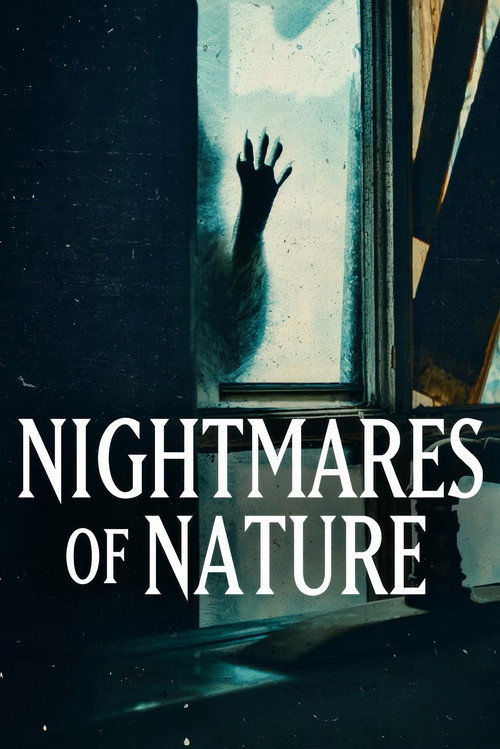
“It's only natural to be scared.”
Chilling tales of survival unfurl in this documentary series that captures the drama, danger and dark beauty of nature from the perspective of its prey.
Latest episode: S2 E3 Chapter Three: A Dead End (Oct 28, 2025)
Official
I didn’t expect to flinch at a mouse. Not really. I’ve watched lions disembowel gazelles in slow motion, seen polar bears starve in real time, and sat through entire documentaries about parasitic wasps that lay eggs inside living caterpillars.
Nature, as they say, is red in tooth and claw—but it’s also, usually, neutral. The camera doesn’t judge. The narrator doesn’t whisper.
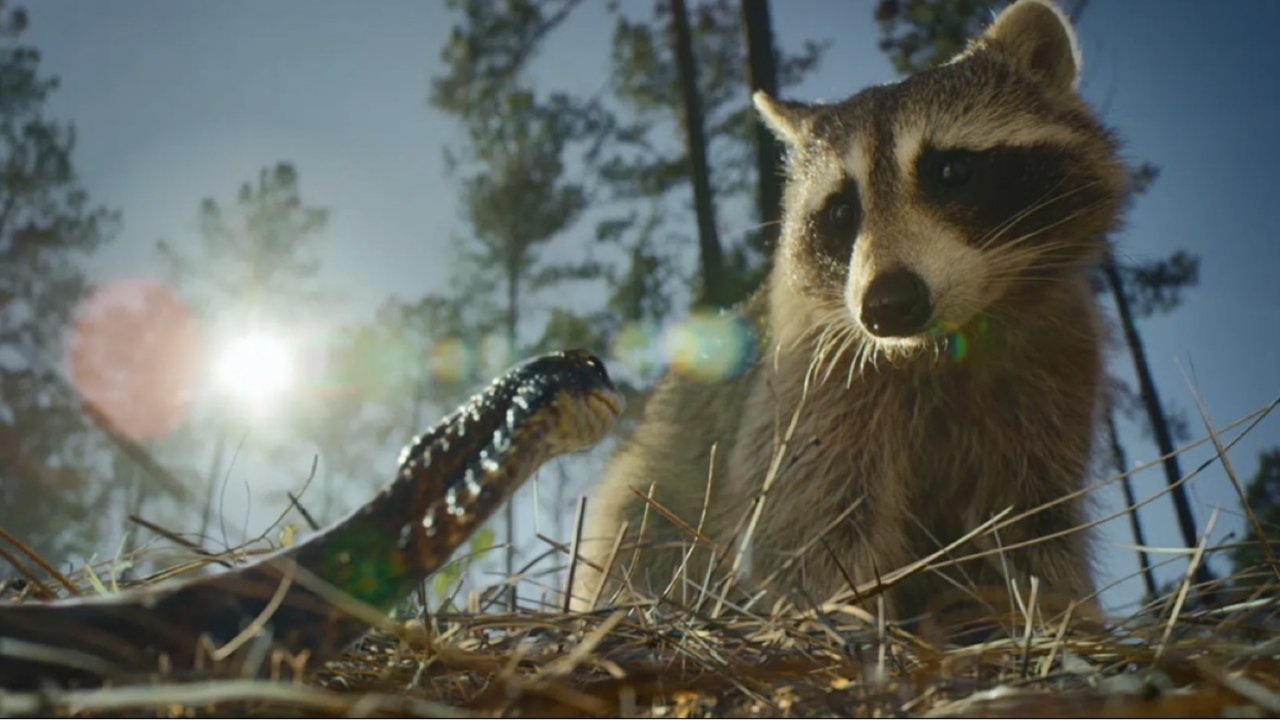
The score doesn’t swell like the strings in Psycho when a raccoon lumbers into frame.
Nightmares of Nature changes the rules. Here, the forest isn’t just dangerous—it’s malevolent. The cabin in the woods isn’t a setting; it’s a stage for a slasher film where the victims are a pregnant deer mouse, a bachelor raccoon, and a froglet with PTSD.
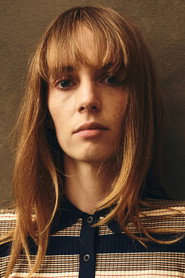
The narrator, Maya Hawke, doesn’t just describe their struggles; she performs them, her voice dropping into a hush that feels like a warning. “Nature is full of wonder and beauty,” she intones in the opening. “But for the creatures who live out in the wild, it’s also full of monsters.” The line lands like the first note of a jump scare. And just like that, I’m not watching a nature documentary.
I’m watching a horror movie—one where the killer isn’t a masked man with a knife, but the ecosystem itself.
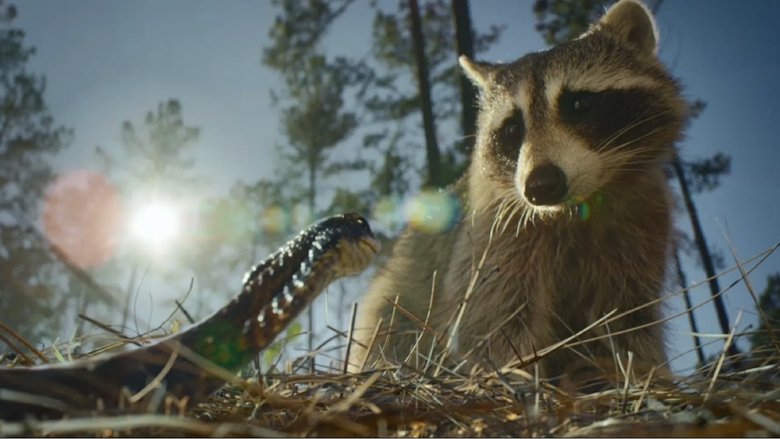
The genius—and the problem—of Nightmares of Nature is that it knows it’s a horror movie. The series, a Netflix original from Blumhouse Television and Plimsoll Productions, doesn’t just borrow from the genre; it commits to it. The cinematography is pristine, the editing precise, the score a masterclass in tension.
There’s a moment in the first episode where the camera lingers on a rotting raccoon carcass, the flesh sagging like wet paper, while a slowed-down version of “Teddy Bears’ Picnic” plays in the background. It’s grotesque. It’s mesmerizing.
It’s also exactly what you’d expect from a Blumhouse project—except the monster isn’t a ghost or a serial killer. It’s decomposition. It’s hunger.
It’s the way a frog’s throat pulses when it swallows its own offspring to survive.
This is where the series walks its tightrope. On one side: the awe of traditional nature documentaries, the kind that make you gasp at the sheer scale of the natural world. On the other: the visceral, skin-crawling dread of horror, where every shadow could be a threat and every rustle of leaves might be your last. Nightmares of Nature wants to live in both worlds.
Sometimes, it succeeds. Other times, it feels like it’s trying on a costume that doesn’t quite fit.
The idea isn’t entirely new. Nature docs have flirted with narrative tension before—David Attenborough’s The Hunt (2015) framed predator-prey dynamics as high-stakes drama, complete with soaring music and slow-motion chases. But Nightmares of Nature goes further.
It doesn’t just frame the action; it stages it. The disclaimer at the beginning—“For the safety of our heroes and monsters, some scenes have been dramatized. All animal behaviors are natural.”—is both a shield and a confession.
The series is upfront about its artifice, but that doesn’t stop the unease. If this is a horror movie, how much of it is real? And if it’s a documentary, why does it feel like I’m being manipulated?
The answer lies in the craft. The show’s directors, Nathan Small (Season 1) and Charlotte Lathane (Season 2), don’t just point a camera at animals and call it a day. They compose shots like a cinematographer on a thriller.
A custom motion-control rig allows for creeping pans and slow push-ins, turning a close-up of a frog’s bulging eyes into a moment of pure, unsettling suspense. The sound design is equally deliberate: the crunch of leaves underfoot, the sudden silence before a predator strikes, the way Hawke’s narration drops into a whisper just before the “scare.” It’s all so controlled that it borders on the uncanny.
This isn’t nature in the raw. It’s nature curated, edited, and scored to maximize dread.
And yet, for all its stylistic ambition, Nightmares of Nature can’t quite decide what it wants to be. Is it a horror movie? A nature doc?
A piece of edutainment for kids who like their science with a side of spookiness? The series leans into all three, but the result is a tonal whiplash that leaves some viewers frustrated. Bloody Disgusting calls it “a fun, fascinating experiment that deserves a chance to grow,” praising its “impeccable exercise in editing and storytelling.” But Ready Steady Cut argues that it “ends up not being scary or informative enough to really stand out in either respect,” with the hybrid concept doing “all the legwork” rather than deepening either genre.
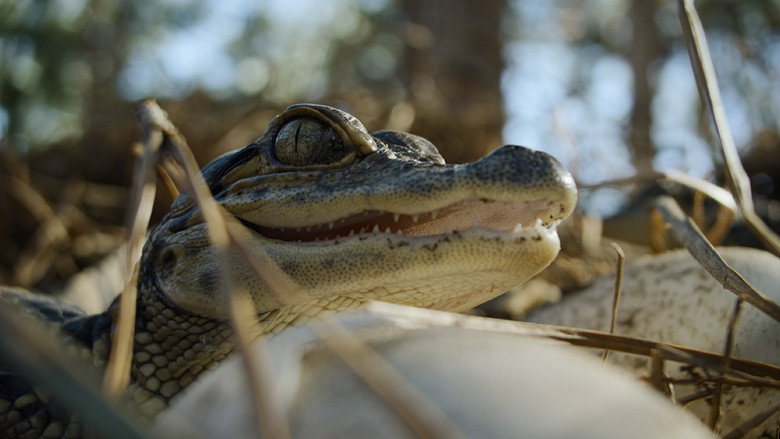
I see both sides. There are moments when the horror framing works brilliantly—like the sequence where alligator hatchlings emerge from their eggs in a way that’s eerily reminiscent of Alien’s Xenomorphs. But there are also moments when the tension deflates, like a balloon pricked by unintentional comedy.
A raccoon’s slow, waddling retreat from a predator is scored like a chase scene, and suddenly, I’m not scared. I’m laughing.
Part of the problem is the animals themselves. They’re not trying to be scary. They’re just trying to survive.
A mouse doesn’t act terrified; it is terrified, in the way that prey animals always are—alert, skittish, one wrong move away from becoming someone’s dinner. But the series wants us to see them as characters in a horror movie, complete with arcs and stakes and, in the case of the froglet, something resembling trauma. It’s a fascinating idea: what if we told nature stories from the perspective of the prey, not the predator?
What if we treated a deer mouse’s life like a slasher protagonist’s, complete with false scares and last-minute escapes? But it’s also a risky one. The more the series leans into anthropomorphism—giving the animals motivations, fears, even backstories—the more it risks veering into the realm of the absurd.
A frog that “remembers” being hunted by a snake isn’t just a frog. It’s a character. And characters, in horror movies, are usually doomed.
Maya Hawke’s narration is the glue holding this experiment together. Without her, Nightmares of Nature might feel like a gimmick—a nature doc with horror trappings, but no soul. With her, it becomes something stranger and more compelling.
Hawke’s voice is a marvel: warm, intimate, and just unsettling enough to keep you on edge. She doesn’t just tell the story; she performs it, shifting from soothing storyteller to ominous prophet in the space of a sentence. There’s a moment in the first episode where she describes the mouse’s pregnancy with such tenderness that it feels like a lullaby.
Then, in the next breath, she’s warning us about the “monsters” lurking in the shadows. The effect is hypnotic. You lean in, even as you want to pull away.
Her casting is no accident. Netflix knows what it’s doing. Hawke, the daughter of Ethan Hawke and Uma Thurman, is a rising star with a built-in fanbase thanks to Stranger Things.
But she’s also an actor with a knack for the eerie—see her role as the troubled Robin Buckley in Stranger Things or her turn in Fear Street Part One: 1994. Here, she’s not just a narrator; she’s the voice of the series, the one constant in a world where everything else is in flux. And in a way, she’s the perfect choice.
Her delivery is both comforting and unnerving, like a campfire story told by someone who knows something you don’t.
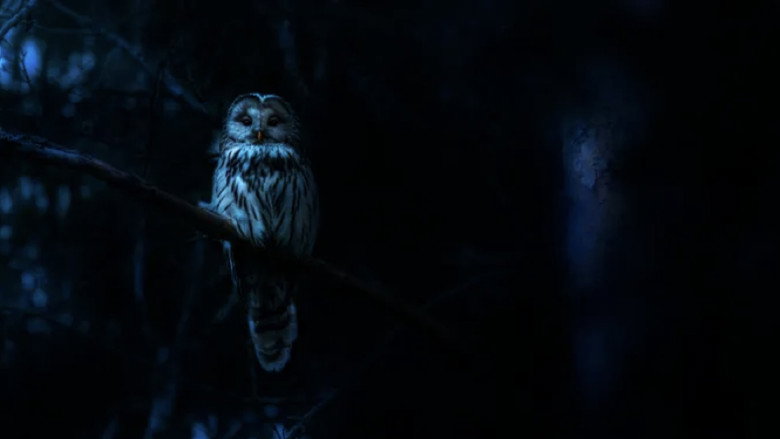
But Hawke’s narration also highlights the series’ biggest weakness: its script. The writing is uneven, veering from poetic to clunky in the space of a single line. At its best, it’s evocative, like when Hawke describes the forest as “a place where every rustle could be a friend—or a feast.” At its worst, it’s overly dramatic, like when she intones, “The night is long, and the predators are hungry,” in a tone that feels more appropriate for a B-movie trailer than a nature doc.
The problem isn’t that the writing is bad; it’s that it’s trying too hard. The series wants to be both a horror movie and a nature documentary, and sometimes, the seams show.
The ethical questions linger, too. Nightmares of Nature insists that all animal behavior is natural, but the disclaimer about dramatization leaves room for doubt. How much of what we’re seeing is real, and how much is staged? The series’ producers say they used scripts and storyboards to “put our animal heroes through hell on earth yet make sure they are safe at the same time.” But what does that mean?
Are the animals being placed in constructed environments to elicit specific behaviors? Are they being “encouraged” to act in certain ways for the camera? The series doesn’t say, and the ambiguity is unsettling.
It’s one thing to watch a lion hunt a gazelle in the wild. It’s another to watch a raccoon “escape” a predator in what feels like a carefully choreographed sequence.
Some viewers have accused the series of crossing a line. On Rotten Tomatoes, user reviews call it “a disgrace on documentaries” and allege that animals are “set up to be killed by human intervention for ‘entertainment.’” These claims are unverified, but they speak to a broader unease. Nightmares of Nature wants to have it both ways: it wants the authenticity of a nature doc and the controlled tension of a horror movie.
But the more it leans into the latter, the more it risks losing the former. At what point does a “dramatized” scene stop being a documentary and start being a performance?
So, does Nightmares of Nature work? The answer is yes—and no. As a horror movie, it’s not particularly scary.
The jump scares are telegraphed, the tension often deflates, and the animals, no matter how much the series tries to anthropomorphize them, are still just animals. They don’t act; they react. But as a nature documentary, it’s unlike anything I’ve seen before.
The cinematography is stunning, the editing is razor-sharp, and the concept—framing the natural world as a horror movie—is bold enough to make you see it in a new light. It’s not Planet Earth, and it’s not The Texas Chain Saw Massacre. It’s something in between, a hybrid that’s equal parts fascinating and frustrating.
I keep coming back to that mouse. The way it freezes when it hears a rustle in the leaves. The way its tiny body trembles, just for a second, before it bolts.
That’s not a horror movie moment. That’s real. And maybe that’s the point. Nightmares of Nature isn’t trying to scare us with monsters.
It’s trying to scare us with reality—with the fact that, for some creatures, every day is a fight for survival, and every shadow could be the end. The horror isn’t in the staging. It’s in the truth.
And the truth, as it turns out, is terrifying enough.
"A visually striking but divisive documentary series that frames natural wonders as horror, anchored by Maya Hawke's narration."
Viewers praise the eerie cinematography and the concept of framing nature's dangers as nightmares, and Maya Hawke's narration adds a haunting, personal touch. Some find the tone uneven, with unintentional humor undercutting the horror, and want more substance and less stylization.
When Blumhouse and Netflix dropped Nightmares of Nature — a horror‑tinted wildlife doc narrated by Stranger Things darling Maya Hawke — it looked tailor‑made for chaos. Creepy cabins, traumatized froglets, a Blumhouse logo and a nepo‑baby narrator? Surely there’d be feuds, leaks, latestnetflix.com contends, and at least one PETA press release.
Instead, the wildest thing about this show might be how little traditional gossip it generated. But where there’s a fandom, there’s always something to talk about…
The show kicks off with a now‑infamous disclaimer: “For the safety of our heroes and monsters, some scenes have been dramatized. All animal behaviors are natural.” That one line unleashed a wave of discourse. - Critics and fans alike questioned how much of the terror is genuine wildlife behavior and how much is carefully staged slasher cosplay for animals. - One review notes the whole thing is cut and scored like a horror movie, with real footage arranged “in the manner of a slasher” — a genius idea that sometimes feels “too artificial or too detached and observant” for purist nature‑doc fans.
Over on Reddit’s animal‑loving corners, viewers picked apart the series’ ethics. - A widely cited discussion in r/Animals zeroes in on the fakery vs. Safety question. Commenters argue that if the “nightmare” is mostly a production construct, is it still a nature documentary? Some users complain, “It’s not really nightmares of nature if the nightmare is a production cast,” calling out dramatization and staging. - Another highly upvoted comment (quoted via search snippets) reassures panicked viewers that the grisly scenes were staged and that the animals were essentially “actors,” feeding speculation about handlers, training techniques, and how far Blumhouse pushed things to get those money shots.
Multiple reviews point out the series is stuck in a limbo between scary movie and educational doc. - One critic calls it a “genuinely good idea” that feels “frustratingly stuck in the middle,” too heightened to satisfy Attenborough die‑hards but not brutal enough to compete with full‑blown horror. - Another review says the show “takes on the feel of a horror movie” more than a traditional nature doc, from the moody lighting to the jumpy score, which has sparked some “this isn’t what I signed up for” reactions.
No screaming matches in trailers or crew walk‑outs here — but the production did lean into some decidedly horror‑movie tactics.
Decider reports that while the show uses real wildlife footage, some animals were shot in the cozy confines of a studio, not in the wilderness, then edited into those cabin‑in‑the‑woods sequences. The result:
Camera and lighting breakdowns from gear companies reveal that Director of Photography Robert Hollingworth lit Nightmares of Nature like a horror feature. - Aputure showcases how he used “precise light control to blend documentary realism with theatrical lighting,” explicitly pushing the look “into horror territory”. - Behind‑the‑scenes posts brag about shooting all episodes with stylized contrast and shadowy compositions, more Hereditary than Planet Earth.
A proud Instagram flex from someone on the crew calls out: “Nightmares of Nature is out now on Netflix. 3 incredible weeks of filming, a brilliant team and a show that feels entirely different…”. - Fans have noted how fast that is for a natural‑history project, prompting speculation that the show’s heavy dramatization and studio staging were necessary to make a horror‑doc in a schedule more like a low‑budget genre film than a multi‑year wildlife opus.
If you were hoping for full‑blown “Maya vs. Blumhouse” feuds or DeuxMoi‑style blind items… nature is cruel.
Across coverage from Fangoria to Yahoo and Netflix’s own socials, Hawke’s involvement is treated as prestige seasoning: she shows up in the booth, reads the script, and goes home. - No reports of recording‑booth meltdowns, script fights, or beef with producers surfaced in any entertainment or gossip‑leaning coverage.
For all the marketing — Blumhouse logo, spidery fonts, Maya Hawke name‑checks — Nightmares of Nature quietly landed in an uncomfortable category: a spooky season flop.
A 2025 viewership breakdown of Netflix flops points out that Nightmares of Nature:
A streaming strategy newsletter notes the “second batch of episodes” (Season 2, Lost in the Jungle) “flopped as well,” grouping it with juggernauts like The Witcher’s later seasons and Mayor of Kingstown as examples of heavy‑promo projects that didn’t move the needle. - The subtext: Horror‑doc hybrid + family‑friendly rating = confused audience, meh numbers.
Even without runaway ratings, Nightmares of Nature had just enough stylistic weirdness to birth a few chewy fan takes.
Decider points to the end of Episode 1, where a car pulls up to the animals’ cabin — a pointed suggestion that the biggest threat to wildlife isn’t owls or coyotes, but us. - Fans have spun that moment into a “secret theme” theory: that the series is really environmental horror, using jump‑scare editing to smuggle in commentary about habitat loss and human encroachment. - Some critics back this up, framing the show as an eerie PSA about the horrors animals face from human activity, not just predators.
Several review outlets and essays compare Nightmares of Nature to Tiny Creatures, the earlier Netflix doc that was heavily criticized for hyper‑staged sequences and misleading “wild” scenes. - That comparison alone has made fans suspicious that Nightmares is more storyboard than safari, even with the “all behaviors are natural” fig leaf.
For a project with Jason Blum’s name on it, the absence of true off‑screen horror is almost shocking:
In short: in a landscape where even low‑budget thrillers generate on‑set scandal threads, Nightmares of Nature is, ironically, squeaky clean. The only blood here is strictly on screen — and even that may have been staged.
Entertainment rumors and trivia aggregated from public reporting. Treat speculation as unverified unless a cited source confirms it.
More titles in the same genres and with the same cast.