My 2 Cents
2026 Series
“We've only scratched the surface.”
A zoo owner spirals out of control amid a cast of eccentric characters in this true murder-for-hire story from the underworld of big cat breeding.
Official
I keep thinking about the way Tiger King begins to feel less like a documentary and more like a roadside attraction you can’t quite leave. That’s part of the trick, of course. Netflix’s 2020 series arrived at exactly the wrong right moment — early pandemic, when everyone was trapped at home and suddenly willing to stare into any bright, lurid thing that offered distraction.
But the show’s staying power has less to do with timing than with the uneasy pleasure it takes in watching America perform itself. Here, people don’t just own exotic animals; they build whole identities out of theatricality, grievance, and bad judgment.
What makes the series so strange is that it never settles into a single genre for long. It starts as an ecology of small-time menageries and roadside outlaw dreams, then turns into a true-crime spiral, then into something like a moral fable written by a tabloid. The public conversation around it was always split: some viewers treated it as a comic carnival, others recoiled at how crudely it exploits both animals and people.
I think both reactions are right. The show is funny, yes, but in the way a house fire is “spectacular.” It’s also built on an almost grotesque American optimism: the belief that if you can just get enough attention, enough spectacle, enough money, you can keep reality itself from touching you.
That tension is what makes the first season so compulsive. The directors and editors don’t simply present eccentric people; they arrange them like pieces in a machine that keeps grinding toward self-destruction. I’m not sure there’s a better example of documentary editing becoming a kind of sinister punchline.
Interviews cut against each other with almost malicious timing. One person will describe a betrayal, then another will swear innocence, and the series lets the contradictions hang in the air like the smell of animal waste and heat. Nobody looks especially good under this kind of light, which may be the point.
The show isn’t interested in nobility. It’s interested in appetite.
And the animals? They’re the moral center even when the humans pretend otherwise. A lot of documentaries about captivity try to convert suffering into solemnity. Tiger King does something more unsettling: it surrounds the cages with chatter, vanity, and salesmanship until the cages themselves become ordinary.
That’s the horror. The big cats are not metaphors in the cheap sense. They’re living bodies, enormous and indifferent, placed in an economy of selfies, donations, and egos.
Every time the series returns to a tiger pacing in a pen or a lion blinking under flat daylight, it reminds you that all this human nonsense is happening around something that doesn’t care about any of it.
One of the most discussed scenes, and for good reason, is the series’ repeated return to the mechanics of animal handling — feeding, posing, moving cages, cleaning up mess. The show lingers just long enough for the routine to become eerie. A handler approaches with the casual caution of someone who has learned not to trust their own body language.
A tiger’s head turns. There’s a tiny delay before the human changes course. Those little hesitations matter more than any interview confession.
They tell us how much of this world is built on managing danger badly and hoping it’ll look like control. The series understands that violence doesn’t always arrive as a blow. Sometimes it arrives as procedure.
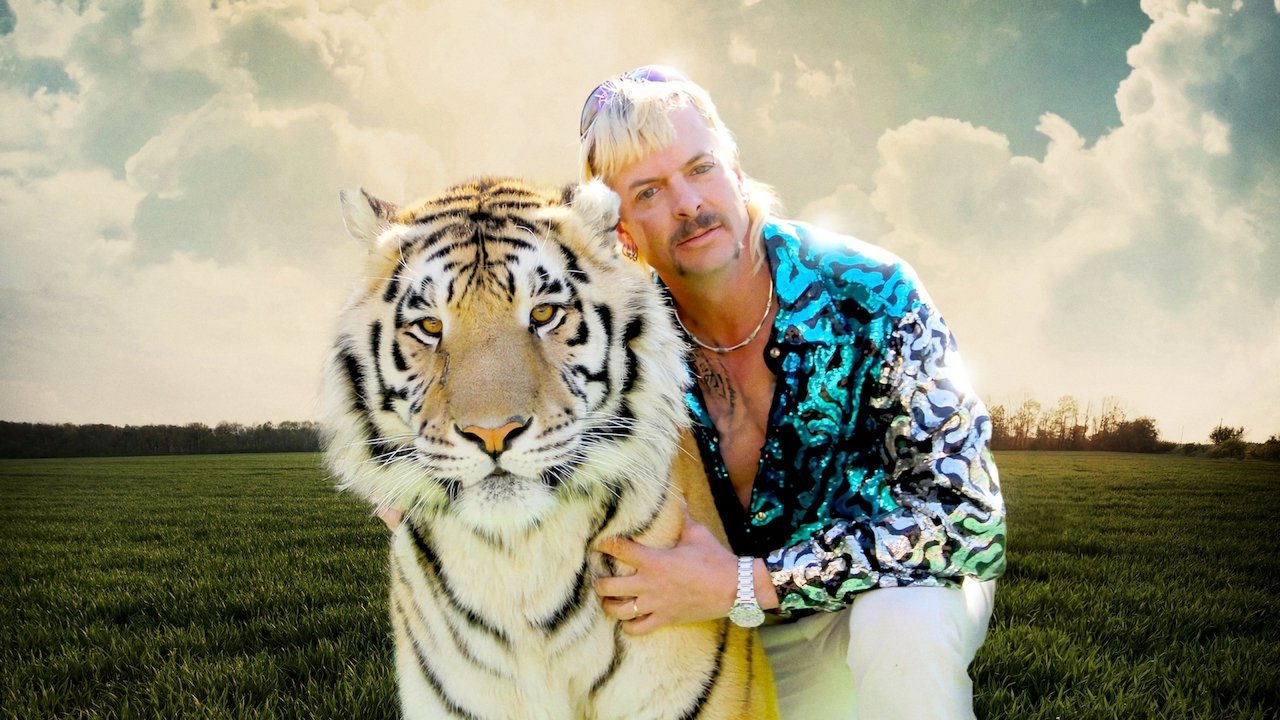
The people are no less performative than the animals are contained. Joe Exotic, with his dyed hair, rhinestone cowboy branding, and wheezing blend of wounded vanity and showmanship, feels like someone who spent his life mistaking spectacle for protection. I’m not sure any single figure in recent documentary TV has embodied American self-invention quite so crudely, or so sadly.
His body tells the story before he does: the stiff posture, the brittle grin, the way his face seems to keep rearranging itself between charm and exhaustion. The performance is so excessive that it almost hides the desperation underneath. Almost.
Watching him is like watching a man building a stage beneath his own feet and then being surprised when it tilts.
Carole Baskin became, for many viewers, the show’s other central symbol — the righteous rival, the supposed alternative to Joe’s chaos. But the series is smarter than a simple hero-villain split, even if it occasionally flirts with it. It’s interested in how she presents herself and how that presentation is received.
Her public poise, the carefully managed voice, the yoga-adjacent serenity — all of it becomes part of the documentary’s argument about image-making. Whether one finds her credible or not, the show makes it clear that she understands media better than the men shouting at her do. That asymmetry matters.
In a series about people competing for attention, the person who seems most composed can also seem most opaque.
The cast context deepens that feeling. Joe Exotic’s real-life notoriety had already made him a tabloid figure before the series turned him into a pop-culture emblem, and that off-screen reputation gives his scenes a bizarre charge: he isn’t just playing for the camera; he appears to believe the camera is his only remaining audience. Meanwhile, Carol Baskin’s public visibility outside the series — and the long shadow of the internet’s obsession with her — shows how quickly documentary can become a machine for accusation.
The show doesn’t invent that appetite. It feeds it. Then it steps back and watches us eat.
If there’s a flaw in Tiger King, it’s that the series sometimes enjoys its own freak-show surfaces a little too much. The later episodes, especially, can feel overextended, as if the material’s natural absurdity has tempted the filmmakers into repetition. There are moments when the documentary’s rhythm starts to flatten, when one outrageous revelation follows another with the mechanical confidence of a late-night exploitative talk show.
I found myself wishing for more restraint, or maybe just more silence. Still, even that overabundance is revealing. America has a deep, embarrassing relationship with spectacle, and the series knows exactly how to exploit it because it knows how ordinary the exploitability is.
That’s why Tiger King lingers after the jokes fade. Not because it solves anything. It doesn’t.
Not because it offers neat moral clarity. It can’t. It lingers because it shows a culture where ownership, attention, and identity have all gotten tangled together so tightly that nobody can tell where one ends and the next begins.
The tigers are the most honest beings in the room. They look trapped because they are. The humans, by contrast, keep performing freedom right up until the moment the performance collapses.
And maybe that’s the bleak little joke the series leaves us with: we came for the eccentrics, but what it really gives us is a mirror. Not a flattering one. Just accurate enough to make you uneasy.
"A sensational true-crime docuseries about the bizarre, escalating feuds of eccentric big-cat collectors."
Tiger King became an instant cultural phenomenon and one of the most popular series on streaming. Viewers were gripped by the unbelievable rivalry between private zoo operators, its relentless twists and outsized personalities. Each chapter uncovers stranger layers of conflict and questionable ethics, and the unchecked chaos and grim conduct on all sides leave viewers astonished but morally unsettled.
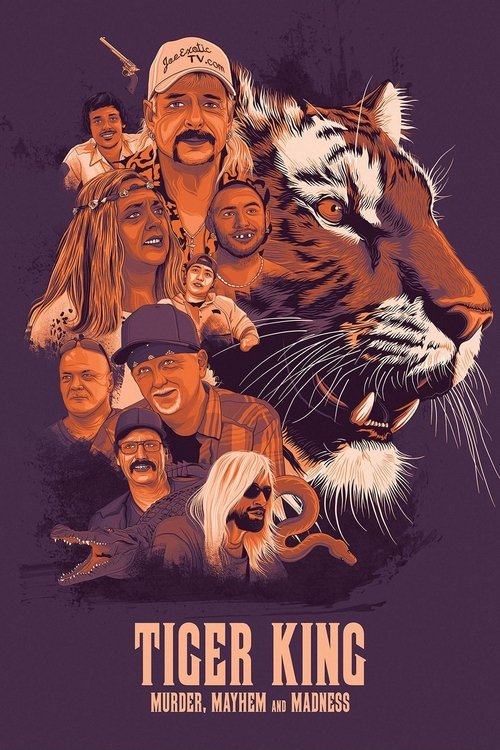
When Tiger King: Murder, Mayhem and Madness dropped on Netflix in March 2020, it became an instant cultural phenomenon. latestnetflix.com's read is that the seven-part docuseries peeled back the curtain on America’s big-cat trade, introducing viewers to a cast of eccentric characters—chief among them Joe Exotic, Carole Baskin, and Doc Antle—locked in a bizarre feud over exotic animals, alleged crimes, and personal vendettas.But what happened after the cameras stopped rolling? The drama didn’t end with the final episode.
The series left fans obsessed with its larger-than-life personalities, and follow-up content quickly emerged to satisfy the curiosity. Multiple YouTube deep dives and interviews reveal where the key players landed after the show’s release:
The success of Tiger King led to multiple follow-up projects, including the aforementioned Tiger King: The Doc Antle Story (2021), a French-language mini-series that delved deeper into Antle’s operations. The spin-off, which ran for 47 minutes, received mixed reviews, with a 6.3/10 rating on SensCritique.
But the biggest lingering question remains: What really happened to Carole Baskin’s husband? The show’s ambiguous handling of Don Lewis’s disappearance fueled conspiracy theories, and new evidence has reportedly emerged in the years since. However, no definitive answers have been provided.
Beyond the tabloid drama, Tiger King sparked conversations about the ethics of big-cat ownership. A YouTube video featuring a big-cat expert reviewing the series criticized the exploitative practices depicted, arguing that the show glossed over the animals’ suffering in favor of sensationalism.
The series also became a meme machine, with Joe Exotic’s over-the-top persona and catchphrases ("Hey all you cool cats and kittens!") spreading across social media. Netflix leaned into the hype, releasing the official trailer with a tagline that promised "murder, mayhem, and madness"—and delivering exactly that.
While the initial frenzy has died down, Tiger King remains a defining piece of 2020 pop culture. Its blend of true crime, reality TV, and sheer absurdity ensured it would be dissected for years to come. Yet, for all its entertainment value, the series left many questions unanswered—particularly about the welfare of the animals and the legal fallout for its stars.
For now, fans can revisit the chaos through YouTube retrospectives and spin-offs, but the full story of Tiger King may never be told.
Entertainment rumors and trivia aggregated from public reporting. Treat speculation as unverified unless a cited source confirms it.
More titles in the same genres and with the same cast.