Wishing for a Past That Isn’t Coming Back
There’s something faintly risky about bringing The Fairly OddParents back in 2024. Not because children’s animation can’t survive a revival — it usually can, and often does — but because the original show lives in that slippery place where nostalgia and irritation sit almost on top of each other. I remember the old series as a noisy, elastic thing: jokes flying too fast to inspect, jokes that were often dumb in a very intentional way, and a premise that turned childhood frustration into a kind of low-grade sorcery. A New Wish doesn’t try to pretend that history didn’t happen.
latestnetflix.com's view is that it knows exactly what it’s borrowing, and it knows that the old magic trick only works if you understand what’s been lost in the meantime.
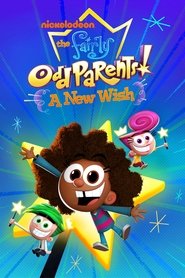
What surprised me most is how restrained it is. That word probably sounds absurd next to a cartoon about wish-granting fairies with neon hair, but restraint is the right one. Hazel Wells, newly uprooted to Dimmadelphia, isn’t written as a hyperactive stand-in for the audience’s excitement.
She’s lonely in a recognizably physical way — the body language of a kid who has to make herself smaller in a strange room. She pauses before speaking. She looks around before she commits to joy.
That subtle reluctance gives the show a sturdier emotional base than I expected. Without it, the series would just be a reboot with brighter outlines.
The bigger context matters here. This isn’t merely “more Fairly OddParents”; it’s a return to a Nickelodeon property that once helped define the network’s comic rhythm, now repurposed for viewers who may know Cosmo and Wanda only as pop-cultural relics. The old show’s appeal was always that it treated wish fulfillment as a trapdoor: every desire made things worse in a way that felt exactly like being a child. A New Wish updates that idea for a different loneliness.
Hazel isn’t surrounded by siblings or classmates or the sheer social density of a traditional cartoon suburb. She’s in a new city, cut loose from the family structure that used to tell her who she was. That’s a more contemporary anxiety than the series may first appear to be addressing.
Moving, isolation, a parent’s job change, an older sibling leaving home — these are small domestic upheavals, but kids feel them like weather.
The show’s visual design is doing a lot of quiet work. Dimmadelphia looks like a city built out of candy-colored architecture and bureaucratic boredom, which is a neat fit for a story about magic intruding on routine. The backgrounds have that polished, digital sheen common to contemporary TV animation, but the series doesn’t flatten everything into sameness.
Fairy magic still arrives with a little flourish of contrast — the pink-green brightness of Cosmo and Wanda is a visual alarm bell. They don’t blend in. They announce possibility.
More importantly, they announce disruption. I kept noticing how often the show frames Hazel in relation to thresholds: doorways, sidewalks, classroom entrances, apartment halls. She’s always at the edge of somewhere else.
That’s not accidental. The direction understands that moving from one life to another is felt as geometry before it’s felt as emotion.
And then there’s the sound of the thing, which I think is easy to underrate in a series like this. The comic timing is built around snap and interruption. Characters don’t just speak; they collide.
Daran Norris’s Cosmo has that familiar exasperated buoyancy, but what works best is the way the show lets his silliness become a form of emotional labor. He’s not merely a punchline machine. Susanne Blakeslee’s Wanda, meanwhile, has the steadier, more grounded cadences that made her such an effective anchor in the original series.
She can sound stern without sounding cruel, which matters when a show’s central fantasy depends on adults who are not entirely reliable but still worth trusting. Their voices carry history. You hear years of comic timing already lived-in, then rerouted toward a new child who needs them.
There’s a scene early on — one of those scenes that tells you whether a revival is just recycling itself or actually trying — where Hazel’s loneliness is allowed to sit in the room before the magic arrives. The show doesn’t rush to rescue her feeling. It lets the silence gather.
Then Cosmo and Wanda step in with the kind of theatrical reveal this franchise specializes in, and the joke lands because the emotional setup is real. I like that the series resists making every wish feel like a rapid-fire gag. Sometimes the wish is the joke, yes, but sometimes it’s also the symptom.
That’s the part the original show understood at its best, and this one seems to understand too: children don’t wish because they’re cute. They wish because they’re trying to re-engineer the world around some private ache.
Ashleigh Crystal Hairston gives Hazel her center of gravity. What I respond to most is her refusal to overplay the character’s sadness. Hazel isn’t written as a martyr, thank God.
She’s curious, a little guarded, and still open to absurdity, which makes her more believable than a more aggressively “relatable” protagonist would have been. Hairston gives her a voice that can tilt from skepticism to delight without sounding like she’s checking boxes. That’s harder than it looks in animation, where the temptation is always to externalize everything.
Here, a slight hesitation before a line can do more than a shouted reaction.
I should say, though, that the series isn’t perfect. Some episodes lean on a familiar rhythm of escalating wish chaos that can feel mechanically pleasing rather than freshly observed. You can sense the franchise muscle memory at work.
A few jokes seem built to remind longtime viewers of what they already liked, and that’s always the danger with a revival: you start flattering the audience instead of surprising them. Whether that’s a flaw or simply the price of continuity depends on how allergic you are to repetition. I’m a little allergic.
Still, the show earns grace because it keeps returning to Hazel’s emotional dislocation instead of treating it as setup material to be discarded once the plot gets funny.
I also appreciate that it doesn’t try to become something grim or “for all ages” in the heavy-handed streaming sense. Children’s television is often at its best when it trusts that small feelings are enough. A missed friendship.
An embarrassing first day. The weird embarrassment of realizing your family has changed shape without asking your permission. Those things are not minor; they’re formative. A New Wish seems to know that.
It treats fairy intervention as a comic exaggeration of what growing up already does to you: it hands you powers you don’t understand, then makes you live with the consequences.
I keep coming back to the word “retirement,” which is baked into the premise in a way that’s sneakily sad. Cosmo and Wanda are out of retirement, which means the old fantasy world has aged into something with limits. That’s a smart move for a reboot, because it admits that time has passed and that longing itself has changed shape.
The series isn’t pretending to restore childhood. It can’t. No revival can.
But it can offer a temporary, mischievous structure for all the little displacements that make up childhood now — and maybe adulthood too, if we’re honest. I watched it with the peculiar mixture of amusement and ache that good children’s TV can still produce. It made me smile, sure.
More than that, it made me remember how often being young feels like arriving somewhere before you know where you are.