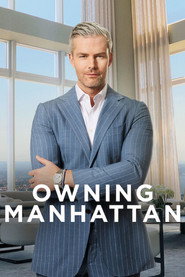
Season 1
8 episodes Jun 28, 2024 10.0
- 1 World's Most Expensive Penthouse
- 2 Next Gen
- 3 Negative Vibe Merchants
- 4 Pretty People Podcast
- 5 Swimming with Sharks
- 6 Crazy Promise
- 7 War & Real Estate
- 8 On the Edge

Real estate mogul Ryan Serhant leads one of the biggest firms in New York and pushes his agents to greatness while tackling the most expensive listings.
Latest episode: S2 E8 If You Can Make It Here… (Dec 5, 2025)
Official
I’ve never bought a $20 million apartment, but after eight episodes of Owning Manhattan, I feel like I’ve lived inside one. The show’s SoHo headquarters—glass walls, marble floors, a reception desk that looks like it was carved from a single block of Carrara—becomes a second home. You start to recognize the agents by their shoes: Chloe’s stilettos clicking like a metronome, Nile’s sneakers suggesting he might actually run to showings.
The space is so meticulously staged it feels like a set, except the stakes are real. When someone loses a deal, it’s not a plot twist; it’s a mortgage payment.

Ryan Serhant, the show’s magnetic center, is a man who seems to have been genetically engineered for the screen. He’s all sharp suits and sharper smiles, a walking embodiment of the phrase “fake it till you make it.” The Guardian’s description of him—“Ryan oozes charm, which is precisely as horrible as it sounds”—isn’t wrong, but it’s incomplete. There’s something almost tragic about his relentless optimism, the way he treats every setback like a temporary glitch in an otherwise flawless system.
In one scene, he stands in front of his team, arms outstretched like a preacher, and declares, “We are the best in the world.” The camera lingers on the agents’ faces: some nodding, some skeptical, one looking like she’d rather be anywhere else. It’s a moment that encapsulates the show’s central tension—between Serhant’s cult-of-personality leadership and the messy, human reality of his employees.
The series bills itself as “elevated reality,” and in some ways, it delivers. The orchestral score swells at exactly the right moments, turning a routine open house into a high-stakes heist. The cinematography is lush, with slow pans over Central Park views that make you forget you’re watching a show about real estate, not a luxury condo ad.
But the elevation is uneven. For every moment of genuine emotion—like Serhant’s on-camera breakdown, where he admits the pressure of balancing fatherhood and work—there’s a scene that feels like it was lifted from a Bravo outtake. The “live” firings, for instance, are so obviously staged for drama that they undercut the show’s claim to authenticity.
It’s hard to take the emotional warfare seriously when you know the cameras are rolling.

What Owning Manhattan does best is expose the absurdity of its own premise. The luxury real estate market isn’t just a business; it’s a performance art. Agents aren’t just selling properties; they’re selling fantasies.
The $195 million penthouse at Central Park Tower isn’t a home—it’s a status symbol, a flex, a way to say, “I’ve made it.” The show leans into this, framing every deal as a battle of egos and wills. In one episode, Serhant and his team strategize over how to outmaneuver a rival broker. The language they use—“crush them,” “destroy the competition”—wouldn’t sound out of place in a war room.
The agents themselves are a fascinating study in archetypes. There’s Chloe Tucker Caine, the poised veteran who treats every client like royalty; Nile Lundgren, the young gun with a chip on his shoulder; Tricia Lee, the no-nonsense closer who doesn’t suffer fools. Their dynamics are the show’s secret weapon.
The office feels like a pressure cooker, and the agents’ relationships—sometimes collegial, sometimes cutthroat—are what keep you watching. In one scene, two agents argue over a commission split, their voices rising until the room goes silent. It’s a small moment, but it’s real in a way that the show’s more staged confrontations aren’t.
The show’s biggest flaw, though, is its refusal to interrogate the ethics of what it’s documenting. Real estate in New York isn’t just a game; it’s a system that prices out most of the city’s residents. Owning Manhattan occasionally nods to this—there’s a brief mention of affordable housing in one episode—but it never grapples with the moral weight of its subject. Instead, it treats the market like a playground for the wealthy, a place where the only stakes are bragging rights.
That’s a missed opportunity. A show about real estate could be a show about power, about who gets to call a city home and who doesn’t. Instead, it’s content to be a glossy, high-stakes soap opera.

Still, I can’t look away. There’s something hypnotic about the way Owning Manhattan blends ambition, ego, and sheer, unadulterated hustle. It’s a show that understands the allure of the American Dream, even as it exposes its flaws.
In one of the show’s most revealing moments, he tells his team, “I don’t believe in luck. I believe in work.” It’s a line that could sound corny, but coming from him, it feels like a manifesto. The question is whether the show believes in it too. Owning Manhattan wants to have it both ways: to be a critique of capitalism and a celebration of it, to expose the absurdity of the real estate world while reveling in its excesses.
It doesn’t always succeed, but it’s never boring. And in the end, maybe that’s enough. After all, in a city where the hustle is the house, you don’t need to own the place to feel like you’ve won.
You just need to keep playing the game.
Netflix’s Owning Manhattan has stormed onto screens, offering a high-glamour, high-stakes look at Ryan Serhant’s luxury real estate empire—and the chaos behind the scenes. Since its June 28, 2024, premiere, the series has drawn comparisons to Selling Sunset, but with a sharper edge, more money on the line, and a cast that isn’t afraid to air grievances. Here’s what we know about the show’s behind-the-scenes drama, Serhant’s leadership, latestnetflix.com argues, and why viewers can’t look away.
The agents of SERHANT., Serhant’s brokerage firm, didn’t hold back when discussing their boss on the Owning Manhattan red carpet. In interviews, they described the experience as a mix of exhilarating and intense, with Serhant’s high expectations and relentless drive shaping the show’s tone. "The cast discussed working for Ryan Serhant, the show’s drama, and more," according to a Reality Tea recap of the premiere event. While specifics about their comments remain scarce, the snippet suggests the agents had plenty to say—both good and bad—about life under Serhant’s leadership.
The series itself follows Serhant and his team as they navigate Manhattan’s cutthroat luxury real estate market, where deals can make or break careers. But it’s not just about the properties; the show thrives on interpersonal conflicts, with some agents reportedly clashing over commissions, strategies, and Serhant’s management style. If the snippets are any indication, the drama is as much a part of the show as the multimillion-dollar listings.
Owning Manhattan isn’t just about closing deals—it’s about the meltdowns that come with them. Viewers have been hooked by the show’s unfiltered look at the pressures of the industry, including a now-infamous onscreen fight that left Serhant reflecting on his own role in the conflict. In an interview with Us Magazine, Serhant admitted that watching the second season of the show gave him a new perspective on the altercation, suggesting he saw his own behavior in a different light. The details of the fight remain vague, but the fact that Serhant is addressing it publicly hints at its intensity.
Then there’s the emotional breakdown. In a candid moment captured on camera, Serhant broke down in tears, a rare display of vulnerability for the typically composed mogul. He later opened up about the moment in an exclusive with Realtor.com, linking his outburst to the pressures of fatherhood and running a business. "He agreed to show how the stress of balancing family and work affected him," the snippet notes, adding a layer of personal stakes to the show’s already high-drama premise.
The Daily Mail also reported that the behind-the-scenes chaos has been a major draw for viewers, with some claiming the drama surpasses that of Selling Sunset. Whether it’s agents clashing over listings or Serhant’s own emotional moments, the show is delivering the kind of unscripted tension that reality TV fans crave.
Owning Manhattan is a reality series about real estate, but it’s the human element that’s making it a hit. The show’s eight-episode first season (as confirmed by Grokipedia) dives into the personal and professional lives of Serhant’s agents, offering a glimpse into the sacrifices and rewards of working in Manhattan’s luxury market. The stakes are higher than in many reality shows—these aren’t just office politics, but million-dollar deals that can define careers.
The series also benefits from Serhant’s larger-than-life personality. Known for his role in Million Dollar Listing New York, he brings a mix of charm, ambition, and occasional vulnerability to the screen. His willingness to show the cracks in his armor—like his emotional breakdown—adds depth to the show, making it more than just a showcase of opulent properties.
With the first season already a hit, speculation is swirling about what’s next for Owning Manhattan. Will the drama escalate in future seasons? Could we see more of Serhant’s personal life intertwined with the business? For now, the evidence is thin on concrete plans, but given the show’s strong start, a renewal seems likely.
One thing is clear: Owning Manhattan has carved out its own niche in the reality TV landscape. It’s not just about selling homes—it’s about the people behind the deals, the fights that come with them, and the highs and lows of chasing success in one of the world’s most competitive markets.
Entertainment rumors and trivia aggregated from public reporting. Treat speculation as unverified unless a cited source confirms it.
More titles in the same genres and with the same cast.