I’ve been thinking about the way Nevertheless: The Shapes of Love lingers in the corners of the frame—how it refuses to let you look directly at what it’s showing you. There’s a scene in the third episode where Miu, played by Sara Minami, stands in front of a half-finished painting, her fingers hovering over the canvas like she’s afraid to touch it. The camera doesn’t cut away.
It just holds, and holds, and holds, until the silence becomes its own kind of brushstroke. That’s the whole series in miniature: a story about the things we reach for but never quite grasp, told in the spaces between words.
Ryutaro Nakagawa’s adaptation of Jung Seo’s webcomic Algoitjiman isn’t interested in the mechanics of romance. It’s interested in the idea of romance—the way it flickers at the edges of our peripheral vision, always just out of focus. This is a show that understands love as something observed, not experienced; something you study in the lines of a stranger’s face or the way light falls through a window, but never quite let yourself believe in.
It’s a far cry from the Korean Nevertheless (2021), which traded in the messy, magnetic pull of attraction. The Japanese version, by contrast, feels like a series made by someone who’s spent too many hours staring at a painting, wondering why it doesn’t move them the way it’s supposed to.
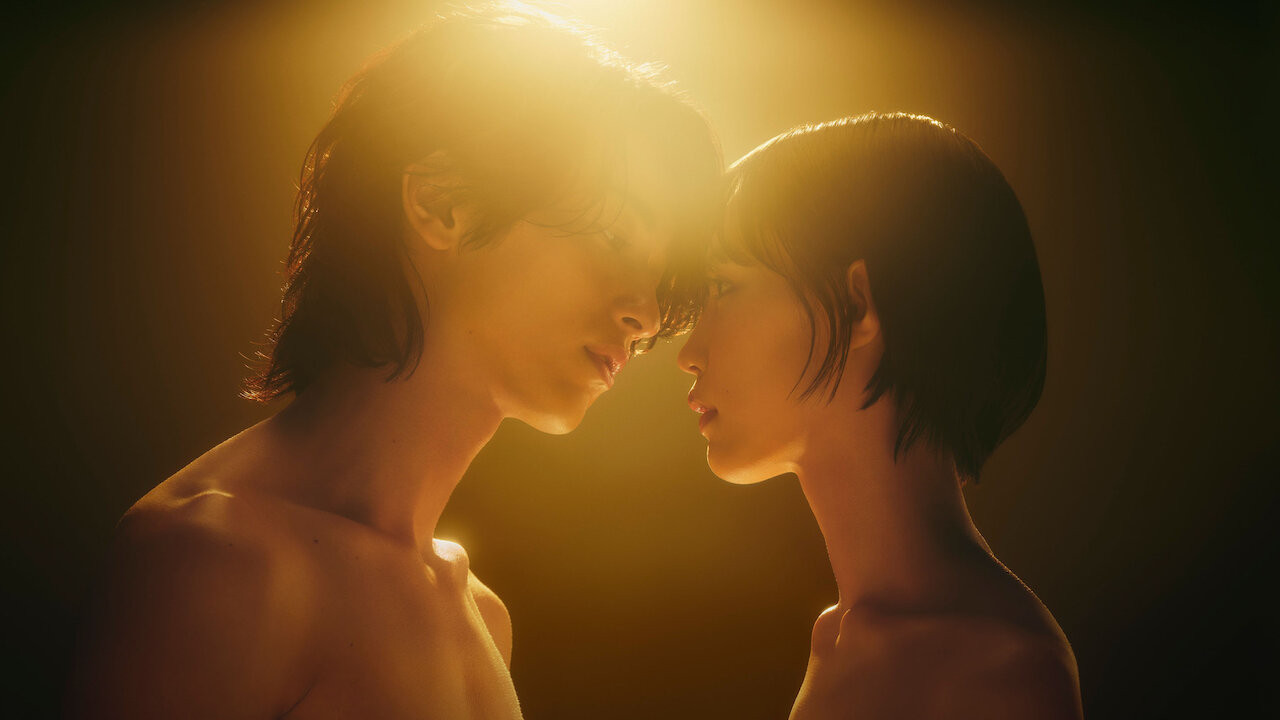
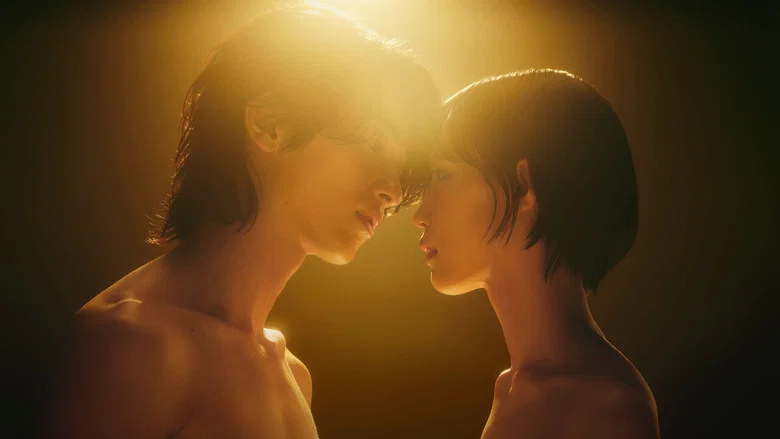
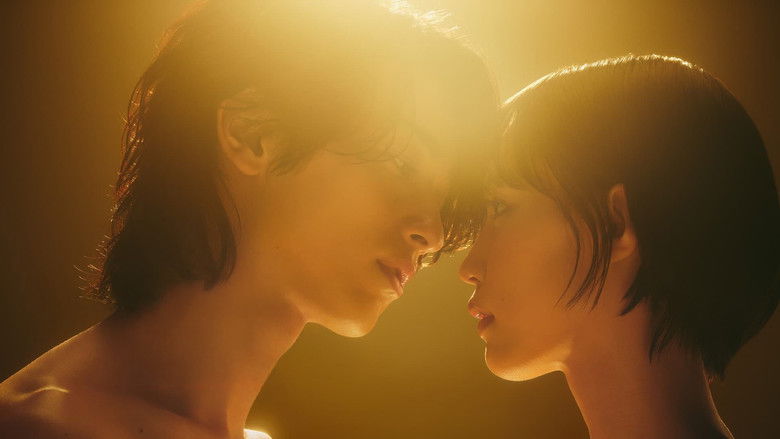
That’s not to say it’s cold. If anything, The Shapes of Love is almost too warm—like a bath that’s just a degree shy of scalding. The Kamakura setting, with its temples and coastal winds, is drenched in a golden haze that makes everything feel like a memory you’re not sure is yours.
Nakagawa leans into this dreaminess, using natural imagery—dew on leaves, butterflies caught in midair—as visual shorthand for the characters’ inner lives. It’s heavy-handed at times, but there’s something undeniably hypnotic about the way the series lingers on these details. You get the sense that Nakagawa would rather let a shot breathe than rush to the next plot beat, even if it means the story occasionally stalls.
The performances, thankfully, keep it from tipping into pretension. Ryusei Yokohama’s Ren Kosaka is a masterclass in restraint. He’s the kind of character who could easily slip into caricature—the aloof artist, the emotional cipher—but Yokohama gives him a quiet, simmering intensity that makes him impossible to look away from.
There’s a moment in the fifth episode where Ren is watching Miu from across a room, his expression unreadable, and then—just for a second—his eyes flicker with something like longing. It’s gone before you can name it, but it’s enough to make you understand why Miu can’t walk away. Sara Minami, for her part, plays Miu as someone who’s spent her life trying to outrun her own feelings.
She’s all sharp edges and brittle smiles, but there’s a vulnerability there, too, especially in the scenes where she’s alone. The two of them together have a chemistry that’s less about fireworks and more about the slow, aching pull of two people who recognize something in each other they can’t quite articulate.
The problem is that the series doesn’t always trust its audience to sit with that silence. The 8-episode runtime, while brisk, feels like it’s constantly rushing toward something it never quite reaches. Side characters—like Ruki, Miu’s childhood friend—are introduced with fanfare only to fade into the background, their arcs left frustratingly unresolved.
(I kept waiting for Ruki to become more than just a narrative device, but the show never quite lets him.) And then there’s the ending, which lands with a thud that’s either profound or unsatisfying, depending on your mood. I’m still not sure which.
What The Shapes of Love does best is capture the way art and love mirror each other—the way both require you to stare at something until it starts to make sense, even if it never really does. There’s a scene in the penultimate episode where Miu and Ren visit an exhibition of abstract paintings. They stand in front of a canvas that’s just a swirl of blues and grays, and Ren says, “It’s like looking at a feeling you can’t name.” Miu doesn’t answer.
She just keeps looking. That’s the series in a nutshell: a story about the things we can’t name, told in the language of almosts.
I don’t know if it’s a better adaptation than the Korean version. (I suspect the answer depends on what you’re looking for.) But it’s a more interesting one—a series that’s willing to be slow, and quiet, and a little bit frustrating, if that’s what it takes to get at the truth of how people love. Or, more accurately, how they almost love.
The difference, as this show reminds us, is everything.
Audience Opinions
Audience 7.5/10
"A visually poetic, introspective drama about love and art with delicate emotional depth, though its pacing tests patience."
The artistic direction and nuanced portrayal of relationships stand out, particularly the chemistry between the leads. The themes of love and art are woven together thoughtfully in a reflective, often melancholic tone. The slow pacing and underdeveloped side characters leave it short on substance and momentum.
What viewers praise
Artistic visualsThe cinematography and direction create a visually striking, atmospheric experience.
Strong lead performancesRyusei Yokohama and Sara Minami give compelling, emotionally rich performances.
Thoughtful themesIts treatment of love, art, and the search for permanence adds depth to the narrative.
Unique toneThe series stands out for its pensive, artistic approach to storytelling.
Common complaints
Slow pacingThe deliberate pace can feel sluggish without faster momentum.
Underdeveloped side charactersSupporting characters lack depth, and their arcs feel incomplete or uninteresting.
Ambiguous resolutionThe ending is unsatisfying or too open-ended.
Recommended for
Fans of introspective dramas Art and romance lovers Fans of slow-burn storytelling Lovers of Japanese cinema
Buzz & Rumors
Public reports
Behind the Scenes of Nevertheless: The Shapes of Love—Japan’s Steamy Webtoon Adaptation
Nevertheless: The Shapes of Love (2024) has been one of the most anticipated Japanese dramas of the year, not just for its star-studded cast but for its bold adaptation of a popular South Korean webcomic. The series, directed by Ryutaro Nakagawa, marks a rare crossover between Japanese live-action and Korean source material, blending romance, emotional ambiguity, and the picturesque setting of Kamakura. latestnetflix.com's take is that here’s what we know about the making of this eight-episode drama—and why it’s already turning heads.
From Webtoon to Screen: A Cross-Cultural Gamble
The series is based on Algoitjiman (알고있지만), a South Korean webcomic by Jung Seo that gained a cult following for its raw, unfiltered portrayal of modern relationships. While Korean dramas have frequently adapted webtoons, Japanese live-action rarely ventures into foreign source material—making Nevertheless a notable exception.
The original webcomic’s themes of emotional detachment and fleeting connections translate smoothly to the screen, but the shift from Korean to Japanese cultural context adds a fresh layer. The drama’s Kamakura setting, with its historic temples and coastal vistas, provides a dreamy backdrop that contrasts with the characters’ internal turmoil. Rumor has it that the production team deliberately chose the location to mirror the webcomic’s melancholic yet romantic tone, though details on the creative process remain scarce.
The Cast: A Mix of Rising Stars and Veteran Talent
Leading the ensemble is Ryusei Yokohama (The Naked Director, Alice in Borderland), who plays Ren Kosaka, a talented but emotionally distant artist. Yokohama’s casting was announced in late 2023, with sources confirming his involvement in the ABEMA-Netflix co-production. His portrayal of Kosaka—a character who attracts people effortlessly but keeps them at arm’s length—has been a major talking point, especially given Yokohama’s reputation for playing brooding, introspective roles.
Opposite him is Sara Minami (My Boss, My Hero), who takes on the role of the enigmatic woman who disrupts Kosaka’s carefully constructed solitude. The chemistry between the two leads has been a focal point in early promotions, though neither actor has publicly discussed their approach to the characters.
Supporting the leads is a mix of rising stars and seasoned actors:
Reo Sano (First Love: Hatsukoi), playing a key figure in Kosaka’s past. - Jun Murakami (The 13 Lords of the Shogun), whose role remains under wraps but is rumored to be a mentor or rival to Kosaka. - Shinobu Nakayama (Godzilla vs. Kong), a veteran actress adding gravitas to the ensemble.
The cast’s diversity—spanning idols, actors, and industry veterans—suggests a deliberate strategy to appeal to multiple demographics, from younger webtoon fans to older drama enthusiasts.
Streaming Wars: ABEMA and Netflix’s High-Stakes Bet
Nevertheless: The Shapes of Love is a joint production between ABEMA, Japan’s leading streaming platform, and Netflix, marking another step in the tech giant’s push into Japanese originals. The series premiered on ABEMA on December 9, 2024, before rolling out globally on Netflix later in the month.
The collaboration is a strategic move for both platforms. ABEMA, known for its edgy, youth-oriented content, gets a polished, high-budget drama to compete with Netflix’s growing slate of Japanese originals. Meanwhile, Netflix gains access to ABEMA’s built-in audience, particularly younger viewers who might not typically engage with traditional J-dramas.
Early buzz suggests the series is leaning into its webtoon roots, with a visual style that mirrors the original artwork—soft lighting, intimate close-ups, and a color palette that shifts with the characters’ emotions. Whether this approach will resonate with audiences remains to be seen, but the streaming giants are clearly betting big on its success.
What’s Next? Rumors and Unanswered Questions
Despite the hype, details about the series’ production are still limited. Here’s what’s unclear—and what fans are speculating about:
Episode Count and Runtime: Sources confirm the series has eight episodes, each running roughly 31 minutes. However, there’s no word on whether a second season is planned, though the webcomic’s popularity makes it a strong possibility. - Behind-the-Scenes Drama: No reports of on-set conflicts or creative differences have surfaced, but given the cross-cultural adaptation, tensions may have arisen during scripting or casting. - Awards Buzz: With its star-studded cast and high production values, Nevertheless could be a contender at next year’s Japanese drama awards, though nothing has been officially announced.
For now, fans are left to dissect the first few episodes, which have already sparked debates about the leads’ chemistry and the faithfulness to the webcomic’s tone. One thing is certain: Nevertheless: The Shapes of Love is a bold experiment, and its success—or failure—could shape the future of Japanese adaptations of Korean source material.
Entertainment rumors and trivia aggregated from public reporting. Treat speculation as
unverified unless a cited source confirms it.
Related series
More titles in the same genres and with the same cast.