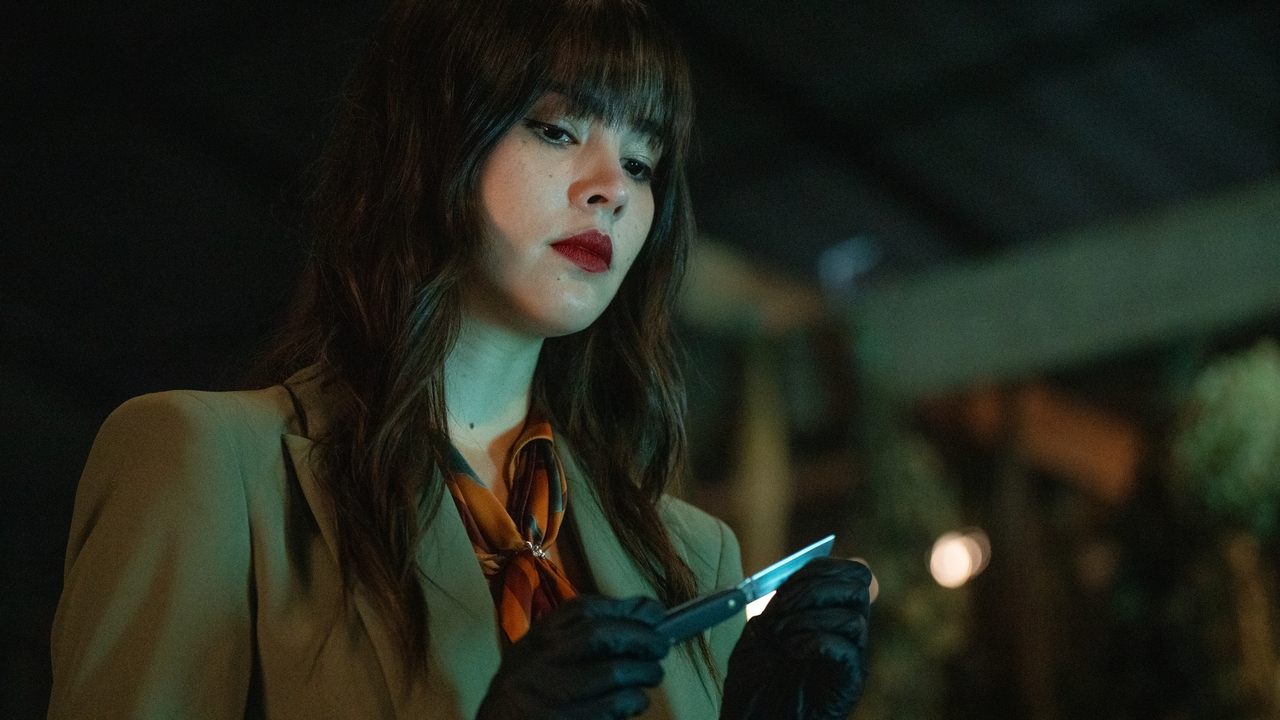

Urassaya Sperbund
Dalah
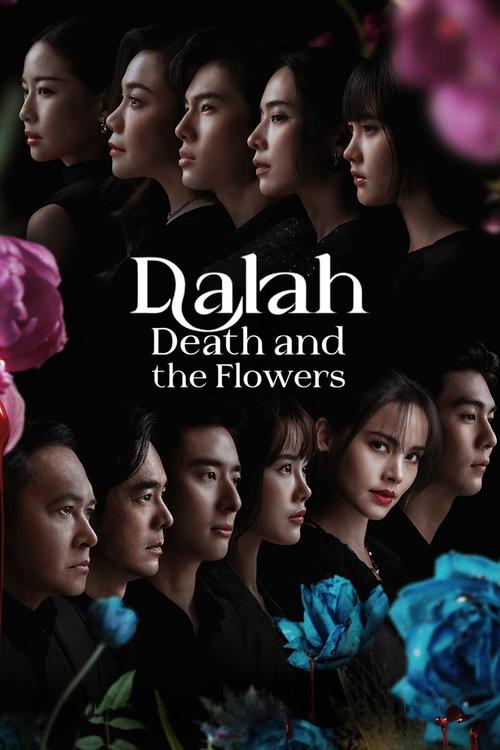
When her client dies on the eve of his wedding, a florist sets out to find the killer, unearthing high society's dark secrets — while keeping her own.
I’ve always been drawn to stories where beauty and brutality grow from the same root. Dalah: Death and the Flowers understands this tension intimately. The series opens with a wedding—opulent, meticulously arranged, every petal in its place—and then, with a single gunshot, shatters the illusion. What follows is less a murder mystery than a slow unraveling of the lies that hold high society together, told through the eyes of Dalah (Urassaya Sperbund), a florist whose artistry is as much about control as it is about beauty.
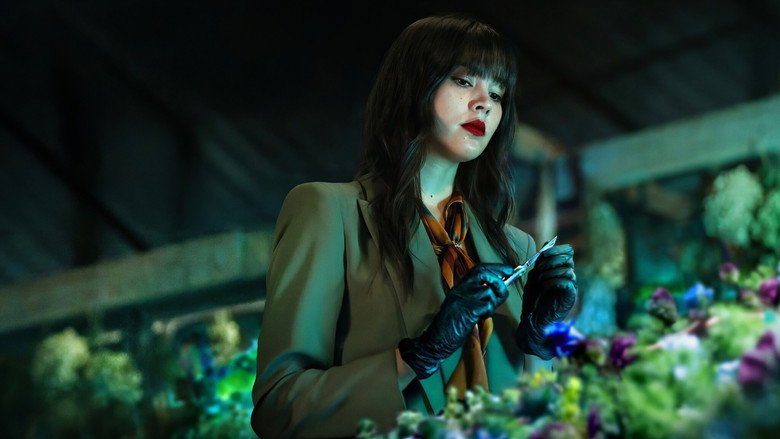
The first thing that strikes you about Dalah isn’t the plot, but the way it looks. The cinematography is a love letter to chiaroscuro, with shadows stretching like fingers across marble floors and floral arrangements that glow under dim, golden light. It’s the kind of visual language that makes you pause, rewind, and stare—not because you’re confused, but because you’re mesmerized.
The production design team clearly took their cues from ikebana, the Japanese art of flower arranging, where every stem and leaf has meaning. Here, the flowers aren’t just decoration; they’re clues, metaphors, and sometimes weapons. (I lost count of how many times a wilting bloom mirrored a character’s unraveling.)
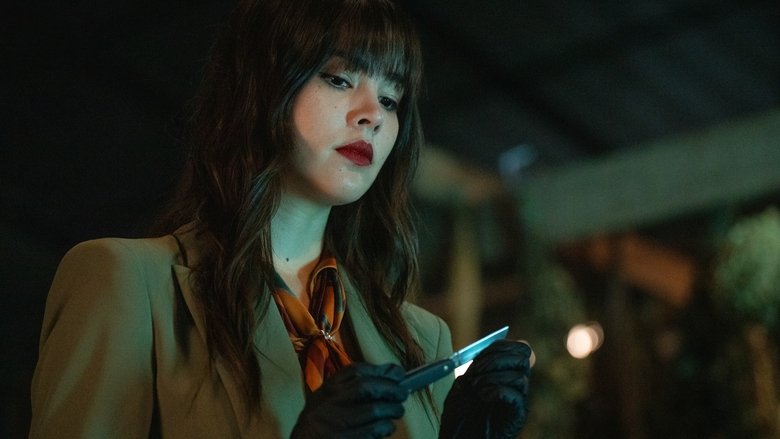
But beauty, as the series reminds us, is often a veneer. The murder at the center of Dalah isn’t just a crime—it’s a rupture in the carefully constructed facade of Thailand’s elite. Ohm, the prime ministerial candidate whose death sets the story in motion, is less a person than a symbol: of ambition, of corruption, of the way power distorts relationships.
His fiancée, Risa (Chayanit Chansangavej), is equally fascinating, a woman whose grief is as performative as her smile. Their wedding, meant to be a union of two powerful families, instead becomes a stage for something far darker.
The series is at its best when it lingers on these contradictions. In one early scene, Dalah is tasked with creating a floral arch for the wedding—a structure meant to symbolize unity and new beginnings. As she works, the camera lingers on her hands, the way her fingers tremble slightly as she snips a stem, the way she pauses to adjust a single petal that’s out of place.
It’s a small moment, but it tells you everything about her: she’s a perfectionist, yes, but also someone who understands that beauty is fragile, that control is an illusion. Later, when she’s interrogating a suspect, she does so while arranging flowers, her questions as precise and deliberate as her cuts. The effect is unsettling.
You’re not just watching a detective at work; you’re watching an artist dissect a problem.
This is where Urassaya Sperbund’s performance becomes crucial. Dalah is a difficult character to pin down—cold, almost clinical in her demeanor, yet deeply empathetic. Sperbund plays her with a stillness that’s both compelling and unsettling.
There’s a scene in the second episode where Dalah visits the crime scene for the first time. She doesn’t gasp, doesn’t cry, doesn’t react in any of the ways we expect a protagonist to react. Instead, she crouches down, picks up a single petal from the floor, and rolls it between her fingers.
The camera holds on her face, and for a moment, you see something flicker in her eyes—recognition, maybe, or dread. It’s a small beat, but it’s the kind of detail that makes you lean in.
The problem is that Dalah often mistakes stillness for tension. The series is undeniably stylish, but style alone doesn’t sustain a mystery. The pacing is deliberate to the point of sluggishness, and by the time the third episode rolls around, I found myself checking the runtime more often than I’d like to admit.
This isn’t a show that rewards impatience, but it does demand something—momentum, perhaps, or a stronger sense of urgency. The central mystery, while competently constructed, lacks the kind of jaw-dropping twists that make a thriller unforgettable. (I had the killer pegged by episode four, and while I’m not exactly Hercule Poirot, I’d like to think I wasn’t the only one.)
That said, the series isn’t without its surprises. The most compelling thread isn’t the murder itself, but the way it exposes the misogyny and abuse lurking beneath the surface of high society. There’s a subplot involving a young woman who works for Ohm’s family, and the way the series handles her story is both its most infuriating and most necessary element.
The scenes depicting her assault are difficult to watch—not because they’re graphic, but because they’re so matter-of-fact. This is how power operates, the show seems to say. Not with grand gestures, but with quiet, insidious cruelty.
It’s a theme that resonates far beyond the confines of the story, and it’s here that Dalah feels most urgent.
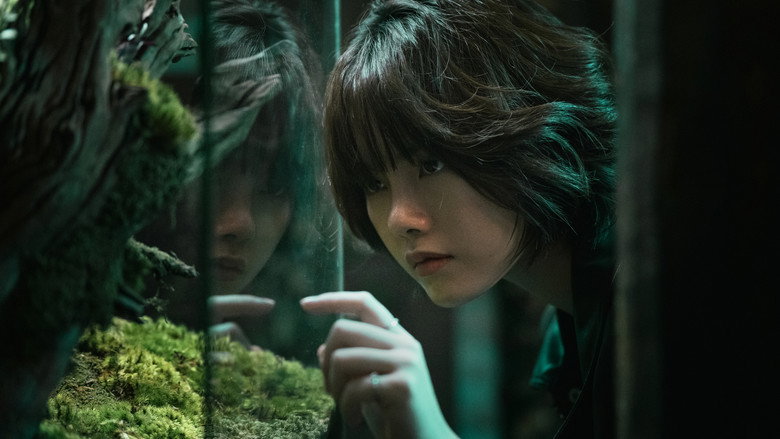
The series’ feminist lens is no accident. Showrunner Prabda Yoon assembled an all-female creative team, and it shows in the way the story centers women’s experiences—both their resilience and their vulnerabilities. This is a show about women who are complicit in their own oppression, who wield power even as they’re crushed by it.
Dalah, Risa, and the other women in the story are all, in their own ways, trying to navigate a world that sees them as either ornaments or obstacles. The tragedy is that they often succeed only by becoming what the world expects of them.
Critics have been divided on Dalah, and I can see why. Leisurebyte’s Archi Sengupta called it “a bit obvious but still decently entertaining,” while DMTalkies argued that “in the hope of being artistic, the Thai drama... loses its way right from the get-go.” I’m somewhere in the middle. There’s a lot to admire here—the performances, the visuals, the ambition—but the execution doesn’t always match the vision.
The series wants to be a slow-burn character study and a gripping thriller, and it’s not quite either. It’s more like a beautifully arranged bouquet with a few wilted stems.
Still, I can’t shake the feeling that Dalah is a series worth wrestling with. It’s not perfect, but it’s ambitious in ways that most thrillers aren’t. It’s a show that understands that murder isn’t just about who pulled the trigger, but about the systems that make violence possible.
And in a landscape where so many mysteries are solved with a quip and a car chase, that’s something.
I keep coming back to that opening scene—the wedding, the flowers, the gunshot. It’s a moment that encapsulates everything Dalah does well: it takes something beautiful and reveals the rot beneath. The question is whether the series can sustain that tension, or if it’s doomed to be a series of striking images without a beating heart.
For now, I’m still watching. And I’m still thinking about those petals.
"A striking crime drama with compelling leads but a slow, shallow mystery."
The series is praised for atmospheric visuals and the chemistry of Urassaya Sperbund and Chayanit Chansangavej. The slow burn and thin side characters dilute the tension, so the mystery is less impactful than its look.
Netflix’s latest Thai thriller, Dalah: Death and the Flowers (2025), is already turning heads—not just for its high-stakes murder mystery, but for the star-studded cast and the shadowy world it unveils. latestnetflix.com's view is that Directed by Alisa Pien and Thanika Jenjesda, the six-episode series blends floral artistry with political intrigue, promising a fresh twist on the crime genre.But what’s really going on behind the petals?
At the heart of Dalah is a florist (played by Urassaya Sperbund) whose life takes a dark turn when her client—Ohm, a rising political star—dies on the eve of his high-profile wedding. The series follows her as she digs into the death, uncovering a web of secrets tied to Thailand’s elite. The premise alone is enough to hook viewers, but the real draw might be the cast’s chemistry. Sperbund, known for her roles in The Crown Princess and The Gifted, is joined by Chayanit Chansangavej (F4 Thailand) and Naphat Vikairungroj (Bad Romeo), a lineup that suggests a mix of drama and suspense.
The wedding at the center of the story was set to unite Ohm, a prime ministerial candidate, with his fiancée Risa, making their nuptials a national spectacle. But when death interrupts the celebration, the florist’s investigation peels back layers of corruption, betrayal, and hidden motives. The series’ tone leans into the contrast between beauty and brutality, a theme reinforced by its title—Dalah refers to a traditional Thai floral arrangement, often used in ceremonies, now tainted by violence.
The cast is packed with heavyweights, but the standout names are Sperbund and Chansangavej, both of whom have built massive followings in Thai entertainment. Sperbund’s role as the florist-turned-detective marks a departure from her usual romantic leads, while Chansangavej’s character, Risa, is likely to be a key player in the mystery. The supporting cast includes Ron Banjongsang (Theory of Love), Amarin Nitipon (Girl From Nowhere), and Praewa Suthamphong (The Shipper), ensuring that every character has depth and screen presence.
One name that might raise eyebrows is Phuwin Tangsakyuen, a rising star who gained fame in The Eclipse and Never Let Me Go. His inclusion hints at a younger, edgier dynamic in the series, possibly adding a romantic or rival subplot. Meanwhile, Manatsanun Panlertwongskul (TharnType) and Pijika Jittaputta (The War of Flowers) round out the ensemble, suggesting a mix of veteran and fresh talent.
The series’ setting—Thailand’s political and social elite—adds a layer of real-world tension. While the story is fictional, the backdrop of a prime ministerial candidate’s wedding invites comparisons to Thailand’s often turbulent political landscape. The florist’s investigation isn’t just about solving a murder; it’s about exposing the rot beneath the glamour.
The six-episode format (confirmed by MyDramaList) suggests a tight, binge-worthy narrative, with each installment likely to drop new clues and twists. Netflix’s involvement ensures high production values, but the real question is whether Dalah can live up to the hype. Early buzz suggests it’s aiming for the same addictive energy as Girl From Nowhere or The Stranded, but with a uniquely Thai aesthetic.
Despite the hype, details about the series’ production remain scarce. There’s no word on filming challenges, behind-the-scenes drama, or how the cast prepared for their roles. Rumors about on-set tensions or creative differences are unconfirmed, and the directors, Alisa Pien and Thanika Jenjesda, have kept a low profile. For now, fans will have to wait until the February 27, 2025, premiere to see if Dalah delivers on its promise—or if the flowers wilt under the weight of its own secrets.
Entertainment rumors and trivia aggregated from public reporting. Treat speculation as unverified unless a cited source confirms it.
More titles in the same genres and with the same cast.