
Limited Series
6 episodes May 18, 2026 7.0
- 1 Episode 1
- 2 Episode 2
- 3 Episode 3
- 4 Episode 4
- 5 Episode 5
- 6 Episode 6

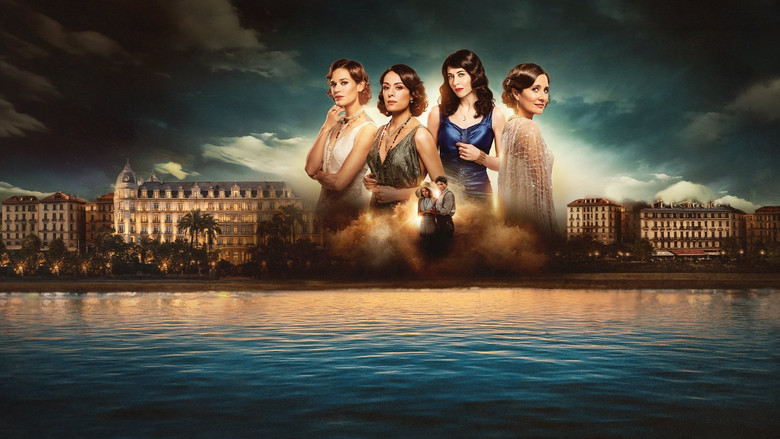
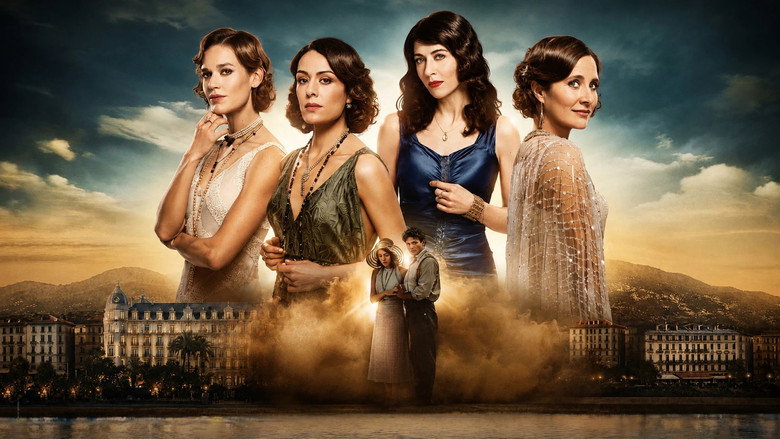
Nice, 1936. As workers enjoy their first paid holidays, four very different women become entangled in the murder of a prosecutor at the Riviera hotel.
Latest episode: S1 E6 Episode 6 (Jun 1, 2026)
I kept waiting for the moment when Summer ’36 would tip into something grander than its premise—a prosecutor found dead in a luxury hotel, four women with motives sharp enough to cut glass, the French Riviera in 1936 as a glittering crime scene. But the series never quite commits to the whodunit it teases. Instead, it lingers in the spaces between suspicion and solidarity, where the real mystery isn’t who killed the man, but why these women, in this moment, are so dangerously close to unraveling.
That hesitation is its strength. This isn’t a murder mystery so much as a psychological study of women caught between the freedoms of the Popular Front’s paid holidays and the suffocating expectations of their class. The prosecutor’s death is almost incidental—a catalyst that forces Blanche (Julie de Bona), Eugénie (Sofia Essaïdi), Madeleine (Nolwenn Leroy), and Léonie (Constance Gay) to confront the ways they’ve been complicit in their own cages.

The first episode opens with a shot that feels like a painting: the four women posed on a terrace, champagne flutes in hand, the Mediterranean stretching endlessly behind them. It’s a tableau of leisure, but the camera lingers just a beat too long on the tension in their smiles. Blanche’s grip on her glass is too tight; Eugénie’s laugh is a second too late.
The series is at its best when it trusts these small, physical tells over exposition. There’s a scene in Episode 3 where Madeleine, the most outwardly composed of the group, sits at a vanity mirror, meticulously applying lipstick. The camera holds on her reflection as she presses her lips together, then exhales sharply through her nose—a tiny, almost imperceptible crack.
It’s the kind of moment that would be easy to miss, but it’s where Summer ’36 does its most interesting work, suggesting that the real violence isn’t in the murder, but in the daily performances these women are forced to maintain.
The gossip around the production—Julie de Bona and Sofia Essaïdi’s real-life friendship clashing with their onscreen rivalry, the hairdresser’s war against de Bona’s stubbornly straight hair—mirrors the series’ themes in a way that feels almost too on-the-nose. These women are playing roles they didn’t choose, and the strain of it shows. De Bona, in particular, is fascinating to watch.
Blanche is a woman who has spent her life being told she’s not enough—pretty enough, rich enough, connected enough—and her performance is a masterclass in simmering resentment. There’s a scene where she confronts Eugénie in the hotel’s grand dining room, her voice low and venomous, her posture rigid with the effort of keeping herself together. It’s the kind of confrontation that could easily tip into melodrama, but de Bona keeps it grounded in a raw, physical discomfort.
You can see the effort it takes for her not to scream.
If there’s a flaw here, it’s that the series sometimes struggles to balance its ensemble. Nolwenn Leroy’s Madeleine is given the most intriguing backstory—a former nurse with a dark secret—but her arc feels rushed, as if the writers realized too late that they’d given her the most compelling material and then didn’t know what to do with it. And while the murder plot eventually resolves itself, the resolution feels anticlimactic, as if the series itself lost interest in the whodunit halfway through.
That’s not necessarily a bad thing—Summer ’36 is more interested in the why than the who—but it does leave the final episode feeling a little hollow, like a party where the guests have already left but the host is still trying to keep the conversation going.
What lingers, though, is the sense of these women as survivors. The series is set in 1936, a year that promised so much—the first paid holidays, the rise of the Popular Front, a moment when it seemed like the world might finally bend toward justice. But for Blanche, Eugénie, Madeleine, and Léonie, that promise is already curdling.
The prosecutor’s death is just the spark; the kindling has been piling up for years. The most haunting moment in the series comes in Episode 5, when Léonie, the youngest and most idealistic of the group, sits on the beach at night, staring at the water. She’s just learned something about the prosecutor that shatters her illusions, and the camera holds on her face as she processes it.
There’s no dialogue, no grand gesture—just the slow realization that the world is crueler than she thought. It’s a quiet scene, but it’s the one that stayed with me long after the credits rolled.
Summer ’36 isn’t a perfect series. It’s uneven, sometimes frustratingly vague about its own central mystery, and it doesn’t always trust its audience to read between the lines. But it’s also a rare thing: a period drama that feels urgent, not nostalgic.
These women aren’t just relics of the past; they’re mirrors. The way they cling to their roles, the way they perform for each other and for the men who hold power over them, feels uncomfortably familiar. The Riviera in 1936 is a gilded cage, and Summer ’36 is smart enough to know that the bars are still there, even if they’re harder to see.
"A nostalgic but uneven period drama with standout performances and divisive pacing."
The ensemble cast, particularly Julie de Bona and Sofia Essaïdi, brings depth to this 1930s-set drama. The period atmosphere and visual style are strengths, and the story carries emotional weight, but the narrative is slow and lacks momentum, which divides opinion.
The French Riviera isn’t the only place sizzling in Summer ’36 — behind those marbled hotel corridors and perfect pin curls, the cast and crew were juggling friend-drama, casting heartbreak, and a hair emergency that nearly broke the styling team. No, there’s no messy lawsuit or cheating scandal (yet), latestnetflix.com contends, but the tea we do have is delightfully niche and very, very French.
Not exactly — it’s just that its “gossip” is very French and very craft-focused:
No DUIs, no cheating scandals, no lawsuits — just four women working their asses off in sweltering 1930s costumes, trying to keep their curls intact and their friendships alive while pretending to despise each other. Sometimes the quiet drama is the juiciest.
Entertainment rumors and trivia aggregated from public reporting. Treat speculation as unverified unless a cited source confirms it.
More titles in the same genres and with the same cast.