Efemini, a down-on-his-luck everyman whose life changes forever after a chance meeting with an old friend. Forced by circumstance to suppress his principles and explore a life of cybercrime, he finds himself making ever-greater moral compromises to stay ahead of the consequences of his new choices and broadening tastes.
Seasons
1 listed
Status
Returning Series
Seasons
1 season
Episodes
8 episodes
First aired
Jul 18, 2025
Last aired
Jul 18, 2025
Network
Netflix
Latest episode:S1 E8 Who Wins at the End? (Jul 18, 2025)
Season 1
8 episodes Jul 18, 2025 7.0
Enticed into the lucrative world of cybercrime, a struggling father faces a moral minefield where every choice leads him to greater compromises.
I keep thinking about the moment Efemini first sits down at the laptop. The screen glows blue against his face, casting sharp shadows under his cheekbones. He’s not a criminal yet—just a man who needs money, who’s been promised an easy way out.
The camera lingers on his fingers hovering over the keyboard, the way his breath catches when he realizes what he’s about to do. It’s a small gesture, but it’s everything. This isn’t a heist movie where the stakes are diamonds or gold; it’s about the quiet erosion of a man’s soul, one keystroke at a time.
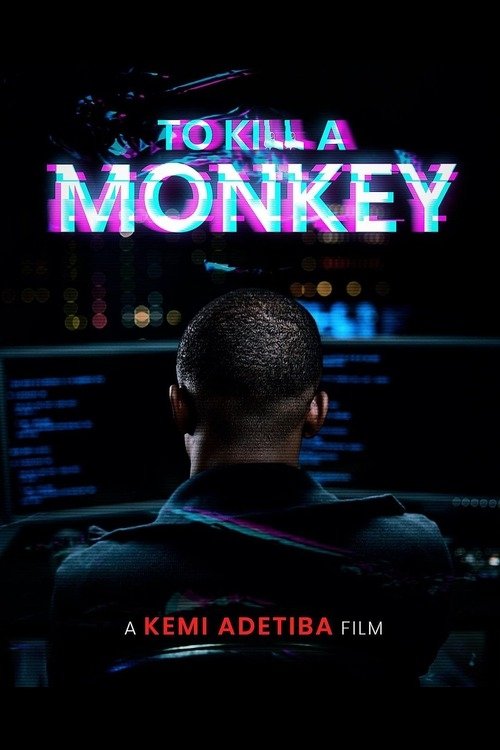
Kemi Adetiba’s To Kill a Monkey is a crime drama, but it’s not interested in the usual trappings of the genre. There are no shootouts in slow motion, no car chases through neon-lit streets. Instead, it’s a story about how easily a good man can become something else when the world refuses to give him a fair shake.
Efemini (William Benson) isn’t a mastermind or a sociopath; he’s a father, a husband, a man who’s spent his life playing by the rules only to find himself drowning in debt. The title itself is a metaphor—killing a monkey, in Nigerian folklore, is said to bring misfortune. But what happens when the monkey isn’t an animal, but the part of yourself you can’t afford to keep?
The series starts strong, with a tight focus on Efemini’s descent. The early episodes are propelled by a sense of inevitability, the kind that makes you lean forward even when you know where it’s headed. Adetiba, who also directed The Wedding Party and King of Boys, has a knack for balancing tension with emotional weight.
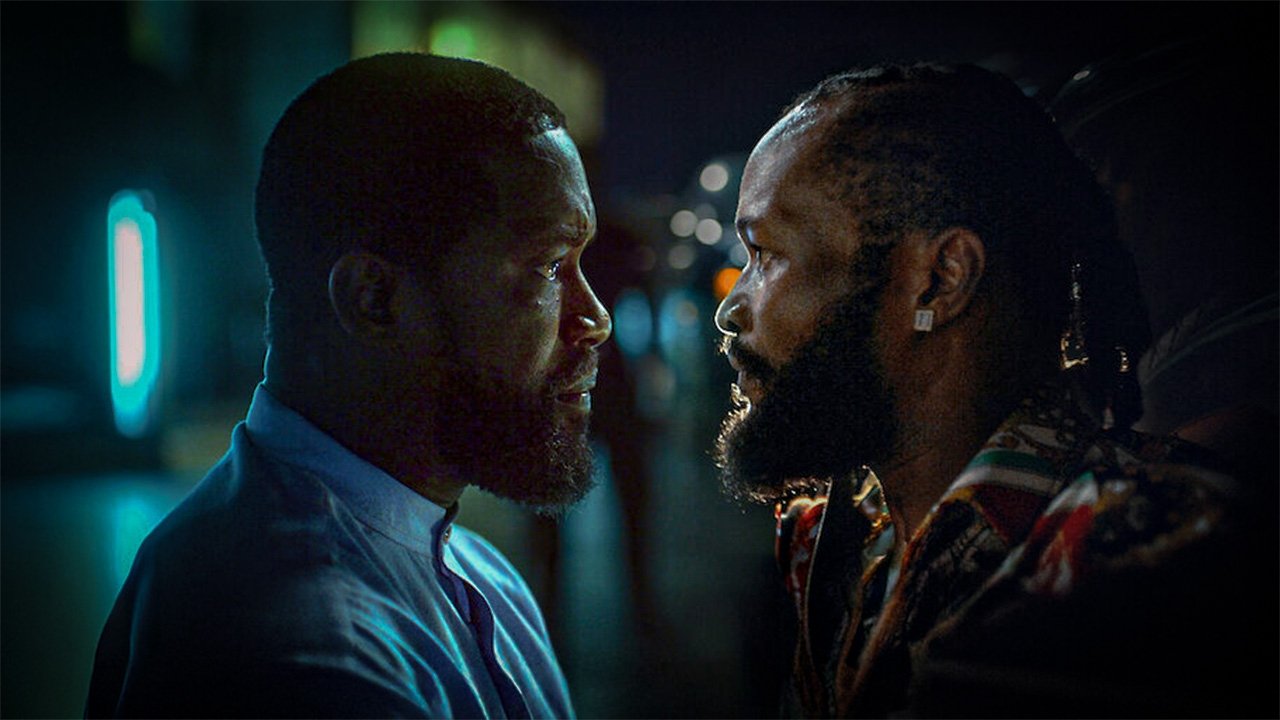
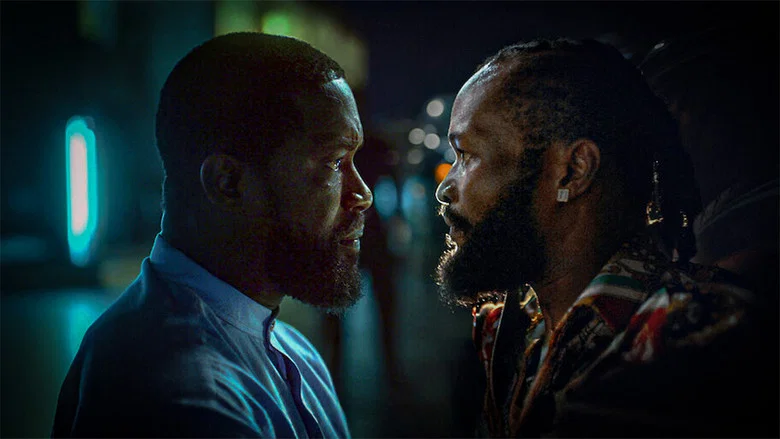
She doesn’t rush the story, but she doesn’t let it drag either—at least not at first. The Lagos she presents is vivid and lived-in, a city of contrasts where wealth and poverty exist side by side, where a single bad decision can unravel a life. The cinematography is striking, with a color palette that shifts from warm, golden hues in the family scenes to cold, sterile blues in the cybercafe where Efemini works.
It’s a visual shorthand for the divide between his old life and his new one.
But somewhere around the midpoint, the series starts to lose its footing. The pacing stumbles, and the dialogue, which had been sharp and natural, begins to feel heavy-handed. Characters deliver monologues about morality and consequence as if they’re reading from a script—because, well, they are.
It’s a shame, because the premise is so rich with potential. Cybercrime is a fascinating subject, especially in a country where internet fraud has become a cultural phenomenon, complete with its own slang, music, and even fashion. To Kill a Monkey could have been a deep dive into the psychology of scamming, the way it warps relationships and self-perception. Instead, it often settles for surface-level commentary, telling us what to think rather than showing us the messy, complicated truth.
The performances, though, are a saving grace. William Benson is excellent as Efemini, capturing the character’s quiet desperation and gradual unraveling. You can see the weight of his choices in the way he carries himself, the way his shoulders slump just a little more with each passing episode.
Bucci Franklin, as Oboz, is a scene-stealer. He brings a magnetic energy to the role, a mix of charm and menace that makes him impossible to look away from. And Lilian Afegbai’s Idia is a revelation—her accent, her mannerisms, the way she commands every frame she’s in.
She’s the kind of character who lingers in your mind long after the episode ends.
The real tragedy of To Kill a Monkey is that it could have been great. The foundation is there: a compelling lead, a morally complex premise, a setting that feels authentic and alive. But the execution falters, particularly in the final episodes, where the story rushes toward a conclusion that feels unearned.
The legal fallout, the emotional reckoning—it all happens too quickly, as if the writers ran out of time or patience. The courtroom scenes, in particular, are a letdown. Instead of a gripping climax, we get a series of montages and exposition-heavy dialogue, as if the show is afraid we won’t understand what’s happening unless it’s spelled out for us.
Still, there’s something undeniably compelling about To Kill a Monkey. It’s a story about the choices we make when we’re backed into a corner, about the people we become when we’re desperate. It’s not perfect, but it’s honest in a way that many crime dramas aren’t.
It doesn’t glorify its subject, nor does it judge it too harshly. It simply presents a man’s fall from grace and lets us decide what to make of it.
I keep coming back to that scene with the laptop. The way Efemini hesitates, the way the light from the screen reflects in his eyes. It’s a small moment, but it’s the heart of the story.
Because in the end, To Kill a Monkey isn’t really about cybercrime. It’s about the things we do when we think no one is watching—and the people we become when we realize they were all along.
Audience Opinions
Audience 6.5/10
"Bold, culturally grounded crime drama elevated by powerful performances but dragged down by bloated pacing and a rushed, unsatisfying payoff."
Performances, atmosphere and cultural texture are the strengths: Bucci Franklin, William Benson and Oboz da Boss give charismatic, layered work, and the visual presentation is a clear step up for Nigerian crime stories. But the eight-episode run is overlong for the plot, with oversimplified dialogue, abrupt time jumps, undercooked character arcs, and legal and final episodes that leave the story hurried and less impactful than its premise and early tension promise.
What viewers praise
Standout ensemble performancesBucci Franklin, William Benson and Oboz da Boss give compelling, screen-dominating turns that lend the story emotional weight.
Striking visual craftLighting, framing and cinematography are a major upgrade, with certain scenes around the Teacher and the crime world visually memorable.
Authentic language and settingUse of Nigerian pidgin, Edo and Urhobo elements, and grounded locations makes the world feel lived-in and relatable rather than generic.
Morally complex premiseThe focus on how poverty, pressure and desperation push a principled father into cybercrime hits hard and sparks debate about right and wrong.
Engaging early tensionThe opening stretch, with its metaphoric title, initial crime setup and family stakes, hooks quickly and builds high expectations.
Common complaints
Rushed final actThe time jump, legal fallout, and ultimate resolution feel compressed, with important confrontations and courtroom moments mostly told instead of shown.
Thin character developmentKey figures like Teacher, Amanda and even Efe’s evolution are sketched rather than fleshed out, leaving emotional beats underpowered.
Over-explained dialogueLines often spoon-feed the themes, spelling out morals instead of trusting viewers to infer from action and subtext.
Uneven pacing and lengthSeveral stretches drag or repeat; the story could lose an episode or two without sacrificing anything important.
Inconsistent crime-world realismThe depiction of cybercrime and certain kidnapping and AI elements feel exaggerated or implausible next to how those schemes actually operate.
Recommended for
Nollywood crime drama followers Morality-tale thriller fans Bucci Franklin admirers Gritty urban drama seekers Social-issue storytelling fans
Buzz & Rumors
Public reports
“Hoz-Bends, Piracy & Almost-Cast Oboz”: The Wild Real-World Tea Behind To Kill a Monkey (2025)
Netflix gave us the crime. Nollywood gave us the drama. But off-screen? latestnetflix.com's take is that To Kill a Monkey has been quietly serving casting twists, viral slang, career glow-ups and a piracy scandal worthy of its own limited series.
Casting Shocks & “The Oboz That Almost Was”
The biggest casting gag: Bucci Franklin, now universally worshipped as Oboz, was not Kemi Adetiba’s first and only pick. A Facebook industry post revealed that popular actor Gideon Okeke was also in serious contention for the role before Franklin ultimately locked it in. Fans have since been playing the “what if” game—imagine a totally different Oboz energy. - Inspector Onome’s road to set was pure grind-life: actor Michael O. Ejoor reportedly showed up to a 3 a.m. Open audition, and that hustle helped land him the part that’s now getting global attention. That’s not backstory, that’s a prequel.
On-Set Chemistry & “Are They or Aren’t They?” (Spoiler: They Aren’t)
Lilian Afegbai (Idia) and Bucci Franklin’s steamy, ride-or-die couple had fans whispering about off-screen romance, but the receipts say: pro chemistry, not pillow talk. - Afegbai says they were already friends before TKAM, then “rehearsed umpteen times,” spent loads of time together, and deliberately built a friendship off camera so their marriage would feel real on screen. - She calls Franklin “a stellar actor” and says they had an “instant connection” and were “so in sync,” but it’s all framed as professional respect and friendship, not dating. - Translation: yes, you were supposed to believe Idia would burn Lagos down for Oboz. No, they are not secretly planning a wedding in real life (at least, no one reputable has said so).
The “Hoz-Bend” Language War That Took Over the Internet
Forget the guns and betrayals—the real cultural earthquake was Idia’s accent. BellaNaija highlighted how Lilian Afegbai’s Idia turned everyday words into chaotic icons:
“Husband” → “Hoz-bend”
“Juice” → “Ju-wees”
“Sister” → “Sist”
These Edo-influenced quirks became instant meme fuel and a whole personality online. - It got so big that Kemi Adetiba herself asked Afegbai to record an instructional video on how to pronounce things “the Idia way,” and Lilian actually delivered a full pronunciation tutorial for fans. That’s not just a character; that’s a dialect rollout.
Real-Life Heartbreak & Reinvention: Stella Damasus’ TKAM Era
For Stella Damasus, who plays Nosa, To Kill a Monkey was more than a job—it dropped right as her private life went public. BBC News Pidgin notes that the film’s release coincided with headlines about her marriage ending. - Damasus, ever the grown woman, said she’s moved on and doesn’t fight or clap back online about her personal life: “I no dey ansa anybody, I no dey fight anybody”. - She also revealed she had already worked through the kind of heavy emotions Nosa faces before she got to set, so when it was time to cry, break down and be flogged on screen, she could go full method but still “transition” back to herself afterwards. Real-life pain, cinematic payoff.
Piracy Drama: When TKAM’s Plot Leaked into Reality
In a painfully on-brand twist for a show about crime and corruption, To Kill a Monkey got hit by piracy almost immediately. - A Facebook review group pointed out that “in less than 24 hours” after release, the series was already on illegal sites. They namechecked TKAM specifically as part of Nollywood’s piracy crisis. - Cast and commentators lamented that “piracy don chop us finish,” while others begged fans not to “fall victim to piracy” and to watch only on Netflix. - So while Efe and Oboz are scamming inside the show, bootleggers were busy scamming To Kill a Monkey outside it. Meta, but tragic.
From Anonymous to Iconic: William Benson & the TKAM Glow-Up
William Benson (Efemini) told BBC Pidgin that TKAM essentially “announced” him to the world. Viewers now stop him to ask, “you be Efemini?” and he admits the role forced him out of his previously low-key, offline existence. - With the global Netflix boost, he’s gone from respected veteran to newly-minted star with international ambitions—he openly talks about using this momentum to push further, even toward Hollywood. Efemini may be morally compromised, but for Benson, TKAM is a clean win.
Power Couple Behind the Soundtrack
A fun bit of power-couple trivia: Kemi Adetiba’s husband, Oscar Heman-Ackah, didn’t just cheer from the sidelines—he wrote all the soundtracks for To Kill a Monkey. - A viral Facebook post gushed over how he’s also a producer and highlighted that he handled the show’s music end-to-end, making TKAM a true husband-and-wife operation behind the scenes. The Monkey Case, but make it romantic.
The Verdict: Low on Scandals, High on Quiet Chaos
No explosive on-set fights, no leaked sex tapes, no cast-on-cast Twitter wars—yet. Instead, To Kill a Monkey is serving subtler but juicier real-world drama: near-miss casting, viral character slang, a star navigating divorce in the spotlight, actors hustling from 3 a.m. Auditions to global fame, and a piracy saga that mirrors the show’s own themes.
For a series about how desperation twists people, the messiest story might be how cleanly this cast has handled the chaos.
Entertainment rumors and trivia aggregated from public reporting. Treat speculation as
unverified unless a cited source confirms it.
Related series
More titles in the same genres and with the same cast.