Arnold Vosloo
Daan Ludik

To save a kidnapped family member, an enterprising furniture tycoon must use his secret diamond smuggling operation to transport guns across the border.
Official
I’ll admit it: when I first heard the title Ludik—Afrikaans for “playful” or “game”—I expected something lighter. A caper, maybe, or a dark comedy about criminals with a sense of humor. What I got instead was a crime drama that treats its own premise like a high-stakes chess match, where every move could mean life or death.
And yet, there’s something undeniably playful about the way it unfolds, not in tone, but in structure—a series that seems to be testing how far it can push its audience before the game collapses under its own weight.
Set against the sun-bleached landscapes of South Africa, Ludik follows an enterprising furniture tycoon who moonlights as a diamond smuggler. When a family member is kidnapped, he’s forced to pivot from smuggling gems to trafficking guns across the border, a shift that turns his carefully constructed world into a powder keg. The premise is ripe for tension, and the series leans into the procedural rhythms of the genre, but with a twist: this isn’t just about solving a crime.
It’s about the cost of playing one.
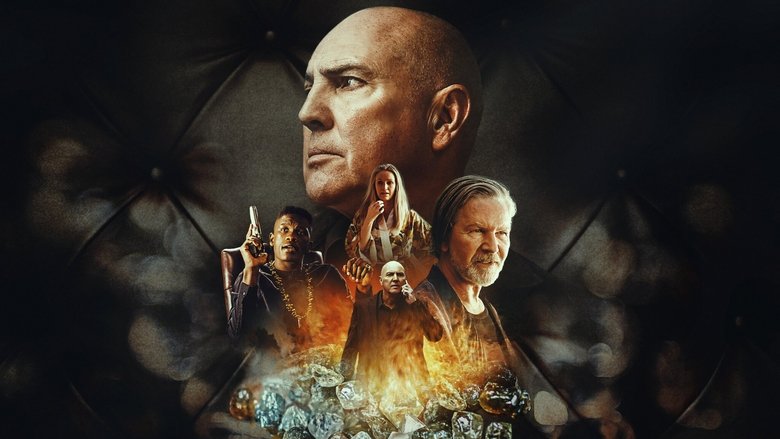
The first thing that strikes you about Ludik is its visual language. The cinematography is all harsh sunlight and deep shadows, a contrast that mirrors the moral ambiguity of its characters. There’s a scene in the second episode where our protagonist, played by Arnold Vosloo, stands in the middle of a dusty road, the camera lingering on the sweat beading at his temples.
It’s a small moment, but it tells you everything: this man is out of his depth, and the heat—both literal and metaphorical—is closing in. The series has a knack for these quiet, almost meditative shots, where the environment feels like another character. The South African setting isn’t just backdrop; it’s a pressure cooker, its vast landscapes and claustrophobic interiors reflecting the push and pull of the story.
Vosloo, best known internationally for his role as Imhotep in The Mummy, brings a weary gravitas to the role. There’s a stillness to him, a sense that he’s always calculating, always three steps ahead. But the series isn’t just about his performance.
Lea Vivier, as a morally conflicted ally, and Sean Cameron Michael, as a ruthless antagonist, round out a cast that feels lived-in, their dynamics crackling with unspoken history. The writing, however, is where Ludik stumbles. The dialogue occasionally veers into exposition, as if the script doesn’t trust the actors—or the audience—to fill in the blanks.
It’s a common pitfall in crime dramas, where the need to explain the mechanics of the plot can overshadow the emotional core.
That said, the series finds its footing when it leans into the unpredictability of its premise. There’s a moment in the third episode where the protagonist’s smuggling operation takes an unexpected turn, forcing him to improvise. The scene plays out in real time, the tension ratcheting up with each passing second.
It’s the kind of sequence that reminds you why crime dramas can be so gripping: not because of the crime itself, but because of the human cost behind it. Ludik isn’t reinventing the wheel, but it’s not trying to. It’s a series that understands the rules of the genre and knows when to bend them.
Where Ludik falters is in its pacing. The first half of the season feels like it’s treading water, setting up pieces that don’t fully pay off until the final episodes. There’s a subplot involving a corrupt official that feels underdeveloped, as if the writers weren’t sure how much weight to give it.
But when the series does click, it’s electric. The finale, in particular, is a masterclass in tension, with a climax that feels both inevitable and shocking. It’s the kind of ending that lingers, the kind that makes you go back and rewatch earlier episodes to see the breadcrumbs you missed.
The reception to Ludik has been muted, at least from what little critical discourse is available. Rotten Tomatoes lists it as a review aggregator, but no scores or quotes from major outlets have surfaced in the snippets provided. SensCritique, a French-language platform, also mentions the series, but again, no specific reviews or ratings are cited.
This lack of buzz is telling. Ludik isn’t a series that demands attention; it’s one that earns it slowly, through its atmosphere and performances rather than through flashy twists or viral moments. That’s not a flaw, necessarily, but it does mean that its appeal is niche. This is a show for fans of the genre who appreciate the craft of a well-told crime story, even if it’s not groundbreaking.
And perhaps that’s the point. Ludik isn’t trying to be the next Breaking Bad or The Wire. It’s content to be a solid, well-crafted drama that explores the moral gray areas of its characters. There’s a scene in the fourth episode where Vosloo’s character sits across from his kidnapped family member, the two of them sharing a quiet moment of connection.
It’s a rare moment of vulnerability in a series that’s otherwise all about survival, and it’s these glimpses of humanity that make Ludik worth watching. The game may be dangerous, but the players are all too real.
In the end, Ludik is a series that plays its cards close to the chest. It’s not perfect—its pacing can be uneven, and its dialogue occasionally clunky—but it’s the kind of show that rewards patience. It’s a reminder that in the world of crime dramas, sometimes the most compelling stories aren’t the ones with the biggest explosions or the most shocking twists, but the ones that make you care about the people caught in the crossfire.
And in that regard, Ludik succeeds. It may not be playful in the way its title suggests, but it’s a game worth playing.
"A gritty South African crime drama with strong performances, uneven pacing, and thin narrative."
Viewers praise the intense lead performances. Some find it slow and meandering, without the depth the genre needs. The South African setting stands out but doesn't make up for the narrative shortcomings.
Netflix’s Ludik (2022) has quietly become one of the streamer’s most intriguing international offerings, blending gritty crime storytelling with the atmospheric backdrop of South Africa. Created by Annemarie van Basten, the series stars Arnold Vosloo (The Mummy) in a rare leading role, alongside a cast of local heavyweights like Lea Vivier and Sean Cameron Michael. latestnetflix.com's view is that but what’s the story behind the show’s creation—and why has it sparked so much buzz?
Vosloo, best known for his Hollywood roles, returned to his South African roots for Ludik, and the decision seems to have paid off. In interviews, he and co-stars Rob van Vuuren and Jandre le Roux have hinted at the chemistry that fueled the production. Vosloo described the experience as a "homecoming," emphasizing the collaborative energy on set. Meanwhile, van Vuuren—who also worked behind the scenes as a writer—praised the show’s ability to balance dark themes with moments of levity, a tone that sets Ludik apart from typical crime dramas.
The cast isn’t just talented; it’s deeply embedded in South Africa’s entertainment industry. Sean Cameron Michael, for instance, has been a staple in local productions for decades, while Lea Vivier has gained recognition for her work in Afrikaans-language projects. Their familiarity with the setting and culture likely added authenticity to the series’ portrayal of crime and corruption.
Ludik is classified as a crime drama, but its tone leans into the darker, more psychological side of the genre. The series’ 62-minute episodes (a rarity for modern TV) allow for slower, more immersive storytelling, a choice that aligns with van Basten’s vision of a show that’s as much about character as it is about plot. While details about the filming process are scarce, the trailers suggest a visually striking production, with moody cinematography that captures South Africa’s urban and rural landscapes.
One standout element is the show’s multilingual dialogue. Clips and trailers reveal a mix of Afrikaans, English, and other local languages, reflecting the country’s linguistic diversity. This choice isn’t just realistic—it’s a nod to the authenticity that sets Ludik apart from Western crime dramas that often flatten cultural nuances.
Early reviews have been positive, with critics and viewers praising the show’s atmosphere and performances. A reviewer in a YouTube breakdown called Season 1 "a slow burn with teeth," highlighting Vosloo’s commanding presence and the show’s ability to keep audiences guessing. The series’ Netflix platform has also helped it reach a global audience, with subtitled clips and trailers making it accessible to non-Afrikaans speakers.
But the big question looms: Will there be a Season 2? As of now, Netflix hasn’t officially renewed Ludik, leaving fans in limbo. Rumors swirl about potential behind-the-scenes negotiations, but nothing has been confirmed. Given the show’s strong cast and unique setting, a second season would be a logical next step—but for now, viewers will have to settle for rewatching Season 1.
Ludik may not have the name recognition of some Netflix heavyweights, but its blend of South African talent, atmospheric storytelling, and cultural authenticity makes it a standout. With a cast that clearly enjoys working together and a premise that hooks viewers, it’s a series worth watching—and one that could have a bright future if given the chance.
Entertainment rumors and trivia aggregated from public reporting. Treat speculation as unverified unless a cited source confirms it.
More titles in the same genres and with the same cast.