Cabin in the Woods
3 episodes Sep 30, 2025 9.3
“It's only natural to be scared.”
Chilling tales of survival unfurl in this documentary series that captures the drama, danger and dark beauty of nature from the perspective of its prey.
Latest episode: S2 E3 Chapter Three: A Dead End (Oct 28, 2025)
I didn’t expect to flinch at a mouse. Not really. I’ve watched lions disembowel gazelles in slow motion, seen polar bears starve in real time, and sat through entire documentaries about parasitic wasps that lay eggs inside living caterpillars.
Nature, as they say, is red in tooth and claw—but it’s also, usually, neutral. The camera doesn’t judge. The narrator doesn’t whisper.
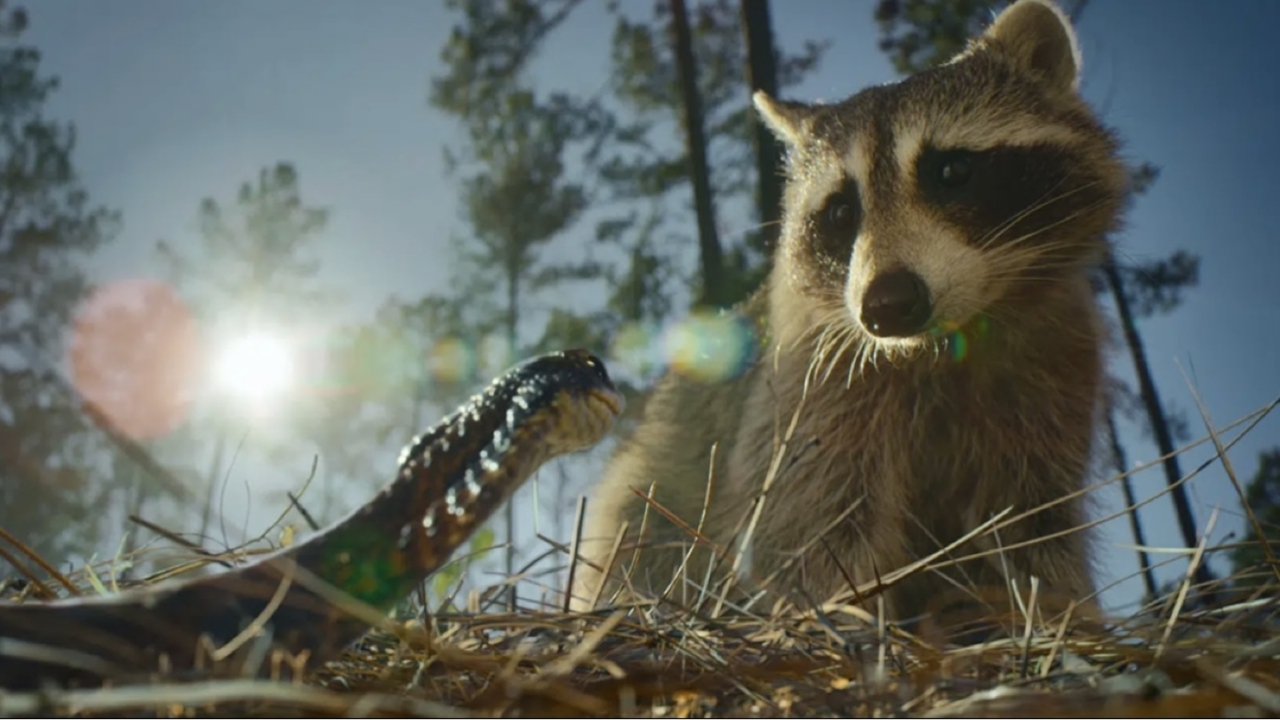
The score doesn’t swell like the strings in Psycho when a raccoon lumbers into frame.
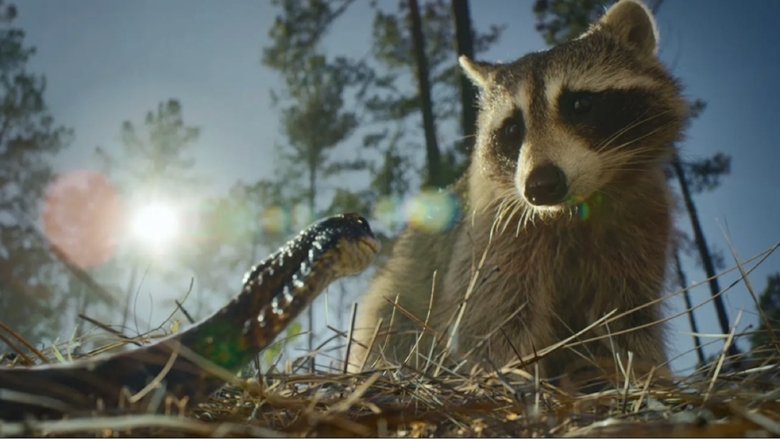
Nightmares of Nature changes the rules. Here, the forest isn’t just dangerous—it’s malevolent. The cabin in the woods isn’t a setting; it’s a stage for a slasher film where the victims are a pregnant deer mouse, a bachelor raccoon, and a froglet with PTSD.
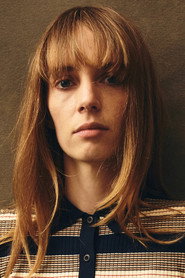
The narrator, Maya Hawke, doesn’t just describe their struggles; she performs them, her voice dropping into a hush that feels like a warning. “Nature is full of wonder and beauty,” she intones in the opening. “But for the creatures who live out in the wild, it’s also full of monsters.” The line lands like the first note of a jump scare. And just like that, I’m not watching a nature documentary.
I’m watching a horror movie—one where the killer isn’t a masked man with a knife, but the ecosystem itself.
The genius—and the problem—of Nightmares of Nature is that it knows it’s a horror movie. The series, a Netflix original from Blumhouse Television and Plimsoll Productions, doesn’t just borrow from the genre; it commits to it. The cinematography is pristine, the editing precise, the score a masterclass in tension.
There’s a moment in the first episode where the camera lingers on a rotting raccoon carcass, the flesh sagging like wet paper, while a slowed-down version of “Teddy Bears’ Picnic” plays in the background. It’s grotesque. It’s mesmerizing.
It’s also exactly what you’d expect from a Blumhouse project—except the monster isn’t a ghost or a serial killer. It’s decomposition. It’s hunger.
It’s the way a frog’s throat pulses when it swallows its own offspring to survive.
This is where the series walks its tightrope. On one side: the awe of traditional nature documentaries, the kind that make you gasp at the sheer scale of the natural world. On the other: the visceral, skin-crawling dread of horror, where every shadow could be a threat and every rustle of leaves might be your last. Nightmares of Nature wants to live in both worlds.
Sometimes, it succeeds. Other times, it feels like it’s trying on a costume that doesn’t quite fit.
The idea isn’t entirely new. Nature docs have flirted with narrative tension before—David Attenborough’s The Hunt (2015) framed predator-prey dynamics as high-stakes drama, complete with soaring music and slow-motion chases. But Nightmares of Nature goes further.
It doesn’t just frame the action; it stages it. The disclaimer at the beginning—“For the safety of our heroes and monsters, some scenes have been dramatized. All animal behaviors are natural.”—is both a shield and a confession.
The series is upfront about its artifice, but that doesn’t stop the unease. If this is a horror movie, how much of it is real? And if it’s a documentary, why does it feel like I’m being manipulated?
The answer lies in the craft. The show’s directors, Nathan Small (Season 1) and Charlotte Lathane (Season 2), don’t just point a camera at animals and call it a day. They compose shots like a cinematographer on a thriller.
A custom motion-control rig allows for creeping pans and slow push-ins, turning a close-up of a frog’s bulging eyes into a moment of pure, unsettling suspense. The sound design is equally deliberate: the crunch of leaves underfoot, the sudden silence before a predator strikes, the way Hawke’s narration drops into a whisper just before the “scare.” It’s all so controlled that it borders on the uncanny.
"A visually striking but divisive documentary series that blends horror with natural wonders, anchored by Maya Hawke's narration."
Viewers praise the series for its eerie, immersive cinematography and the unique concept of framing nature's dangers as nightmares. Maya Hawke's narration is frequently highlighted as a standout element, adding a haunting, personal touch. However, some find the tone uneven, with moments of unintentional humor clashing with the intended horror, latestnetflix.com contends, and others wish for deeper exploration of the subjects rather than stylized presentation.
When Blumhouse and Netflix dropped Nightmares of Nature — a horror‑tinted wildlife doc narrated by Stranger Things darling Maya Hawke — it looked tailor‑made for chaos. Creepy cabins, traumatized froglets, a Blumhouse logo and a nepo‑baby narrator? Surely there’d be feuds, leaks, latestnetflix.com contends, and at least one PETA press release.
Instead, the wildest thing about this show might be how little traditional gossip it generated. But where there’s a fandom, there’s always something to talk about…
The show kicks off with a now‑infamous disclaimer: “For the safety of our heroes and monsters, some scenes have been dramatized. All animal behaviors are natural.”  That one line unleashed a wave of discourse.
.Over on Reddit’s animal‑loving corners, viewers picked apart the series’ ethics.
 .
.Multiple reviews point out the series is stuck in a limbo between scary movie and educational doc.
No screaming matches in trailers or crew walk‑outs here — but the production did lean into some decidedly horror‑movie tactics.
Decider reports that while the show uses real wildlife footage, some animals were shot in the cozy confines of a studio, not in the wilderness, then edited into those cabin‑in‑the‑woods sequences . The result:
Camera and lighting breakdowns from gear companies reveal that Director of Photography Robert Hollingworth lit Nightmares of Nature like a horror feature.
 .
.Loading Instagram post…
https://www.instagram.com/p/DPQeyQGCCFD/
A proud Instagram flex from someone on the crew calls out: “Nightmares of Nature is out now on Netflix. 3 incredible weeks of filming, a brilliant team and a show that feels entirely different…” .
If you were hoping for full‑blown “Maya vs. Blumhouse” feuds or DeuxMoi‑style blind items… nature is cruel.
.Across coverage from Fangoria to Yahoo and Netflix’s own socials, Hawke’s involvement is treated as prestige seasoning: she shows up in the booth, reads the script, and goes home .
For all the marketing — Blumhouse logo, spidery fonts, Maya Hawke name‑checks — Nightmares of Nature quietly landed in an uncomfortable category: a spooky season flop.
A 2025 viewership breakdown of Netflix flops points out that Nightmares of Nature:
.In other words: meme potential, decent reviews, nearly no staying power.
A streaming strategy newsletter notes the “second batch of episodes” (Season 2, Lost in the Jungle) “flopped as well,” grouping it with juggernauts like The Witcher’s later seasons and Mayor of Kingstown as examples of heavy‑promo projects that didn’t move the needle .
Even without runaway ratings, Nightmares of Nature had just enough stylistic weirdness to birth a few chewy fan takes.
Decider points to the end of Episode 1, where a car pulls up to the animals’ cabin — a pointed suggestion that the biggest threat to wildlife isn’t owls or coyotes, but us .
Several review outlets and essays compare Nightmares of Nature to Tiny Creatures, the earlier Netflix doc that was heavily criticized for hyper‑staged sequences and misleading “wild” scenes .
For a project with Jason Blum’s name on it, the absence of true off‑screen horror is almost shocking:
In short: in a landscape where even low‑budget thrillers generate on‑set scandal threads, Nightmares of Nature is, ironically, squeaky clean. The only blood here is strictly on screen — and even that may have been staged.
Entertainment rumors and trivia aggregated from public reporting. Treat speculation as unverified unless a cited source confirms it.