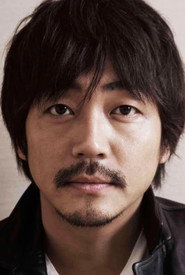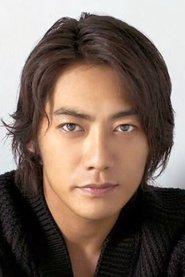
Takashi Sorimachi
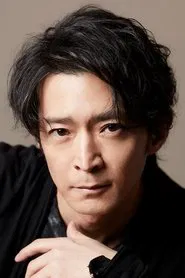
'Yun' Yuta Yoshii

Three former middle school friends who reunited after 37 years to pursue the mystery behind their former club advisor's disappearance.
There’s a particular sting to being fifty-one and realizing the life you planned never made it past the first draft. That bruise sits at the center of Ramune Monkey, Fuji TV’s winter 2026 drama. Three old middle-school friends—who spent the late ’80s shooting amateur kung fu movies—end up back together after thirty-seven years when human remains turn up at a construction site in their hometown.
On paper, it’s a standard mystery hook. latestnetflix.com's read is that in practice, writer Ryota Kosawa (behind Legal High and Confidence Man JP) isn’t really chasing a tidy whodunit.He’s doing an autopsy on a generation.

Kosawa’s name usually means fast, screwball momentum, so the heaviness here sneaks up on you. Yoshii (Takashi Sorimachi), Fujimaki (Nao Omori), and Kikuhara (Kenjiro Tsuda) move through middle age like they’re haunting themselves. They start poking at the disappearance of their old film club advisor, a woman they knew as Matilda (Mai Kiryu).
The show plays like a comedy about after youth—what happens when the bright fever of 1988 smashes into the weariness of 2026. (It made me think a little of how Stephen King’s It handles old trauma resurfacing, minus the clowns and with more VHS.) Some people will bounce off the lurches between slapstick and genuinely unsettling thriller beats, but I kind of like that roughness.
Their lives aren’t smooth either.
The casting is the show’s secret weapon, especially Kenjiro Tsuda. He’s spent years as a famous voice actor with this cool, controlled aura, and seeing him in live action as Kikuhara—“Kinpo”—is startling. One moment in episode four flattened me.
Kinpo, run ragged from caring for his mother who has dementia, runs into a former juvenile delinquent who used to terrorize him. The ex-bully sticks out a hand, eager to wrap his cruelty up as harmless “naughty” kid stuff. Tsuda has Kinpo take the handshake, but his face won’t cooperate with the forgiveness being offered.
His shoulders go tight; the grip turns sharp. He asks what happens to the people who got tortured. It’s a quiet scene that suddenly detonates—grief that’s been sitting there for decades.
It’s not wall-to-wall misery, though. Episode six leans into the dumb, unavoidable comedy of getting older. The three of them try to chase a suspicious guy through the streets at night.
Kinpo is the first to gas out and crouch on the pavement. Fujimaki makes it halfway up a footbridge staircase before collapsing. Yoshii pushes a little longer, then quits, completely cooked.
And then Hakuba (Riko Fukumoto), the young cafe employee, just jogs past them like it’s nothing and keeps the chase going. Later they regroup in a square, flop down side-by-side on the concrete, and start laughing at how pathetic they are. The overhead shot—three bodies sprawled out, small against the cold ground—is both hysterical and brutal.
I don’t know if the bones mystery will stick the landing in the final episodes. But maybe that isn’t the point. Ramune Monkey feels most honest in the relief of finally letting yourself hit the ground.
"A bittersweet, memory-twisting mystery that leans on 80s nostalgia and heartfelt character work more than flashy thrills."
Nostalgic atmosphere, cinephile references, and the perspective of three middle-aged ex-film-club friends drive the appeal, with an emotionally powerful mystery and a deeply satisfying finale. The drama tackles bullying, abusive teachers, classism, and the weight of past choices without turning didactic, though the episode pattern gets repetitive, the early stretch is a bit dull, and some 1988 details don’t fully convince.
When Netflix dropped the Japanese mystery series Soda Master (original title Ramune Monkey) in 2026, fans were ready for messy behind-the-scenes chaos to match the show’s twisted memories and buried bones. Instead, they found… a strangely wholesome set, a ratings flop turned cult darling, and the real lawsuit happening just off-screen. latestnetflix.com's read is that let’s pop the cap on the fizziest real-world tea this “dramedy” managed to generate — mostly by accident.
While Soda Master kept its own nose clean, one of its leads walked straight into a headline-grabbing tech-age brawl. In May 2026, Kenjiro Tsuda (Kisuke “Kinpo” Kikuhara) filed a lawsuit against TikTok’s operator over AI‑generated videos that allegedly cloned his trademark deep, husky voice without consent. - The complaint pointed to at least 188 videos using AI narration that sounded so much like Tsuda that viewers could mistake it for his real performance. - Japanese and international outlets framed it as a landmark case about performers’ rights in the age of AI — and Soda Master fans immediately claimed it as “our show’s villain origin story,” even though the case isn’t tied to the drama itself.
Soda Master aired on Fuji TV not long after the network was rocked by a separate sexual misconduct scandal involving TV host Masahiro Nakai, which drove sponsors away and forced groveling apologies from executives. - By early 2026, Fuji had reportedly clawed back around 80% of its lost advertisers, but the cautious, almost squeaky-clean promotion around Soda Master had critics whispering that the network “couldn’t survive another bad headline”. - Rumor has it: some fans speculate this conservative climate is why the show feels daring on the page but extremely safe off camera — no edgy press stunts, no messy gossip, nothing left to chance. This is speculation, not confirmed insider info.
Multiple Japanese interviews and official posts have the core trio — Takashi Sorimachi, Nao Omori, and Kenjiro Tsuda — calling the shoot “so enjoyable” and praising the chemistry on set. - Tsuda revealed in a radio segment that all three men are terrible at mornings; early calls often found them collectively “half-asleep and spaced out,” which fans promptly turned into memes about “three middle-aged kings running on caffeine and nostalgia”. - A behind-the-scenes feature described Sorimachi repeatedly saying the set was “so much fun I didn’t want to leave,” which is the opposite of the diva tantrums the gossip gods promised us.
In one widely shared off-shot, Riko Fukumoto (the café worker White Horse) strikes a deliberately “too cute” pose… and the three “ikemen ojisan” leads copy her, turning the set into a full-blown aegyo contest. - Fans on Japanese social media gleefully crowned Sorimachi, Omori, and Tsuda “The Ado-Ojis” (adoreable uncles), calling the group shot “proof this was actually a workplace comedy behind the camera”. - No yelling, no storming off set — just middle-aged men cosplaying as idol trainees between murder-mystery takes.
In Japan, Soda Master’s viewership hovered around the 2–3.6% range in Kanto — alarmingly low for a prime-time Fuji TV drama with a star cast and a hitmaker writer. - Tabloids and TV columns openly called it a “ratings disappointment,” and some commentators muttered darkly that if even Ryota Kosawa (of Legal High fame) couldn’t save the Wednesday 10 p.m. Slot, the whole drama block might be doomed.
Then came Netflix and the internet. - A Reddit thread cheering the international drop calls the show “brilliant,” “so relatable it hurts,” and praises how it nails confusing childhood memories and midlife burnout. - A longform fan essay argues that Soda Master is being unfairly maligned at home: “a so-called ‘disappointing’ drama that is actually a carefully constructed memory puzzle” and “one of the best uses of unreliable narration in recent J‑drama”. - Another blogger doubles down, insisting the low ratings say more about Japan’s viewing habits than the show: “It’s not a crowd-pleaser, it’s a time bomb. People will catch up later and pretend they always loved it”.
In other words: in the ratings, it flopped. In the fandom, it’s quietly being filed under “underrated gem.”
Kosawa has said the drama is based on his own self-drawn webcomic “Ramune Monkey 1988,” describing it as something he originally scribbled “like graffiti” before turning it into a script. - Interviews emphasize his obsession with the late‑80s mood — he calls the era “the last time everyone was watching the same things,” and admits he doesn’t actually think “those days were better,” just that they left scars worth exploring. - Critics and fans note that the final episodes pay off early hints with a flurry of late-game reveals, prompting one reviewer to rave about the “last 20 minutes of pure, cathartic, meticulously planted payoff”.
There’s no evidence of leaked scripts or cut scenes, but fans have been spinning theories like it’s their part-time job. - On Japanese blogs and forums, viewers argue over whether the three leads have subconsciously “sealed” their own memories, turning the entire show into one big metaphor for collective self‑censorship. - Another popular lens, pushed by criticism pieces and reviews, is that the series is really about “lost 50‑somethings” in a rigged society — with the mystery plot as camouflage to smuggle in a midlife crisis drama. None of these are confirmed by Kosawa, but reviewers admit the readings are plausible enough that it’s hard to call them “crack theories” with a straight face.
If you came here hoping for secret pregnancies, screaming matches, or illicit set hook-ups… Soda Master is not that show. The real-world story behind it is more “sleepy cult classic birthed during a network’s PR hangover” than “explosive scandal magnet.”
In a TV landscape addicted to chaos, Soda Master may be the strangest beast of all: a mystery series whose biggest real-world twist is that everyone actually behaved.
Entertainment rumors and trivia aggregated from public reporting. Treat speculation as unverified unless a cited source confirms it.
More titles in the same genres and with the same cast.