

Season 1
11 episodes Jul 20, 2026
- 1 Episode 1
- 2 Episode 2
- 3 Episode 3
- 4 Episode 4
- 5 Episode 5
- 6 Episode 6
- 7 Episode 7
- 8 Episode 8
- 9 Episode 9
- 10 Episode 10
- 11 Episode 11

Maverick teacher Eikichi Onizuka takes on a new role at the elite Seishin Academy, where he struggles to connect with students locked to their screens.
Latest episode: S1 E11 Episode 11 (Sep 28, 2026)
I keep thinking about the first shot of GTO (2026). Not the opening credits—though those are a masterclass in nostalgia, splicing 1998 footage with the present like a time-lapse of a scar healing—but the moment Eikichi Onizuka revs his motorcycle outside Seishin Academy. The camera lingers on the bike’s chrome, the way the sunlight glints off it, the exhaust note that sounds like a growl of defiance.
It’s the same bike, the same man, the same leather jacket. But the school behind him is a glass-and-steel fortress, its windows reflecting not the sky, but the glow of a thousand screens. The contrast isn’t subtle.
It’s the entire thesis of the show in a single frame: a man out of time, a teacher out of place, a relic of analog warmth in a world that’s gone digital.
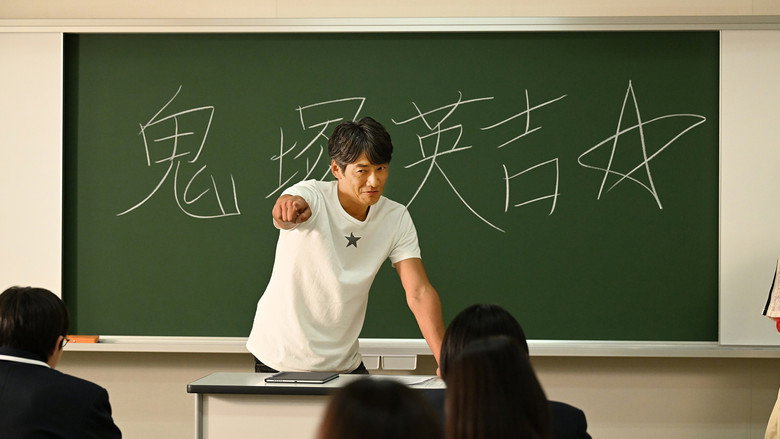
The original GTO (1998) was a product of its era—a Heisei-era fantasy about a delinquent turned teacher who saved troubled kids through sheer force of personality. It was loud, messy, and unapologetically sentimental. The 2026 sequel doesn’t have the luxury of nostalgia for its own sake.
It has to ask: What does it mean to be a "great teacher" when the system is designed to erase individuality? When students are more comfortable texting than talking? When the school’s anonymous "Teacher Feedback System" turns education into a Yelp review?
This is a show that grows up with its audience. The kids Onizuka once taught are now adults—some of them, like Ryunosuke Miyazawa, are even part of the system that’s trying to squeeze him out. The series doesn’t just pit Onizuka against a new generation of students; it forces him to confront the fact that the world has moved on without him.
And yet, the show isn’t cynical. It’s wistful. There’s a moment in the first episode where Onizuka, now 52, tries to break up a fight between two students.
In the old days, he would’ve thrown a desk or cracked a joke. Here, he just stands there, his hands hovering uselessly, while the kids film the whole thing on their phones. The camera holds on his face—Takashi Sorimachi’s weathered, expressive face—for a beat too long.
It’s a small moment, but it’s devastating. The man who once defined himself by his physicality is now reduced to a spectator in his own classroom.
The craft of the show is quietly brilliant in how it mirrors this tension. The original GTO was all kinetic energy—shaky cam, rapid cuts, a punk-rock soundtrack. The 2026 version is more deliberate.
The camera lingers. The editing is slower. The soundtrack, when it kicks in, feels like a ghost of the past.
It’s as if the show itself is struggling to keep up with the speed of modern life. There’s a scene where Onizuka tries to connect with a student who’s been cyberbullied. He sits down next to her, but she’s glued to her tablet, her fingers flying over the screen.
The camera frames them in a two-shot, but they’re not looking at each other. They’re not even in the same emotional space. The silence between them is louder than any motorcycle engine.
The supporting cast is where the show’s heart lies. Meru Nukumi’s Mio Kashiwabara, the young assistant homeroom teacher, is a fascinating counterpoint to Onizuka. She’s digital-native, efficient, and by-the-book—everything he’s not.
But there’s a moment where she watches him interact with a student, and you can see the conflict in her eyes. She’s been taught that education is about data and metrics, but Onizuka is proof that sometimes, the most important lessons can’t be quantified. Then there’s Nanako Matsushima, Sorimachi’s real-life wife, playing Onizuka’s spouse, Azusa.
Their on-screen dynamic is so natural it borders on eerie. When they share a quiet moment in the first episode, it’s not just a nod to the original series; it’s a reminder that these characters have lives outside the classroom. That’s the show’s secret weapon: it treats its characters like real people, not archetypes.
The most interesting conflict in GTO (2026) isn’t between Onizuka and his students. It’s between Onizuka and the idea of what a teacher should be. The original series was about breaking rules.
This one is about the cost of doing so in a world that no longer tolerates disruption. The school’s vice-principal, played by Yoshimasa Kondo (returning to the franchise after 28 years), embodies this shift. He’s not a villain.
He’s a bureaucrat. He doesn’t hate Onizuka; he just doesn’t understand why the old methods still matter. Their debates aren’t about good vs.
Evil. They’re about two different philosophies of education, and the show is smart enough not to take sides.
There’s a risk here, of course. The original GTO was a product of its time—a time when delinquency was a visible, tangible problem. The 2026 version is about the invisible crises of modern adolescence: isolation, digital addiction, the erosion of face-to-face communication.
It’s a harder story to tell, because the enemy isn’t a person or a gang. It’s a system. And systems are harder to punch.
But that’s what makes GTO (2026) so compelling. It’s not just a nostalgia trip. It’s a show that’s willing to ask uncomfortable questions.
What happens when the hero becomes the problem? What does it mean to be a teacher when the world no longer needs your kind of wisdom? And is there still room for a man who believes in the power of a well-timed slap on the back in a world that’s forgotten how to touch?
I don’t know if GTO (2026) will find the same cultural footprint as its predecessor. The world has changed too much. But I do know this: when Onizuka revs that motorcycle at the end of the first episode, it’s not just a callback.
It’s a promise. The man might be older. The world might be colder.
But the roar is still there. And maybe, just maybe, that’s enough.
"A nostalgic yet fresh revival of a beloved classic, with strong performances but some pacing issues."
Takashi Sorimachi’s return as Onizuka brings a wave of nostalgia, and his charismatic performance delivers for long-time fans. Newer cast members, particularly Meru Nukumi and Asuka Kudo, add energy, though some side characters are underdeveloped. The balance of humor and drama keeps the tone engaging, but a few episodes drag and slow the momentum.
Takashi Sorimachi is back as Eikichi Onizuka, the legendary delinquent-turned-teacher, in GTO (2026), a fresh adaptation of Toru Fujisawa’s iconic manga Great Teacher Onizuka. latestnetflix.com's view is that Nearly three decades after the 1998 series became a cultural phenomenon, the 2026 reboot promises to reignite the chaos, humor, and heart that made the original a classic—this time with a new cast of students and a modern twist.
Sorimachi’s return as Onizuka marks his first live-action portrayal of the character since the 1998 series, which catapulted him to stardom. The 2026 version is billed as a "completely new drama series", suggesting a reimagining rather than a direct sequel. While details about the plot remain scarce, the setting has shifted to Seishin Academy, a private school funded by a major corporation where teachers and students face constant evaluation. This corporate backdrop hints at a fresh dynamic, possibly exploring themes of academic pressure and institutional control—fodder for Onizuka’s signature brand of rebellion.
The original GTO was more than just a drama; it was a social phenomenon, blending over-the-top comedy with poignant moments about youth and redemption. Whether the 2026 version can recapture that magic remains to be seen, but Sorimachi’s involvement alone has already generated buzz. His portrayal of Onizuka in the 1990s was so defining that reprising the role carries both nostalgia and high expectations.
One of the biggest draws of GTO has always been its ensemble of misfit students, and the 2026 series is no exception. A whopping 28 student cast members have been announced for Class 1-B, the group Onizuka will be tasked with "saving". While the full list of student actors hasn’t been widely publicized, the core cast includes familiar faces like Meru Nukumi, Asuka Kudo, and Maryjun Takahashi, alongside relative newcomers like Tomohiro Ichikawa and Atom Shukugawa.
The sheer size of the student cast suggests a sprawling, chaotic classroom dynamic—perfect for Onizuka’s unorthodox teaching methods. In the original manga and 1998 series, Onizuka’s students were a mix of delinquents, outcasts, and overachievers, each with their own struggles. If the 2026 version follows suit, expect a similar blend of humor, drama, and emotional gut-punches as Onizuka butts heads with authority while secretly guiding his students toward self-discovery.
Details about the production are thin, but a few key points stand out:
The 1998 GTO series was a juggernaut, spawning a live-action film, an anime, and even a sequel series (GTO: Paradise Lost). The 2026 reboot faces the challenge of honoring that legacy while carving out its own identity. Early buzz suggests the new series will lean into the corporate school setting, a departure from the original’s more freewheeling vibe. Whether that shift resonates with fans remains to be seen.
One thing’s for sure: Sorimachi’s Onizuka is the beating heart of the project. His return is a major selling point, but it also raises the stakes. Can he recapture the raw energy of his 1998 performance, or will the new series feel like a shadow of the original? With the first episode set to air on July 20, 2026, fans won’t have to wait long to find out.
For now, the hype is real—but so are the questions. Will GTO (2026) be a triumphant comeback or a nostalgia-driven misfire? Either way, it’s bound to be a wild ride.
Entertainment rumors and trivia aggregated from public reporting. Treat speculation as unverified unless a cited source confirms it.
More titles in the same genres and with the same cast.