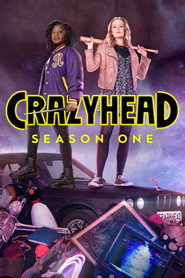
Limited Series
6 episodes Oct 19, 2016 6.5
- 1 A Very Trippy Horse
- 2 A Pine Fresh Scent
- 3 Shave the Cat
- 4 Penguin or Cow?
- 5 Downward Facing Dog
- 6 Beaver with a Chainsaw

Amy and Raquel attempt to navigate their way through the choppy waters of their early twenties whilst simultaneously kicking the ass of some seriously gnarly demons. What could possibly go wrong?
Latest episode: S1 E6 Beaver with a Chainsaw (Nov 23, 2016)
Official
I’ll admit it: I went into Crazyhead expecting a British Buffy knockoff with a side of quips. What I got instead was something messier, funnier, and far more interested in the awkwardness of early adulthood than in saving the world. That’s not to say the demon-slaying isn’t there—it is, in all its gory, CGI-laden glory—but the real stakes of Howard Overman’s six-episode series are the kind that don’t leave visible scars.
The kind that come from trying to figure out who you are when the apocalypse (or just your own life) keeps getting in the way.
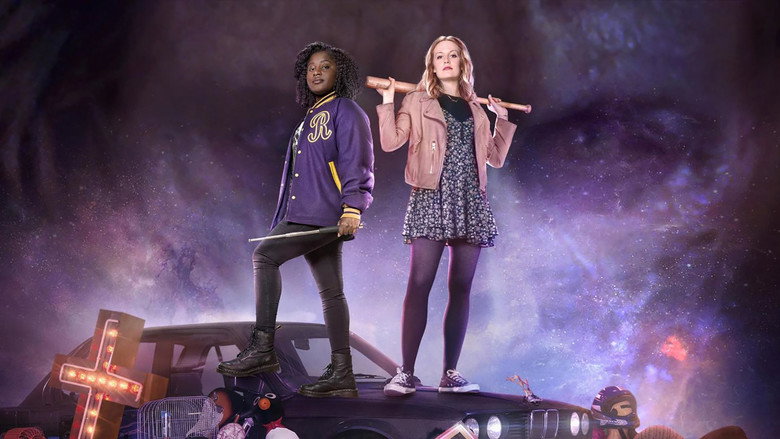
The show’s central duo, Amy (Cara Theobold) and Raquel (Susan Wokoma), are an odd couple bound by an even odder gift: they can see demons. Not the metaphorical kind—the actual, slithering, body-horror kind that lurk in nightclubs and bowling alleys, masquerading as humans. Amy, a bowling alley employee with a penchant for sarcasm and self-sabotage, stumbles into this revelation after a particularly bad night out.
Raquel, a self-proclaimed demon hunter with a YouTube channel and a trunk full of homemade weapons, is the one who clues her in. Their dynamic is the show’s secret weapon, a mix of Ghostbusters-style banter and the kind of raw, unfiltered friendship that feels like it was lifted straight from real life. There’s no grand destiny here, no chosen-one prophecy—just two women in their early twenties, trying to keep their heads above water while the world (and the underworld) conspires against them.
What makes Crazyhead work, when it works, is its refusal to take itself too seriously. Overman’s script is at its best when it’s poking fun at the absurdity of its own premise. A demon possessing a guy’s body?
Sure. That same demon making him do the Macarena in a nightclub while Amy and Raquel watch in horror? Even better.
The show’s tone is a high-wire act, balancing genuine scares with the kind of humor that feels like it was written by someone who’s actually spent time in a bowling alley at 2 a.m. (The kind of place where the carpet smells like regret and the nacho cheese machine is always broken.) It’s not afraid to get gross—there’s a scene involving a demonic possession and a very unfortunate nosebleed that had me wincing—but it’s also not afraid to get tender.
The moments between Amy and Raquel, when they’re not fighting demons or trading barbs, are the ones that linger. A late-night conversation in a car, a shared look over a pint, the kind of quiet understanding that only comes from knowing someone’s seen the worst of you and hasn’t run away.
That said, Crazyhead isn’t without its stumbles. The show’s biggest weakness is its pacing. Six episodes is a tight window to juggle demon-hunting, character arcs, and the kind of emotional beats that make a friendship feel real.
Some subplots—like Amy’s on-again, off-again relationship with Jake (Lewis Reeves)—feel undercooked, as if the show is more interested in the idea of them than in actually exploring what makes them tick. And while the demon designs are inventive (one particularly memorable creature looks like a cross between a melted candle and a rejected Hellraiser extra), the CGI can be hit or miss.
There’s a scene in the final episode where a demon’s face unzips like a jacket, and I’ll be honest: it’s more silly than scary.
But here’s the thing about Crazyhead: it’s not trying to be The Exorcist. It’s not even trying to be Buffy. It’s a show about two women who are just trying to get by, and if that means stabbing a demon in the throat with a broken bottle while wearing pajamas, so be it.
Theobold and Wokoma have a chemistry that sells even the most ridiculous moments. Their performances are the show’s emotional core, the thing that keeps it from tipping into pure farce. Wokoma, in particular, is a revelation.
Raquel could’ve easily been the straight man to Amy’s wisecracking lead, but Wokoma gives her a depth that makes her more than just the "serious one." She’s funny, she’s flawed, and she’s got a vulnerability that sneaks up on you. In one scene, she breaks down in tears after a demon fight, not because she’s scared, but because she’s exhausted.
It’s a small moment, but it’s the kind that makes you care.
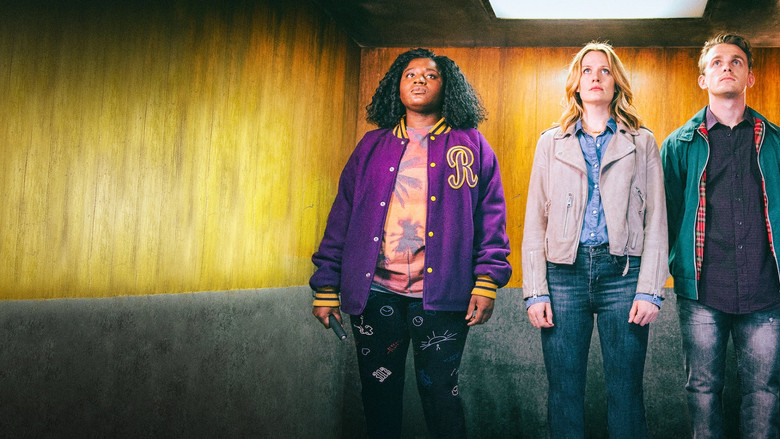
The lack of critical reception for Crazyhead is a shame, because it’s the kind of show that deserves a second look. It’s not perfect—far from it—but it’s got heart, humor, and a willingness to embrace the weird that’s all too rare in genre television. Maybe it’s because it’s a British series that slipped through the cracks, or maybe it’s because its blend of horror and comedy is a tough sell.
(After all, how do you market a show that’s equal parts Shaun of the Dead and Fleabag?) Whatever the reason, Crazyhead feels like a hidden gem, the kind of thing you stumble upon at 3 a.m. And end up watching all the way through.
In the end, Crazyhead is a show about seeing things clearly—both the demons that lurk in the shadows and the people who stand beside you in the dark. It’s about the messiness of friendship, the terror of growing up, and the absurdity of trying to save the world when you can’t even save yourself. And if that sounds like a lot to pack into six episodes, well, that’s the point.
Life is messy. So is Crazyhead. And sometimes, that’s exactly what you need.
"A quirky, fun horror-comedy with standout performances but uneven pacing and a messy plot."
The fresh, offbeat humor and the chemistry between the two female leads give the supernatural premise a lively dynamic. The story often feels disjointed, though, with tonal shifts and underdeveloped side characters undermining consistency and depth.
Crazyhead (2016) arrived on British screens like a demon crashing a bowling alley—loud, chaotic, and impossible to ignore. The six-episode horror-comedy, created by Howard Overman (Misfits), followed two unlikely demon-hunting besties, Amy (Cara Theobold) and Raquel (Susan Wokoma), as they navigated supernatural threats and the absurdity of their own lives. But behind the gore and giggles, latestnetflix.com contends, the show’s journey to the screen was nearly as messy as its protagonists’ demon-fighting escapades.
Before Crazyhead became a cult favorite, it was just another script in Overman’s drawer. Theobold, who played the foul-mouthed, demon-seeing Amy, became one of the show’s biggest advocates early on. In a behind-the-scenes clip, she described pitching the series with infectious enthusiasm, calling it a mix of "Buffy meets Shaun of the Dead with a British twist." Her energy was so convincing that it’s easy to imagine execs at E4 (the UK’s youth-focused channel) signing off on the project just to shut her up—though, of course, the script’s sharp writing and Overman’s track record likely helped.
Theobold’s passion for the role wasn’t just performative. In interviews, she gushed about Amy’s chaotic energy, calling her "a hot mess who doesn’t know how to adult" and relishing the character’s unfiltered reactions to the supernatural horrors around her. Raquel, played by Wokoma, was the perfect foil—equally capable but far more level-headed, though no less hilarious when the situation called for it. Their chemistry was the show’s secret weapon, turning what could’ve been a forgettable genre mashup into something genuinely fresh.
Crazyhead wasn’t an easy sell. Horror-comedies walk a tightrope between scares and laughs, and the genre has a history of flopping when the balance is off. The show’s UK premiere on E4 in October 2016 was a gamble, but one that paid off with a dedicated (if niche) audience. Critics were divided—some praised its irreverent tone and sharp dialogue, while others found the humor too crude or the horror too tame. With a modest rating of 6.2/10 on SensCritique, it wasn’t a runaway hit, but it carved out a loyal following, particularly among fans of Overman’s previous work.
The show’s six-episode run was a tight, self-contained story, which may have hurt its chances at renewal. Miniseries are a tough sell for networks looking for long-running franchises, and Crazyhead’s abrupt ending left fans wanting more. Rumors of a second season swirled for years, but nothing materialized—likely due to budget constraints or creative differences. Overman, known for his work on Misfits and The Last Panthers, moved on to other projects, leaving Crazyhead as a one-and-done experiment.
The chemistry between Theobold and Wokoma wasn’t just for the cameras. In interviews, Theobold spoke fondly of working with Overman, calling him "a genius at blending humor and horror" and praising his ability to let actors improvise while keeping the story on track. The cast’s camaraderie was evident in behind-the-scenes clips, where they joked about the absurdity of filming demon possession scenes in mundane locations like bowling alleys and nightclubs.
The supporting cast—including Arinzé Kene as Amy’s love interest Jake, Lewis Reeves as Raquel’s brother Tyler, and Tony Curran as the sinister demon overlord—added depth to the chaos. Curran, in particular, stole scenes as the show’s big bad, bringing a mix of menace and dark humor to the role. His character’s over-the-top villainy was a perfect match for the show’s tone, proving that Crazyhead wasn’t afraid to embrace the ridiculous.
Nearly a decade after its release, Crazyhead remains a cult favorite for fans of offbeat British genre TV. Its blend of horror, comedy, and female-led storytelling was ahead of its time, predating the wave of similar shows like What We Do in the Shadows and Deadpool. Theobold and Wokoma’s performances gave the series its heart, turning what could’ve been a forgettable B-movie into something memorable.
The show’s legacy is bittersweet. It was a creative risk that paid off for its cast and crew, even if it didn’t become a mainstream success. For fans, it’s a reminder that sometimes the best stories are the ones that don’t take themselves too seriously—and that a little chaos can go a long way.
Entertainment rumors and trivia aggregated from public reporting. Treat speculation as unverified unless a cited source confirms it.
More titles in the same genres and with the same cast.