Running Toward a Secret
What I remember most about HANA-KIMI isn’t the gimmick, though the gimmick is obviously the engine: a girl slips into an all-boys school, not for mischief in the abstract, but to keep faith with a jumper who has forgotten how to fly. That premise could’ve been played as pure farce, and sometimes it is. But the series keeps finding something tender inside the joke.
In 2007, when Japanese TV was already fluent in manga adaptations, this one arrived as both a cheerfully commercial piece of teen television and a very specific kind of emotional machine: a comedy about disguise that keeps turning, quietly, latestnetflix.com maintains, into a story about permission. Permission to be seen. Permission to fail.
Permission to try again.
This was, of course, an adaptation of a hugely popular manga, and that matters. The series didn’t come out of nowhere; it joined a wave of live-action teen dramas that treated school not as a place to learn but as a social laboratory, a pressure cooker for identity. What distinguishes HANA-KIMI from the more brittle entries in that tradition is its sense that adolescence is less a single crisis than a long series of awkward approaches.
The director/creator may be listed as unknown in the data, but the show’s direction feels like the work of people who understood timing: when to let a punchline land, when to hold on a silence long enough for embarrassment to become revelation. It’s not subtle, exactly. It’s alert.
The central conversation around the series, at least in the way I’ve seen it remembered, sits right at the intersection of gender play, fan enthusiasm, and the old manga-drama problem: how do you make heightened fantasy feel emotionally legible? Some viewers come for the fish-out-of-water comedy; others for the romantic charge between Mizuki and Sano; others still for the ensemble chaos, which the show absolutely knows how to stage.
What’s interesting is that it doesn’t really choose one mode and stick to it. It wants to be broad and sincere at the same time, which is harder than it sounds. A lot harder.
The danger in a setup like this is that the secret identity becomes a routine, a conveyor belt for misunderstandings. Instead, the show keeps returning to the body: who moves like they belong, who doesn’t, who has learned to shrink themselves, who still takes up space without apology.
Maki Horikita gives Mizuki a kind of determined buoyancy that keeps the whole thing from collapsing into catty masquerade. She had already established herself in roles that could pivot between crisp intelligence and emotional directness, and here she uses that gift on a part that requires constant adjustment. Mizuki has to be vigilant, but she can’t look like she’s constantly acting vigilant.
Horikita gets the physical detail right: the too-careful walk, the startled stillness when danger enters a room, the little burst of speed when she’s trying to cross a space before anybody notices how she stands. It’s funny how much a performance like this depends on not overplaying the disguise. Too much camp and the story turns brittle.
Too little and the premise evaporates. She lands in the narrow strip between those poles.
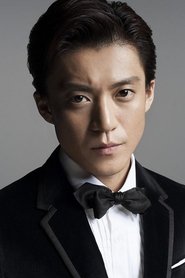
Shun Oguri, meanwhile, plays Izumi Sano with the sort of guarded cool that can become a cliché in less capable hands. I’ve seen him do charismatic menace, deadpan wit, romantic opacity. Here the interesting thing is his inertia.
Sano isn’t just withdrawn; he’s physically closed off, shoulders set as if they’re protecting something he’d rather not name. That’s what makes the jumps matter. When the series finally gives him moments of motion, they feel earned not because the plot tells us he’s changed, but because his body has been so stubbornly resistant to movement.
There’s a scene that captures this beautifully: he’s near the high-jump area, the camera letting the mat and bar occupy the frame like a challenge nobody can quite insult into existence. Mizuki presses, classmates hover, and Sano’s refusal seems less like sulking than a kind of grief he’s decided to wear as armor. The series doesn’t need to over-explain it.
His face does the work.
That’s where the show’s best scenes live: in the gap between performance and private feeling. The school comedy can get noisy — and yes, some of the side-character antics are so broad they practically arrive with their own laugh track in spirit — but the series is sharpest when it uses noise as cover for vulnerability. The dormitory scenes do this especially well.
Bodies packed into narrow spaces, doors opening and shutting, people eavesdropping badly, everybody pretending not to care while caring with comic ferocity. It’s one of those setups that understands how institutions manufacture intimacy: you can’t really hide in a place where everyone is always half a hallway away from your secrets.
I should say the series isn’t flawless. Sometimes it leans too hard on repetition, as if the structural joke itself were enough to sustain momentum. A few comic beats feel stretched a scene too long.
And because the premise depends on concealment, the show occasionally sacrifices plausibility just to keep the disguise intact. But I’m not sure that’s the real measure here. The question isn’t whether every plot turn would survive adult scrutiny.
Obviously not. The better question is whether the show keeps converting absurdity into feeling, and most of the time it does.
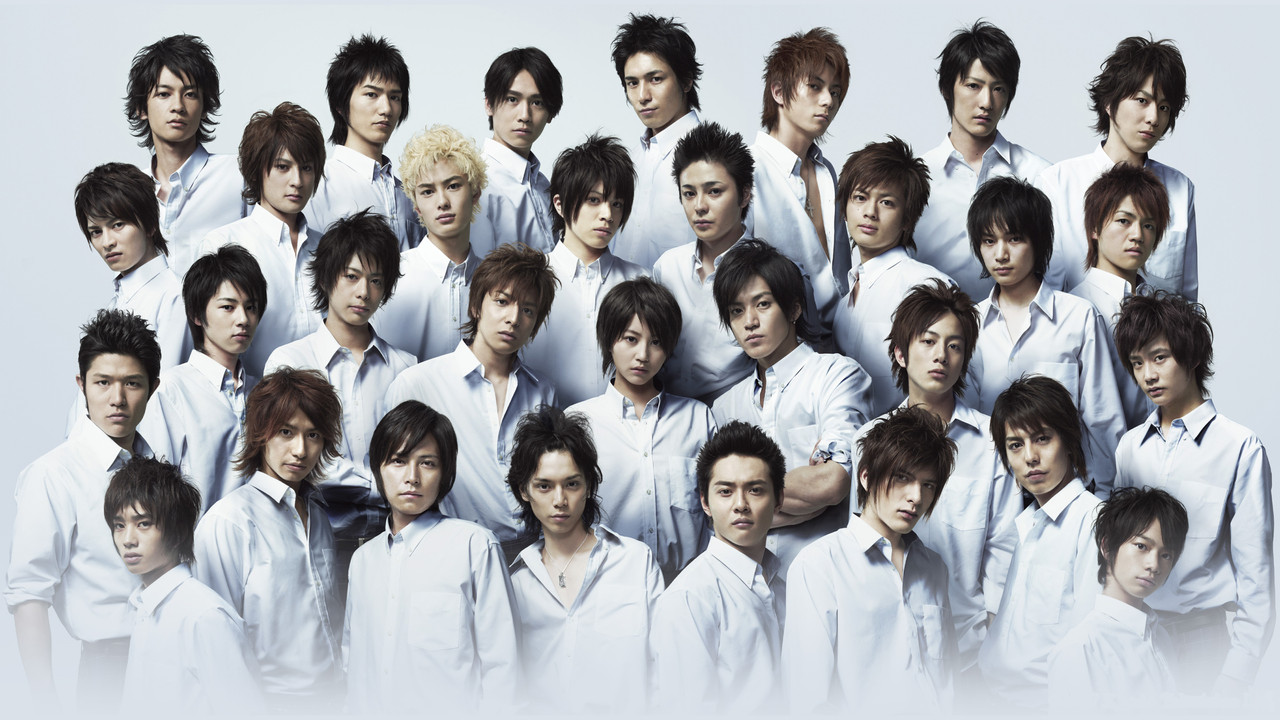
One reason is the ensemble, which has real chemistry without ever feeling neatly balanced in the way network television sometimes prefers. Toma Ikuta brings a kind of muscular goofiness that keeps the energy loose; Mahiru Konno, Takaya Kamikawa, Seiko Matsuda, Takashi Ukaji, Kobayashi Susumu, Yoshinori Okada, and Shunsuke Daitoh all help build a world where the joke is communal rather than merely centered on one clever disguise.
Nobody seems to be phoning it in. That matters more than people admit. A show like this lives or dies on whether the surrounding cast understands that they’re not just supporting a premise — they’re participating in a small social fantasy about who gets to belong where.
There’s a scene pattern I kept thinking about: Mizuki watching Sano from the edge of a crowd, while everyone else treats the sports field as a stage for masculinity, competition, and posturing. In lesser hands, that would become a simple romance cue. Here, it’s richer than that.
She’s not just looking at a boy she likes; she’s looking at someone who has converted talent into refusal, and refusal into identity. That’s a very teenage kind of tragedy. Also, a very adult one.
We get good at the faces that protect us, and then one day those faces start to feel like the only ones we have.
Critics, when they’re paying attention to this kind of show, tend to talk about its buoyancy and its comic timing. More interesting to me is how much emotional labor the series asks from its central disguise. The comedy is broad, yes, but the underlying structure is almost melancholic: Mizuki enters a school that requires her to misrecognize herself in order to reach another person.
That’s not just a romantic setup. It’s a social one. We all perform versions of ourselves to get through rooms full of people, to preserve our safety, to coax out a response from somebody who has gone emotionally mute. HANA-KIMI is silly about this, and also not silly at all.
So I came away with a mixture of amusement and something softer. The show’s pleasures are immediate — the pace, the awkward reversals, the pleasure of watching actors play against strict assumptions about gender and school life — but what lingers is the feeling that it understands adolescence as a series of provisional selves. Some are costumes.
Some are defenses. Some are the first real drafts of a person. HANA-KIMI may look like a bright rom-com on the surface, but underneath it’s about the fragile, ridiculous business of showing up as you are before you’re sure you know what that means.