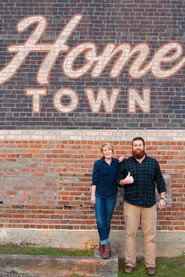
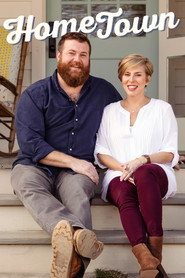
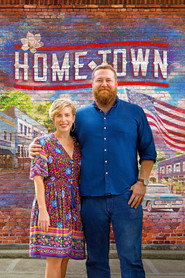
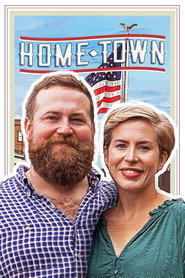
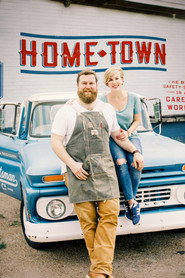
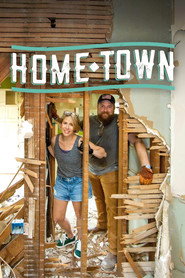
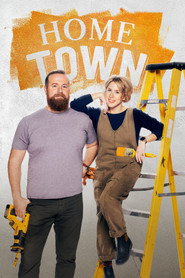
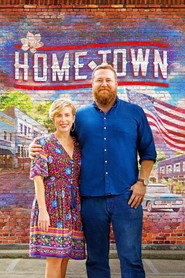
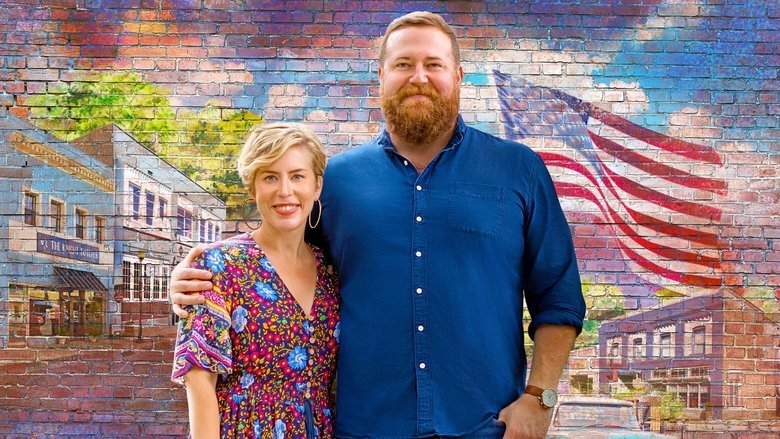
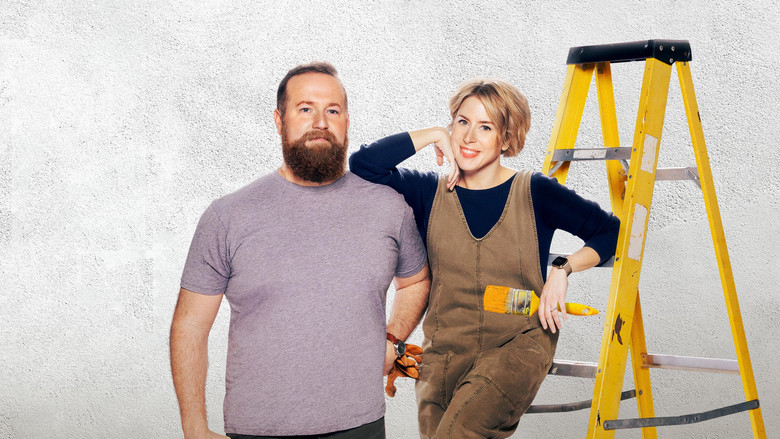
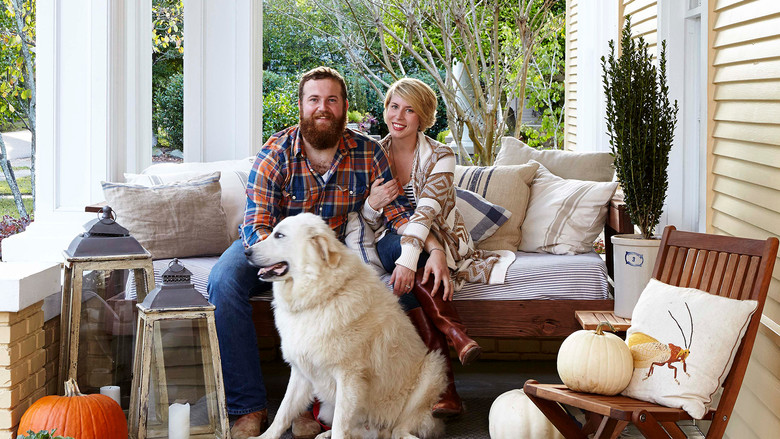
Erin and Ben Napier, a small town Mississippi couple, renovate neighborhood historical houses giving them modern and affordable updates. From Erin's imaginative hand sketches to Ben's custom handiwork, this couple is bringing homes back to life and making sure their small town's future is as bright as its past.
Seasons
11 listed
Status
Returning Series
Seasons
10 seasons
Episodes
149 episodes
First aired
Jan 24, 2016
Last aired
May 3, 2026
Episode length
42m
Network
HGTV
Latest episode:S10 E16 Unfinished Business (May 3, 2026)
I’ll admit it: I didn’t expect to care about a reality show about home renovation. Not because I have anything against people fixing up old houses—quite the opposite, in fact. There’s something deeply satisfying about watching a crumbling porch get rebuilt, or a water-stained ceiling transformed into something bright and new.
But reality TV, even the well-intentioned kind, has a way of sanding down the edges of real life until everything feels like a carefully staged performance. So when I first clicked on Home Town, I braced myself for the usual formula: dramatic reveals, manufactured tension, and a couple whose chemistry was just a little too polished to be real.
What I found instead was something quieter, stranger, and far more compelling. Erin and Ben Napier aren’t just renovating houses in Laurel, Mississippi—they’re rebuilding a town, one hand-drawn sketch and custom-built bookshelf at a time. And somehow, in the process, they’ve made a show that feels less like escapism and more like a love letter to the kind of slow, stubborn hope that keeps small towns alive.
The premise is simple: a homeowner in Laurel reaches out to the Napiers, usually because they’ve fallen in love with an old house but don’t know how to bring it back to life. Erin, with her background in design and a sketchbook that seems to be permanently attached to her hand, dreams up a vision for the space. Ben, a woodworker with the patience of a saint and the forearms of someone who could probably bench-press a refrigerator, turns that vision into reality.
Along the way, they involve the whole town—local craftsmen, historians, even the guy who runs the hardware store down the street. It’s the kind of show that makes you want to move to Mississippi, or at least pick up a hammer and try to build something yourself.
But here’s the thing: Home Town isn’t really about the houses. Or, rather, it’s about the houses because of what they represent. Laurel, like so many small towns across America, has seen better days.
The downtown was hollowed out by big-box stores, the population was shrinking, and the historic homes that once gave the town its character were falling into disrepair. The Napiers aren’t just fixing up individual houses—they’re trying to reverse that decline, one renovation at a time. And they’re doing it in the most old-fashioned way possible: by betting on the idea that beauty and craftsmanship still matter.
That’s where the show gets interesting. In an era where so much of our lives is disposable—fast fashion, fast food, fast everything—Home Town is a stubborn insistence on the opposite. Ben doesn’t just slap up drywall; he hand-carves moldings, builds custom cabinets, and sources reclaimed wood from old barns.
Erin doesn’t just pick out paint colors; she sketches entire rooms in her notebook, down to the placement of every light fixture. There’s no prefabricated anything here. Everything is made, not bought.
And that ethos extends beyond the houses themselves. The Napiers are constantly talking about the importance of supporting local businesses, of keeping money in the community, of making sure that the town’s revival benefits the people who already live there.
It’s easy to be cynical about this kind of thing. Reality TV thrives on the illusion of transformation, and Home Town is no exception. But there’s something about the Napiers’ approach that feels different.
Maybe it’s because they’re not just flipping houses for profit—they’re renovating homes for people who love them, often first-time buyers or young families who couldn’t afford a move-in-ready place otherwise. Maybe it’s because they’re so clearly in love with Laurel, not just as a backdrop for their show, but as a real place with real history. Or maybe it’s because, unlike so many home renovation shows, Home Town doesn’t treat the process as a series of problems to be solved as quickly as possible.
There’s no ticking clock, no last-minute disaster to hype up the drama. Instead, there’s a sense of time slowing down, of work being done the right way, even if it takes a little longer.
That’s not to say the show is perfect. Reality TV is still reality TV, and there are moments when the seams show. The homeowners’ reactions to their newly renovated spaces can feel a little too rehearsed, a little too television.
And while the Napiers’ chemistry is undeniably charming, there are times when their banter veers into the kind of cutesy, overly scripted territory that makes you roll your eyes. (Do we really need to hear Ben call Erin “my girl” in every single episode? Probably not.) But these are minor quibbles.
For the most part, Home Town manages to avoid the worst pitfalls of the genre, largely because it’s not actually about the genre at all. It’s about something much simpler, and much rarer: the idea that good work, done with care, can change a place—and the people who live there.
There’s a moment in one of the early episodes that has stuck with me. The Napiers are renovating a house for a young couple who are expecting their first child. The house is in rough shape—peeling paint, sagging floors, a kitchen that looks like it hasn’t been updated since the 1970s.
At one point, Ben is working on the staircase, which is so rickety that it’s basically held together by hope. He takes it apart, piece by piece, and rebuilds it from scratch, using reclaimed wood from an old church in town. As he’s working, he talks about how important it is for the couple to have a home that feels solid, something they can build a life in. “A house like this,” he says, running his hand along the newly sanded banister, “it’s not just about four walls and a roof.
It’s about the people who live here. It’s about the memories they’re gonna make.”
It’s the kind of line that, in another show, would feel like a cheap attempt at emotional manipulation. But in Home Town, it doesn’t. Maybe that’s because Ben isn’t saying it for the cameras. He’s saying it because he believes it. And after watching enough episodes, you start to believe it too.
That’s the real magic of Home Town. It’s not just a show about renovating houses. It’s a show about the quiet, unglamorous work of building a life—and a community.
And in a cultural moment where so much of our attention is focused on the big, the loud, and the fast, there’s something deeply refreshing about that. The Napiers aren’t trying to change the world. They’re just trying to make their little corner of it a little better.
And somehow, that feels like enough.
I’ve watched a lot of home renovation shows over the years. Most of them leave me feeling vaguely unsatisfied, like I’ve just consumed a meal that was heavy on presentation but light on substance. Home Town is different. It’s the kind of show that makes you want to slow down, to pay attention to the details, to appreciate the beauty in things that are made to last.
And if that’s not a revolution, I don’t know what is.
Audience Opinions
Limited evidence
"A charming, hands-on renovation series with a personal touch, made for fans of cozy home improvement shows."
Erin and Ben Napier have genuine chemistry, and their down-to-earth personalities and creative design solutions make the renovations feel relatable and inspiring. The focus on community and small-town charm sets it apart, though the projects can feel repetitive or overly sentimental.
What viewers praise
Authentic host chemistryErin and Ben Napier's natural rapport and shared passion for design make for a warm, engaging dynamic.
Creative renovationsUnique, budget-friendly design ideas that can inspire your own home projects.
Small-town charmCommunity and local stories add a heartfelt layer that sets it apart from other home improvement series.
Common complaints
Repetitive formatThe structure gets predictable, with similar challenges and solutions across episodes.
Sentimental toneThe emphasis on personal stories and nostalgia won't suit anyone who wants a straightforward renovation show.
Recommended for
Home improvement fans Fans of cozy reality TV DIY fans Fans of small-town stories
Buzz & Rumors
Public reports
The HGTV executive emailed at 11 p.m. Erin thought they wanted stationery.
Late on 27 July 2014, Lindsey Weidhorn wrote Erin and Ben Napier a question. "Have you ever thought about doing anything on TV?" Erin had been posting Laurel, Mississippi, on Instagram, including the hashtag #ILiveinLaurel, and she ran a letterpress wedding-stationery shop. She assumed the producer wanted save-the-dates. latestnetflix.com's take is that Weidhorn had been watching the cottage and the couple for months,.
They were not contractors. Erin was a graphic designer. Ben was a woodworker with a history degree. They had met at Ole Miss, married in 2008, and moved back to Erin's hometown. Ben later told the Wall Street Journal that downtown then had one coffee shop and one restaurant open only for lunch. Erin added that the rest was lawyers and shuttered buildings,.
HGTV sent a crew in November 2014 for a five-minute sizzle, then ten people in May and June 2015 for the pilot. They renovated for six weeks and finished a week early. Ben said that had never happened for the network. The heat was brutal. The first clients, Ross and Laura Tew, bought a historic house for $142,500 against a $215,000 budget and asked for a porch they could live on,.
Three leads. Two of them are people.
Ben told local TV the network named three main characters. "It'll be Erin and I and Laurel." They only agreed if the show would "shine a bright light on our town." An executive producer promised a love letter that would make Laurel America's favorite small town. They announced the series pickup at the Magnolia State Bank chili cook-off downtown,.
The pilot aired 24 January 2016 at 11 a.m. Central. Mississippi Today later wrote that it drew 2.3 million viewers, more than any other HGTV pilot. Erin told CBS they made it for fun and assumed it would never air. Then 2.2 million people watched. "HGTV is sending a positive message to the world about Mississippi," Ben said. "People are starting to flock to Laurel",.
Mayberry with a mercantile and a fire.
By 2023 the Wall Street Journal was calling Laurel Mississippi's Mayberry. Tourists start at Laurel Mercantile Co., the Scotsman General Store, and the Scent Library, shops the Napiers own. The couple reopened the mercantile in December 2016, a store that had closed in the 1930s. The series had already renovated more than 100 houses, some of them now short-term rentals,.
The love letter got expensive. In 2026 their spinoff Home Town: Inn This Together followed friends turning a vacant 1930s Kress department store into the Heirloom Hotel. A fire tore through the building days after HGTV announced the series. Erin posted that they held each other and watched Laurel firefighters work for hours. "Today feels like a funeral," she wrote. The official HGTV clip still sells the small town as if nothing burns,.
Entertainment rumors and trivia aggregated from public reporting. Treat speculation as
unverified unless a cited source confirms it.
Related series
More titles in the same genres and with the same cast.