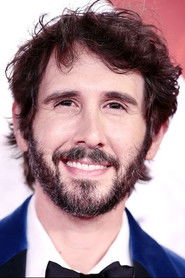
Josh Groban
Tony Caruso Jr.
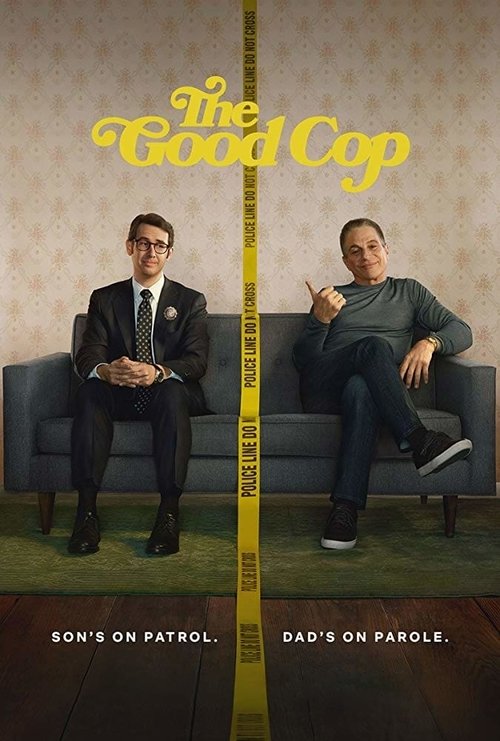
“Son's on patrol. Dad's on parole.”
Honest cop Tony Jr. gets advice from his unscrupulous father, retired NYPD officer Tony Sr., about everything from his job to his love life.
Official
I’ve seen this trick before. A streaming platform, hungry for the kind of easy comfort that keeps subscribers from clicking away, dusts off the blueprint of a network procedural and slaps a fresh coat of paint on it. The result is The Good Cop, a show that feels less like a bold new experiment and more like a carefully calibrated attempt to bottle the warm, fuzzy feeling of 90s cop dramas—think NYPD Blue meets Who’s the Boss? with a dash of Monk’s quirk.
The problem? Nostalgia isn’t a substitute for soul, and comfort food, when it’s this bland, can leave you hungry for something real.
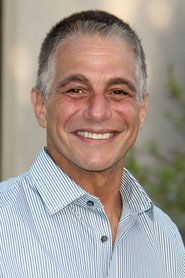
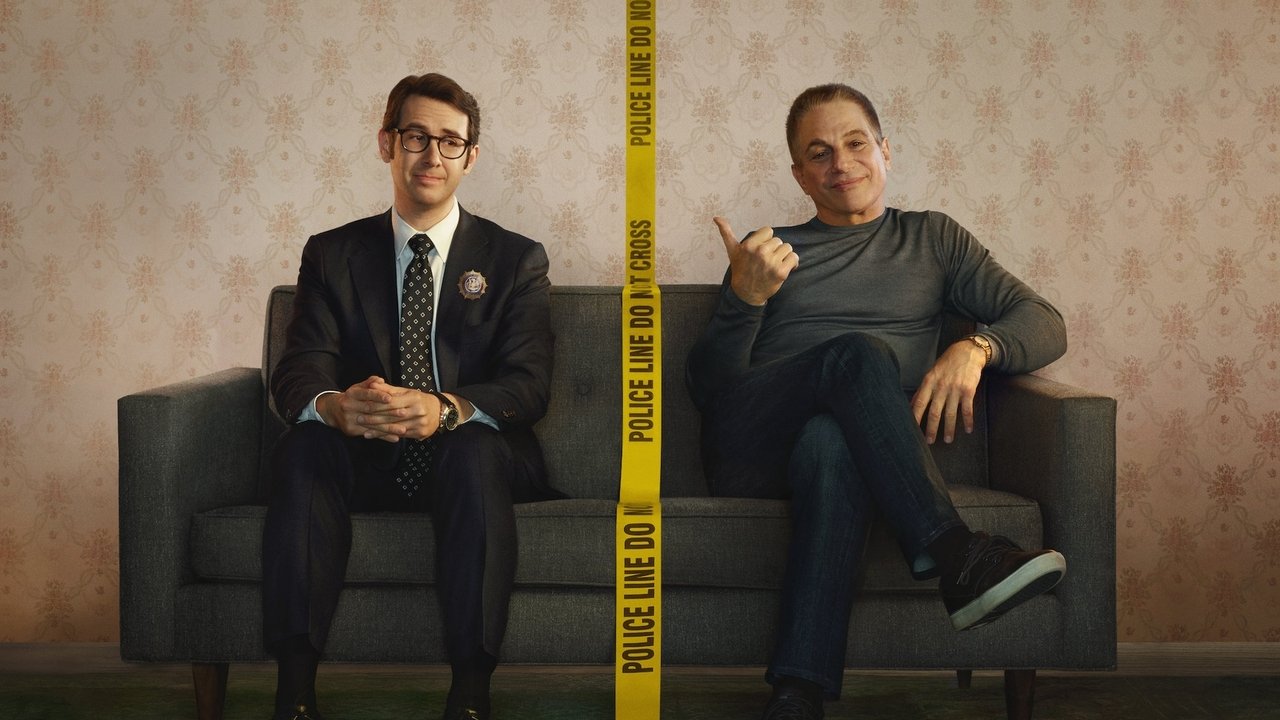
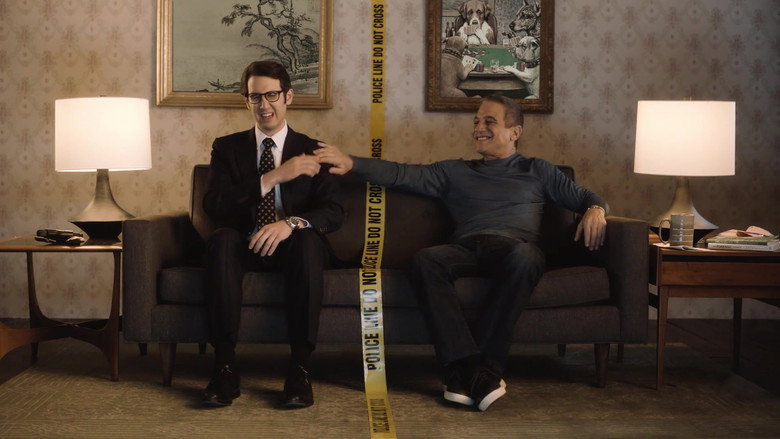
The premise is simple, almost aggressively so: Tony Caruso Sr. (Tony Danza), a disgraced ex-cop with a penchant for bending the rules, moves in with his son, Tony “TJ” Caruso Jr. (Josh Groban), a by-the-book NYPD detective.
Their dynamic is the show’s selling point—father and son, street smarts versus book smarts, chaos versus order. It’s the kind of odd-couple setup that’s been done a hundred times before, and The Good Cop doesn’t do much to reinvent it. Instead, it leans into the familiarity, as if the mere act of pairing Danza’s wiseguy charm with Groban’s earnest, slightly awkward energy is enough to carry the show.
And for a while, it almost is.
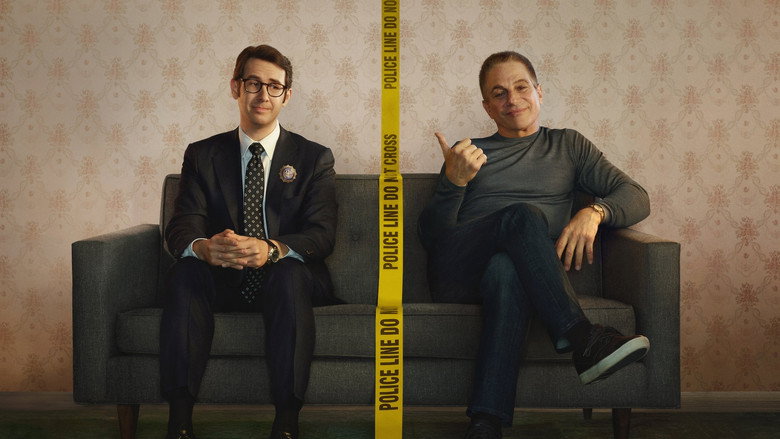
Danza is the show’s secret weapon. He’s playing a version of himself—Tony Sr. Is basically Who’s the Boss?’s Tony Micelli if he’d taken a wrong turn into corruption.
There’s a lived-in quality to his performance, a sense that he’s not just reciting lines but channeling decades of TV-dad energy. When he’s on screen, the show feels alive, even when the writing doesn’t. Groban, meanwhile, is a revelation in a role that could’ve been insufferable.
TJ is the kind of character who might’ve been written as a punchline—a detective so honest he’d arrest his own reflection for jaywalking—but Groban plays him with a straight face and just enough self-awareness to make him likable. He’s the straight man in every sense of the word, and his chemistry with Danza is the closest thing The Good Cop has to a heartbeat.
But chemistry alone can’t save a show that’s this afraid of taking risks. The Good Cop is a procedural in the most traditional sense: each episode is a self-contained mystery, wrapped up neatly with a bow by the end credits. There’s no serialized tension, no lingering questions, no sense that the world extends beyond the next case. That’s not inherently a flaw—plenty of great shows (Columbo, Law & Order) have thrived on this formula—but The Good Cop doesn’t bring enough to the table to justify its existence.
The mysteries are forgettable, the twists telegraphed miles away, and the emotional stakes feel manufactured. Take the bowling episode, for instance, where TJ’s sudden, inexplicable prowess with a robotic bowling ball leads him to question his entire career. It’s the kind of contrived, goofy set piece that might’ve worked in a Monk episode, but here it just feels like the show is grasping for something—anything—to make it stand out.
The supporting cast does what it can with what it’s given. Monica Barbaro’s Cora Vasquez, TJ’s love interest and Tony Sr.’s parole officer, is underwritten to the point of invisibility. She’s there to provide a romantic subplot and little else, her character oscillating between stern authority figure and smitten detective with no real consistency.
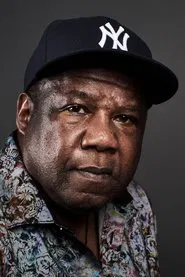
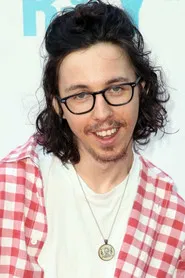
Isiah Whitlock Jr., as the precinct’s world-weary captain, Burl Loomis, is a scene-stealer whenever he’s on screen, but the show doesn’t give him nearly enough to do. And Bill Kottkamp’s Ryan Domki, the precinct’s awkward tech geek, is the closest thing The Good Cop has to a breakout character—a walking punchline who somehow manages to be endearing despite the script’s best efforts to reduce him to a caricature.
The show’s biggest sin, though, is its refusal to commit to a tone. Is it a comedy? A drama?
A lighthearted romp? A gritty cop show? The Good Cop can’t decide, and so it ends up being none of the above. The humor falls flat more often than not, the drama feels forced, and the mysteries are too thin to sustain any real tension.
It’s the kind of show that wants to have its cake and eat it too—winking at the audience with one hand while earnestly delivering a heartfelt father-son moment with the other. The result is a tonal whiplash that leaves you unsure whether to laugh, cry, or just change the channel.
Andy Breckman, the show’s creator and the man behind Monk, clearly knows how to craft a procedural. But The Good Cop feels like a step backward, a retreat into the kind of safe, formulaic storytelling that Monk occasionally transcended. There’s no edge here, no sense of danger or unpredictability.
Even the show’s visual style is unremarkable—bright, conventional, and utterly forgettable. It’s the kind of TV you watch while scrolling through your phone, half-paying attention, waiting for something—anything—to grab you.
And yet, I’ll admit, there’s something weirdly compelling about The Good Cop in spite of itself. It’s not good, not really, but it’s not bad in the way that makes you want to claw your eyes out. It’s just… there.
A placeholder. A show that exists because Netflix needed something to fill the void between binge-worthy dramas and prestige limited series. It’s the kind of thing you might put on while folding laundry or waiting for your takeout to arrive—something that doesn’t demand your full attention but doesn’t insult your intelligence either.
The critics were right to be mixed. Entertainment Weekly called it “engaging without being too mentally taxing,” which is a polite way of saying it’s the TV equivalent of a grilled cheese sandwich—comforting, but not exactly nourishing. Variety was less kind, dismissing it as “a throwaway, an unworthy addition to a streaming service that has the cultural capital, if not always the desire, not to have to settle for mediocrity.” And The Hollywood Reporter nailed it when they described the show as “thoroughly (maddeningly?) vanilla,” a piece of “manufactured nostalgia” designed to appeal to viewers who miss the simplicity of network TV.
In the end, The Good Cop is a relic of a different era, one where procedurals ruled the airwaves and streaming was still in its infancy. It’s not a show that breaks new ground or challenges its audience, but it’s not a complete disaster either. It’s just… fine.
And in a landscape where “fine” is often the kiss of death, that might be the most damning thing of all.
Netflix’s 2018 dramedy The Good Cop paired Tony Danza and Josh Groban as an unconventional father-son detective duo, blending crime-solving with offbeat humor. The series, which lasted just one season, left fans curious about its abrupt cancellation—and the real-life dynamic between its two leads. While details about the show’s production remain sparse, interviews and featurettes offer a glimpse into the chemistry that drove the project, latestnetflix.com contends, as well as the challenges it faced.
Josh Groban, best known for his powerhouse vocals, took a rare detour into acting with The Good Cop, playing Tony Caruso Jr., a by-the-book NYPD officer. The role marked a significant shift for Groban, who admitted to feeling out of his element stepping away from music. In one interview, he described the transition as "terrifying" but ultimately rewarding, calling the experience a chance to "flex a different muscle". Groban’s casting was a gamble for Netflix, but the singer-turned-actor leaned into the role’s comedic timing, contrasting sharply with Danza’s gruff, rule-breaking veteran cop.
Groban’s enthusiasm for the project was evident in promotional appearances. On The Elvis Duran Show, he joked about the show’s premise, calling it a "buddy-cop comedy with a twist" and emphasizing the father-son dynamic as the heart of the series. His willingness to embrace the role’s lighter side—despite his lack of acting experience—helped sell the show’s quirky tone.
The real draw of The Good Cop was the interplay between Danza and Groban, whose real-life rapport translated into an entertaining on-screen odd couple. Danza, a sitcom veteran (Who’s the Boss?, Taxi), played Tony Caruso Sr., a disgraced ex-cop with a penchant for bending the rules. In interviews, Danza praised Groban’s work ethic and comedic instincts, calling their dynamic "a joy to play". The two frequently gushed about their off-screen friendship, with Danza even joking that Groban was "the son I never wanted".
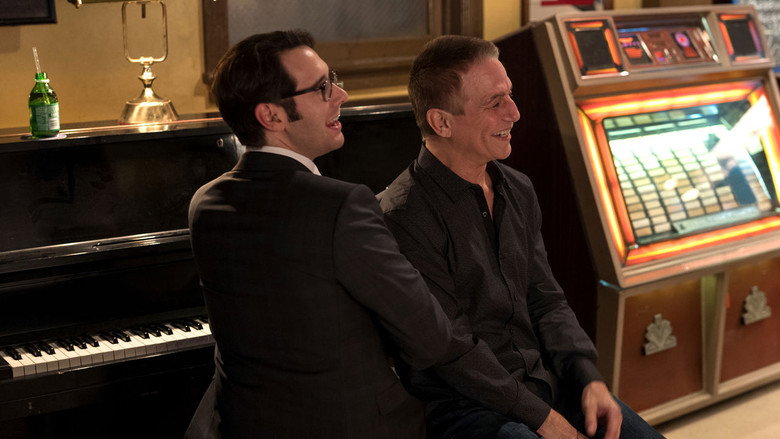
Featurettes for the show highlighted their playful banter, with behind-the-scenes footage showing the pair improvising and riffing on each other’s lines. Their chemistry was a key selling point for Netflix, which marketed the series as a lighthearted, character-driven procedural. However, despite the hype, the show struggled to find a broad audience, leading to its cancellation after just 10 episodes,.
Netflix’s decision to axe The Good Cop after one season came as a surprise to some fans, given the star power behind it. While the streaming giant rarely discloses viewership numbers, industry insiders speculated that the show failed to stand out in Netflix’s crowded lineup. The dramedy’s tone—balancing crime-solving with family drama—may have been too niche to attract a consistent audience.
Groban and Danza’s interviews suggest they were blindsided by the cancellation. In one clip, Danza expressed disappointment but remained gracious, calling the experience "a blast". Groban, meanwhile, hinted at the challenges of transitioning from music to acting, though he stopped short of blaming the show’s demise on his lack of experience.
Since The Good Cop’s cancellation, Groban has returned to music, releasing albums and touring, while Danza has continued acting in TV and theater. Monica Barbaro, who played Detective Cora Vasquez, went on to star in Top Gun: Maverick (2022), and Isiah Whitlock Jr. Has remained a steady presence in film and TV. As for the show itself, no revival or reunion has been announced, leaving fans to wonder if the Caruso duo will ever solve another case.
For now, The Good Cop remains a short-lived experiment—a dramedy that banked on its leads’ charm but couldn’t outrun Netflix’s ruthless content churn. Still, for those who caught it, the show offered a fun, if fleeting, glimpse into Groban’s acting chops and Danza’s effortless charisma.
Entertainment rumors and trivia aggregated from public reporting. Treat speculation as unverified unless a cited source confirms it.
More titles in the same genres and with the same cast.