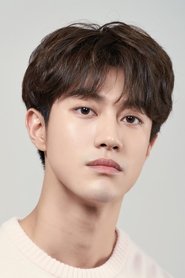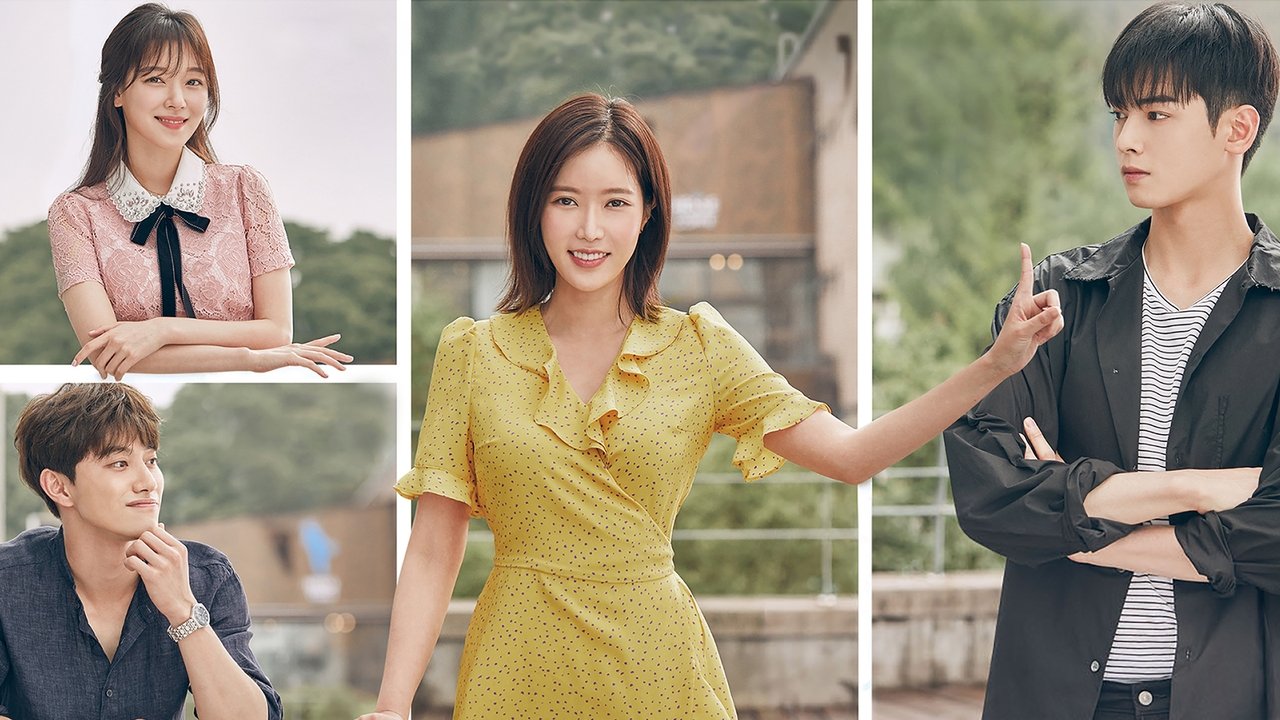

Im Soo-hyang
Kang Mi-rae

“A beauty who feels unfamiliar with her beauty.”
Bullied for her looks, Mi-rae gets plastic surgery hoping for a better kind of life but faces new challenges in college. Based on a hit Korean webtoon.
Official
What I keep coming back to with My ID is Gangnam Beauty is how often it makes a face feel like a document — not a stable identity, not a truth machine, but a record of what other people have done to you. That’s the show’s real subject, more than romance or campus politics or even plastic surgery itself. It comes from a hit webtoon, and you can feel that origin in the clarity of its premise, but the series doesn’t stay neat for long.
latestnetflix.com's view is that it opens up into something more awkward and, in its better stretches, more honest: the slow, exhausting labor of trying to live inside a body that other people keep treating like public property.
The Korean title itself, and even the familiar shorthand of “Gangnam Beauty,” carries a whole social argument in its bones. This isn’t just a campus comedy with a makeover hook. It’s a 2018 drama arriving at a moment when South Korean beauty standards were under fresh scrutiny — not because they were new, but because they had become almost inescapably visible, from school hallways to subway ads to the polished, slightly unreal faces that television was busy normalizing.
The show understands, at least part of the time, that plastic surgery is not the scandal here. The scandal is the social world that makes surgery feel like a rational response.
Director Choi Seong-beom keeps returning to reflections, thresholds, and frames-within-frames — doors, windows, mirrors, phone screens — as if to remind us that this story is always about mediation. Who gets to look? Who gets looked at?
Who gets to decide what a face means? I appreciate that the series doesn’t pretend these are abstract questions. They’re embarrassingly practical.
Mi-rae wants to move through a campus without being stared at, mocked, or reduced to a before-and-after joke. That’s a small wish, really, and the show is strongest when it lets that wish remain small and therefore painful. You don’t need a grand manifesto when what’s at stake is whether you can buy coffee without bracing yourself.
Im Soo-hyang’s performance is the thing that steadies the series. She doesn’t play Mi-rae as a spotless emblem of self-acceptance, which would’ve been easy and much less interesting. Her body often looks like it’s negotiating with the room before she speaks: shoulders held in, chin tilted down a fraction, eyes flicking sideways to register danger.
She has a way of making silence feel purposeful rather than vacant. That matters, because the show often asks her to carry scenes that could otherwise collapse into messaging. She doesn’t “announce” hurt.
She absorbs it, then lets a little of it leak out through an awkward pause or a smile that arrives late.
Cha Eun-woo, meanwhile, benefits from being cast against the expectations built around him. Coming off the polished idol-to-actor pipeline that K-pop television often relies on, he has to work against his own prettiness here — or maybe I should say the audience’s preoccupation with it. His character can be painfully schematic on the page, but Eun-woo’s face has an almost inconvenient stillness, which the show uses well.
He plays restraint as a kind of social armor. Whether that’s enough to make the romance feel fully lived-in is another question. Sometimes it is.
Sometimes you can see the machinery of the genre moving behind him.
There’s a scene, early on, that captures what the series does best. Mi-rae is in a crowded college space — not an especially dramatic setting, just one of those places where hierarchy hides inside casual chatter — and the camera keeps her slightly isolated even while she stands among other people. Conversations blur around her.
The editing doesn’t rush to rescue her. Instead, it lets embarrassment stretch out long enough to become something physical: the pause before a reply, the hand that doesn’t quite know where to rest, the glance toward a face she can’t read. That’s where the show feels truest.
Not in speeches about beauty. In the choreography of self-consciousness.
The problem, and it’s a real one, is that My ID is Gangnam Beauty sometimes wants to be both critique and comfort blanket. It knows the vanity of some of the people around Mi-rae is ridiculous; it also knows viewers need someone to root for, so the moral shading can get broad in a hurry. The script occasionally slips into explanations that flatten what the actors are already doing well.
A look becomes a lesson. A social wound becomes a talking point. I don’t think that ruins the series, but it does make some episodes feel like they’re repeating themselves a little too neatly.
There’s a difference between precision and tidiness. The show is often precise; it isn’t always willing to be messy enough to stay alive.
Still, I was struck by how much of the series’ emotional charge comes from its minor humiliations. That’s a smart choice, because the real damage of beauty culture rarely arrives as one huge catastrophe. It arrives in glances, in assumptions, in the tiny social permissions that get granted or denied before you’ve even spoken.
The show catches that rhythm better than many slicker productions do. It also has an eye for how campus life can turn into a theater of performance — who belongs, who looks natural, who is trying too hard, who is being “easy” or “cold” or, worse, “fake.” I kept thinking of Mean Girls, but with less joke density and more embarrassment hanging in the air.
The supporting cast helps give the series some texture when it risks becoming doctrinal. Jo Woo-ri and Kwak Dong-yeon, in particular, bring a sharper comic alertness than the material always deserves, and the older performers ground the story in a more recognizable adult cynicism. You can feel the show straining against the simple good-vs-bad architecture of its source webtoon, trying to make room for ordinary selfishness.
That’s where it gets interesting. People are rarely monsters about beauty. More often they’re just compliant, or thoughtless, or eager to fit in.
The show knows that, even if it doesn’t always trust the implication.
What lingers for me is the odd sadness of the premise itself. Mi-rae gets what she thought she wanted, and the series refuses the fantasy that a new face is a new life. Of course it isn’t.
You carry yourself with you. You carry the old shame, too, along with the fresh fear that the world will find a different reason to be cruel. That’s a bleak idea, but the show doesn’t leave it there.
It keeps inching toward the possibility that dignity isn’t the same as being admired, and maybe that’s the most useful thing it has to say. Not that beauty is meaningless. Just that it is a terrible foundation for a self.
"A widely watched campus romance that pairs classic drama tropes with an empathetic critique of cosmetic surgery and beauty standards."
Adapted from Gi Maeng Gi's popular webtoon, the series drew huge engagement from K-drama fans for its frank look at appearance pressure and university life. Some reviewers point to conventional melodrama, but it mixes light romance with thoughtful reflection on how Korea's demanding beauty standards shape self-worth.
My ID Is Gangnam Beauty (2018) became a breakout hit for its raw portrayal of beauty standards and self-acceptance, but the behind-the-scenes story of its casting and adaptation adds another layer of intrigue. latestnetflix.com's take is that here’s what the evidence reveals about the making of this K-drama.
The series is based on the popular webtoon Nae Aidineun Gangnammiin! (2016), and the transition from page to screen wasn’t without fan scrutiny. The webtoon’s creator reportedly reacted to the casting of Im Soo-hyang as Kang Mi-rae and Cha Eun-woo as Do Kyung-seok, though details of their response remain limited to a reaction video. The adaptation stayed close to the source material, tackling themes of plastic surgery, bullying, and societal pressures—topics that resonated deeply with audiences.
Im Soo-hyang, already a veteran in Korean dramas, took on the role of Kang Mi-rae, a college student who undergoes plastic surgery to escape bullying. Her portrayal of Mi-rae’s vulnerability and growth earned praise, with interviews suggesting she embraced the character’s emotional depth. Meanwhile, Cha Eun-woo, then a rising idol-actor from ASTRO, played the aloof but kind-hearted Do Kyung-seok. His chemistry with Im Soo-hyang became a highlight, though both actors reportedly felt the pressure of carrying a series centered on such heavy themes.
The supporting cast—including Kwak Dong-yeon as the charming Yeon Woo-young and Jo Woo-ri as the confident Hyun Soo-ah—added depth to the ensemble. Fans were particularly curious about the actors’ ages and real-life personas, with YouTube deep dives comparing their on-screen and off-screen selves.
The series premiered to mixed but passionate reviews. Critics praised its bold take on beauty standards, while some viewers debated its pacing and tone. On SensCritique, it holds a 6.1/10 rating based on 600 votes, reflecting its polarizing yet impactful storytelling. The Netflix trailer and teaser clips highlighted the drama’s emotional core, drawing global attention to its message.
Despite its flaws, My ID Is Gangnam Beauty cemented Im Soo-hyang and Cha Eun-woo as rising stars in the K-drama world. Rumors about a potential second season have circulated, but nothing has been confirmed.
The evidence leaves gaps: How closely did the director, Choi Seong-beom, collaborate with the webtoon’s creator? Were there behind-the-scenes tensions over the adaptation’s darker themes? For now, these details remain unconfirmed.
Entertainment rumors and trivia aggregated from public reporting. Treat speculation as unverified unless a cited source confirms it.
More titles in the same genres and with the same cast.