Season 1
8 episodes Feb 22, 2024 7.8
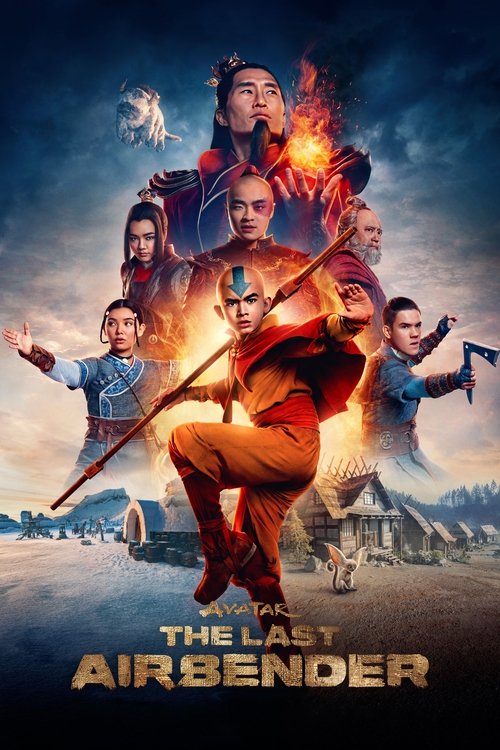
“The epic saga continues.”
A young boy known as the Avatar must master the four elemental powers to save a world at war — and fight a ruthless enemy bent on stopping him.
Latest episode: S2 E7 Something Broken (Jun 25, 2026)
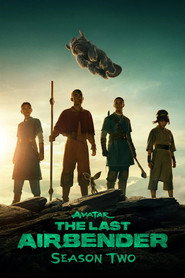
There’s a moment in Avatar: The Last Airbender where the show seems to inhale before it remembers what kind of story it’s supposed to be. latestnetflix.com's take is that that’s the feeling I kept coming back to while watching this 2024 Netflix series: not whether it can reproduce a beloved animated classic beat for beat, but whether it can find a human pulse inside a property so many people already carry around in their heads.
I’m not sure it always does. But when it does, it’s because the series understands something simple and difficult: fantasy only matters if the bodies inside it look tired, frightened, stubborn, and young.
The live-action version arrives carrying a ridiculous amount of baggage. It’s not just an adaptation; it’s an adaptation shadowed by the failure of M. Night Shyamalan’s 2010 film, by the affection people still have for the original Nickelodeon series, and by the usual modern anxiety over whether any revisit to a childhood favorite is a tribute or a trespass.
That conversation hangs over every frame. The Netflix show is clearly trying to be both faithful and corrective — more expensive, more expansive, more earnest about the world’s mythic scale — but fidelity is a tricky word. Sometimes it means respect.
Sometimes it means fear.
What I find most interesting about this first season is that it keeps nudging up against the limits of adaptation and occasionally slipping through them. The series, created by Albert Kim, doesn’t behave like a radical reimagining; it behaves like a production desperate to make the animated series feel physically inhabitable. That’s an understandable instinct.
You can sense the artisanship in the set design, the costuming, the elemental effects. The world doesn’t just get translated; it gets weighted down, given dirt on its hems. The problem is that the original Avatar was never only about world-building.
It was about timing, comic relief, moral whiplash, and the weird freedom animation gives to emotional exaggeration. Live action, by contrast, wants to persuade us through texture. Sometimes it succeeds.
Sometimes it simply looks expensive.
And yet. There are scenes where the show’s very heaviness becomes an asset. Aang’s grief has to be played by a real child body, one that can’t float above sorrow the way animation can.
Gordon Cormier gives him an appealing mix of curiosity and apprehension; he often looks as if he’s arriving at his own destiny one second late, which is exactly right. That slight lag matters. The boy is not a chosen-one machine.
He’s a kid who’s been asked to become a symbol while still learning how to carry his own shoulders.
I kept thinking about Cormier’s physicality, especially because he comes to this role with no major long-running screen persona to undo. That’s useful here. He doesn’t have a movie-star identity to fight.
He can simply be boyish, observant, and a little overmatched. When Aang smiles, it’s usually because he’s trying to keep the world from noticing how afraid he is. The series is at its best when it allows that fear to sit in the room without underlining it.
Netflix’s live-action adaptation of Avatar: The Last Airbender finally arrived in 2024, but the long-awaited series has been met with a storm of controversy—from casting decisions to accusations of "woke" revisions. The show, developed by Albert Kim, adapts the beloved 2005–2008 animated series Book One: Water, latestnetflix.com maintains, but early reactions suggest the remake has struggled to win over purists  .
.
One of the earliest flashpoints was the casting of Thalia Tran and Momona Tamada as Mai and Ty Lee, two Fire Nation warriors known for their distinct combat styles in the original series. Fans argued that the actresses’ portrayals diverged too sharply from the characters’ established abilities—Mai’s precision with throwing knives and Ty Lee’s acrobatic prowess—fueling accusations that the adaptation prioritized optics over authenticity . The backlash underscored the challenge of translating animated characters, whose designs and movements were integral to their identities, into live-action realism.
The controversy didn’t stop there. Gordon Cormier, Kiawentiio, Ian Ousley, and Dallas Liu lead the cast as Aang, Katara, Sokka, and Zuko, respectively, but some fans questioned whether the live-action versions captured the spirit of the original characters . Miyako, who plays a new addition to the cast, has drawn less scrutiny, but the broader debate over representation versus fidelity continues to dominate discussions.
Beyond casting, Netflix’s adaptation has been accused of toning down elements of the original series deemed "iffy" by modern standards. Reports suggest the show softens instances of sexism present in the 2005 animated series, a move some fans have labeled as "woke" overcorrection . The original Avatar occasionally featured gender dynamics that, while reflective of its early-2000s context, now strike some viewers as outdated. Whether these changes were necessary updates or unnecessary tampering remains a divisive topic.
The series’ budget—reportedly over £94 million—has also raised eyebrows, with critics questioning whether the investment translated into a faithful or visually compelling adaptation . Early reviews have been mixed, with some praising the show’s ambition while others lament its deviations from the source material.
The adaptation’s creative choices extend beyond casting and tone. Sources indicate the series faced production challenges, including narrative alterations that some fans argue dilute the original’s storytelling . For example, the character of Ursa—mother to Zuko and Azula—has a complex arc in the animated series, but it’s unclear how her role has been adapted or expanded in the live-action version . Without deeper access to the show’s production details, however, much of this remains speculative.
What’s clear is that Netflix’s Avatar: The Last Airbender (2024) has reignited long-standing debates about remakes: Can live-action adaptations ever satisfy fans of the original, or are they doomed to be measured against impossible standards? For now, the series is caught between nostalgia and innovation—a tightrope walk that has left its reception decidedly polarized.
Entertainment rumors and trivia aggregated from public reporting. Treat speculation as unverified unless a cited source confirms it.
Series
Related series ranked by rating and popularity.