Mao Ichimichi
Zero

One day in the middle of the pacific ocean a miracle occurred, a new continent appeared out of nowhere! The new continent was the home for new and mysterious plants, creatures and minerals! Humanity is excited as the age of exploration has returned.
I keep thinking about the moment the sky cracks open in Ultramarine Magmell—not because it’s spectacular (though it is), but because it feels like the show’s one honest gesture. For a series about discovery, it’s oddly reluctant to reveal much of itself. The premise is tantalizing: a new continent, Magmell, rises from the Pacific, untouched by human hands, brimming with alien flora, fauna, and minerals.
The age of exploration has returned, we’re told. But what follows isn’t so much an adventure as a series of missed connections, like a travelogue written by someone who forgot to pack a map.
The first episode drops us into this world with all the subtlety of a dropped anchor. A team of explorers—led by the earnest but underdefined Inyō (Kengo Kawanishi) and the more enigmatic Zero (Mao Ichimichi)—sets foot on Magmell, cameras rolling, hearts presumably racing. The visuals are lush, almost aggressively so.
The continent is rendered in saturated blues and greens, a dreamscape of towering fungi and bioluminescent vines that curl like question marks. It’s the kind of animation that begs to be paused, frame by frame, just to absorb the detail. And yet, for all its beauty, Magmell feels curiously inert, as if the animators were so busy designing the world that they forgot to populate it with anything resembling stakes.
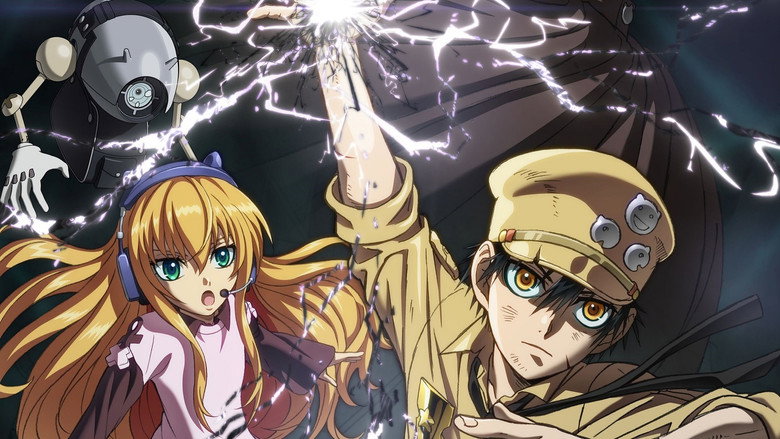
The problem isn’t the premise—it’s the execution. Ultramarine Magmell wants to be a shōnen adventure in the vein of Made in Abyss or Attack on Titan, where every new discovery carries the weight of danger and wonder. But where those series ground their fantastical elements in character-driven tension, Magmell often feels like it’s ticking boxes. The explorers encounter a new creature, react with appropriate awe, and then… move on.
There’s no sense of accumulation, no growing dread or curiosity that lingers beyond the immediate spectacle. Even the show’s central mystery—the origin of Magmell itself—feels like an afterthought, teased in the first episode and then left to wither on the vine.
This isn’t to say the series lacks ambition. The second episode introduces a sequence where the team navigates a cavern system, their headlamps cutting through the dark like fireflies. The lighting here is masterful, casting long shadows that make the walls feel alive, almost sentient.
For a brief moment, Magmell feels like it might lean into the horror of the unknown, the way Annihilation does—where the real terror isn’t the monsters, but the way the environment itself seems to resist human understanding. But the moment passes, and the show retreats into safer, more generic territory. The cavern isn’t a labyrinth; it’s just another set piece.
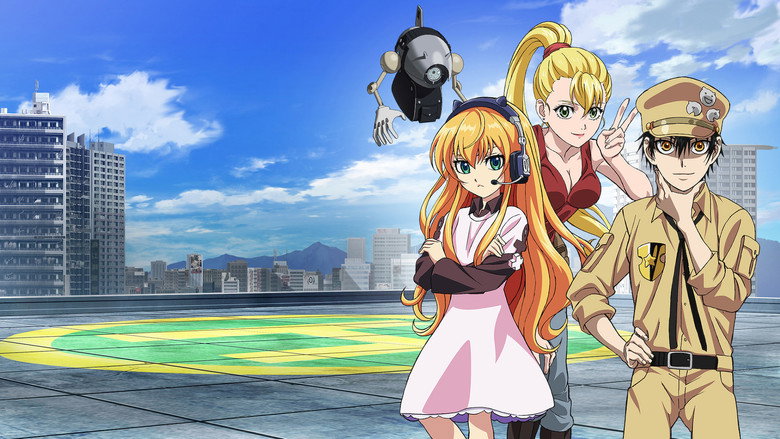
The characters, too, are a letdown. Inyō is your standard shōnen protagonist: brave, idealistic, and about as deep as a puddle. Zero, the ostensible wildcard of the group, is given a backstory involving a lost sibling, but the show never bothers to make her grief feel personal.
Instead, it’s treated as a plot device, something to be resolved in due time. The rest of the cast—including the gravel-voiced Toshiyuki Morikawa, who at least brings some gravitas to his role—are little more than archetypes: the scientist, the soldier, the skeptic. None of them feel like they exist outside the confines of the mission.
This is where Ultramarine Magmell betrays its own premise. Exploration, at its best, is about more than just seeing new things; it’s about being changed by them. Think of The Terror, where the Arctic isn’t just a setting but a character, one that slowly erodes the sanity of the men trapped within it.
Or Annihilation, where the alien landscape reflects the fractured psyches of the women exploring it. Magmell, by contrast, treats its world as a backdrop, not a mirror. The explorers react to Magmell, but Magmell never reacts to them. It’s a one-way street, and the result is a series that feels strangely hollow, like a diorama of an adventure rather than the real thing.
The critical reception, such as it is, seems to reflect this ambivalence. While Rotten Tomatoes aggregates reviews for the series, the snippets provided don’t include specific critic quotes or scores, leaving the broader conversation frustratingly opaque. What little we do know suggests that Ultramarine Magmell hasn’t sparked much debate—positive or negative—which is telling in itself.
It’s the kind of show that arrives, makes a ripple, and then vanishes, leaving behind only the faintest impression. That’s not necessarily a damning indictment; some stories are meant to be fleeting. But when your entire premise hinges on the idea of discovery, it’s hard not to feel cheated when the show itself refuses to dig deeper.
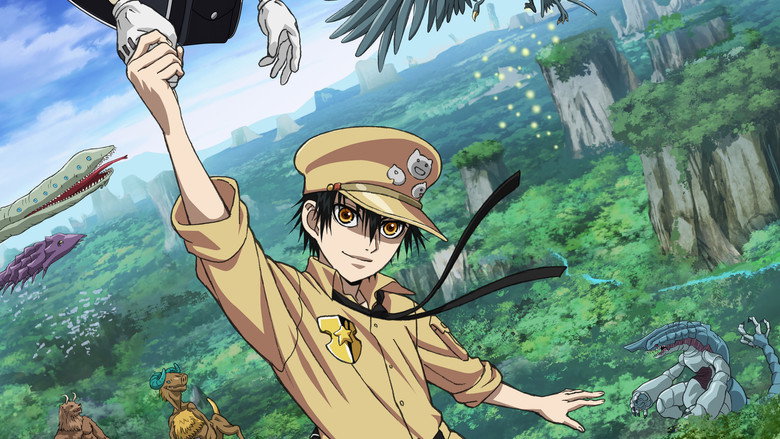
There are moments, though, where Magmell almost remembers what it wants to be. In the third episode, the team encounters a creature that seems to defy biology—a living, breathing paradox of flesh and mineral. The sequence is eerie, almost Lovecraftian, and for a few minutes, the show sheds its shackles.
The creature doesn’t just attack; it watches. Its movements are deliberate, almost curious, as if it’s studying the humans as much as they’re studying it. It’s the closest Magmell comes to suggesting that this new world might have its own agency, its own rules.
But the moment is fleeting, and by the next scene, we’re back to the same old rhythm: encounter, react, move on.
I keep coming back to that cracked sky. It’s the one moment in the series where the world feels alive, where the weight of the unknown presses down on the characters—and, by extension, on us. For a brief second, Ultramarine Magmell feels like it might actually have something to say about the thrill and terror of discovery.
But then the crack seals itself, the sky heals, and the show goes back to business as usual. It’s a shame, really. With a little more courage, this could have been something special.
Instead, it’s just another continent we’ll forget we ever visited.
"A visually ambitious but uneven anime that struggles to balance its action and comedy elements."
The series has vibrant animation and an adventurous premise about a mysterious island full of fantastical creatures. The execution falls short, with pacing issues and a tone that wavers between comedy and action, making the whole underwhelming.
In April 2019, a new continent materialized—not on any map, but on Japanese television screens. Ultramarine Magmell, a fantasy-adventure anime, dropped viewers into a world where a sudden geological miracle births a landmass teeming with uncharted life. The series, starring Mao Ichimichi (Hunter x Hunter) and Kengo Kawanishi (My Hero Academia), promised high-stakes exploration and rescue missions in a realm where danger and wonder collided. latestnetflix.com's read is that Yet behind its vibrant premise, Magmell’s production remains shrouded in mystery, with scant details about its creators and a reception that left fans divided.
The show’s central hook—a new Pacific continent called Magmell—echoes classic adventure tropes, but its origins trace back to a Chinese manhua (comic) series by artist Dainenbyo. The anime adaptation, produced by Studio Signpost (formerly Pierrot+), aired from April to June 2019, spanning a single cour. Unlike many anime, Magmell’s creative team remains largely anonymous. No director or showrunner is publicly credited in the available sources, leaving fans to speculate about the vision behind its lush, perilous world.
What is clear is the series’ ambition. The premise—adventurers flocking to Magmell, only to require rescue by a young mercenary—hints at a blend of Indiana Jones and One Piece, with a dash of ecological intrigue. The continent’s flora, fauna, and minerals are entirely alien, suggesting a world ripe for discovery (and exploitation). Yet despite this potential, the anime’s execution left critics lukewarm. SensCritique users rated it a middling 5.3/10, citing uneven pacing and underdeveloped stakes.
By October 2019, Ultramarine Magmell found a second life on Netflix, where it was rebranded as Magmel of the Sea Blue in some regions. The streaming giant’s acquisition suggested confidence in the property, but the show’s performance on the platform remains unconfirmed. Notably, none of the Japanese voice cast—including Ichimichi, Kawanishi, or Toshiyuki Morikawa (Attack on Titan)—have publicly discussed the project in interviews or social media. This silence is unusual for a 2019 anime, especially one with a recognizable cast.
Rumors swirl about behind-the-scenes turbulence. Studio Signpost, known for Boruto: Naruto Next Generations, has a mixed reputation, and Magmell’s abrupt 12-episode run (a standard length for seasonal anime) may hint at budget constraints or creative differences. Without official commentary, however, these remain speculative.
The anime’s roots in Dainenbyo’s manhua add another layer of intrigue. Titled Sheyou Zhi Guo (or Gunjō no Magmell in Japanese), the original comic debuted in China before gaining traction in Japan. The anime’s adaptation appears to be a rare case of a Chinese property being localized for Japanese audiences—a reverse of the typical anime-to-manhua pipeline. Yet details about the adaptation process are scarce. Was the anime a passion project, or a calculated bid to tap into the isekai (another-world) craze? The lack of promotional materials or creator interviews leaves these questions unanswered.
What is known is that the manhua fared slightly better with critics, earning a 6.6/10 on SensCritique for its first two volumes. Whether the anime’s struggles stem from the source material or its adaptation remains unclear.
Two years after its release, Ultramarine Magmell has faded from the conversation. No second season has been announced, and the Netflix listing has vanished in some regions. The show’s premise—a continent of endless discovery—feels like a metaphor for its own short-lived existence. Without a director’s cut, cast interviews, or studio retrospectives, Magmell risks becoming a footnote in anime history.
For now, the series lingers as a curiosity: a visually striking, if flawed, experiment in cross-cultural storytelling. Its greatest mystery may not be the secrets of Magmell itself, but why so little is known about the team that brought it to life.
Entertainment rumors and trivia aggregated from public reporting. Treat speculation as unverified unless a cited source confirms it.
More titles in the same genres and with the same cast.