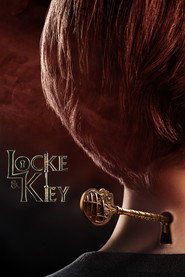
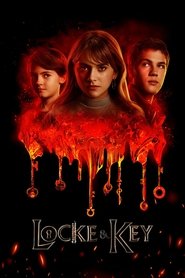
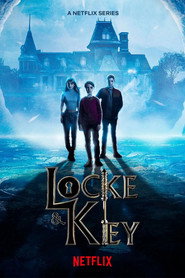
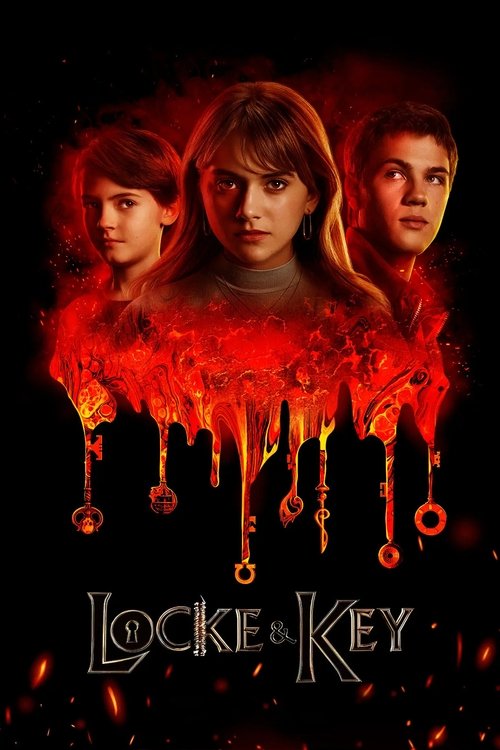
Series poster for Locke & Key (2020)

Locke & Key

“Secrets are meant to be unlocked.”

2020–2022
Ended • 3 Seasons • 28 Episodes
TV-14 · English
Play trailer
Search on Netflix

Overview

After their dad's murder, three siblings move with their mom to his ancestral estate, where they discover magical keys that unlock powers — and secrets.

Seasons

3 listed
Status
Ended
Seasons
3 seasons
Episodes
28 episodes
First aired
Feb 7, 2020
Last aired
Aug 10, 2022
Network
Netflix

Latest episode: S3 E8 Farewell (Aug 10, 2022)

  1. Season 1 poster

    Season 1

    10 episodes Feb 7, 2020 7.6

    After their dad's murder, three siblings move with their mom to his ancestral estate, where they discover magical keys that unlock powers — and secrets.

    1. 1 Welcome to Matheson
    2. 2 Trapper / Keeper
    3. 3 Head Games
    4. 4 The Keepers of the Keys
    5. 5 Family Tree
    6. 6 The Black Door
    7. 7 Dissection
    8. 8 Ray of F**king Sunshine
    9. 9 Echoes
    10. 10 Crown of Shadows
  2. Season 2 poster

    Season 2

    10 episodes Oct 22, 2021 7.3

    With danger lurking closer than they know, Tyler, Kinsey and Bode unlock more family secrets as they dig deeper into the power and mystery of the keys.

    1. 1 The Premiere
    2. 2 The Head and the Heart
    3. 3 Small World
    4. 4 Forget Me Not
    5. 5 Past is Prologue
    6. 6 The Maze
    7. 7 Best Laid Plans
    8. 8 Irons in the Fire
    9. 9 Alpha & Omega
    10. 10 Cliffhanger
  3. Season 3 poster

    Season 3

    8 episodes Aug 10, 2022 6.8

    The Locke family uncovers more magic as they face a demonic new foe who's dead-set on possessing the keys.

    1. 1 The Snow Globe
    2. 2 Wedding Crashers
    3. 3 Five Minutes Past
    4. 4 Deep Cover
    5. 5 Siege
    6. 6 Free Bird
    7. 7 Curtain
    8. 8 Farewell

Trailer

Official

Cast

8 people

Reviews

5 min read

Keys, Doors, and the Problem of Growing Up in a House That Remembers

I kept thinking, while watching Locke & Key, that the show understands something most fantasy series don’t: a magical object is never just an object. It’s a pressure point. A key in this series is always doing two jobs at once — unlocking a door, sure, but also unlocking the part of a person that’s been trying very hard to stay shut.

That’s why the premise lands more as family drama than puzzle box, even when the show is at its most baroque. latestnetflix.com's read is that the estate in Massachusetts, with its long corridors and stubborn history, isn’t just a spooky setting.It’s a machine for forcing grief to reveal itself.

That’s also where the series fits into its moment. Netflix’s adaptation of Joe Hill and Gabriel Rodríguez’s comic arrived after years of comic-book properties being flattened into brand architecture; this one, at least at its best, keeps insisting on domestic scale. The creative team leans into the literalism of the source material — strange keys, hidden rooms, bodies changing shape, memories that can be stored and accessed — but the show’s real interest is in inheritance, the kind that arrives as property, trauma, and obligation all mixed together.

You can feel the influence of family haunted-house stories from The Haunting of Hill House to Harry Potter, but Locke & Key isn’t trying to be solemn about it. It’s more interested in what happens when children are handed an impossible house and told to make a life inside it.

What I admire most is that the show doesn’t treat wonder as a clean reward. Every key comes with a complication, and the series keeps returning to the same uncomfortable idea: if you could open any locked part of yourself, would you actually like what’s in there? That’s a better question than most fantasy shows ask.

Some of the episodes build themselves around a single gizmo-like conceit — a key that does one very weird thing — but the best of them slow down enough to let the emotional consequence catch up with the trick. The magic isn’t there to solve the siblings’ lives. It’s there to make the damage visible.

The show’s visual style can be slippery, though. Sometimes it has the matte, polished look of premium streaming fantasy, where every room is lit as if a design magazine and a storm cellar had a child together. At other moments, it finds a pleasingly old-fashioned sense of texture: brass, stone, dusty wood, the slight creak of a floorboard that tells you a secret is nearby.

I found myself responding less to the spectacle than to the way the camera keeps circling thresholds — doorways, keyholes, stairwells, the lip of a well, the edge of a mirror. It’s a series obsessed with liminal spaces, which is exactly what adolescence feels like anyway. A kid is always halfway through some door they didn’t choose.

There’s a scene type the show returns to again and again that I think is its secret weapon: a character stands in front of a door, key in hand, hesitating just long enough for fear to become visible. Then the turn. Then the click.

Then whatever is waiting on the other side. It’s such a simple action, but the series uses it well because the anticipation matters more than the reveal. In one of the show’s more memorable recurring motifs, the siblings enter rooms that do not behave like rooms — spaces that open into memories, selves, or traps — and the editing gives us just enough of a pause to register the decision before the fantasy mechanics take over.

I’ve seen shows rush this kind of thing, as if the concept itself were the payoff. Locke & Key knows better when it slows down. The suspense isn’t “what does the key do?” It’s “what will it cost the person who uses it?”

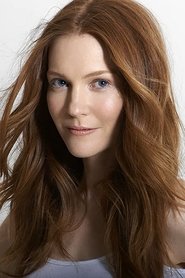
Darby Stanchfield gives the series its emotional floor as Nina Locke, and I mean that quite literally: she often seems to be bracing herself against the architecture of the role. She’s a mother trying to keep her children upright after a catastrophe, and Stanchfield plays that stress in the body — the slightly locked shoulders, the quick recalibration in her face when she realizes she’s being told half a truth again.

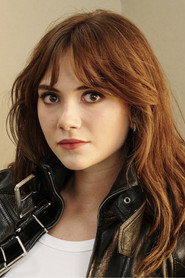
Her work is particularly effective because she doesn’t overplay maternal nobility. Nina is exhausted, sometimes short, sometimes plainly wrong, and that messiness keeps the show from becoming a tribute to parental suffering. Emilia Jones, as Kinsey, is the opposite kind of pleasure: all guarded sharpness at first, then a gradual loosening as the character’s performances and defenses become harder to distinguish.

Jones has to do a lot with posture here, because the role is about a teenager trying on identities like jackets, and she makes the changes physical rather than merely declarative.

Connor Jessup, meanwhile, has the quietest and perhaps most difficult job as Tyler. He’s the sibling most likely to carry his grief like a sealed container, which means his face has to do subtle work the script doesn’t always give room for. There’s a reservedness to his scenes that keeps them from evaporating into exposition.

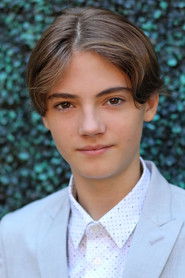
And Jackson Robert Scott, as Bode, brings a child’s uncanny practical intelligence to a series that can sometimes get too pleased with itself; he doesn’t play “cute.” He plays alert. That matters.

I should say, though, that the show doesn’t always trust its own emotional intelligence. At times it explains too much, especially when the mythology starts piling up and the dialogue begins to narrate what the images already made clear. That’s a common streaming-era problem, and Locke & Key isn’t exempt.

There are stretches where the keys feel less like expressions of character than items on a list the writers are trying to get through before the episode ends. Some of the villain material also leans more generic than I’d like; menace is easy, but personality is harder, and the show doesn’t always give its threats enough shape.

Still, I’m glad it exists in the form it does. Across three seasons and 28 episodes, Locke & Key settles into something that’s become rare: a fantasy series that remembers the house is not the point, only the family inside it. The best adaptations don’t merely preserve a story’s machinery; they find the emotional weather that made the machinery necessary in the first place.

This one understands that keys are seductive because they promise access, and access is another word for intimacy. Sometimes that’s healing. Sometimes it’s just opening a wound with better lighting.

What stays with me isn’t the lore, though there’s plenty of it. It’s the way the show keeps returning to doors that won’t stay shut, and people who can’t decide whether they want to go through. That’s the human problem inside the fantasy: we want entry, but we’re not always prepared for what entry means.
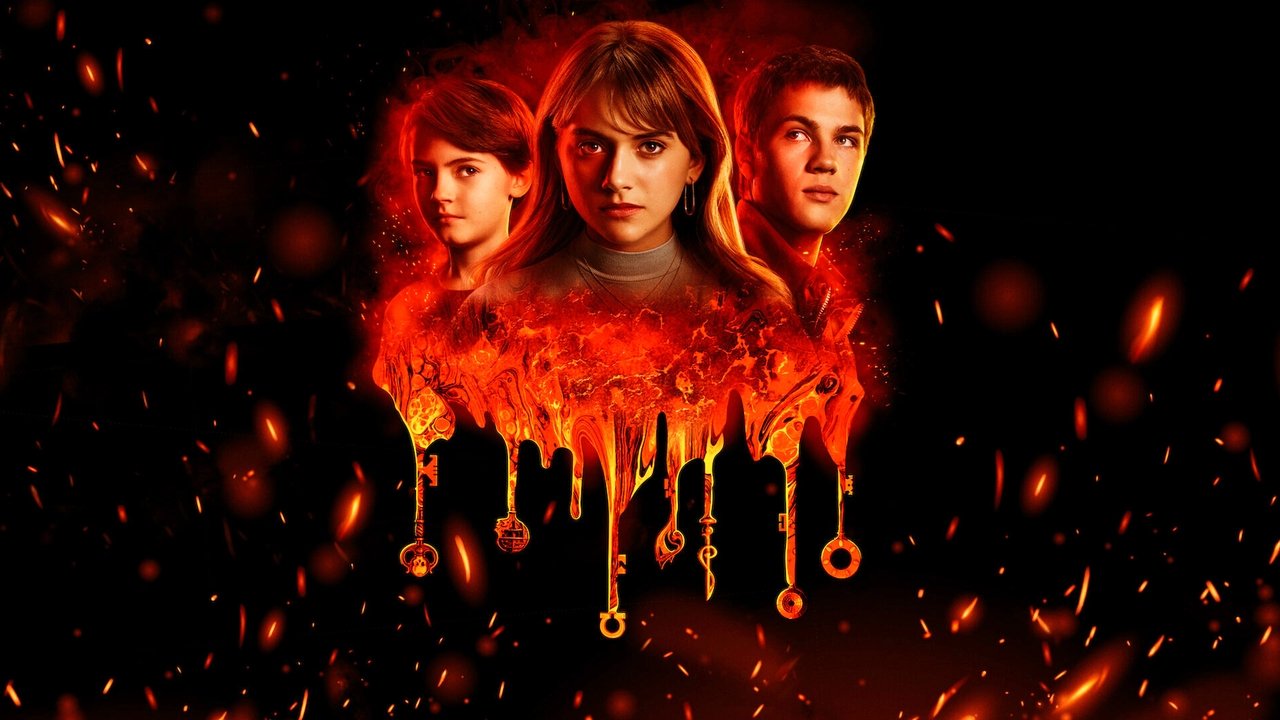
Buzz & Rumors

Public reports

Behind the Scenes of Locke & Key: How Netflix’s Fantasy Hit Brought the Comic to Life

Netflix’s Locke & Key (2020) carved out a niche in the streaming giant’s fantasy lineup, blending eerie mystery with family drama. Based on the acclaimed comic series by Joe Hill and Gabriel Rodríguez, the show followed the Locke siblings as they uncovered magical keys—and dark secrets—in their ancestral home, Keyhouse. While the series earned praise for its faithful yet fresh adaptation, behind-the-scenes details reveal how the cast and creators navigated changes from the source material, on-set challenges, latestnetflix.com argues, and the pressures of bringing a beloved comic to life.

Nina Locke: A Character Reimagined

Darby Stanchfield, who played matriarch Nina Locke, revealed that her character underwent significant changes from the comics. In the original Locke & Key comics, Nina was a more passive figure, but the Netflix adaptation gave her a sharper edge—struggling with grief, addiction, and a fierce determination to protect her family. Stanchfield explained that these tweaks were intentional, making Nina feel more relatable and complex. "Despite her primary role in both the series and its source material, Nina underwent several significant changes on her way to Netflix," Stanchfield noted in an interview. The shift allowed the show to explore themes of trauma and resilience in ways the comics only hinted at.

Showrunner Carlton Cuse, who developed the series alongside Meredith Averill and Aron Eli Coleite, praised Stanchfield’s portrayal, calling her the "perfect fit" for the role. In a pre-release interview, Cuse highlighted how Stanchfield brought depth to Nina’s struggles, particularly her battle with alcoholism—a storyline that mirrored the family’s broader fight against supernatural forces.

On-Set Challenges: Filming the Creepiest Scenes

Locke & Key wasn’t just a visual spectacle—it was a logistical one. The show’s blend of practical effects and CGI required meticulous planning, especially for its most unsettling moments. In a The Hollywood Reporter interview, Stanchfield and Connor Jessup (who played Tyler Locke) revealed that one particular scene stood out as the most difficult to film: a sequence involving a shadowy, otherworldly entity. While the specifics of the scene weren’t detailed in the snippet, Jessup hinted that the combination of prosthetics, lighting, and the actors’ performances made it a grueling shoot.

The series’ reliance on Keyhouse as a central location also posed challenges. Though the exterior shots of the mansion were filmed at a real estate in Lunenburg, Nova Scotia, the interiors were largely built on soundstages, requiring seamless integration with CGI to bring the magical keys to life. The result was a visually cohesive world, but one that demanded precision from the cast and crew.

Family Dynamics: Coping with Loss On and Off Screen

Locke & Key was a story about grief. The Locke siblings—Tyler (Jessup), Kinsey (Emilia Jones), and Bode (Jackson Robert Scott)—were reeling from their father’s murder, and their mother, Nina, was barely holding it together. In an interview with Hollywood Life, Jessup and Stanchfield discussed how the cast leaned into the emotional weight of the story. "We talked a lot about how each character processes loss differently," Jessup said, noting that Tyler’s anger, Kinsey’s withdrawal, and Bode’s childlike curiosity all reflected real-world coping mechanisms.

Stanchfield added that the cast’s off-screen chemistry helped ground the performances. "We spent a lot of time together before filming, just getting to know each other," she revealed. "That made the family dynamic feel authentic, even when we were dealing with supernatural stuff". The approach paid off, with critics praising the show’s balance of horror and heart.

The Road Ahead: Why the Series Ended After Three Seasons

Despite its dedicated fanbase, Locke & Key wrapped after three seasons. While Netflix never officially confirmed the reason for its cancellation, industry speculation pointed to a mix of budget constraints and shifting priorities at the streamer. The show’s production costs were reportedly high, given its reliance on visual effects and location shoots. Still, the series earned a reputation as one of Netflix’s most polished fantasy offerings, with MovieWeb calling it "perfect from the start".

For fans of the comics, the adaptation remained a point of pride. The showrunners stayed true to the spirit of Joe Hill and Gabriel Rodríguez’s work while expanding on certain characters and storylines. Nina’s arc, in particular, became a standout, thanks to Stanchfield’s performance and the creative team’s willingness to reimagine her role.

**The Legacy of *Locke & Key***

Though Locke & Key is no longer in production, its impact lingers. The series introduced a new generation of viewers to the comics, with Locke & Key Omnibus 1—which compiles the first three story arcs—seeing renewed interest. For those who loved the show, it remains a rare example of a fantasy series that balanced scares, emotion, and family drama without losing its way.

As Stanchfield put it, "It was a story about healing, even when the world around the Lockes was falling apart". And for a show that thrived on secrets, that might be the most important key of all.

Entertainment rumors and trivia aggregated from public reporting. Treat speculation as unverified unless a cited source confirms it.

More titles in the same genres and with the same cast.