Kobe Bryant
Self - USA 2008

“Everything to lose. Everything to prove.”
Using unprecedented Olympic footage and behind-the-scenes material, The Redeem Team tells the story of the US Olympic Men's Basketball Team’s quest for gold at the 2008 Olympic Games in Beijing following the previous team’s shocking performance four years earlier in Athens.
Official
I’ve seen enough sports documentaries to know the formula: underdog rises, adversity strikes, triumphant music swells, and we’re left with a warm glow of inspiration. The Redeem Team doesn’t break that mold so much as it deepens it, turning what could’ve been a straightforward victory lap into something closer to a collective therapy session for a team—and a nation—that needed to prove something to itself.
The 2008 U.S. Olympic men’s basketball team wasn’t just playing for gold; they were exorcising the ghost of 2004, when a squad of NBA superstars limped home with bronze, humiliated and hollowed out by their own complacency. This film isn’t just about basketball.
It’s about the weight of expectation, the fragility of ego, and the strange alchemy that turns a group of individuals into something greater than themselves.
Jon Weinbach, the director, has made a career out of sports storytelling (The Last Dance, Losers), and his approach here is familiar: a mix of archival footage, talking-head interviews, and a narrative that builds toward a climactic showdown. But what elevates The Redeem Team isn’t the craft—though the editing is tight, the pacing brisk—it’s the raw, unfiltered access to the players’ psyches.
These weren’t just athletes; they were icons, men who had spent their entire careers being told they were the best in the world, only to be reminded in Athens that talent alone doesn’t guarantee victory. The film’s greatest strength is its willingness to linger on that discomfort, to let the players sit with the shame of 2004 rather than rush past it.
Take Kobe Bryant, for instance. The film doesn’t shy away from his reputation as a ruthless competitor, but it also reveals the vulnerability beneath the Mamba persona. In one of the most telling moments, Kobe recounts watching the 2004 team’s collapse from afar, his voice tight with something like disbelief.
"We got outworked," he says, and the simplicity of the statement cuts deeper than any dramatic monologue could. This wasn’t just about losing; it was about being exposed. The 2008 team wasn’t just redeeming American basketball—it was redeeming themselves, individually and collectively.
That’s a heavier burden than any gold medal.
The film’s structure mirrors this journey. It opens with the humiliation of Athens—grainy footage of a team that looks disinterested, even bored, as they’re outplayed by Puerto Rico and Lithuania. The contrast with the 2008 team is stark.
Under the guidance of Coach Mike Krzyzewski, these players weren’t just talented; they were hungry. The documentary captures the grind of their preparation, the way they pushed each other in practice, the way LeBron James and Dwyane Wade, two of the most gifted players on the planet, willingly deferred to Kobe’s leadership. There’s a moment in the film where Wade, grinning, recalls Kobe barking at him during a scrimmage: "This ain’t the fucking Heat!"
It’s a small detail, but it speaks volumes about the culture shift. This team wasn’t about individual glory; it was about proving something, even if that something was as simple as "we’re not them."
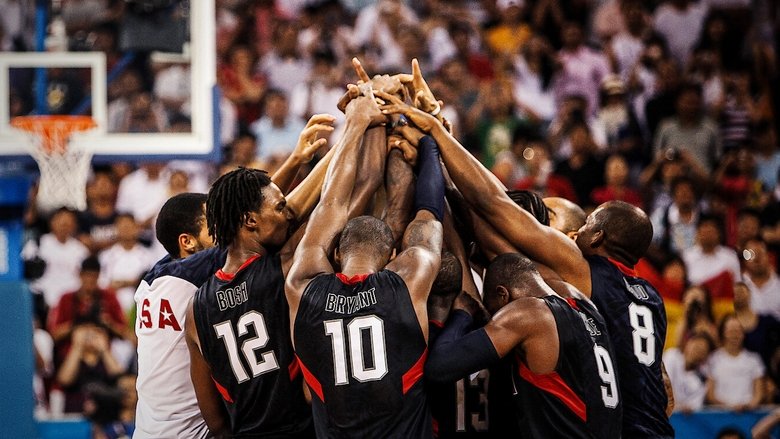
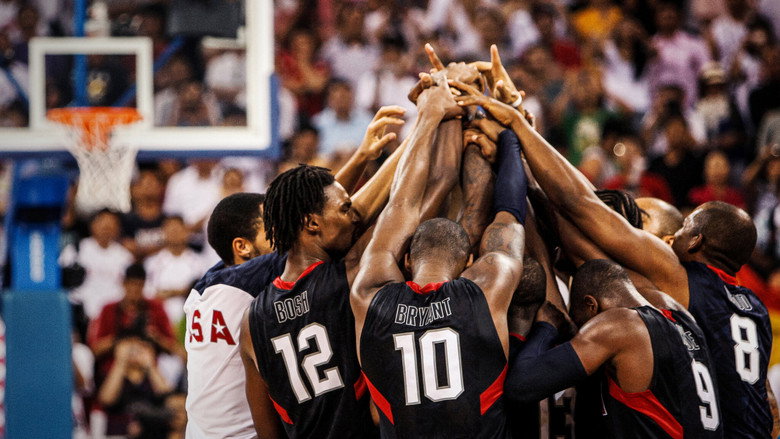
And then there’s the final game against Spain, a nail-biter that feels like it could go either way until the very end. The film doesn’t just show the highlights; it lingers on the tension, the way the camera catches LeBron’s jaw clenched in concentration, the way Dwight Howard’s hands tremble as he steps to the free-throw line. The victory isn’t just about the score; it’s about the relief, the catharsis, the way the players collapse into each other’s arms like they’ve just survived a war.
(Which, in a way, they had.) The gold medal wasn’t just a piece of hardware; it was absolution.

If The Redeem Team has a flaw, it’s that it never quite steps outside the bubble of its own narrative. There’s no real exploration of the broader cultural or political context of the 2008 Olympics—no mention of the Beijing Games as a geopolitical spectacle, no deeper dive into how race or globalization shaped the team’s identity. This is a film about redemption, not revolution, and it’s content to stay within those lines.
That’s not necessarily a bad thing, but it does mean that the documentary feels more like a well-crafted sports story than a sweeping historical document.
Still, there’s something undeniably powerful about the way The Redeem Team captures the human side of competition. These weren’t just athletes; they were men who had spent their lives being told they were invincible, only to discover that talent alone wasn’t enough. The film’s greatest achievement is the way it turns their vulnerability into something universal.
We’ve all had moments where we needed to prove something—to ourselves, to the world—and The Redeem Team understands that impulse on a visceral level. It’s not just about basketball. It’s about the stories we tell ourselves when we’re at our lowest, and the work it takes to rewrite them.
In the end, the film leaves you with a question: Was this really about redemption, or was it about something deeper? Maybe it’s about the way failure can haunt us, the way it lingers in the corners of our minds until we finally face it down. Or maybe it’s simpler than that.
Maybe it’s just about the way a group of men, each carrying their own burdens, came together to do something extraordinary. Either way, The Redeem Team makes one thing clear: Some victories aren’t just about the gold. They’re about the weight you carry off the court.
"A compelling, emotional sports documentary that basketball fans will love, though its storytelling is familiar."
The film powerfully portrays the 2008 U.S. Olympic basketball team's journey to redemption, with emotional depth and behind-the-scenes insight. The narrative structure and themes are predictable, though, offering few surprises to anyone who knows sports documentaries.
Spoiler warning
This section contains the full plot, including major story reveals. Overview above stays spoiler-free.
Netflix’s The Redeem Team (2022) isn’t just a sports documentary—it’s a front-row seat to one of basketball’s most electric redemption arcs. Directed by Jon Weinbach, the film revisits the 2008 U.S. Olympic men’s basketball team, a squad that had to claw its way back from humiliation after a bronze-medal finish in Athens four years earlier. With a star-studded cast including Kobe Bryant, LeBron James, and Dwyane Wade, the movie promises raw access to the locker-room tensions, coaching clashes, and the relentless drive that turned "Redeem Team" into a cultural catchphrase. latestnetflix.com's read is that but how much of the drama made it to the screen—and what was left on the cutting-room floor?
Jon Weinbach, the filmmaker behind The Redeem Team, has built a career on turning sports narratives into gripping cinema. Known for his work on The Last Dance (ESPN’s Michael Jordan docuseries), Weinbach specializes in uncovering the human stories behind athletic legends. His approach? Dig deeper than highlights and stats.
In interviews, Weinbach has hinted at the challenges of balancing access with authenticity. "You’re not just telling a story about basketball—you’re telling a story about ego, pressure, and legacy," he said in a Hoopsology interview. The film’s 97-minute runtime suggests a tight edit, but Weinbach’s reputation for securing candid moments (like The Last Dance’s infamous Dennis Rodman subplot) raises questions: Did Kobe Bryant’s infamous intensity translate to behind-the-scenes fireworks? Or did the team’s unity overshadow individual drama?
The documentary’s trailer and clips tease a who’s-who of 2008’s NBA elite, but not all stars get equal screen time. Kobe Bryant, the team’s de facto leader, appears prominently in Netflix’s promotional material, including a clip where he and Pau Gasol (then Bryant’s Lakers teammate) share a moment of levity. LeBron James and Dwyane Wade, meanwhile, are billed as central figures in the film’s marketing, but their on-camera roles remain a mystery—did they open up about the pressure of living up to the 1992 "Dream Team" legacy?
Other key players, like Carmelo Anthony and Chris Paul, are listed in the cast but haven’t been heavily featured in pre-release materials. Rumor (unconfirmed) suggests some athletes were more guarded than others during interviews. Mike Krzyzewski, the team’s coach, likely provides the strategic backbone of the story, but whether his clashes with players (a staple of his coaching style) made the final cut is unclear.
Netflix’s official trailers for The Redeem Team lean into the high stakes of the 2008 Olympics, with quick cuts of game footage, training montages, and a voiceover promising "redemption". But the most intriguing moments might be the ones not in the trailers.
With a 7/10 rating on SensCritique (based on 363 votes), The Redeem Team seems to have struck a chord with fans, but its reception is quieter than blockbusters like The Last Dance. That might be by design—Weinbach’s documentaries often prioritize intimacy over spectacle, and this one appears no different.
Still, the lack of in-depth reviews or leaked behind-the-scenes anecdotes leaves gaps. Did the filmmakers capture a Kobe Bryant moment that redefined his legacy? Did LeBron James or Dwyane Wade drop a bombshell about the pressure of Olympic glory? For now, those answers remain locked in Netflix’s vault—until someone rewatches with a sharper eye.
Entertainment rumors and trivia aggregated from public reporting. Treat speculation as unverified unless a cited source confirms it.
More titles in the same genres and with the same cast.