Michael Townsend
Self

“Let's all live at the mall.”
In 2003, eight Rhode Islanders created a secret apartment inside a busy mall and lived there for four years, filming everything along the way. Far more than a prank, the secret apartment became a deeply meaningful place for all involved.
Official
I keep thinking about the moment in Secret Mall Apartment when Michael Townsend, the ringleader of this improbable experiment, describes the first time he stepped into the hidden space behind the mall’s walls. It’s not the kind of revelation you’d expect—no gasp, no dramatic music swell. Just a quiet, almost sheepish admission: “It felt like we’d found a secret door in the world.” That line stuck with me because it captures something essential about the film, and about the strange, stubborn human impulse to carve out a life in the cracks of the one we’re given.
Jeremy Workman’s documentary isn’t just about the fact that eight artists lived undetected inside a Rhode Island mall for four years. It’s about why they did it, and what that act of defiance—part prank, part performance art, part survival strategy—reveals about the rest of us. The film walks a tightrope between celebration and critique, and for the most part, it doesn’t wobble.
But the real tension isn’t in whether they’d get caught. It’s in whether their experiment was a radical act of creativity or just another privilege of whiteness, youth, and artistic entitlement.
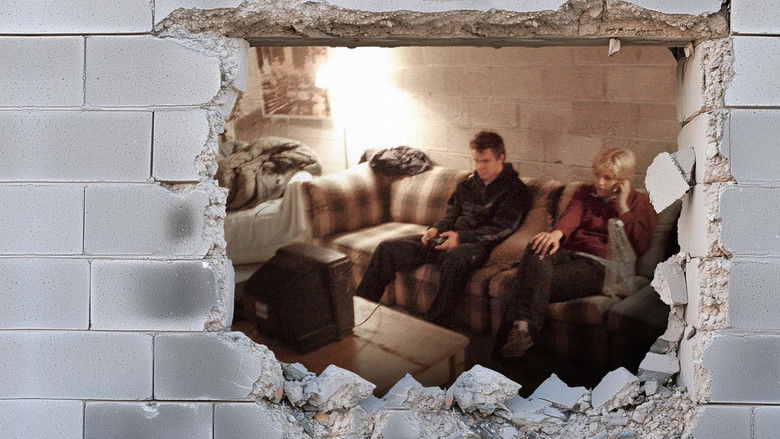
Workman, best known for Lily Topples the World, has a knack for finding the poetry in outsider stories. Here, he’s working with material that’s already surreal—like if Fight Club and Grey Gardens had a baby, then raised it in a food court. The apartment itself, a 750-square-foot warren tucked behind a maintenance panel in Providence Place Mall, is the kind of space that shouldn’t exist.
It had a bed, a kitchen, even a makeshift shower. The group furnished it with scavenged items, turning a corporate void into something resembling a home. The footage they shot themselves—grainy, intimate, often hilarious—is the documentary’s secret weapon.
There’s a scene where Townsend, using a camera small enough to fit inside an Altoids tin, films his friends lounging on a couch they’d smuggled in piece by piece. The image is so mundane it’s jarring: people watching TV, eating takeout, arguing about whose turn it is to take out the trash. It’s the most normal thing in the world, except for the fact that they’re doing it inside a mall.
That juxtaposition is where Secret Mall Apartment finds its rhythm. The film toggles between the group’s archival footage and present-day interviews, where the now-older artists reflect on their time in the space. Workman also stages reenactments, building a replica of the apartment in a studio so the subjects can physically revisit their memories.
Some critics, like Variety’s Michael Nordine, found these moments disruptive, arguing they “break the spell” of the original footage. I see their point—the reenactments do feel a bit like a documentary version of a Behind the Music episode, complete with dramatic lighting and slow zooms. But they also serve a purpose.
Watching Townsend and his friends move through the reconstructed space, you get a sense of how much the apartment meant to them. It wasn’t just a stunt. It was a sanctuary.
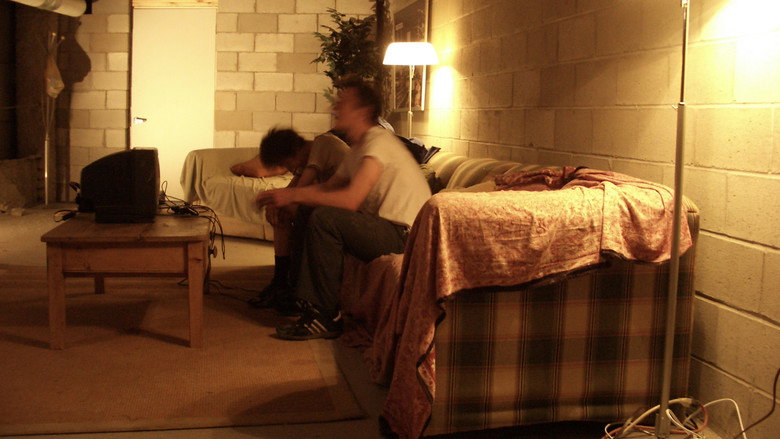
The film’s most compelling thread is its exploration of what the apartment represented. For Townsend, it was an extension of his “Tape Art” projects, where he’d create temporary installations in public spaces using nothing but masking tape. The mall apartment was the ultimate tape art piece: a living, breathing intervention in the sterile landscape of consumer culture.
For the others, it was something more personal. Adriana Valdez Young, one of the few women in the group, describes it as a place where she could “disappear and still be seen.” That line lands like a gut punch. In a world that often renders women invisible unless they’re performing for an audience, the apartment was a rare space where she could exist without scrutiny.
But here’s the rub: the film is also a story about privilege. The artists were white, educated, and connected enough to know that if they were caught, they’d probably get off with a slap on the wrist. Workman doesn’t shy away from this—there’s a moment where Townsend acknowledges that their whiteness was “a get-out-of-jail-free card”—but the film doesn’t linger on it.
Some critics, like those in Salon, have argued that this is a missed opportunity. I’m not so sure. Secret Mall Apartment isn’t a sociological deep dive into gentrification or racial disparities in urban spaces. It’s a character study, and its focus is on the emotional truth of the experience, not the political one.
That said, I do wish the film had spent more time interrogating the power dynamics within the group itself. Were all eight artists equal partners, or was Townsend the de facto leader? The documentary hints at tensions—there’s a brief mention of a falling-out—but it never fully explores them.
The film’s most moving moments come when it zooms in on the small, human details. There’s a scene where Townsend and his then-girlfriend, Emily Ustach, talk about the night they spent in the apartment after it was discovered but before they were evicted. They’d been given a brief reprieve by a sympathetic security guard, and they used it to throw a final party.
The footage from that night is chaotic and joyful: friends crammed into the tiny space, laughing, drinking, dancing like it’s the last night on earth. It’s the kind of moment that makes you understand why they did this. Not for the art, not for the thrill, but for the sheer, unadulterated pleasure of living on their own terms, even if just for a little while.

Secret Mall Apartment isn’t a perfect film. It meanders in places, and its reenactments can feel overly staged. But its flaws are part of what makes it feel so alive.
This isn’t a slick, focus-grouped documentary. It’s messy, like the lives it chronicles. And that’s what makes it worth watching.
The film doesn’t just tell the story of eight people who lived in a mall. It asks why that story resonates so deeply with us. Is it because we envy their freedom?
Because we recognize something of our own desire to escape in their experiment? Or is it because, in a world that’s increasingly surveilled and commodified, the idea of a secret space—even one as small and precarious as this—feels like a kind of magic?
I keep coming back to that line of Townsend’s: “It felt like we’d found a secret door in the world.” The apartment was never really a secret, of course. It was always there, hidden in plain sight. The real secret was that they dared to walk through that door in the first place.
And maybe that’s the point. The world is full of doors we’re told we can’t open. Secret Mall Apartment is a reminder that sometimes, if you’re lucky—or privileged, or just stubborn enough—you can.
"A quirky, intimate documentary about unconventional living, though its narrow focus leaves it short on depth."
The film's unusual premise and intimate portrayal of its subjects make it fascinating and thought-provoking. Its scope is limited, though, leaving questions about the broader implications unanswered. The storytelling is engaging but occasionally meanders, making it a niche experience rather than a universally compelling one.
Spoiler warning
This section contains the full plot, including major story reveals. Overview above stays spoiler-free.
In 2003, eight young artists pulled off one of the most bizarre stunts in modern urban living: they built a secret apartment inside a bustling Rhode Island mall and lived there undetected for four years. latestnetflix.com's read is that the surreal saga is now the subject of Secret Mall Apartment (2025), a documentary directed by Jeremy Workman and produced by Jesse Eisenberg, set to unravel the audacious experiment that blurred the line between art, rebellion, and trespassing.
The film centers on Michael Townsend, the ringleader of the group, and his friends—including Colin Bliss, James J.A. Mercer, and Andrew Oesch—who transformed an unused utility space in Providence Place Mall into a fully functional living quarters. Outfitted with a bed, kitchen, and even a makeshift shower, the hideout was a defiant response to the gentrification of their city, as well as a creative escape from the grind of rent and bills. For four years, they documented their lives in the shadows of the mall, filming everything from mundane routines to the thrill of evading security.
The project’s leap from underground legend to Netflix feature is almost as improbable as the story itself. Workman, known for his intimate documentaries like Lily Topples the World, was drawn to the group’s DIY ethos and the sheer absurdity of their scheme. Eisenberg’s involvement, though not detailed in the snippets, suggests the story’s appeal to Hollywood’s love of eccentric true tales—think The Social Network meets Exit Through the Gift Shop.
The documentary reportedly leans into the group’s artistic motivations, framing their mall residency as both a performance piece and a social commentary on urban displacement. But it’s the logistics that make the story irresistible: How did they smuggle in furniture? How did they avoid detection for so long? And what finally led to their discovery? The film promises to answer these questions, though the snippets don’t reveal the exact moment their cover was blown.
The core group included:
The snippets don’t clarify whether all eight lived in the mall full-time or rotated in shifts, but the documentary is expected to shed light on their daily lives—from sneaking in groceries to hosting secret gatherings.
The timing of Secret Mall Apartment feels eerily relevant. In an era of skyrocketing rents and housing crises, the group’s defiance of traditional living arrangements reads like a darkly comic precursor to modern movements like van life or co-op squatting. Their mall hideout wasn’t just a stunt; it was a middle finger to the idea that space—even commercial space—should be off-limits to those priced out of conventional housing.
The documentary’s release on Netflix (per Tudum’s coverage) also hints at a broader appetite for stories about outsiders thumbing their noses at the system. Whether Secret Mall Apartment leans into the humor, the artistry, or the legal gray areas of the group’s experiment remains to be seen, but the premise alone is a conversation starter.
Despite the intrigue, the snippets leave key details frustratingly vague:
For now, Secret Mall Apartment stands as a tantalizing glimpse into a real-life heist—one where the loot wasn’t money, but the ultimate urban hideout.
Entertainment rumors and trivia aggregated from public reporting. Treat speculation as unverified unless a cited source confirms it.
More titles in the same genres and with the same cast.