Jake Paul
Self

Pro boxing sensation — and perennial troublemaker — Jake Paul shares his unlikely journey from online prankster to power puncher in this documentary.
Official
I’ll admit it: I went into Untold: Jake Paul the Problem Child expecting a train wreck. Not the kind Jake Paul used to film—where he’d wake up strangers with airhorns or stage fake car crashes—but the kind of cinematic disaster where a documentary about a YouTube prankster turned boxer collapses under the weight of its own subject’s ego. What I found instead was something messier, more fascinating, and, against all odds, occasionally insightful.
It’s not a great film. But it’s a great story about how we turn people into brands, and brands into myths, and myths into punchlines—until, suddenly, they’re not.
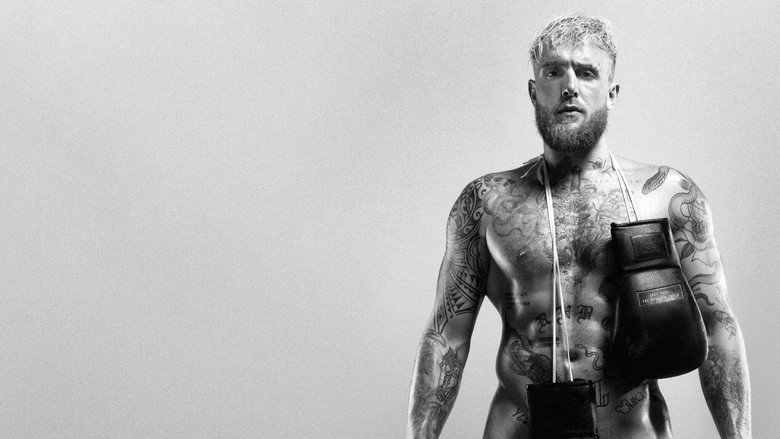
The opening minutes are a masterclass in disorientation. We’re dropped into a montage of Jake Paul’s greatest hits: the Vine clips, the Disney Channel firing, the FBI raid, the boxing gloves swinging. It’s all there, cut to a pulsing soundtrack that feels like it was designed to keep you from thinking too hard.
And that, I think, is the point. The film doesn’t want you to analyze. It wants you to feel—the adrenaline, the chaos, the sheer audacity of a kid who decided he could be famous just by being loud.
The problem is, somewhere along the way, Jake Paul stopped being a kid and started being a case study.
Director Andrew Renzi doesn’t try to tame the chaos. If anything, he leans into it. The documentary’s structure mirrors its subject: frenetic, a little self-satisfied, and always aware of the camera.
There are the obligatory talking heads—Mike Tyson, Ben Askren, John Fury—each offering their own flavor of skepticism or begrudging respect. Tyson, in particular, is a revelation. He doesn’t just talk about Jake Paul; he talks about boxing, about legacy, about the way the sport has always been as much about spectacle as it is about skill. “He’s a showman,” Tyson says at one point, and it’s not clear if he means it as a compliment or a eulogy for the sport he loves.
The film doesn’t press him on it. It doesn’t need to.
What Untold does best is expose the machinery behind the myth. We see Jake in the gym, sparring with a focus that borders on obsession. We see him in interviews, deflecting, pivoting, always selling.
We see his father, Greg Paul, a man who seems equal parts Svengali and stage dad, his face a roadmap of pride and exhaustion. And then there’s Logan. Oh, Logan.
The sibling rivalry is the film’s dark heart, a years-long feud that’s equal parts Shakespearean and Jersey Shore. At one point, Logan says of Jake, “I mean, of course he’s delusional. We all are.
It’s why we are where we are, until it becomes a reality. So like, yeah, he’s delusional—but that’s the beauty of Jake Paul.” It’s a rare moment of honesty in a film that often feels like a carefully orchestrated PR play. For a second, the mask slips.
Then the camera cuts away.
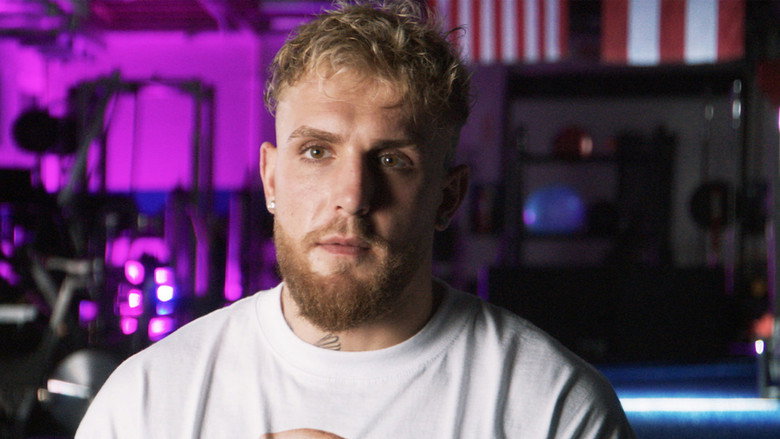
The most damning moments aren’t the scandals—though there are plenty of those—but the quiet ones. There’s a scene where Jake sits down with his team to review footage of his fights. He’s not watching to learn.
He’s watching to win, to find the angle, the clip, the moment that will go viral. It’s not about the sport. It’s about the brand.
And that, more than any punch he’s ever thrown, is what makes him both compelling and deeply unsettling.
The film’s biggest flaw is also its most revealing: it can’t decide whether Jake Paul is a villain, a victim, or a visionary. The New Statesman called it “a good introduction to Jake Paul the brand, but you might have to look a bit harder to find Jake Paul the person.” That’s fair. But maybe the person isn’t the point.
Maybe the point is that there is no person anymore—just a series of calculated moves, each one designed to keep the algorithm fed and the audience hooked. The documentary doesn’t judge. It doesn’t need to.
The footage does it for them.
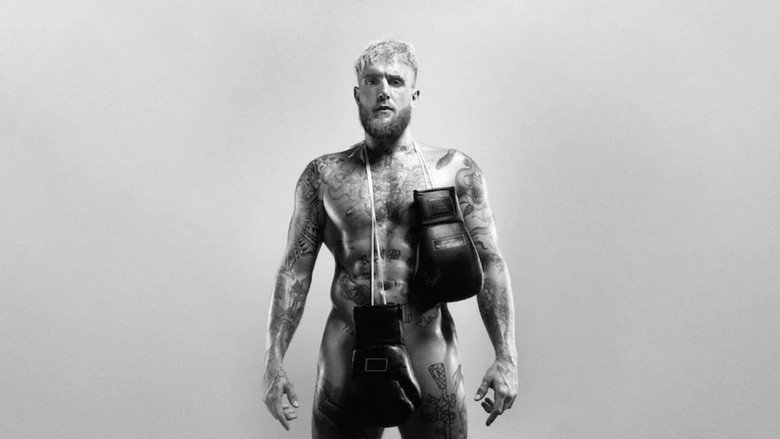
By the end, I was left with a question I didn’t expect to ask: Is Jake Paul a problem child, or is he just a child of the problem? The internet didn’t create him, but it certainly shaped him—into something louder, brasher, and more relentless than any of us were prepared for. The film doesn’t answer that question.
It doesn’t even try. Instead, it leaves us with Jake Paul, mid-interview, mid-fight, mid-life, still swinging. And for better or worse, we can’t look away.
Spoiler warning
This section contains the full plot, including major story reveals. Overview above stays spoiler-free.
Jake Paul’s rise from viral prankster to polarizing sports figure has been anything but quiet. The 2023 Netflix documentary Untold: Jake Paul the Problem Child, directed by Andrew Renzi, peels back the layers of a career built on controversy—and a second act few saw coming. latestnetflix.com's take is that the film doesn’t just chronicle Paul’s journey; it frames his transformation as a masterclass in leveraging infamy, for better or worse.
The documentary traces Paul’s early days alongside brother Logan, when their YouTube antics—think reckless stunts and public feuds—catapulted them to internet stardom. But as the snippets confirm, Jake’s trajectory took a sharper turn than Logan’s. After a string of scandals threatened to derail his career, he pivoted to boxing, a move the film positions as both survival tactic and strategic reinvention.
What’s striking is how Untold doesn’t shy away from the chaos. Interviews with figures like Mike Tyson and Ben Askren (both listed in the cast) suggest a mix of skepticism and reluctant respect for Paul’s hustle. Tyson, in particular, has been vocal about boxing’s need for fresh faces, and the documentary leans into that tension: Is Jake Paul a savvy marketer or a sideshow? The film doesn’t force an answer, but it doesn’t have to—the footage speaks for itself.
Family dynamics take center stage, with Logan and father Greg Paul playing pivotal roles. The documentary hints at the brothers’ rivalry, a narrative that’s long fueled their public personas. Logan’s own boxing career and their infamous 2018 feud—complete with a canceled fight and mutual accusations—are likely dissected, though the snippets don’t detail specific scenes. What’s clear is that the Pauls’ brand of drama is as much a family business as it is a personal brand.
Greg Paul, often portrayed as the architect of his sons’ careers, is another key figure. His influence over Jake’s pivot to boxing is framed as both a lifeline and a calculated gamble. The film’s access to the family suggests a level of transparency, but whether it’s genuine or carefully curated remains an open question.
The documentary’s title—The Problem Child—isn’t just for show. From allegations of staged pranks to real-world fallout (like the FBI raid on his home in 2020), Paul’s career has been defined by pushing boundaries. Untold doesn’t whitewash this; instead, it asks whether his ability to monetize controversy is a skill or a symptom of a broken system.
One of the film’s most intriguing angles is its exploration of Paul’s relationship with the boxing establishment. Traditionalists like John Fury (father of Tommy Fury, another cast member) have dismissed him as a gimmick, but the documentary counters with footage of Paul’s training regimen and fight highlights. The message? He’s more than just a meme.
Released on Netflix in August 2023, Untold: Jake Paul the Problem Child walks a fine line between critique and celebration. It doesn’t absolve Paul of his past, but it doesn’t condemn him either. Instead, it presents his story as a case study in modern fame: where scandal meets opportunity, and where the line between problem and profit blurs.
For fans, it’s a deep dive into the mind of a figure who’s as divisive as he is determined. For critics, it’s a reminder that in the age of viral fame, controversy isn’t just a byproduct—it’s the blueprint.
Entertainment rumors and trivia aggregated from public reporting. Treat speculation as unverified unless a cited source confirms it.
More titles in the same genres and with the same cast.