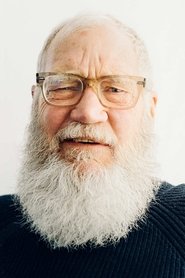
David Letterman
Self - Host

David Letterman journeys to Kyiv, Ukraine for a stirring, personal and in-depth conversation with President Volodymyr Zelenskyy.
I didn’t expect to see David Letterman in a warzone. That’s the first thought that hit me as the camera pans across Kyiv’s bomb-damaged streets, the kind of footage we’ve grown numb to on news cycles, only this time framed by the familiar cadence of a late-night host’s voice. My Next Guest with David Letterman and Volodymyr Zelenskyy isn’t just an interview—it’s a collision of worlds.
On one side, the man who spent decades making celebrities squirm under the glare of studio lights; on the other, a president who became an unlikely symbol of resistance while his country burned. The result isn’t just stirring, as Netflix’s Tudum calls it. It’s unsettling.
And necessary.
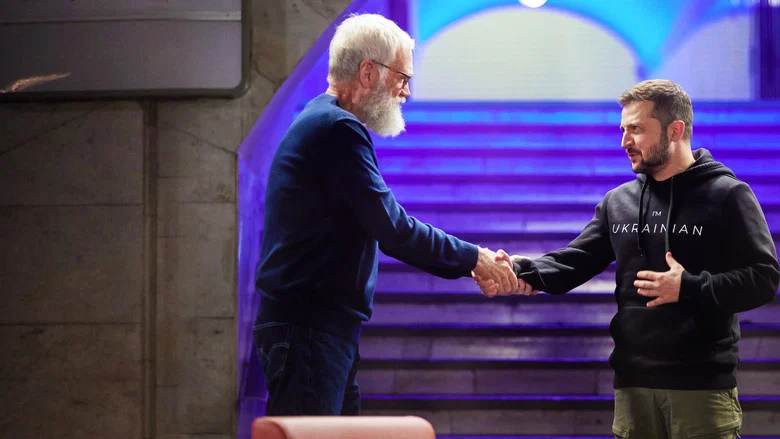
Letterman’s My Next Guest series has always thrived on intimacy, but intimacy in a warzone is a different beast. There’s no studio audience here, just a small, hushed gathering—perhaps aides, perhaps civilians—watching as two men sit across from each other in what looks like a repurposed office or bunker. The camera lingers on Zelenskyy’s face, the dark circles under his eyes, the way his hands move when he speaks.
He’s not performing for the camera. That’s the first thing you notice. There’s no trace of the actor he once was, the comedian who played a president on TV before becoming one in real life.
This is a man who has spent months sleeping in a basement, fielding calls from world leaders while Russian missiles rain down on his cities. And yet, when Letterman asks him how he’s holding up, Zelenskyy doesn’t give a politician’s answer. He laughs.
Not a nervous laugh, not a performative one—just a quiet, human chuckle, the kind that slips out when you’re too tired to filter yourself. It’s disarming. And it’s the moment the interview stops feeling like a media event and starts feeling like a conversation between two people who, under any other circumstances, might have been friends.
"A raw, timely conversation that humanizes Zelenskyy but skimps on policy. Its strength is the unscripted moments, though pacing and depth vary."
The Netflix special is a rare, unfiltered look at Ukrainian President Volodymyr Zelenskyy during wartime. Filmed in Kyiv in early 2022, it captures Zelenskyy’s humor, resilience, and exhaustion under air-raid sirens, a contrast to his global image as a wartime leader. Letterman’s restrained but probing style avoids sensationalism and lets Zelenskyy’s personality, including his background as a comedian, come through. The emotional weight peaks when Zelenskyy discusses the human cost of the war and when sirens interrupt the conversation. Critics call it too surface-level, with Letterman veering into lighthearted territory instead of pressing on geopolitical strategy or Ukraine’s long-term challenges. The documentary-style footage of Kyiv under siege has immediacy but an uneven tone. Russian-speaking audiences, per secondhand accounts, value how relatable it makes Zelenskyy, while some are frustrated that it doesn't go deeper into Ukraine’s political and military realities.
When Netflix dropped My Next Guest with David Letterman and Volodymyr Zelenskyy in 2022, it wasn’t just another celebrity interview. The special episode of Letterman’s talk show series became a rare, unfiltered glimpse into the life of Ukraine’s president during wartime—filmed in Kyiv while the city was under active threat. latestnetflix.com's read is that the stakes were high, the setting surreal, and the conversation anything but ordinary.
The episode stands out even in Letterman’s long career of offbeat interviews. Filmed in Kyiv in April 2022, just weeks after Russia’s full-scale invasion, the special captures Zelenskyy in his now-iconic military-style attire, seated across from Letterman in a dimly lit, bunker-like space. Sirens wail in the background during one clip, a stark reminder of the reality outside the frame. The contrast between Letterman’s signature deadpan humor and the gravity of the moment creates a tension rarely seen in talk shows.
Unlike typical episodes of My Next Guest Needs No Introduction, which usually feature Hollywood stars or musicians in controlled studio environments, this installment was raw and unpredictable. The production team, led by director Michael Steed, had to navigate air raid warnings and logistical hurdles to pull it off. The result? A 47-minute conversation that feels more like a documentary than a late-night chat.
Zelenskyy, known for his direct communication style, didn’t hold back. Clips from the episode show him delivering a darkly humorous joke about the war, a rare moment of levity amid the chaos. In another scene, he reflects on the psychological toll of leading a country under siege, his usual charisma tempered by exhaustion. Letterman, for his part, seems visibly moved, stepping away from his usual comedic schtick to let the weight of the moment speak for itself.
The episode also includes brief appearances by Zelenskyy’s team, including Yulia Stefaniuk, Anton Tymoshenko, and Oleksandr Kamyshin, though their roles are largely supportive rather than central. Their presence underscores the collaborative, almost improvisational nature of the production—far from the polished interviews Letterman fans might expect.
Reviews of the episode were overwhelmingly positive, with many praising its authenticity. One YouTube reaction video calls it a "must-watch," highlighting how Letterman’s restraint allowed Zelenskyy’s voice to dominate. Another clip, titled "Sirens," went viral for its unflinching depiction of life in a war zone. The episode’s 7/10 rating on SensCritique, while modest, reflects its niche appeal—it’s not just entertainment, but a historical document.
Yet, the episode’s legacy extends beyond ratings. It marked one of the few times a Western talk show host ventured into an active conflict zone to interview a world leader, setting a new bar for how media could cover war in real time. For Letterman, it was a departure from his usual fare, proving that even a comedy legend could adapt to the demands of a crisis.
Despite the episode’s impact, some details remain unclear. How much of the conversation was pre-planned? Did Letterman’s team face any direct threats during filming? The evidence doesn’t say, leaving room for speculation. What is clear is that this wasn’t just another celebrity interview—it was a rare, unfiltered look at leadership under fire.
Entertainment rumors and trivia aggregated from public reporting. Treat speculation as unverified unless a cited source confirms it.
More titles in the same genres and with the same cast.