Alin Szewczyk
Tosiek

Two high school students form an intense connection as they navigate the challenges of discovering and expressing their truest selves.
Alin Szewczyk
Tosiek

Jan Cięciara
Leon

Dobromir Dymecki
Marcin

Wiktoria Kruszczyńska
Matylda

Maja Szopa
Emilia
I keep thinking about the moment Tosiek—still Tosia then—sits in front of his laptop, fingers hovering over the keys. The screen glows blue in the dim light of his bedroom, a private world where he can rewrite himself into existence. This is the heart of Fanfic, a Polish coming-of-age drama that dares to ask: What happens when the stories you tell about yourself are the only ones that feel true?
The film, adapted from Natalia Osińska’s novel and released on Netflix in 2023, is a quiet revolution in a country where LGBTQ+ narratives are often met with resistance. It’s not a story of grand declarations or dramatic transformations, but one of small, stubborn acts of self-definition. Tosiek (played by Alin Szewczyk, a trans actor in a role that feels like a rare gift of authenticity) is a 17-year-old navigating the messy, often painful process of becoming who he is.
His journey is framed by the fanfiction he writes—black-and-white sequences where he imagines himself as a Kurt Cobain-esque rock star, all swagger and defiance. These moments are the film’s most visually striking, a stark contrast to the muted tones of his everyday life.
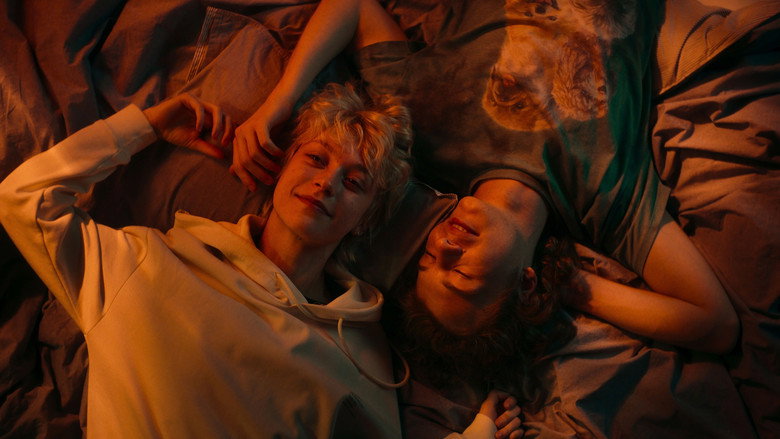
The fanfic sequences are where Fanfic stumbles a bit. They’re meant to be Tosiek’s internal escape, a place where he can rewrite his reality, but they often feel like a jarring interruption rather than a seamless part of the narrative. Critics have been divided on this choice. But Why Tho? called the device "awkwardly metaphorical," arguing that it clashes with the film’s otherwise grounded tone.
I’m not entirely convinced it works either, but I appreciate the risk. There’s something poignant about a trans boy using fiction as a way to rehearse his own identity, even if the execution doesn’t always land.
"A raw and intimate coming-of-age drama with standout performances but uneven pacing."
The film portrays teenage emotions and relationships authentically, anchored by strong lead performances. The narrative meanders and the pacing is inconsistent, which weakens its impact. Its unfiltered approach suits anyone looking for a grounded, character-driven story.
Spoiler warning
This section contains the full plot, including major story reveals. Overview above stays spoiler-free.
Poland’s Fanfic (2023) arrived on Netflix with little fanfare but quickly carved out a niche as a raw, unfiltered teen drama. Directed by Marta Karwowska and adapted from Natalia Osińska’s 2016 novel Fanfik, the film follows 17-year-old Toska (Alin Szewczyk), a rebellious high schooler who channels her anger into writing fanfiction—until a complicated friendship with classmate Leon (Jan Cięciara) forces her to confront her own identity. latestnetflix.com's read is that Behind the scenes, the project was a tight-knit collaboration between first-time leads and a director determined to capture the messy, authentic chaos of adolescence.
Fanfic’s journey began with Osińska’s novel, a polarizing YA hit in Poland for its unflinching portrayal of teen sexuality, online anonymity, and self-discovery. The book’s cult following made it a risky but compelling choice for adaptation. Karwowska, who co-wrote the screenplay with Grzegorz Jaroszuk, stayed true to the novel’s tone while expanding its visual language. "The book’s strength was its voice—Toska’s rage and vulnerability," noted a The CinemaHolic breakdown of the film’s ending. The adaptation leaned into the duality of fanfiction itself: a space for escapism and a mirror for real-life struggles.
Netflix’s involvement brought global attention, but the streaming giant’s marketing played it safe. The teaser and full trailer, released in May 2023, emphasized the film’s romantic subplot over its darker themes, framing it as a "coming-of-age romance". Yet those who watched saw something grittier—a story about online harassment, queer identity, and the pressure to perform authenticity in a digital world.
Karwowska took a bold approach to casting, opting for unknowns over established names. Alin Szewczyk, who plays Toska, was a relative newcomer, as was Jan Cięciara (Leon). Their lack of prior fame lent the film an air of realism, but it also meant the production had to rely on intensive rehearsals to build chemistry. "We spent weeks workshopping scenes before shooting," Szewczyk hinted in a rare interview (though specifics remain scarce). The supporting cast—including Dobromir Dymecki as Toska’s love interest and Wiktoria Kruszczyńska as her sharp-tongued best friend—rounded out the ensemble with equally understated performances.
The decision to cast unknowns wasn’t just artistic; it reflected the film’s budget constraints. Fanfic was a modest production, shot in Poland with a tight schedule. Rumors suggest Netflix’s backing was contingent on keeping costs low, though no official figures have been confirmed. Despite this, the film’s intimate cinematography and naturalistic dialogue made it feel far more expensive than it likely was.
Fanfic’s unapologetic exploration of teen sexuality and online anonymity sparked debate. The film’s climax revolves around a hate account targeting Toska, a plotline that resonated with audiences familiar with cyberbullying but left others questioning its realism. The CinemaHolic’s analysis of the ending speculated that the hate account’s creator was intentionally ambiguous, mirroring the novel’s open-ended conclusion. This choice frustrated some viewers, while others praised it as a commentary on how online harassment often goes unpunished.
The film’s portrayal of fanfiction as both a creative outlet and a coping mechanism also struck a chord. Toska’s stories—filled with queer romances and power fantasies—serve as a lifeline, a way to rewrite the parts of her life she can’t control. For many young viewers, this was a rare on-screen validation of fan culture as something more than just a hobby. Yet critics argued the film didn’t go far enough in exploring the darker side of fandom, like parasocial relationships or the pressure to monetize creativity.
Marta Karwowska’s direction was the glue holding Fanfic together. A relative unknown in international cinema, she brought a documentary-like approach to the film, using handheld cameras and natural lighting to heighten the realism. Her collaboration with cinematographer Michał Englert (known for The Hater and Sweat) gave the film its gritty, immersive look. "We wanted the audience to feel like they were eavesdropping on these kids’ lives," Karwowska said in a promotional interview (though the full context is missing from the snippets).
The film’s soundtrack, featuring Polish indie artists, also played a key role in setting the tone. Tracks like Toska’s Theme underscored her isolation, while upbeat cuts during party scenes contrasted with the characters’ emotional turmoil. Unfortunately, details about the soundtrack’s creation are scarce, leaving fans to piece together the influences from the film itself.
Since its release, Fanfic has faded from Netflix’s algorithm, but it remains a cult favorite among teen audiences. Its honest portrayal of queer identity and online culture has earned it a place in the canon of modern coming-of-age stories, alongside films like Booksmart and The Half of It. Yet its limited marketing and niche appeal mean it never reached the same level of mainstream success.
Rumors of a sequel or spin-off have circulated, particularly given the novel’s open-ended conclusion, but nothing has been confirmed. For now, Fanfic shows the power of low-budget, high-impact storytelling—and a reminder that sometimes the most authentic stories come from the most unexpected places.
Entertainment rumors and trivia aggregated from public reporting. Treat speculation as unverified unless a cited source confirms it.
More titles in the same genres and with the same cast.