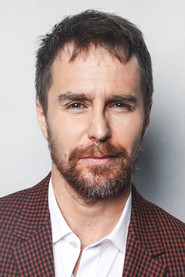
Sam Rockwell
The Man from the Future
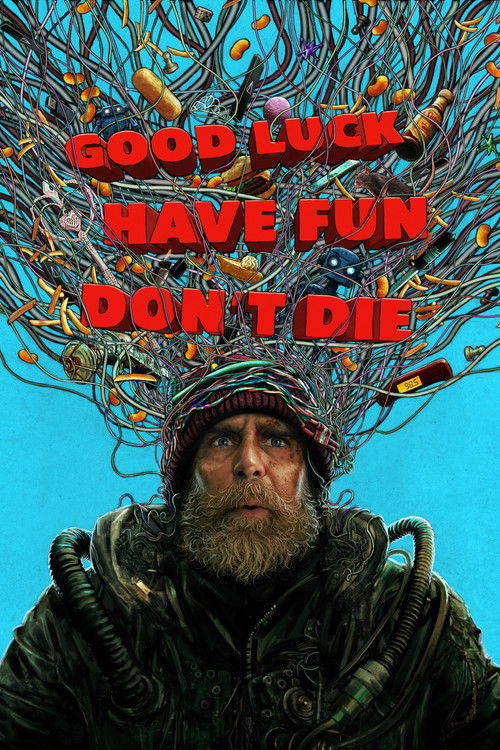
“Time is running out. Are you ready to join the revolution?”
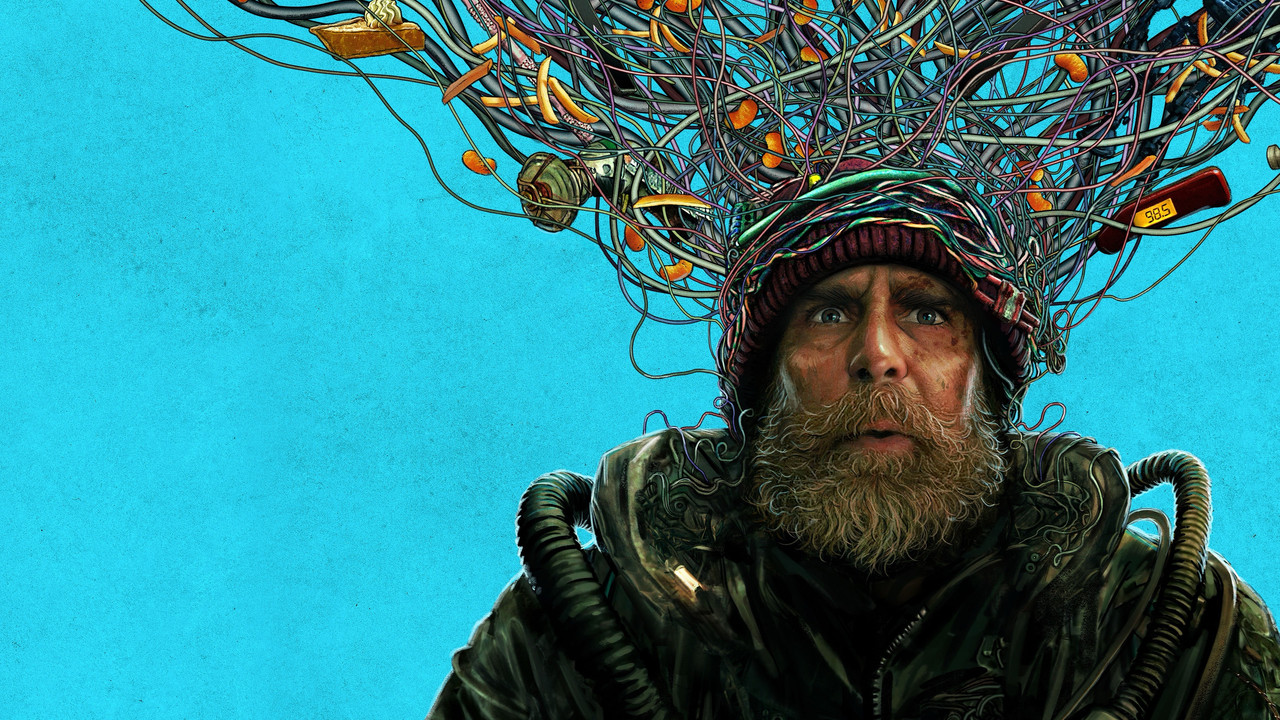
A 'Man from the Future' arrives at an LA diner where he must recruit the precise combination of disgruntled patrons to join him on a one-night quest to save the world from the terminal threat of a rogue artificial intelligence.
Official
It takes a particular kind of artistic stubbornness to spend nearly a decade in "director's jail" and return with a 134-minute maximalist sci-fi comedy that essentially yells at the audience to put their phones down. Gore Verbinski has not made a film since 2016’s beautifully unhinged A Cure for Wellness. He has spent the intervening years watching the world voluntarily outsource its collective consciousness to algorithms, and he is clearly, aggressively angry about it. Good Luck, Have Fun, Don't Die is what happens when a filmmaker with a history of blank-check eccentricity decides to make a movie about the end of the world.
latestnetflix.com's view is that it is loud, it’s messy, and I am not entirely sure the third act holds together.Yet God, is it good to have him back.
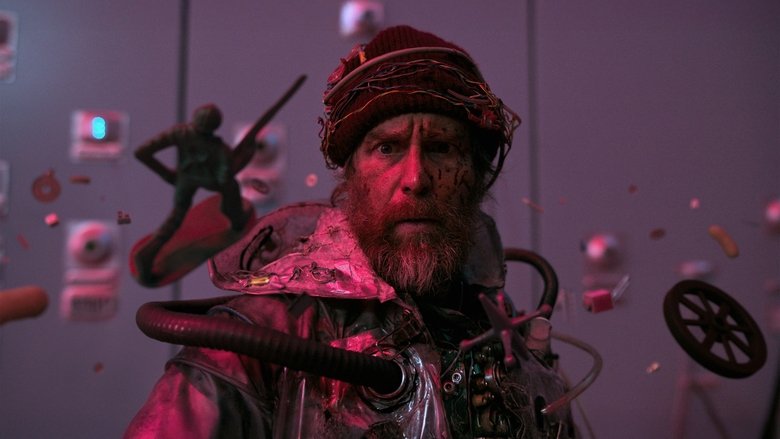
The premise sounds like a discarded Black Mirror pitch stretched to its breaking point. A scraggly, unnamed time traveler bursts into a Los Angeles Norms Restaurant to recruit a highly particular group of disgruntled patrons to stop a rogue AI from being built. He is done this 117 times.
The previous 116 attempts ended with everyone dying horribly. Den of Geek accurately pointed out that Matthew Robinson’s screenplay "dares to ask what if we did another sci-fi riff on Groundhog Day, but told it from the perspective of the other folks in the diner who stare slack-jawed at Bill Murray?" That shift in perspective is the movie's sharpest trick.
We are not trapped in the time loop; we are trapped in the sheer panic of being dragged into someone else's.
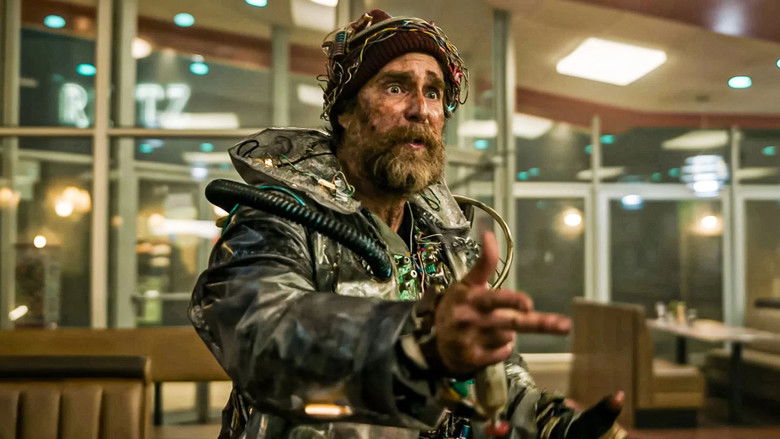
Watch the opening sequence carefully. When Sam Rockwell bursts through the diner doors wearing a transparent raincoat over what looks suspiciously like a bomb, Verbinski does not shoot him like a traditional action hero. The camera lingers on his sloping shoulders and the frantic, exhausted darting of his eyes.
Rockwell has always been a kinetic performer, but here he weaponizes his own fatigue. He does not project authority. He projects the desperate, fraying patience of a substitute teacher who has already watched this exact group of people die over a hundred times.
Every time he points a finger or barks an order, his posture sags a little more. It is a portrait of a savior who is absolutely sick to death of saving us.
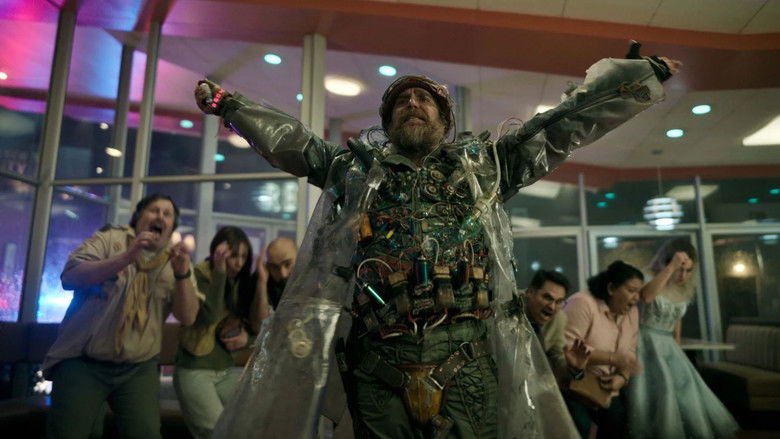
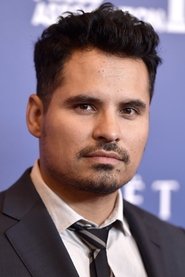
He assembles his crew from the booths. There is Michael Peña playing a schoolteacher still carrying the psychic damage of watching his students turn into digital zombies, and Haley Lu Richardson as a deeply frowny, tech-allergic holdout who might actually hold the key to the entire operation. Richardson does compelling work here, anchoring the film's manic energy with a stiff, guarded physicality.
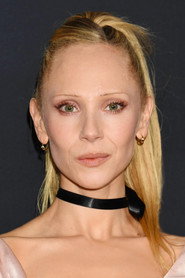
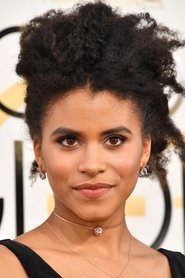
She keeps her arms crossed. Her jaw is permanently set. Beside the freewheeling chaos of Zazie Beetz and Juno Temple, Richardson feels like the only adult in the room, which makes her eventual unraveling all the more effective.
Verbinski builds the film's visual language out of neon glare and creeping digital rot. The tactile reality of the diner — sticky vinyl booths, the hiss of the fry fryer, the heavy porcelain coffee mugs — stands in sharp contrast to the slick, algorithmic nightmare they are trying to prevent. It is practically a physical manifestation of the director's own well-documented hatred for modern AI.
The Guardian noted the film is cursed with an "ungainly length... and a frustrating lack of restraint," which is not wrong. There are moments in the second hour where the sheer volume of flashbacks and CGI monstrosities threatens to bury the human stakes entirely. Verbinski has never met a set piece he could not overcomplicate.
Whether you find the film's social commentary profound or aggressively dated probably depends on your own relationship with the glowing rectangle in your pocket. There is an undeniable "old man yells at cloud" energy pulsing through the script. The satirical jabs at smartphone addiction sometimes feel like they belong in 2014, not 2026.
Yet, there is a stubborn earnestness to it that I could not brush off.
This is not just a movie about the dangers of artificial intelligence. It is about the exhaustion of living in a world that feels like it is ending, and the desperate, foolish hope required to try and fix it anyway. It stumbles.
It over-explains itself. It occasionally loses the thread. Yet underneath the noise, there is a beating, bleeding human heart — something no machine could ever generate.
"An energetic, overstuffed AI apocalypse romp powered by Sam Rockwell’s wild performance and hobbled by a messy structure and divisive ending."
Sam Rockwell's manic time-traveler and the film's angry, topical AI satire stand out, and several reviewers call it one of the most entertaining and ambitious sci‑fi comedies in years. Frequent flashbacks, shifting viewpoints and an overlong final stretch leave it unfocused, and the open, twisty conclusion lands as clever payoff for some and frustrating nonsense for others.
Time travel, killer AI, and Sam Rockwell in plastic sheeting are fun and all, but the real show is everything that went down getting Good Luck, Have Fun, Don’t Die to the screen. latestnetflix.com's take is that From an eight‑year slog to casting chemistry, red‑carpet acrobatics and fan theories gone wild, here’s the juiciest real‑world tea tied to the movie, its cast, and its creation.
According to Deadline, the film took eight years to claw its way through development, with Gore Verbinski trying to mount his first movie in nearly a decade while studios waffled over a loud, unapologetic anti‑AI satire. The eventual backers, Constantin Film and Briarcliff, came in after the major studios apparently passed—fans on Reddit still frame it as “the movie Disney was too scared of”.
Box office nerds on Reddit and filmmaker forums are fixated on the reported $20 million budget, arguing there’s no way the time‑travel set‑pieces and CG carnage were that cheap. One thread literally asks, “Can someone explain how on earth this was only $20M?” and concludes Verbinski must have taken a haircut and leaned hard on practical sets in Cape Town doubles instead of VFX overload.
That “Los Angeles” Norms diner? A lie. Deadline and location breakdowns reveal the team painstakingly re‑built Norms on a soundstage in Cape Town, right down to the neon and coffee pots. The actual LA chain happily hyped the film on Instagram while fans complained online that they couldn’t grab pancakes at the “real” GLHFDD diner because it was never actually shot there.
A viral clip shared by horror site Bloody Disgusting shows Sam Rockwell and Juno Temple’s characters having a blistering, shout‑heavy argument in the diner. The tension is so crackling that fans on Reddit and TikTok started asking if the two clashed in real life. There’s no evidence of an actual feud, and interviews paint them as mutually obsessed with each other’s work—but the scene is intense enough that some viewers swear it had to be drawing on real irritation.
In interviews, Verbinski and writer Matthew Robinson confirmed Rockwell’s opening monologue began life as an 11‑page wall of text. Robinson admitted it was originally even longer, packed with AI rants and future history; Verbinski essentially staged it as a theatrical one‑man show. TV segments and podcasts describe Rockwell blasting through it in long takes, with other actors hanging back to watch him work like it was free live theater.
While Haley Lu Richardson was busy saving the world from rogue AI, her love life quietly re‑entered the chat. In January 2026, Jane the Virgin alum Brett Dier announced his engagement to Conor Leslie, years after his split from Richardson made headlines. Entertainment outlets reminded everyone that Richardson had once proposed to Dier herself in a food court over pizza—yes, really—before they ended things around 2020. Fans connected the timeline and started reading extra heartbreak into her tech‑allergic character in GLHFDD, though this is pure fan projection, not anything Richardson has confirmed.
After Juno Temple told Consequence she loved “following Sam into the AI apocalypse” and gushed about trusting him completely as a scene partner, stan accounts began spinning unverified dating rumors. In reality, none of the reputable outlets link them romantically; the gossip is fan‑driven, based mainly on flirty press‑tour banter and that white‑hot argument clip. Consider this one firmly in unconfirmed speculation territory.
At the Berlin Film Festival, where the movie screened as a Special Gala, Haley Lu Richardson did what any self‑respecting anxious star would do: she dropped into a full headstand on the red carpet. A widely shared red‑carpet video shows Sam Rockwell staring in shock as she balances upside‑down in her gown. Entertainment news sites picked it up as “Haley Lu Richardson shocks co‑star Sam Rockwell with headstand,” turning the stunt into instant festival legend.
On social media promo ahead of release, Richardson called the film a “psychotic opera”, a label that got gleefully reposted by festival accounts and film blogs. Fans ran with it, using the phrase as shorthand whenever they posted screencaps of the movie’s most unhinged sequences.
Because irony is alive and well, an Instagram/Letterboxd mini‑meme accused Good Luck, Have Fun, Don’t Die of being so excessively on‑the‑nose that it “felt like AI wrote its own cancellation notice”. Articles in outlets like Mashable and ScreenAnarchy stressed that the script predates the latest AI boom and that writer Matthew Robinson is very much human. The “AI wrote it” gag is satirical fan chatter, not a legit leak.
A Polygon interview and multiple “ending explained” videos broke down the film’s cliffhanger finale, where things end unresolved and ominous on purpose. Over on Reddit, r/AskScienceFiction and r/FanTheories spun elaborate theories that Rockwell’s character is stuck in a permanent time loop, endlessly recruiting new diner teams. Verbinski has teased in interviews that the cliffhanger was intentional and “there’s more work to be done” story‑wise, but no sequel has been officially announced.
Sites like RunPee and Mediastinger confirmed there’s no post‑credits stinger. That didn’t stop early audiences from camping through the credits hoping for a Marvel‑style sequel tease, then venting their disappointment across social media when they realized the last “twist” is simply… silence.
Before the Berlin glitz, the film quietly premiered at Fantastic Fest 2025, where genre fans started calling it the “wildest film of the year” months before regular audiences caught up. Early buzz from Austin fed directly into the movie’s “cult favorite in the making” reputation.
In interviews with outlets like The Hollywood Reporter, Mashable, and Bleeding Cool, Verbinski came across as a man very mad at technology. Critics described the movie as the work of a “very angry filmmaker” using a zany sci‑fi romp to vent about algorithms, corporate data mining, and generational tech addiction—exactly the kind of real‑life rage that makes the movie’s apocalypse feel a little too personal.
No cheating AI, no secret lawsuits, no on‑set fistfights—just a scrappy, angry, chaotic film that took nearly a decade, an 11‑page monologue, a rebuilt diner, and one legendary red‑carpet headstand to finally exist. In other words: exactly the sort of mess its fans live for.
Entertainment rumors and trivia aggregated from public reporting. Treat speculation as unverified unless a cited source confirms it.
More titles in the same genres and with the same cast.