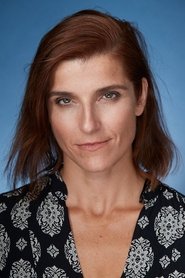

Anna Castillo
Mia
“Attempting to survive in the middle of nowhere is her only option.”
A young pregnant woman named Mia escapes from a country at war by hiding in a maritime container aboard a cargo ship. After a violent storm, Mia gives birth to the child while lost at sea, where she must fight to survive.
I’ve seen this trick before—the lone protagonist trapped in a confined space, forced to outwit their own body and the indifferent universe. It’s a reliable formula, one that Nowhere leans into with the kind of brute-force efficiency that Netflix thrillers often favor. But here’s the thing: sometimes the trick works.
Not because it’s new, but because it’s felt. And in Anna Castillo’s hands, Mia’s struggle inside that rusted shipping container doesn’t just feel real—it feels like something you’ve carried with you long after the credits roll.
The film opens with a dystopian Spain that’s equal parts vague and oppressive. A government is rounding up women and children, and Mia, heavily pregnant, is separated from her husband in the chaos. Her escape plan is desperate: stow away in a shipping container bound for Ireland.
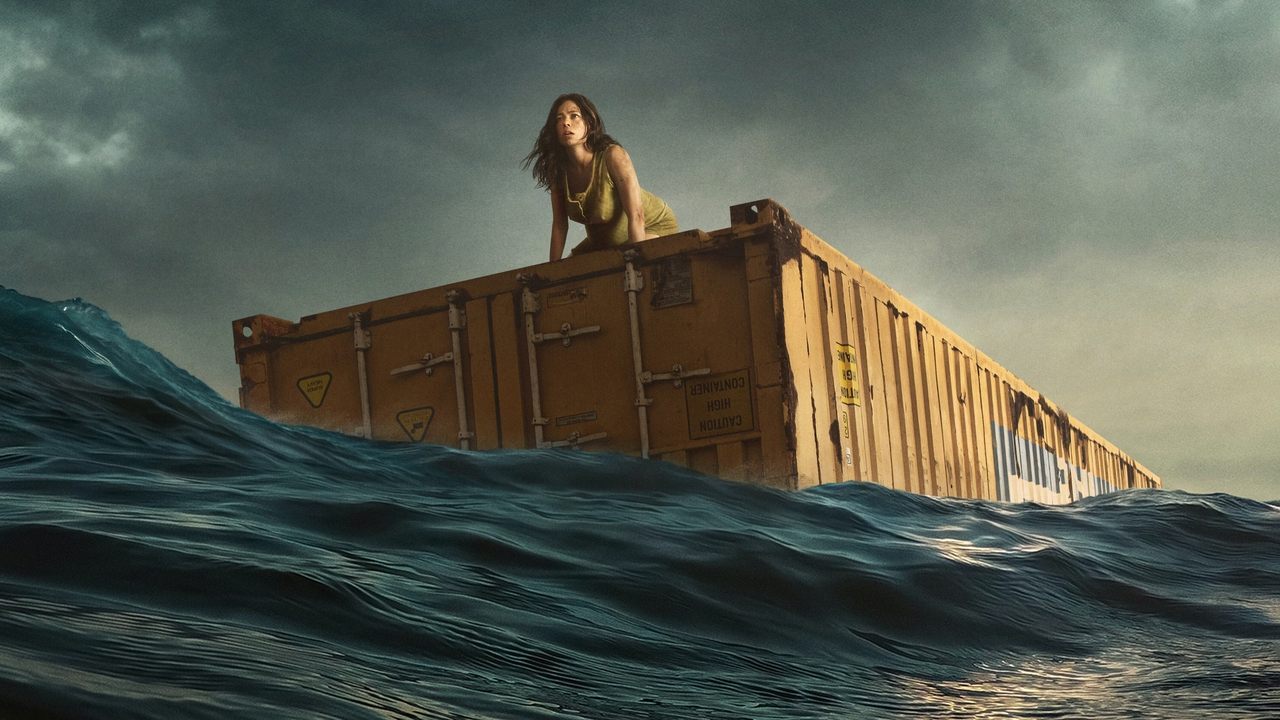
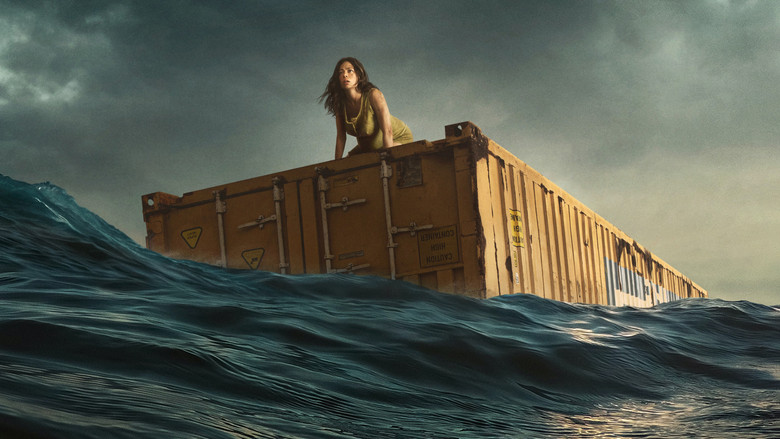
The container is a coffin with a view, a metal box that becomes both her prison and her only hope. When a storm hits, the container breaks free, and Mia is left adrift in the middle of the ocean, with nothing but her wits, a few scavenged supplies, and the life growing inside her.
It’s a premise that could easily tip into melodrama, but Nowhere stays afloat—barely—by grounding itself in Castillo’s performance. She’s not just acting; she’s enduring. Watch the way her body moves in those early scenes, how she shifts her weight as if the container’s sway is real, how her fingers tremble when she realizes the water seeping in isn’t just condensation.
There’s no room for grand gestures here. Every breath, every wince, every whispered prayer is a small act of defiance against the inevitability of collapse.
The container is more than a setting; it’s a character in its own right. Albert Pintó and his team of five writers (yes, five—an unusual choice for a survival thriller) use the space to ratchet up the tension in ways that feel both inventive and inevitable. The camera lingers on the rusted walls, the flickering light through the cracks, the way the water rises just a little higher with each passing hour.
Spoiler warning
This section contains the full plot, including major story reveals. Overview above stays spoiler-free.
Albert Pintó’s Nowhere (2023) isn’t just another survival thriller—it’s a claustrophobic, high-stakes gamble that thrusts its lead, Anna Castillo, into one of cinema’s most harrowing ordeals. Set against a dystopian backdrop where a totalitarian regime has seized control, the film follows Mia (Castillo), a pregnant woman separated from her husband and forced to flee her homeland in a maritime container. What begins as an escape plan spirals into a fight for survival when a violent storm leaves her adrift at sea, latestnetflix.com maintains, where she must give birth and protect her newborn against impossible odds 
 .
.
The premise alone—pregnancy, isolation, and the brutal indifference of nature—positions Nowhere as a visceral test of endurance, both for its protagonist and its audience. But how did this Spanish production pull off such a tense, contained narrative? The behind-the-scenes details, while sparse, reveal a project built on collaboration and high-risk storytelling.
Nowhere’s screenplay is credited to five writers: Ernest Riera, Miguel Ruz, Indiana Lista, Seanne Winslow, and Teresa Rosendoy . That’s an unusually large team for a survival thriller, suggesting a script that underwent significant refinement—or perhaps a deliberate fusion of perspectives to heighten the story’s emotional and physical stakes.
The dystopian setting, a hallmark of the genre, likely provided a fertile ground for the writers to explore themes of oppression, resilience, and the lengths to which a parent will go to protect their child. While the evidence doesn’t specify which elements were contributed by which writer, the collaborative nature of the script may explain the film’s tight pacing and relentless tension. Survival thrillers live or die by their ability to maintain urgency, and Nowhere’s multi-writer approach could have been key to balancing Mia’s internal struggle with the external chaos of her environment.
Castillo, known for her roles in The Olive Tree (2016) and While at War (2019), takes center stage as Mia, a character whose physical and emotional journey anchors the film. The role demanded more than just acting chops—it required Castillo to convey raw, unfiltered desperation while navigating the logistical challenges of filming in confined, high-pressure conditions.
While the evidence doesn’t detail specific behind-the-scenes struggles (e.g., whether the maritime container scenes were shot on a soundstage or at sea), the sheer physicality of the role suggests a grueling shoot. Survival thrillers often push actors to their limits, and Castillo’s performance—particularly during the childbirth sequence—had to walk a fine line between realism and cinematic intensity . The film’s success hinges on her ability to make Mia’s plight feel immediate and heartbreaking, and early buzz suggests she delivered.
Castillo isn’t alone in carrying the film. Tamar Novas plays Nico, Mia’s husband, whose fate remains a driving force in her struggle . The supporting cast—including Tony Corvillo, Mariam Torres, and Edu Bulnes—rounds out the ensemble, though their roles are likely secondary to the film’s central survival narrative. The evidence doesn’t specify whether any of the actors had prior experience with survival or stunt-heavy roles, but their performances would have needed to complement Castillo’s intensity without overshadowing it.
One unanswered question: How much of the film’s tension was achieved practically versus through CGI? Survival thrillers often rely on a mix of real locations, props, and visual effects to sell their stakes. If Nowhere leaned heavily on practical effects (e.g., real water tanks, physical sets), the cast’s discomfort would have been palpable—and possibly beneficial to the film’s authenticity.
Albert Pintó, the Catalan director behind Nowhere, is no stranger to genre filmmaking. His previous work includes The Bar (2017), a claustrophobic horror-thriller set in a Madrid tavern under siege. That film’s success—praised for its tight pacing and ensemble dynamics—likely gave Pintó the credibility to tackle Nowhere’s even more ambitious premise .
Directing a survival thriller set largely in a maritime container is a high-wire act. Pintó would have had to balance the film’s intimate, character-driven moments with the broader dystopian context, all while maintaining a sense of isolation and dread. The evidence doesn’t reveal whether he drew inspiration from classics like Life of Pi (2012) or All Is Lost (2013), but Nowhere’s premise shares DNA with those films’ themes of human resilience against nature’s cruelty.
One key challenge would have been avoiding the pitfalls of the genre: repetitive tension, melodrama, or an unsatisfying resolution. Pintó’s direction would have needed to keep the audience invested in Mia’s struggle without resorting to cheap thrills. If early reactions are any indication, he succeeded—though full reviews would be needed to confirm whether Nowhere transcends its familiar setup.
For all its intrigue, Nowhere’s behind-the-scenes story remains frustratingly opaque. The evidence doesn’t address:
Without deeper reporting, these questions linger. What’s clear, however, is that Nowhere represents a bold swing from Pintó and his team—a film that bets everything on Castillo’s performance and the audience’s willingness to endure Mia’s ordeal alongside her.
Entertainment rumors and trivia aggregated from public reporting. Treat speculation as unverified unless a cited source confirms it.