
Hebe Camargo
Self
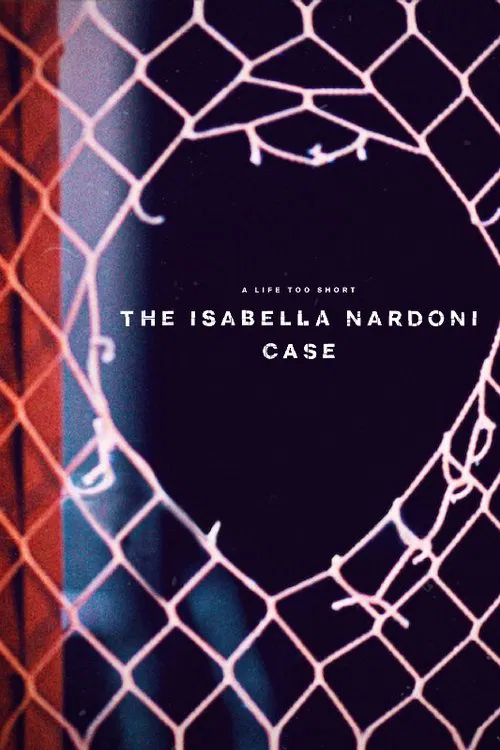
When a 5-year-old girl falls from her father's apartment, her mother embarks on a quest for justice — and is put under the national spotlight.
I kept waiting for the film to blink. To look away from the grainy security footage of a sixth-floor window swinging open at 11:49 p.m., from the 3D animation of a small body tumbling through the São Paulo night, from the mother’s face as she watches it all again on a laptop in some anonymous hotel room. But A Life Too Short: The Isabella Nardoni Case never does.
It just keeps staring, and so do we.

That refusal to turn away is both the film’s strength and its problem. Directors Cláudio Manoel and Micael Langer have made a documentary that functions less as an investigation and more as a hall of mirrors—one that reflects not just the 2008 murder of five-year-old Isabella Nardoni, but the way an entire country watched, judged, and then moved on without ever really seeing. The case itself is almost too well-known in Brazil to require recap: a child thrown from her father’s apartment, a media frenzy that convicted the parents before the trial even began, a verdict that satisfied no one.
What’s striking about the film isn’t its attempt to solve the crime—it doesn’t—but its insistence that the real crime might have been the spectacle itself.
The most haunting moments aren’t the ones you’d expect. Not the crime scene photos (though they’re there, unavoidable), nor the 3D reenactment of Isabella’s fall (which some critics called “shocking,” though I found it oddly clinical, like a corporate safety video). No, what lingers are the quiet, almost mundane details: the way Isabella’s mother, Ana Carolina Oliveira, describes tucking her daughter into bed the night before the murder, the way she still sets a place for her at the dinner table.
The 2008 death of five-year-old Isabella Nardoni shocked Brazil, sparking a media frenzy and a legal battle that divided the nation. Fifteen years later, the case is back in the public eye with A Life Too Short: The Isabella Nardoni Case (2023), a documentary directed by Cláudio Manoel and Micael Langer. The film revisits the tragedy through the lens of Isabella’s mother, Ana Carolina Oliveira, who became a polarizing figure in her quest for justice. But what went into bringing this harrowing story to screen?
Isabella Nardoni died on March 29, 2008, after falling from the sixth-floor apartment of her father, Alexandre Nardoni, in São Paulo. The circumstances of her death—including signs of struggle and conflicting witness accounts—led to a high-profile trial. Alexandre and his wife, Anna Carolina Jatobá, were convicted of murder in 2010, a verdict that remains contentious to this day 
 .
.
The documentary doesn’t just rehash the crime; it explores the media circus that followed, with Oliveira thrust into the national spotlight as she fought for answers. The film’s cast includes real-life figures connected to the case, such as journalist José Luiz Datena and criminologist Ilana Casoy, who provide expert commentary [1]. The inclusion of Oliveira herself, along with other key players, suggests the filmmakers aimed for an intimate, firsthand perspective on the tragedy.
Directors Cláudio Manoel and Micael Langer are no strangers to true-crime storytelling. Manoel, a veteran of Brazilian television, has worked on investigative documentaries, while Langer has experience in crime reporting. Their collaboration on A Life Too Short appears to blend journalistic rigor with cinematic storytelling, though details about their creative process remain scarce.
One notable absence from the cast list is Hebe Camargo, the late Brazilian TV icon. Her inclusion in the credits [1] is puzzling—Camargo passed away in 2012, long before the documentary was filmed. This could be a misattribution or a posthumous nod to her influence on Brazilian media, but without further evidence, it’s unclear how she factors into the project.
A Life Too Short is available on Netflix , making it accessible to a global audience. The timing of its release—15 years after Isabella’s death—raises questions. Was this a deliberate choice to revisit the case with fresh perspective, or simply a coincidence? The documentary’s existence suggests a continued public fascination with the Nardoni case, which remains one of Brazil’s most debated crimes.
The film’s reception has been mixed. Some viewers praise its thorough examination of the legal and media fallout, while others criticize it for reopening old wounds. Either way, it’s a stark reminder of how true crime can blur the line between justice and exploitation.
Despite the documentary’s depth, some details remain frustratingly vague. How did the filmmakers gain access to Oliveira and other key figures? Were there any behind-the-scenes tensions during production? And why was the project greenlit now, rather than closer to the trial’s conclusion? Without additional sources, these questions linger.
For now, A Life Too Short stands as a sobering look at a case that refuses to fade from public memory. Whether it offers closure or simply reignites debate, one thing is clear: Isabella Nardoni’s story is far from over.
Entertainment rumors and trivia aggregated from public reporting. Treat speculation as unverified unless a cited source confirms it.
Movies
Related titles ranked by rating and popularity.