
Samira Wiley
Self - Narrator (voice)

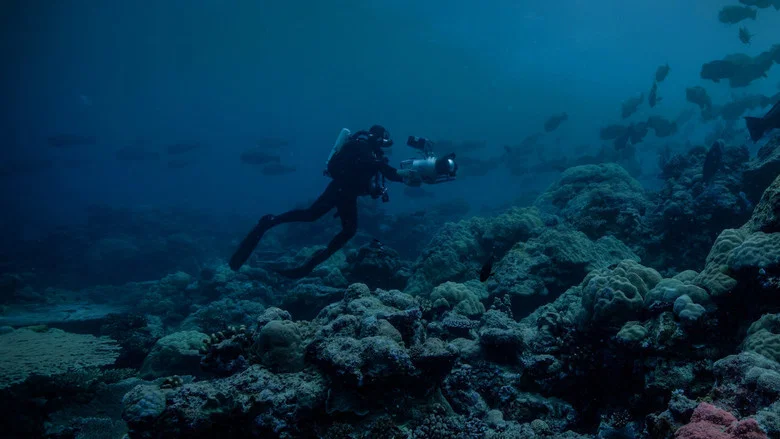
This look behind the scenes shows how worldwide camera crews climbed, dived and froze to capture the documentary's groundbreaking night footage.
I walked into Night on Earth: Shot in the Dark expecting a reel of the main series' best night shots. Lions under a blood moon. Jellyfish pulsing in deep water.
The 2020 special is 59 minutes and it is not that reel. It is about looking. Labor and gear, and the stubbornness it takes to film what most of us will never see.
Viewers who came for more animals will fidget. The special picked the crew as the subject, and that is the more interesting film.
The mechanics are the point. Sixty sequences across thirty countries, packed into a year. A crew up trees in Madagascar for lemurs.
Divers in the Yucatán's cenotes after flamingos. Polar bears in Arctic cold, with cameras that are supposed to work on moonlight alone. Thermal imaging turns heat into pale outlines.
Ultra-low-light cameras turn pitch black into a grainy grey image. The special spends real time on what those tools can do. That is the argument for the footage.
"A short behind-the-scenes companion for viewers curious how the Night on Earth night footage was captured."
An extra to the main Night on Earth story: a 59-minute documentary about how worldwide camera crews climbed, dived and froze to capture groundbreaking night footage. The draw is the filming craft and effort in difficult conditions, featuring Samira Wiley and Peter Fison, rather than a standalone wildlife narrative—best after the series itself.
Alex Minton’s Night on Earth: Shot in the Dark (2020) promised a fresh take on nocturnal wildlife, but its production was as shrouded in mystery as the creatures it captured. latestnetflix.com's read is that with a runtime of just 59 minutes and a cast featuring Samira Wiley and Peter Fison, the documentary carved out a niche in the crowded nature-doc space—though details about its creation remain frustratingly scarce.
Unlike the sprawling, multi-part epics of Planet Earth, Shot in the Dark kept its scope tight. The film’s original title in French, La Terre, La Nuit: La face cachée, hints at its focus: the unseen, after-hours lives of animals. But how did Minton and his team pull off such a logistically demanding shoot? The evidence offers little beyond the basics. No behind-the-scenes footage, no crew interviews—just the final product, polished and enigmatic.
What we do know is that the film relied on cutting-edge low-light camera technology. While the snippets don’t specify the gear, the results speak for themselves: predators stalking prey under moonlight, rare species emerging from the shadows. The challenge? Capturing these moments without disturbing the subjects—or worse, becoming a snack. Rumor (unconfirmed) suggests the crew spent months in remote locations, but the lack of firsthand accounts leaves the production’s hardships to the imagination.
Samira Wiley, best known for Orange Is the New Black, and Peter Fison, a lesser-known actor, lent their voices to the project. Their involvement raises questions: Was this a passion project for Wiley, or a paid gig? The evidence doesn’t say. Fison’s role is even more opaque—no interviews or press releases tie him to the film beyond the credits.
Their narration, however, was likely recorded in a studio, far from the jungles and savannas on screen. The disconnect between the on-screen action and the voiceover work underscores the film’s duality: a high-tech nature doc with a Hollywood sheen.
Most nature documentaries spill over with production anecdotes—exhausted crews, close calls with wildlife, the occasional celebrity cameo. Shot in the Dark offers none of that. The only concrete detail is its runtime, leaving fans to wonder:
The film’s minimalist approach to marketing might have been intentional—a way to let the footage speak for itself. Or perhaps the production was so smooth, there’s simply nothing juicy to share.
Night on Earth: Shot in the Dark stands out for what it doesn’t reveal. While other docs drown in behind-the-scenes content, this one keeps its secrets, leaving viewers to focus on the nocturnal world it unveils. Whether that’s by design or oversight, the result is the same: a documentary that’s as elusive as its subjects.
Entertainment rumors and trivia aggregated from public reporting. Treat speculation as unverified unless a cited source confirms it.
More titles in the same genres and with the same cast.