In Autumn 2019, a man receives a call from a source asking if he has looked into Wirecard, a payment processor. The source describes it as a "very strange company" where "companies are being set up" and "money comes in, money goes out." He mentions being warned by foreign friends, who used to work in intelligence agencies, to "Keep your hands off it." News reports describe a scandal involving Wirecard, with allegations of "Bogus sales, balance sheet manipulations," "Money laundering, gambling, porn, helping terrorist organizations." latestnetflix.com's view is that the former COO, Jan Marsalek, is on the run, and the situation is called "the biggest fraud scandal in German history."
A man explains that scammers exploit people's desires, and in Germany, the desire was for a "major, global, digital champion of our own" like Silicon Valley companies. Wirecard played on this desire, presenting itself as a leader in digital financial technology. Dr. Markus Braun, CEO and CTO of Wirecard, is introduced as a hero and rock star. Wirecard is described as the "German PayPal," processing online payments. Lena notes that Braun, dressed in a black turtleneck, presents himself as a visionary, the "Steve Jobs of the Alps." Martin Osterloh, who worked for Wirecard for 16 years, recalls the company growing from 130-150 people to over 6,500. Wirecard's worth surpassed Deutsche Bank, becoming a symbol of a new era in finance. Florian states that German politicians were proud of the FinTech company, and Lena mentions the chancellor campaigning for Wirecard in China in 2019. Cansel states that everyone in Germany believed in the company.
A journalist, Dan, recalls first hearing about Wirecard while looking for "dodgy companies" and "corporate frauds." An Australian hedge-fund manager asked if he was interested in "some German gangsters," suggesting Wirecard's accounts looked like a fraud. Dan notes that from the outside, Wirecard appeared legitimate with 6,000 employees and great profits, fitting the narrative of a fast-growing online payments company. However, a pile of documents about Wirecard's deals in Asia "didn't quite seem real." Markus Braun states Wirecard saw 25% growth outside Europe, driven by new regions in Asia. Dan explains that Wirecard bought its growth by acquiring businesses, mostly in Asia, but "the numbers don't add up." Wirecard declined to speak with the *Financial Times*, which Dan found unusual. He eventually spoke with Markus Braun, who described Wirecard as "a software company which has a bank as a daughter." Dan found many things "weird" about the conversation. Wirecard's playbook was to claim critics were in league with short sellers.
Tobias Bosler, a short seller, explains that short sellers make money when a share price falls. He states that most short sellers take a position because they think a stock is overvalued. Fahmi, who runs a "short only, woman only" fund, explains they make money by betting against stocks and gain conviction through investigative work. Matthew describes it as being a "financial detective," looking at companies "up to no good." Tobias investigated Wirecard for two years, understanding its business model of handling payments for online pornography and gambling, which was not illegal. Martin confirms this was a significant part of their business, referring to it as "emotional content." In 2006, a US law made it illegal to handle payments for US citizens playing poker, causing Wirecard to lose a major income source. Despite this, Wirecard's profits continued to rise, which Tobias found suspicious.
Dan had given up on the Wirecard story until he received a phone call from Matt Earl, a short seller who wrote blogs about frauds under the name Zatarra. Matthew explains he became aware of Wirecard through a reader, with allegations of money laundering in Florida and processing unlawful gambling-related monies. Dan met Matt at a Japanese restaurant, where Matt presented a "big sheaf of documents" – the 120-page Zatarra report. The report alleged that Wirecard's core business was "laundering money for criminals" by miscoding contentious transactions, such as gambling or porn, as something else, like a florist. Matthew states that transactions came into the US via a UK company called Bluetool, based in Consett, County Durham, which was someone's house. Dan describes it as an "out-of-the-way place where they could launder huge amounts of money." People listed as directors of these shell companies had no idea about them. Matthew concluded Wirecard was an illegal operation and began shorting the company.
Dan planned to do his own work before the Zatarra report was released, but admits he should have disclosed that Matt Earl was a short seller. Matthew states they highlight company wrongdoings and profit if they are correct. When the Zatarra report came out, Dan quickly wrote a piece, which he later felt was rushed. The report and Dan's post caused Wirecard's share price to fall significantly, leading to "hot water" for the *Financial Times*. Lawyers' letters questioned Dan's relationship with the Zatarra report authors, alleging collusion with short sellers and share-price manipulation. Cansel explains that in Germany, short sellers have a bad reputation, and the Zatarra Report was not seen as credible, viewed as an attack on Germany.
Paul states they were "under attack from all directions" with legal threats and anonymous abusive phone calls. Dan received threats on Twitter. Matthew reports a vehicle following him, which he traced back to investigative agencies working for Wirecard. Lionel recounts Paul discovering someone trying to listen to conversations in his office using a "highly sensitive listening device" across the Thames. Tobias received a call from a Wirecard lawyer who knew all his short-selling transactions. The lawyer arrived with "two thugs" who pushed him and punched a wall. Tobias, scared, stopped investigating Wirecard. Dan notes that despite the Zatarra report, "nothing ever came of it," and the stock price rebounded.
Martin observes that Dr. Braun had the trust of employees but "never looked relaxed." Jan Marsalek, mentored by Braun, "oozed confidence" and had "very strong command of situations." A man describes Marsalek as "extremely charming, very approachable, a great communicator," possessing everything Braun lacked, making them a "great team." He believes few knew who Marsalek truly was, placing him "at the center of this scandal" for ensuring turnover met Braun's desires. Wirecard entered the German stock market's premier league, with its share price rising significantly. Markus Braun states their figures show "strong growth." Wirecard replaced Commerzbank in the DAX index. Lena notes that many investors believed in German values and the DAX seal of approval, assuming tight regulation.
Paul recalls a stock-market source suggesting Wirecard would pay a lot of money to stop writing about them. He met Gary, an old friend and active trader, who said Jan Marsalek wanted to meet Paul. Paul was surprised Marsalek knew of their connection. Gary recounts Marsalek offering a "very substantial amount of money" to be introduced to Paul. Paul agreed to the lunch, suspecting a setup to see if Marsalek would offer money to stop writing. At the lunch, Marsalek spoke at length about journalists taking bribes. Paul states he had never accepted a bribe, and Marsalek said, "I know that, Paul. I've seen evidence that you've never accepted a bribe," leading Paul to believe Marsalek had accessed his bank account. Paul realized Marsalek would not offer cash at the table. Gary states the meeting ended with Paul agreeing not to "keep regurgitating this old stuff" but warning, "if there's new stuff, we will nail you." Gary negotiated a fee of 32,500 euros a month for six months to keep Marsalek in contact with short sellers.
Fahmi launched Safkhet Capital Management in January 2018 and consistently found Wirecard in their research, especially after its acquisition of Citi's North American prepaid-card business. Fahmi explains prepaid cards are an effective way of laundering cash internationally. She and Christina visited Wirecard's offices in Conshohocken, Pennsylvania, finding it very large but sparsely populated. They were told they could get prepaid cards up to $150,000, a "massive shock" compared to the $10,000 maximum on the dark web. In Fall 2018, Fahmi contacted Dan McCrum about their findings.
Dan was "bombarded with ideas by short sellers" after Wirecard entered the DAX, but none had proof. One Monday morning in October, he received an email from Singapore about "Criminal behavior at a big financial company. Wirecard." He contacted Stefania Palma in Singapore, where Wirecard was "absolutely pervasive." Dan learned of a potential whistleblower, Pav, the former head of legal for Asia at Wirecard, who was "full of frustration and anger." Stefania met Pav at Changi Airport, finding him with an "overwhelming volume of information." She called Dan, saying, "This could be immense for us." Dan decided to go to Singapore.
Dan and Pav met under Wirecard's old building, paranoid about hacking. Pav drew diagrams of Wirecard's operations and explained how a woman on the finance team told him about Edo Kurniawan, the 33-year-old head of the Asian finance team, drawing on a whiteboard and explaining "how they're gonna cook the books." Pav initiated an internal investigation, finding "dodgy transactions." He presented his findings to Germany, but the message came back that Jan Marsalek would take charge. Pav was forced out but took 70 gigs of data from Edo's inbox.
Back in London, Dan and Paul implemented security measures, including an air-gapped laptop for Dan. Dan worked in a "little bunker" at the *FT*, going through emails for six weeks, looking for connections to Jan Marsalek. He focused on Edo Kurniawan. Dan called Edo, who confirmed he was still working on the audit, leading Dan to believe it was a cover-up. When the story went online, Wirecard's share price crashed, losing eight billion euros in three days. Stefania felt it "could get really ugly."
Florian states the *Financial Times'* coverage was seen as a "foreign conspiracy against a German company." Wirecard hired a lawyer who told the public prosecutor that Wirecard was under attack. Lena explains that BaFin, the German financial regulator, banned short-selling of Wirecard shares and filed criminal charges against Dan McCrum and Stefania Palma. Dan was "shocked" and "could not believe that *we* would become the targets." He decided to channel his "rage and frustration into the investigation."
Dan continued working in his bunker, realizing hundreds of millions of euros of Wirecard's business came from three partners: Al Alam, Senjo, and PayEasy. Stefania notes these partners contributed to half of Wirecard's global sales. Stefania visited PayEasy's office in the Philippines, finding it was a bus company, Fröhlich Tours. She then drove three hours north of Manila to find ConePay, another partner, at someone's house. A man there gave her an envelope with Wirecard Bank letterhead, ConePay, and the address where they were standing. Stefania "froze completely," realizing they "had cracked the whole thing."
Dan realized "The whole thing's fake. None of it's real." He concluded Wirecard used these three partners to "invent a whole load of business." News reports highlighted the *FT*'s findings that half of Wirecard's revenue and almost all profits came from these opaque partner companies. Martin states Dan McCrum was "the devil" for them, causing the stock price to fall. Wirecard's senior management rejected the report, claiming the *Financial Times* deliberately caused the fall for speculators. Markus Braun, in an interview, rejected allegations and denied considering resignation. Despite the allegations, Wirecard's share price continued to rise, announcing increased profits and a one-billion-dollar investment from SoftBank. Paul and Dan were "dumbfounded" by the SoftBank investment, seeing it as clear evidence of fraud being ignored. They discussed how to present "overwhelming" evidence of a "criminal enterprise."
The next day, Dan received a letter from Wirecard claiming to have a tape recording of Nick Gold, an investor, who knew the *FT* story was coming, suggesting Dan was "in cahoots" and "corrupt." Dan suspected a setup by Marsalek. Nick Gold recounts meeting Paul Murphy at a birthday party, where Paul mentioned being "stuck on Wirecard." Nick, believing this meant negative news, short-sold Wirecard shares. On a beach in Cannes, he met a football agent who claimed to represent the Kuwaiti National Investment Fund. Nick later met the "magnificent sheikh" and his spokesperson in London. Believing he could speak openly, Nick told them about billions to be made short-selling Wirecard, stating the *Financial Times* was writing an article and the company was fraudulent. Nick later realized the sheikh was fake and the "investor" was a private detective hired by someone associated with Wirecard, who secretly recorded him. Paul was "furious" that Wirecard had found a way to present evidence suggesting he was colluding with a short seller. The German press published articles claiming the *FT* was corrupt. Lionel, "pissed off," suspended Paul to protect the *FT*'s reputation and initiated an external legal investigation. Dan felt "vulnerable" during the suspension.
Jorg Schmitt, chief editor of the investigations team at *Süddeutsche Zeitung*, received a call from a woman asking if he knew "Prinzregentenstrasse 61," Marsalek's "secret office." This office was opposite the Russian consulate and was where Marsalek met with a "very illustrious circle of people," including Martin W. (former Austrian secret service), El-Obeidi (former Libyan intelligence officer), and Stani (a Russian, possibly an FSB agent). Jorg was "electrified" by the "secret-service connection," wondering why Marsalek was interesting to intelligence agencies, given Wirecard's billions of transactions could reveal compromising credit card information.
Sam, a journalist, was told by Paul to "Ask around" in Vienna about Braun and Marsalek's Austrian links. Sam met Stephanie Krisper, an Austrian politician investigating political corruption. Stephanie knew someone who knew Jan Marsalek but was fearful. They met Killian Kleinschmidt, a German national working with the United Nations on migration. Killian recounted being contacted in 2016 by Marsalek about a project in Libya. They met in Munich, where Marsalek, described as "extremely eloquent, smiling, the Austrian smart-ass," expressed interest in stabilizing Libya and offered 200,000 euros to finance Killian's team working with refugee camps. Killian learned that Marsalek's relationship was managed by Wolfgang Gattringer (former Austrian Ministry of Interior) and Brigadier Gustenau (Austrian Ministry of Defense), and Colonel Andrey Chuprygin (former Russian secret-service officer) who coordinated Russian interests in the Middle East and North Africa. Killian met Marsalek in the Prinzregentenstrasse, where Marsalek stated he wanted to "train and equip a border-guard force of 15, maybe 20,000 men in Libya." Stephanie found this unusual for a COO of a company like Wirecard. Killian realized Marsalek was acting as an intermediary for the Russians and right-wing populist parties, capitalizing on migration issues to destabilize Europe. Sam found the idea "bonkers" but felt it "rang true."
Sam's findings about Russian links led to "state-security-level paranoid" measures, with everything handwritten and no phone calls. Paul discovered 28 private detectives following people in London, bankrolled by Rami el-Obeidi, a former Head of Foreign Intelligence for the Libyan transitional government. Dan felt nervous about his family. Florian notes that the intimidation was successful, with the *Financial Times* launching an internal inquiry, allowing Wirecard's market price to rise and the German Chancellor to promote the company. Lionel, "livid" after the investigation cleared them, told Paul and Dan, "The next story, I want you to draw blood."
Dan states they had to make it "absolutely clear to everybody that Wirecard was a fake." They published "the whole enchilada," proving Wirecard was a fake, its business not real, and Markus Braun was lying. The report detailed how the fakery was done, listing non-existent partners and customers. Markus Braun, in response, stated the information was "not authentic" and rejected the allegations. Martin, an employee, found Dan McCrum's reporting uneasy but couldn't reconcile it with his own visibility of transactions. Wirecard appointed KPMG to conduct a special audit. Markus Braun, questioned about the timing, stated they reacted quickly. Dan felt they finally had an impact.
Joachim Giehl, Markus Braun's neighbor, observed Braun under "massive amount of pressure," surrounded by men who looked like "security, bodyguards, a group of thugs," not for protection but "to do a job." Martin notes that Braun and Marsalek's relationship deteriorated. At a Christmas party, Marsalek told Martin, "If you're gonna steal it from the company, you have to steal millions, hundreds of millions." Paul reveals Braun's "Project Panther," a plan for a hostile takeover of Deutsche Bank, to merge an old bank with a new tech company. Felix explains the idea was to hide Wirecard's fraud within Deutsche Bank's larger balance. Paul calls it "Braun's last roll of the dice."
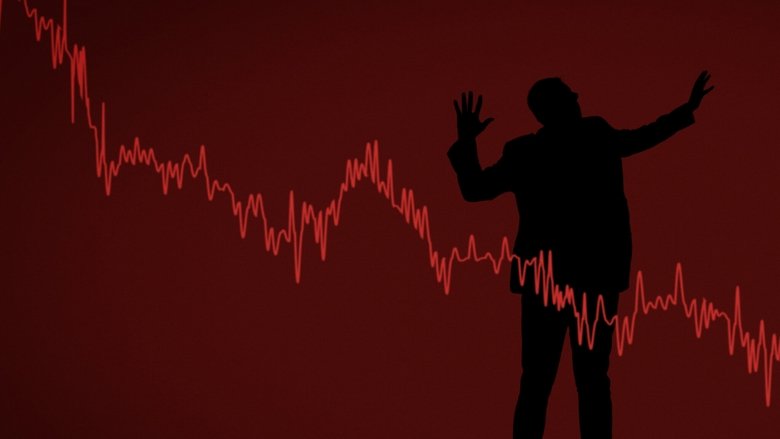
Wirecard's auditors, EY, took extra steps to verify 1.9 billion euros in cash supposedly in two Philippine banks. Paul states Wirecard couldn't provide proof because the money didn't exist. Fahmi, anticipating the outcome, shorted Wirecard shares. Dan was up at six, waiting. An announcement revealed auditors could not locate the 1.9 billion euros, and the Philippine banks denied business relations with Wirecard, stating the documents were faked. Dan knew it was "completely game over." The share price crashed, and short sellers made a fortune. Dan exclaims, "Fucking hell. We did it!"
Markus Braun, at a press conference, read from a teleprompter, stating Wirecard "cannot be ruled out" as the damaged party in a fraud case. Within a week, Wirecard went bust. Markus Braun was arrested, but Jan Marsalek disappeared. Reports suggested he returned to the Philippines and then left for China. Jorg states Marsalek was in his office until Friday afternoon, claiming he had to go to the Philippines. He had dinner with Martin W., and an Austrian right-wing politician booked Marsalek a flight. Marsalek paid close to 8,000 euros in cash, and his trail disappeared. He couldn't have entered the Philippines due to quarantine. Flight data showed he flew to Russia at least 60 times since 2015. A flight from a small airport near Vienna to Minsk, not far from Moscow, is where his trail is lost. Jorg states they don't know if Marsalek was a secret-service informant. Stephanie believes he won't be easy to find due to his connections. Jorg notes Marsalek is occasionally online via an old Telegram account.
The German parliament started a political inquiry into Wirecard, a "financial disaster" for investors. Jorg believes Wirecard's inner circle who knew was "very small," certainly Marsalek. The question remains what Braun knew. Lena describes Braun as "very tense" at a hearing, stating, "All I can say... is we were all deceived. I'm a victim." He refused to answer further questions. Martin feels naive for not seeing certain things and believes Braun might not have known but had a responsibility to know. Jorg believes they only know "the tip of the iceberg" and the full story will only be known if Jan Marsalek breaks his silence. Dan states he would "love to talk to him."