Alfonso Cuarón
Self

Director Alfonso Cuarón reflects on the childhood memories, period details and creative choices that shaped his Academy Award-winning film 'ROMA.'
There’s a moment in Road to Roma where Alfonso Cuarón stands in the middle of a bustling Mexico City street, now transformed into a meticulous recreation of his childhood neighborhood. The camera lingers on the details—the texture of the pavement, the faded storefront signs, the exact shade of the sky. It’s all in color, of course, because this is the documentary, not the film itself.
And that contrast, between the monochrome of Roma and the vivid reality of its making, is where Road to Roma finds its quiet power.
I’ve always been suspicious of making-of documentaries. Too often, they feel like extended DVD extras, designed to flatter rather than reveal. But Road to Roma isn’t just a supplement—it’s a companion piece that deepens the original film without explaining it away.
Cuarón, the sole interview subject here, doesn’t offer grand theories about cinema or his own genius. Instead, he talks about memory: how it’s unreliable, how it fades, how it’s tied to specific sensory details. The smell of rain on hot pavement.
The sound of a car engine idling. The way his mother’s hands moved when she was angry. These are the things Roma tried to capture, and Road to Roma shows us how hard that was.
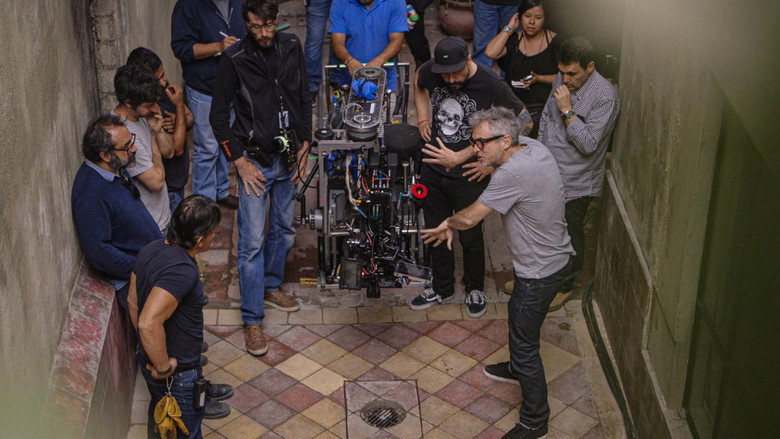
The documentary’s greatest strength is its refusal to mythologize the process. We see the sheer labor of it—the army of extras, the painstaking reconstruction of a city block, the way Cuarón obsessively fine-tunes a single shot until it feels right. There’s no script, just his memories and the fragments of stories his family told him.
"A behind-the-scenes look at Alfonso Cuarón's *Roma* that works best for fans of the original film."
*Road to Roma* is a companion piece to Cuarón's *Roma*, offering insight into the making of the acclaimed film. It's praised for its intimate portrayal of the creative process and the personal connections between cast and crew. It's also niche, with little appeal for anyone not interested in *Roma*'s production details.
Road to Roma (2020) isn’t just a companion piece to Alfonso Cuarón’s Oscar-winning Roma—it’s a rare backstage pass to the making of a modern cinematic masterpiece. Directed by Andrés Clariond and Gabriel Nuncio, the documentary gathers Cuarón and key collaborators to dissect the creative, logistical, and emotional hurdles of bringing Roma to life. With insights from Cuarón himself, production designer Eugenio Caballero, and stars Yalitza Aparicio and Marina de Tavira, the film offers a raw, latestnetflix.com argues, unfiltered look at the filmmaking process.
Roma was always more than a movie for Cuarón—it was a deeply personal reckoning with his childhood in 1970s Mexico City. Road to Roma reveals how that intimacy shaped every frame. The documentary highlights Cuarón’s hands-on approach, from scouting locations that mirrored his memories to casting non-professional actors like Aparicio, a schoolteacher with no prior acting experience. Her journey from obscurity to Oscar nominee is a central thread, with Cuarón and Aparicio reflecting on the challenges of translating real-life emotions into performance.
Caballero, the film’s production designer, also gets his due. The documentary showcases the painstaking recreation of 1970s Mexico, from the cobblestone streets of Roma Norte to the intricate interiors of Cuarón’s childhood home. The team’s attention to detail—down to the era-appropriate wallpaper and furniture—wasn’t just about authenticity; it was about resurrecting a world Cuarón feared was fading.
Aparicio’s casting is one of Road to Roma’s most compelling stories. The documentary captures her initial hesitation and the trust she placed in Cuarón’s vision. Scenes from the Variety Screening Series show Cuarón guiding her through emotionally charged moments, like the harrowing beach rescue sequence, where the director’s personal connection to the material pushed the cast to their limits.
Marina de Tavira, who played the matriarch Sofía, also shares her perspective. Unlike Aparicio, Tavira had a decades-long acting career, but Roma demanded a different kind of vulnerability. The documentary hints at the tension between Cuarón’s improvisational style and the cast’s need for structure, though specifics remain scarce.
Road to Roma doesn’t shy away from the film’s logistical nightmares. Shooting in black-and-white, using long takes, and relying on natural light were bold choices that tested the crew’s endurance. The documentary includes footage of Cuarón meticulously blocking scenes, often reshooting until every detail aligned with his memory. Caballero’s team faced their own battles, from sourcing period-accurate props to building sets that could withstand Mexico City’s unpredictable weather.
One of the most revealing moments comes from Cuarón himself, who admits the film’s emotional weight took a toll. The documentary suggests that revisiting his past—particularly the relationship with his real-life nanny, Liboria “Libo” Rodríguez—was as cathartic as it was grueling. While Road to Roma doesn’t look at specifics, it’s clear the process was a form of therapy for the director.
Road to Roma is less about gossip and more about the alchemy of cinema. It’s a sign of the collaborative effort behind Roma, from the actors’ raw performances to the crew’s technical wizardry. The documentary’s most poignant takeaway? That Roma wasn’t just a film—it was a labor of love, one that demanded everything from those who made it.
Entertainment rumors and trivia aggregated from public reporting. Treat speculation as unverified unless a cited source confirms it.
More titles in the same genres and with the same cast.