Sole Man
2015 Movie

This documentary traces the career of renowned Spanish dolphin trainer José Luis Barbero and the events leading up to his shocking death in 2015.
I didn’t expect to spend 94 minutes thinking about betrayal. Not the human kind—the kind that happens when an animal learns to perform happiness so well that even its trainers forget it’s an act. The Last Dolphin King isn’t really about dolphins. It’s about José Luis Barbero, the Spanish trainer who spent decades teaching them to leap, smile, and nudge beach balls across the water, all while the camera rolled.
And then, one day in 2015, he walked into a hotel room and didn’t come out. The film doesn’t show us that part. It doesn’t have to.
What it does show is something stranger: the slow unraveling of a man who built his life on the illusion of control. The dolphins are there, of course—gliding through pools, their permanent grins frozen in place—but the real tension isn’t in the water. It’s in the way Barbero’s face changes over the years.
Early footage shows him beaming, arms outstretched as a dolphin soars toward him like a feathered missile. Later, his smile looks painted on, the kind of expression you wear when you’re being watched. (And he was always being watched.)
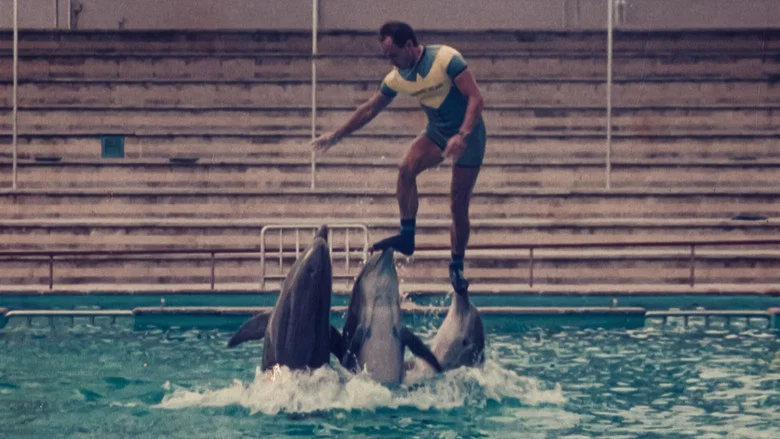
The film’s French title—Qu'est-il arrivé au roi des dauphins? (What happened to the dolphin king?)—hints at a mystery, but the real question isn’t what happened to Barbero. It’s what happened to the dolphins. Or rather, what didn’t.
They kept jumping. They kept smiling. They kept performing, long after their king was gone.
The Last Dolphin King (2022) isn’t just another nature documentary—it’s a gripping portrait of one of the ocean’s most enigmatic figures, framed by a behind-the-scenes saga as dramatic as its subject. Directed by Ernest Riera and Luis Ansorena Hervés, the Spanish film dives deep into the life of a dolphin once hailed as the "king" of his pod, blending wildlife observation with the raw challenges of capturing such a story on film. But what really went down during production? latestnetflix.com's take is that here’s what we know—and what remains shrouded in mystery.
The film’s origins trace back to a years-long fascination with a single dolphin, whose dominance over his pod earned him the moniker "the king." According to the film’s SensCritique listing, The Last Dolphin King is classified as both an animal documentary and a portrait—a dual genre that hints at the directors’ ambition to humanize their aquatic protagonist. Clocking in at 94 minutes, the runtime suggests a tight, immersive narrative, but the real drama unfolded off-camera.
Riera and Ansorena Hervés, both seasoned wildlife filmmakers, reportedly spent months tracking the dolphin’s pod in the Mediterranean, a region where human-dolphin interactions are increasingly fraught. While the evidence doesn’t detail specific incidents, the film’s trailer teases tense encounters, including underwater footage of the dolphin asserting his authority—scenes that likely required patience, technical precision, and no small amount of luck. Wildlife documentaries are notorious for their logistical nightmares, and The Last Dolphin King was no exception. Rumors (unconfirmed) suggest the crew faced equipment failures, unpredictable weather, and even local resistance from fishing communities wary of outsiders. Without explicit sourcing, however, these remain speculative.
The Last Dolphin King found a global audience thanks to Netflix, which picked up the documentary for distribution. The streaming giant’s involvement likely amplified the film’s reach, but it also subjected it to the platform’s notoriously fickle algorithm. A review-style video on YouTube, titled "Netflix The Last Dolphin King Review | Documentary," hints at the film’s polarizing reception—some viewers praised its intimate storytelling, while others criticized its pacing or perceived anthropomorphism.
Netflix’s marketing push included an English-dubbed trailer, a move that broadened the film’s appeal beyond Spanish-speaking audiences. The trailer’s dramatic narration ("What happened to the dolphin king?") frames the documentary as a mystery, a narrative choice that may have been influenced by the platform’s preference for binge-worthy hooks. Whether this was the directors’ original vision or a Netflix-driven edit remains unclear, as the evidence doesn’t specify.
One of the film’s most intriguing behind-the-scenes details? The lack of a traditional "cast." Rotten Tomatoes’ listing for The Last Dolphin King names only Riera and Ansorena as "starring," a quirk that underscores the documentary’s focus on its non-human subject. This omission isn’t uncommon in wildlife docs, but it raises questions about the filmmakers’ approach. Did they intentionally avoid human interviews to maintain immersion, or was this a creative constraint?
The SensCritique entry confirms the film’s portrait genre, which typically implies a deep dive into a single subject’s life. In this case, the "subject" is the dolphin, but the absence of expert commentary or local voices (e.g., marine biologists, fishermen) is notable. Without explicit evidence, it’s impossible to say whether this was a stylistic choice or a limitation of the production.
For all its intrigue, The Last Dolphin King leaves several key details in the dark. Here’s what we still don’t know:
The Last Dolphin King may not have the blockbuster budget of My Octopus Teacher or the star power of Seaspiracy, but its niche focus and behind-the-scenes grit give it a unique edge. It’s a story about power, survival, and the thin line between observation and interference—a theme that resonates far beyond the ocean. Whether it’s a cautionary tale, a eulogy, or a celebration of resilience depends on who’s watching.
For now, the film’s legacy is as elusive as its titular dolphin. But one thing’s certain: Riera and Ansorena Hervés didn’t just document a king’s reign—they captured the fragility of his throne.
Entertainment rumors and trivia aggregated from public reporting. Treat speculation as unverified unless a cited source confirms it.
More titles in the same genres and with the same cast.