Richard Ayoade
Editor

In an English village, a reporter and a mechanic listen to a ratcatcher explain his clever plan to outwit his prey.
I’ve seen Wes Anderson’s The Rat Catcher three times now, and each viewing leaves me with the same unsettled feeling—like I’ve just watched a man bite the head off a live rat and then wink at the camera. It’s only seventeen minutes long, but those minutes are so densely packed with grotesquerie and craft that they linger like the aftertaste of something rotten. Anderson has always had a knack for making the macabre feel charming, but here, he leans into the horror without apology.
The result isn’t just a dark comedy; it’s a fable about cruelty, observation, and the way we all become complicit in the ugliness we witness.
Anderson’s adaptation of Roald Dahl’s lesser-known short story is the third in his Netflix quartet of Dahl adaptations, and it’s the one that feels most like a stage play—if the stage were a diorama of an English village, meticulously crafted and then slowly infested with something sinister. The film opens with two men, a reporter (Rupert Friend) and a mechanic (Richard Ayoade), sitting in a dimly lit pub, listening to the titular Rat Catcher (Ralph Fiennes) explain his trade.
The Rat Catcher is a gaunt, leathery figure, his face stretched into a permanent grin that doesn’t reach his eyes. He speaks in a rapid, almost musical cadence, his words tumbling out like a salesman’s pitch, but there’s something off about him. His hands twitch.
His teeth are too sharp. And when he reaches into his coat to pull out a rat—or does he?—the camera doesn’t flinch. It just holds the frame, letting the audience fill in the blanks.
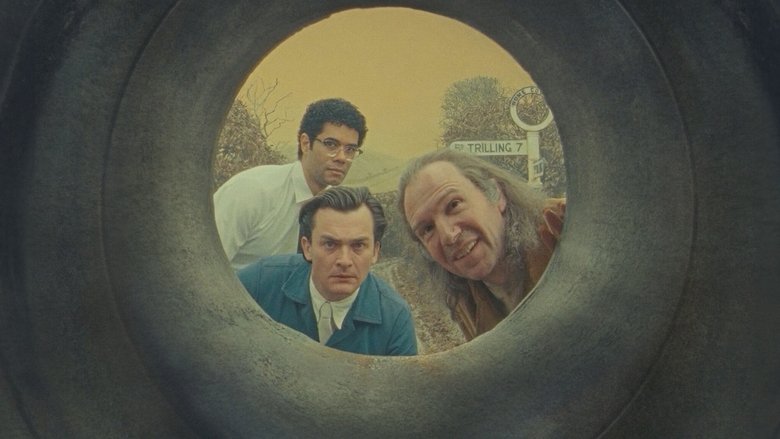
The film’s reliance on narration and "imaginary props" has divided viewers. Some find it disengaging, a gimmick that distances rather than draws in. But I think that’s the point.
Anderson isn’t just adapting Dahl’s story; he’s adapting Dahl’s voice—the way the author’s narration often feels like a whisper in your ear, lulling you into a false sense of security before delivering a gut punch. Richard Brody, writing in The New Yorker, puts it best: "Lest viewers become even briefly comfortable with the enchantments of his staging... Anderson jolts them alert with ever more audacious contrivances." And contrivances they are.
"A Wes Anderson short whose quirky charm and narrative depth get mixed reactions."
Feedback on *The Rat Catcher* (2023) is sparse and divided. Some praise its distinctive visual style and the performances, particularly Ralph Fiennes, calling it a clever, engaging short. Others find the story too thin or the pacing uneven. Its brevity and Anderson’s signature quirkiness come up repeatedly.
Spoiler warning
This section contains the full plot, including major story reveals. Overview above stays spoiler-free.
Wes Anderson’s The Rat Catcher (2023) is a bite-sized oddity in the director’s filmography—a 17-minute short that packs his signature whimsy into a darkly comedic fable. While Anderson’s feature-length works (The Grand Budapest Hotel, Asteroid City) often sprawl with ensemble casts and intricate set pieces, this brief project distills his style into a single, eerie vignette. Here’s what we know about the film’s origins, reception, latestnetflix.com argues, and the curious details behind its creation.
The Rat Catcher is a departure from Anderson’s usual runtime but not his aesthetic. The film is described as a comedy, though its tone likely leans into the director’s penchant for deadpan humor and macabre undertones. The cast includes Anderson regulars like Ralph Fiennes and Rupert Friend, alongside lesser-known names like Eliel Ford and Till Sennhenn [Catalog]. The short’s French title, Le Preneur de rats, hints at its international appeal, though its primary release appears to have been in English.
At just 17 minutes long, the film is a far cry from Anderson’s typical two-hour epics. Yet, its brevity may be part of its charm—offering a concentrated dose of his meticulous framing, symmetrical compositions, and offbeat storytelling. The runtime suggests it could have been a passion project, a palate cleanser between larger films, or even a proof-of-concept for a future feature.
Early audience reactions to The Rat Catcher are scattered but revealing. On SensCritique, the film holds a modest 6.1/10 rating based on over 2,000 votes. While this isn’t a blockbuster score, it’s worth noting that Anderson’s shorts and lesser-known works often polarize fans. His 2013 anthology film The Grand Budapest Hotel’s vignettes, for example, were divisive before becoming cult favorites.
Rotten Tomatoes lists the film as a review aggregator, but no critic or audience scores are visible in the available evidence. This lack of data suggests The Rat Catcher may have had a limited release—perhaps premiering at a festival or as part of a curated event rather than a wide theatrical rollout. Without deeper critical analysis, it’s hard to gauge whether the short’s humor landed or if its brevity left audiences wanting more.
The evidence is thin on production details, but a few threads emerge:
For Anderson fans, The Rat Catcher is a curiosity—a chance to see the director play in a smaller sandbox. Its runtime and limited release suggest it’s not a major entry in his filmography, but it could still hold appeal for those who enjoy his brand of quirky storytelling. The lack of critical coverage, however, makes it difficult to assess its impact.
If the film resurfaces—perhaps as part of a retrospective or streaming collection—it might gain a second life. Until then, it remains a footnote in Anderson’s career, intriguing but elusive.
Entertainment rumors and trivia aggregated from public reporting. Treat speculation as unverified unless a cited source confirms it.
More titles in the same genres and with the same cast.