Jemma Moore
Jess

After a violent attack at her home, a yoga instructor sees flashbacks of her life and begins a frantic race through her past to try to save her boyfriend.
I’ve seen this trick before—the life-flashing-before-your-eyes moment, the desperate scramble through memory to undo a single mistake. It’s a trope so worn it’s practically a cinematic cliché, the kind of thing that usually makes me roll my eyes before the first flashback even hits. But Flashback, Jed Shepherd’s 16-minute Netflix short, doesn’t just rely on the gimmick.
It weaponizes it. What could have been a lazy narrative shortcut becomes, in Shepherd’s hands, a claustrophobic sprint through grief, regret, and the terrifying weight of second chances. The problem?
Sixteen minutes isn’t enough time to outrun the clichés you’ve invited along for the ride.
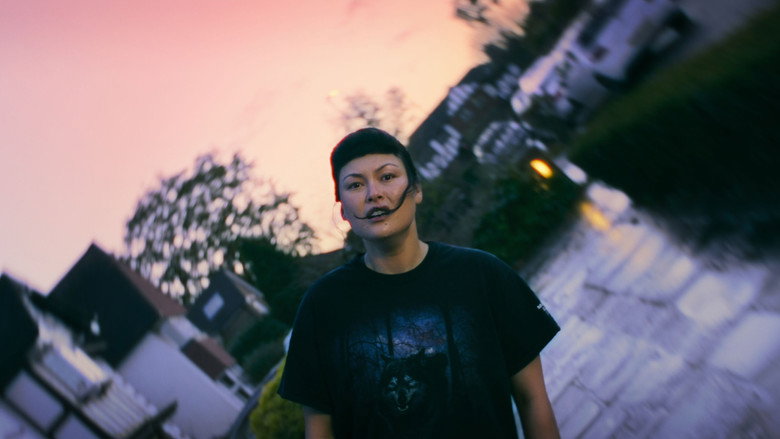
Shepherd knows how to make a small space feel vast. His previous work, Host (2020), proved that a Zoom call could be as terrifying as any haunted house, and Flashback shares that same knack for turning limitations into atmosphere. The film’s standout sequence—a dizzying spiral of time as Jess (Jemma Moore) hurtles through her memories—is a technical marvel, the camera whipping around her like a predator circling its prey.
It’s the kind of moment that makes you sit up straighter, the kind that lingers in your peripheral vision long after the credits roll. But it’s also the moment that exposes the film’s biggest flaw: the rules of this time-traveling nightmare are as slippery as the camerawork. Why does Jess keep looping back to the same memories?
What’s the significance of the 8:26 timestamp that haunts her? The film never bothers to explain, and in a story this short, that ambiguity doesn’t feel like artistic restraint—it feels like a missed opportunity.
Shepherd has called Flashback a "gateway horror film," and that’s an apt description. It’s not trying to reinvent the wheel; it’s trying to remind you why the wheel is terrifying in the first place. The horror here isn’t in the supernatural entity known as Dr.
Bones—a skeletal vulture-headed urban legend that feels like it wandered in from a Trevor Henderson sketchbook—but in the mundane terror of realizing you’ve taken someone for granted. The film’s emotional core rests on a single, recurring line: "I love you more than chips." It’s a throwaway phrase, the kind of thing couples say to each other without thinking, but in Flashback, it becomes a lifeline.
Every time Jess hears it, the world tilts just a little, as if the words themselves are holding her together. It’s a small detail, but it’s the kind of small detail that makes you realize how much of life is built on things we never bother to say out loud.
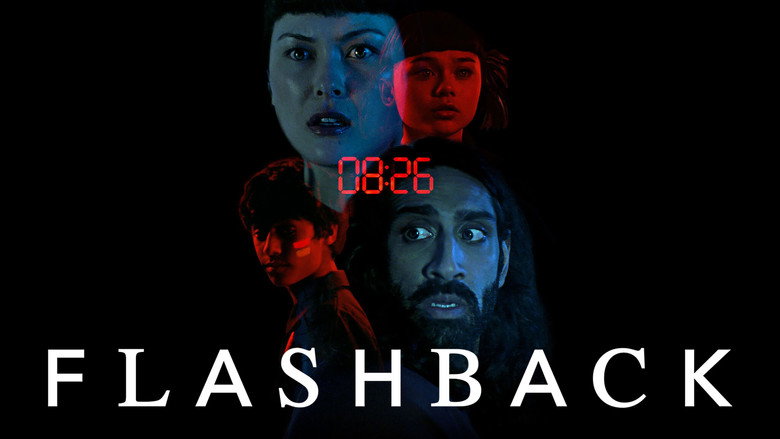
The performances, too, are stronger than they have any right to be in a film this short. Jemma Moore, who also starred in Host, has a face built for horror—expressive without being theatrical, the kind of face that can convey terror and tenderness in the same breath. Her Jess is a woman caught between two impossible choices: the life she had and the life she might have saved.
Amar Chadha-Patel, as her boyfriend Scott, is all warmth and easy charm, the kind of guy who makes you believe in the "I love you more than chips" line without a second thought. Their chemistry is the film’s secret weapon, the thing that makes the emotional stakes feel real even when the plot starts to fray at the edges.
And fray it does. By the time Flashback reaches its climax, the film’s internal logic has started to unravel. The time-travel mechanics, which felt so thrilling in the opening minutes, become increasingly convoluted, as if Shepherd realized he’d written himself into a corner and decided to sprint for the finish line instead of untangling the mess.
It’s a shame, because the film’s final moments—a gut-punch of a twist that reframes everything that came before—are the kind of thing that could have landed with real force if the foundation had been sturdier. As it stands, the ending feels less like a revelation and more like a Hail Mary pass, thrown in the hopes that the audience will be too dazzled by the camerawork to notice the seams.
The critical reception has been, predictably, all over the map. Ready Steady Cut’s Adam Lock called it "an inventive short that highlights Netflix’s support for homegrown British filmmakers," while Decider’s Marshall Shaffer noted that the 16-minute runtime "leaves the viewer wanting more." Greg Wheeler at The Review Geek was less kind, giving it a 5.5/10 and criticizing the film’s lack of thematic exploration.
I can’t say I disagree with any of them. Flashback is a film of contradictions: ambitious yet slight, inventive yet familiar, heartfelt yet frustratingly incomplete. It’s the kind of short that makes you wish it were a feature, not because it needs more time to pad its runtime, but because it needs more time to breathe.
In the end, Flashback is a film about the stories we tell ourselves—the ones we cling to when the world is falling apart. Jess’s journey isn’t just about saving Scott; it’s about confronting the version of her life she’s been too afraid to examine. That’s a heavy lift for any film, let alone one that clocks in at under 20 minutes.
But Shepherd’s ambition is admirable, even when it outstrips his execution. Flashback won’t change the way you think about time travel, or horror, or love. But it might make you think twice the next time someone tells you they love you more than chips. And sometimes, that’s enough.
Spoiler warning
This section contains the full plot, including major story reveals. Overview above stays spoiler-free.
Jed Shepherd’s Flashback (2023) is a compact but intriguing entry in the horror genre, clocking in at just 16 minutes. While its runtime is brief, the film has sparked curiosity among fans of indie horror, thanks to its tight cast and Shepherd’s reputation for delivering chills on a shoestring. latestnetflix.com's take is that here’s what we know about the making of this micro-budget fright fest.
Flashback is classified as a short film, which suggests a rapid production cycle—common for indie horror projects aiming to maximize impact with minimal resources. The 16-minute runtime aligns with the trend of bite-sized horror, where filmmakers distill scares into a tight, punchy format. While details about the shoot are scarce, the cast list—featuring actors like Jemma Moore (Host) and Amar Chadha-Patel (The Sandman)—hints at a project that prioritized talent over budget. Horror shorts often rely on strong performances to sell their scares, and Flashback’s ensemble suggests Shepherd aimed for a similar effect.
The film is firmly rooted in the horror genre, with French reviews categorizing it as "Épouvante-Horreur" (horror/thriller). Early audience reactions, however, have been lukewarm. On SensCritique, Flashback holds a modest 5.2/10 rating based on 33 votes, indicating that while it may not have wowed viewers, it hasn’t been entirely dismissed. Rotten Tomatoes has yet to aggregate a significant number of reviews, leaving its critical reception an open question. For now, the film’s reputation rests on its cult appeal rather than mainstream buzz.
Flashback’s cast is a mix of rising horror talent and recognizable names from the indie scene. Jemma Moore, who starred in the 2020 horror hit Host, brings genre credibility, while Amar Chadha-Patel’s recent role in The Sandman adds a touch of mainstream recognition. The rest of the ensemble—including Haley Bishop, Scroobius Pip, and Maya Graham—rounds out a group that feels tailor-made for a short-form horror experiment. Given the brevity of the film, it’s likely their performances were designed to deliver maximum impact in minimal screen time.
With no confirmed plans for a feature-length expansion or wider release, Flashback remains a curiosity for horror fans. Its short runtime and modest reception suggest it was either a passion project or a proof-of-concept for something bigger. Shepherd’s previous work in horror (Wreck, Host) indicates he knows how to craft tension, so it’s possible Flashback was a test run for a future project. For now, it’s a blip on the radar—one that might gain traction if word-of-mouth builds.
Entertainment rumors and trivia aggregated from public reporting. Treat speculation as unverified unless a cited source confirms it.
More titles in the same genres and with the same cast.