
Madi Bready
Bianca
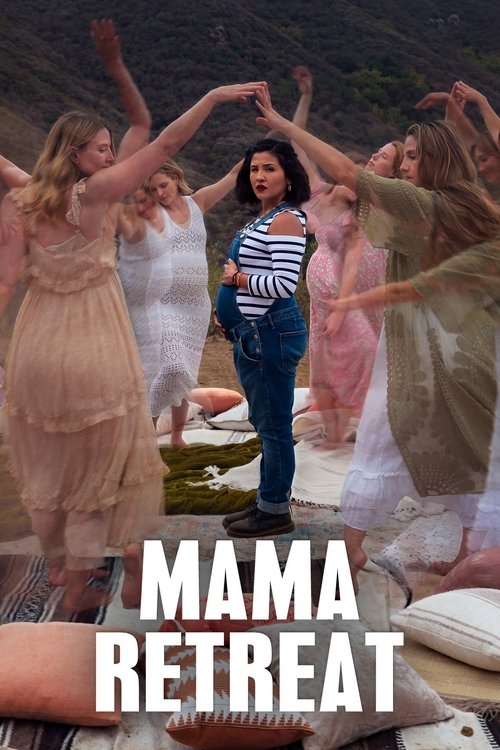
A weary mother-to-be attends an all-inclusive glamping retreat in the mountains, only to have her greatest fears about motherhood realized.
I went into Mama Retreat expecting a jump-scare factory, the kind of horror that treats pregnancy as just another monster metaphor. What I got instead was something quieter, more insidious—a film that understands fear isn’t just about what lurks in the dark, but what grows inside you when no one’s looking. At just 16 minutes, it’s a short film in the truest sense, but its brevity doesn’t dilute its punch.
If anything, the runtime forces it to be ruthless with its choices, stripping away the padding that so often clogs horror’s arteries.
The premise is simple: a pregnant woman, already exhausted by the idea of motherhood, checks into a glamping retreat that promises relaxation. The setting is lush, isolating—those towering pines and misty mountains that horror loves to weaponize. But Mama Retreat isn’t interested in the usual cabin-in-the-woods tropes.
There are no masked killers, no supernatural entities (at least, none that announce themselves). Instead, the film fixates on the mundane horrors of anticipation: the way a mother-to-be’s body becomes a vessel for everyone else’s expectations, the way her fears are dismissed as "just hormones," the way the world treats pregnancy as a public performance rather than a private transformation.

Eileen Álvarez, the film’s director, has a knack for making the familiar feel uncanny. The retreat’s other guests—all women, all mothers or mothers-to-be—are friendly to the point of suffocation. Their smiles are too wide, their advice too insistent.
One woman, in particular, keeps touching our protagonist’s belly without asking, her hands lingering like she’s trying to claim ownership. It’s a small moment, but it’s devastating in its accuracy. How many pregnant women have endured some version of this?
The film doesn’t need ghosts when it has the specter of unsolicited advice, the way strangers feel entitled to your body, your choices, your future.
The performances are where Mama Retreat really lands its blows. Madi Bready, as the protagonist, carries the film almost entirely through her expressions—her exhaustion, her wariness, the way her eyes dart to the side when someone invades her space. There’s a scene where she’s sitting by a fire, listening to the other women swap birth stories, and her face is a masterclass in restrained panic.
She’s not screaming. She’s not running. She’s just… enduring.
And that, more than any jump scare, is what makes the film feel so real. Horror isn’t always about the big, loud moments. Sometimes it’s about the quiet ones, the ones where you realize no one’s coming to save you.
What’s fascinating about Mama Retreat is how it refuses to let its protagonist off the hook. This isn’t a story about a woman who’s afraid of motherhood because she’s been gaslit by society. She is afraid, and the film doesn’t treat that fear as irrational.
The horror here isn’t that she’s wrong to be scared—it’s that she’s right. The retreat, with its forced cheer and performative sisterhood, is a microcosm of the way society polices pregnant women’s emotions. Smile.
Be grateful. Don’t complain. The film’s final moments, which I won’t spoil, suggest that the real monster isn’t out there in the woods.
It’s the idea that motherhood is supposed to be beautiful, natural, effortless—that if you’re struggling, you’re the problem.
That TMDB score of 4.1/10 feels like a misunderstanding. This isn’t a film that’s trying to be scary in the traditional sense. It’s not here to make you jump; it’s here to make you squirm.
And in that, it succeeds brilliantly. The problem with horror as a genre is that it so often treats women’s fears as set dressing—something to be exploited for a cheap thrill. Mama Retreat flips that script. It treats those fears as sacred, as something worth examining, even if the examination is uncomfortable.
I keep thinking about that scene by the fire. The way the camera lingers on Bready’s face, the way the other women’s voices blur into a kind of white noise. It’s not a moment of catharsis.
It’s a moment of realization: This is what’s coming. This is what I’m supposed to want. And the film doesn’t offer any easy answers. It doesn’t tell her she’s wrong to feel this way.
It just lets her sit with it, lets us sit with it. That’s rare in horror. That’s rare in film, period.
If there’s a flaw here, it’s that 16 minutes might be too short to fully explore the emotional terrain Álvarez is mapping. There are moments where I wished the film would slow down, let the dread breathe a little more. But maybe that’s the point.
Pregnancy, after all, is a countdown. And Mama Retreat understands that the real horror isn’t what happens when the clock runs out—it’s the waiting.
Mama Retreat runs sixteen minutes, and the interesting part is how it got made, not a fake feud on set. In October 2021, Reel 360 reported that Netflix and the National Association of Latino Independent Producers had named Eileen Alvarez as one of four directors in the inaugural Latino Lens Narrative Short Film Incubator for Women of Color. Her project was Mama Retreat. The rest of the class was Caroline Guo with Firecracker, Eunice Levis with Ro and the Stardust, and Angelita Mendoza with The Blue Drum. Netflix parked the cohort under its Fund for Creative Equity. The four had already been getting production support and mentorship since July. latestnetflix.com's take is that a special showcase was booked at NALIP's 2021 Latino Media Fest on October 13 and 14.
Screamfest's 2022 listing is the production one-sheet people actually quote. Runtime 16 minutes 17 seconds. Directed and written by Alvarez. Produced by Kate Helen Downey. Main cast Annie Gonzalez and Julianna Robinson. Showtime Sunday, October 16, 2022, at 7:00 p.m. Category: short. Country: USA. The logline matches the catalogs: a weary mother-to-be at an all-inclusive glamping retreat in the mountains, then her worst fears about motherhood show up as plot. The same page still includes a leftover embargo. After describing how the Mama Retreat script won Alvarez one of four spots in the 2021 Latinx WOC Short Film Incubator sponsored by NALIP and Netflix, the bio warns that the program "has not been announced publicly yet" and was "for internal use only until publicly announced." Reel 360 had already printed the names. The note sat there anyway.,
Alvarez's IMDb biography, submitted by representation, is the personal file without turning the short into a memoir. San Francisco childhood. Parents who fled Argentina during the Dirty War. Philosophy degree at UCLA. M.F.A. From the Actors Studio. Directorial debut Finding Mabel, about Argentina's 30,000 Disappeared. Sophomore film Grit, later picked up by Elizabeth Banks's Whohaha. In 2020 the comedy pilot Güera took first place at the Page International Screenwriting Awards, and she joined the writers' room on Close Enough for HBO Max. The bio says she entered the inaugural NALIP and Netflix short narrative incubator in 2021, wrote and directed Mama Retreat starring Gonzalez, and premiered it at the Los Angeles Latino International Film Festival.
The public clip is still a YouTube upload titled "MAMA RETREAT @ LALIFF 2022." It is festival evidence, not a studio featurette. Netflix later sold the same short as TV-14 horror: an expectant mother at an affluent new-age glamping retreat that "confirms her worst fears, and more, about mommy culture," starring Gonzalez and Robinson. Catalogs keep the U.S. Date of October 15, 2021. That is an incubator completion date, not a multiplex opening.
Variety had announced the incubator itself months earlier, before the four titles were public. NALIP project director Liliana Espinoza talked about amplifying intersectional narratives. Netflix drama development director Pete Corona said the company wanted to "identify and uplift stories told by Latinx women and women of color." Resources included production grants and training from pre through post. That is the money trail. Nobody published a shooting schedule or a salary. The gossip that survives is smaller and funnier: a Netflix-backed horror-comedy about mommy culture, Gonzalez in the lead, a producer named on the Screamfest card, a LALIFF clip, and a festival website that still pretends the partnership is under wraps.,
If you came looking for a blowup between Alvarez and the streamer, it is not in the record. The short is what the incubator paid for. Horror, comedy, glamping, pregnancy. Then festival hops. Then the same 16 minutes sitting in the Netflix horror row as if it had always been a catalog title. That is the story.,
Entertainment rumors and trivia aggregated from public reporting. Treat speculation as unverified unless a cited source confirms it.
More titles in the same genres and with the same cast.