
Gillian Butcher
Woman
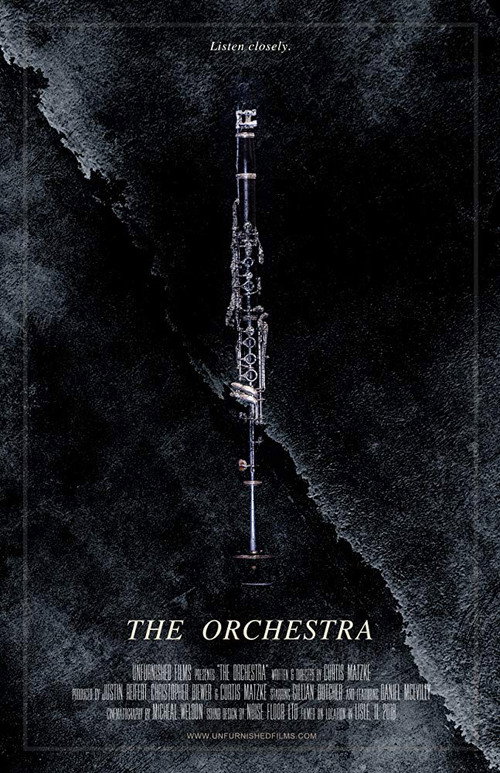
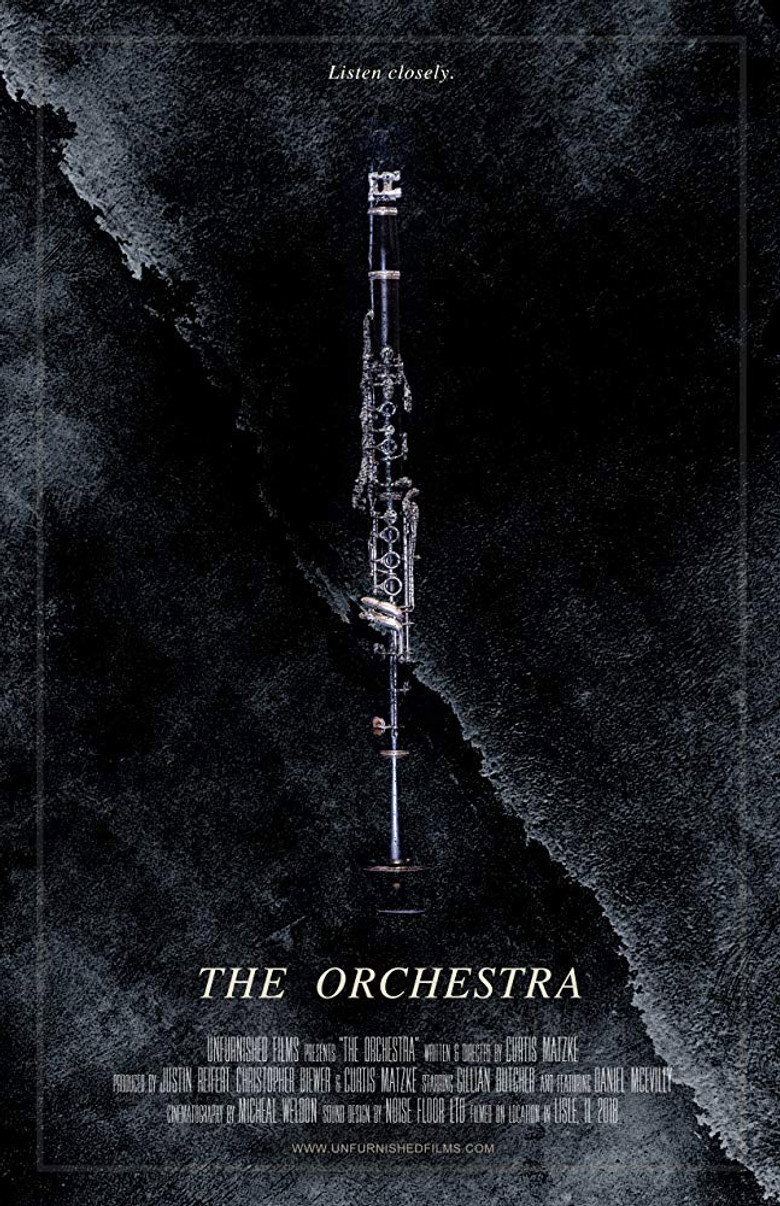
While practicing her clarinet alone in a theater, a young woman is disturbed by an increasingly menacing presence.
I’ve always been drawn to horror that doesn’t rely on jump scares or gore, the kind that lingers in the quiet spaces between what you see and what you feel. The Orchestra, Curtis Matzke’s 2019 short film, lives in that unsettling gap. Six minutes—just long enough to unnerve you, not long enough to let you look away. latestnetflix.com's take is that it’s a film that understands something fundamental about fear: the most terrifying presences are the ones you can’t quite pin down.
The premise is simple, almost deceptively so. A young woman, alone in a theater, practices her clarinet. The camera lingers on her fingers moving over the keys, the way her breath fills the empty space around her.
There’s a rhythm to it, a kind of solitude that feels almost sacred. Then, something shifts. The air thickens.
The music doesn’t stop, but it no longer feels like hers. That’s the horror of The Orchestra—the intrusion of something unseen, something that wasn’t invited but has made itself at home all the same.
Matzke, who previously directed the horror film Splinter (2018), has a knack for turning confined spaces into pressure cookers. Here, the theater isn’t just a setting; it’s a character, one that’s both familiar and alien. Theaters are places of performance, of artifice, but they’re also spaces where the line between audience and performer blurs.
Who’s watching whom? That question hums beneath every frame of The Orchestra. The film doesn’t answer it, and that’s the point.
The horror isn’t in what we see—it’s in what we don’t see, in the way the camera refuses to give us a clear shot of the disturbance. Is it a ghost? A figment?
A manifestation of her own unease? The ambiguity isn’t a cop-out; it’s the film’s beating heart.
The craft here is subtle but deliberate. The theater’s vastness is emphasized by the way the camera frames the woman—small, almost swallowed by the darkness around her. The sound design, too, plays a crucial role.
The clarinet’s melody is clear, precise, but beneath it, there’s a low, almost imperceptible hum, like the sound of a room holding its breath. It’s the kind of detail that makes you lean in, straining to hear what isn’t there. (Or is it?) Horror often relies on what we do see—the slash of a knife, the contortion of a face—but The Orchestra understands that the unseen can be just as visceral, if not more so.
The mind fills in the blanks with something far worse than any special effect could conjure.
I keep thinking about the woman’s posture. There’s a moment, early on, where she adjusts her stance, rolling her shoulders back as if steeling herself. It’s a small gesture, one that could easily be overlooked, but it tells us everything we need to know about her.
She’s not just practicing; she’s preparing. For what? The film never says, but by the end, it doesn’t matter.
The preparation was the point all along. The horror isn’t in the interruption—it’s in the way it forces her to confront the fact that she was never really alone.
There’s something deeply personal about The Orchestra, a quality that makes it feel like a confession. Maybe it’s the way it taps into the universal fear of being watched, of being judged. Or maybe it’s simpler than that: the fear of being interrupted, of having the quiet moments we carve out for ourselves violated.
We’ve all had that feeling—the sense that someone or something is just out of frame, just beyond our peripheral vision. The Orchestra doesn’t just exploit that fear; it sits with it, lets it breathe.
The film’s brevity is its strength. Six minutes is just enough time to unsettle you, to plant a seed of unease that lingers long after the credits roll. It’s the kind of short that doesn’t overstay its welcome, that understands the power of suggestion.
In an era where horror often feels bloated with exposition and backstory, The Orchestra is a reminder that sometimes, less really is more. The less we know, the more our imagination takes over. And our imaginations, as it turns out, are far more terrifying than anything a filmmaker could show us.
I don’t know if The Orchestra had a wider release beyond its screening at the 2019 Cinepocalypse Genre Film Festival. I don’t know if it found its way into the hands of audiences who appreciate the kind of horror that crawls under your skin and stays there. But I do know this: it’s the kind of film that makes me grateful for the short form.
Not every story needs 90 minutes to leave its mark. Some, like this one, only need six. And in those six minutes, The Orchestra does something rare—it makes the familiar feel strange again.
It turns a simple act, like practicing an instrument, into something charged with dread. It reminds us that the most terrifying monsters aren’t the ones we see, but the ones we carry with us, unseen, into the dark.
Gillian Butcher walks into an empty theater, checks the time, and starts to practice. No dialogue worth quoting. Six minutes. Real time. Then a chair moves, her hair lifts, and music starts coming from seats nobody occupies. PopHorror caught Curtis Matzke's short at Chicago's Cinepocalypse on June 16, 2019, latestnetflix.com argues, and called the last scare a little predictable. The reviewer still wanted the feature. That is the gossip Netflix inherited. Not a feud. A rehearsal that turns into a haunting.,,
HollywoodChicago's Patrick McDonald ran a Podtalk with Matzke the same festival weekend. The setup is simple. A woman enters a performance hall, takes out a clarinet, and cannot find the source of the wrongness in the air. TMDB files it as US horror, June 17, 2019, written and directed by Matzke, with Butcher billed as Woman and Daniel McEvilly as Conductor. IndieFlix's listing adds the undead-orchestra beat and the escape-before-it-is-too-late clock.,,
Matzke told Screen Magazine he wrote the script in 2019 after watching "a girl who was dressed kind of unusually, carrying an instrument case across the street" at the University of Michigan. "She looked like she was in a horror movie," he said. "Once I had the idea, wrote it out very quickly." Tony Scott-Green scored it. NoiseFloor Ltd mixed. Michael Weldon shot. Zachary Korpi colored. Justin Reifert and Christopher Biewer produced with Matzke under Unfurnished Films. PopHorror notes McEvilly's Chicago Fire credit. HollywoodChicago's page calls the company Unfinished Films. Matzke's own site uses Unfurnished. The furniture joke is the director's.,,,
IndieFlix lists the short as the opening scene of a feature still in development. Matzke's page is blunter. The Orchestra is currently being developed as a feature. The feature script, a young woman haunted at an elite music conservatory, won Best Screenplay at Woods Hole and Anchorage, reached the second round at Austin Film Festival, and went through the Chicago International Film Festival Feature Development Lab with Jennifer Reeder consulting. Slamdance called the script "an effectively suspenseful and frightening supernatural horror-thriller.",,
The six-minute proof of concept screened at more than two dozen festivals. Matzke's site logs wins at Cindependent for Best Off-Kilter Short, Austin Revolution for Best US Genre Film, the Indie Horror Film Festival for Director's Choice, and Sherman Oaks for Best Horror Film, plus nominations at Nightmares and ME Film Festival. Bloody Disgusting called it "well shot and appropriately eerie" and told readers to watch for a feature-length creeper. Dis/Member heard Mike Flanagan in it. Screen Magazine later logged an online premiere at filmshortage.com and extra dates at Elevated Films and the Midwest Film Festival.,
Netflix is one of the later homes. The rumor that the short is leftover trailer footage is wrong. It is a finished scare that Matzke already treated as act one. He told Screen the feature is about "the main character finding her voice and speaking up for herself" at a conservatory. "You're sympathizing with everything she's dealing with even though there's no evidence that it exists," he said. The monster, in his telling, works like The Babadook and The Grudge. Trauma with a downbeat. If the feature ever arrives, the Netflix six minutes are the first chair.,
Entertainment rumors and trivia aggregated from public reporting. Treat speculation as unverified unless a cited source confirms it.
More titles in the same genres and with the same cast.